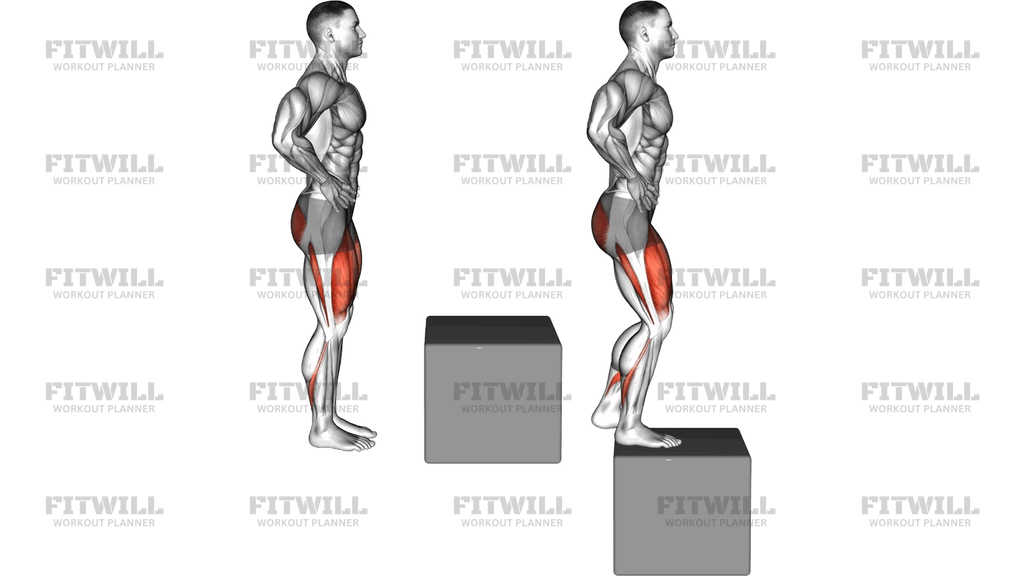
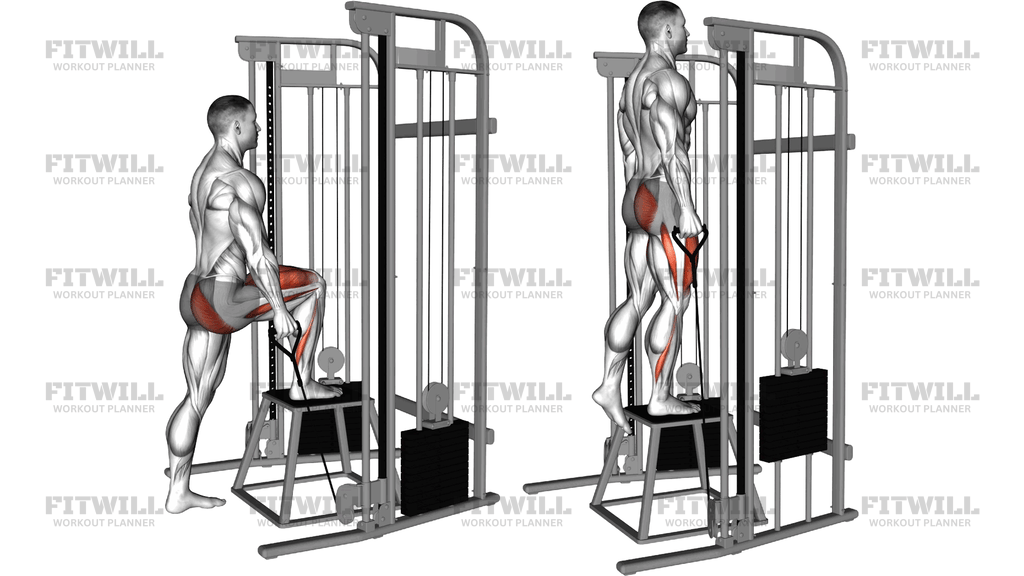
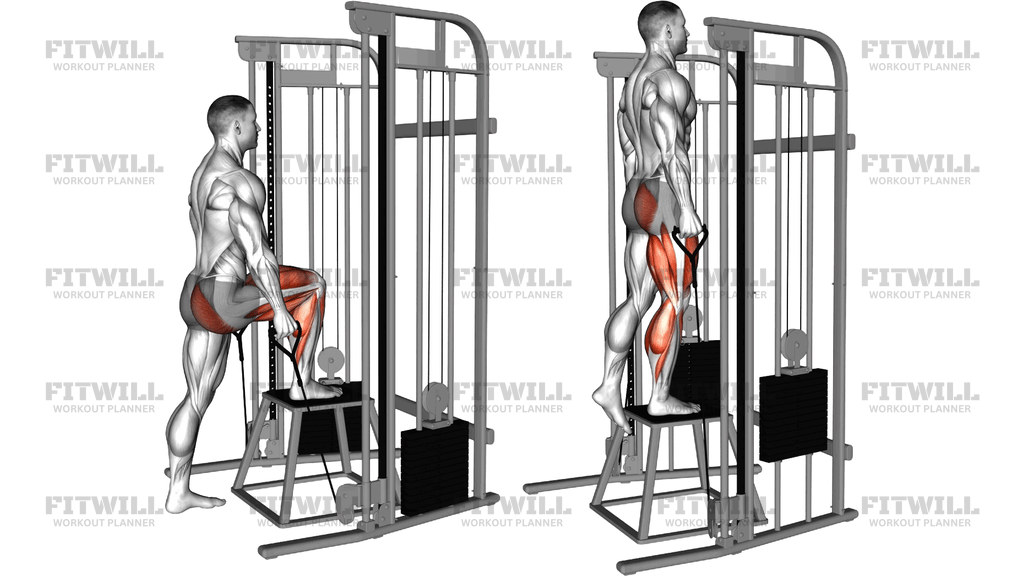
Knee To Box Calf Stretch
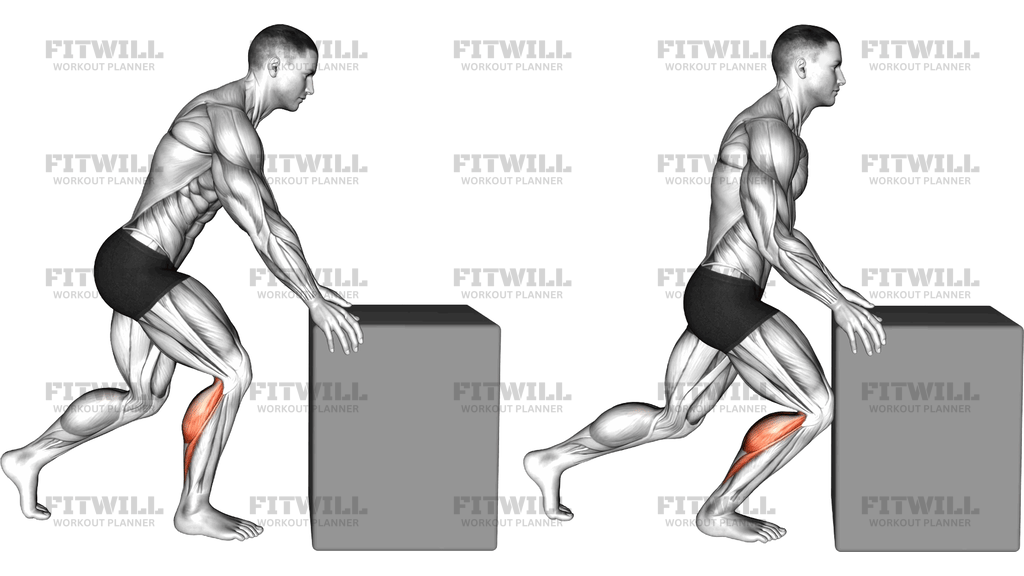
The Knee To Box Calf Stretch is a standing stretch performed with a sturdy box, bench, or step placed in front of you. You rest your hands on the box for support, take a short split stance, and drive your front knee forward toward the box while keeping that heel flat on the floor. The highlighted area in the movement is the calf of the bending leg, which gets a deep, controlled stretch as the knee travels over and toward the box with the foot planted.
This stretch stands out because bending the knee changes which part of the calf you target. With a straight knee, most calf stretches emphasize the gastrocnemius, the two-headed muscle that crosses both the knee and ankle. Once you bend the knee toward the box, the gastrocnemius slackens and the soleus, the deeper muscle below it, takes over the work. Because the soleus does most of its demanding work in walking, running, squatting, and climbing, this bent-knee version is one of the most practical calf stretches for everyday movement and not just for show.
It suits a wide range of people: runners and lifters with tight calves, office workers who spend long hours seated, anyone recovering general ankle range of motion after a layoff, and beginners who find wall-based calf stretches awkward. The box gives your hands a stable, waist-to-chest-height surface to lean on, so you can relax into the stretch instead of fighting for balance. That support also lets you fine-tune intensity simply by moving your foot closer to or farther from the box.
Setup matters more than it looks. Your front foot should point straight ahead with the whole foot, especially the heel, glued to the floor. If the heel lifts as the knee travels forward, you lose the stretch and turn it into a balance drill. Your back leg stays extended behind you for stability, and your hands stay in contact with the box throughout so your upper body contributes nothing but support.
To perform it well, ease the knee toward the box over a few seconds, stop at the point of a firm but tolerable stretch in the lower calf or Achilles region, and hold while breathing steadily. Do not bounce or force the knee past the point where your heel starts to peel off the floor. The stretch should live in the calf, not in the arch of the foot, the knee joint, or the front of the ankle.
A typical session is two to three holds of 20 to 40 seconds per side, either as part of a warm-up with shorter holds or after training with longer, more relaxed holds. If a box is not available, stairs, a bench, or a sturdy low platform work the same way, provided the surface can safely take your hand pressure.
[ Workout Log & Planner ]
Put your next workout in Fitwill
Keep your plan and training log ready when you are.


Instructions
- Place a sturdy box, bench, or step in front of you and stand facing it about one foot-length away.
- Set your hands flat on top of the box, arms extended, and take a short split stance with your working foot closest to the box, toes pointing forward.
- Keep the working heel pressed firmly into the floor and distribute your weight across the whole front foot.
- Brace lightly through your trunk and keep your shoulders relaxed as you lean slightly into the box for support.
- Slowly bend the working knee and drive it forward toward the box, letting the shin angle forward while the heel stays glued down.
- Continue until you feel a firm stretch deep in the calf and along the Achilles area of the bending leg, then hold that position.
- Breathe slowly and steadily through the hold, letting the stretch ease slightly deeper on each exhale without forcing it.
- Pause at the end position for 20 to 40 seconds, keeping the back leg extended behind you for balance.
- Ease the knee back until the front leg is straight again and reset your foot position before the next repetition.
- Complete the set on one side, then switch stance so the opposite leg is closest to the box and repeat.
Tips & Tricks
- If your heel lifts as the knee travels toward the box, shorten the distance: slide the foot slightly back or reduce how far the knee travels. A lifted heel removes the stretch from the calf entirely.
- Most people push the knee straight down instead of forward over the toes. The stretch comes from the shin angling forward while the foot stays planted, so think of moving the knee toward the box edge, not toward the floor.
- Keep the toes pointing straight ahead. If the foot turns outward, the calf stretch rotates into the ankle and loses intensity on the target muscle.
- Do not lock the hands and shrug into the box. Your arms are there for balance; if you are leaning heavily through the shoulders, reduce the depth of the knee drive until your upper body stays relaxed.
- Expect a different sensation depending on knee angle: a small bend highlights the soleus low near the Achilles, while keeping the back leg long and staying tall shifts tension up into the calf bulk. Adjust the angle to wherever you feel tightest.
- Avoid bouncing the knee toward the box. Ballistic tugging at the Achilles tendon is the most common fault in this stretch and usually shows up when people hold too deep a position for too long.
- If the floor is slippery, place the working foot on a mat or perform the stretch barefoot with socks removed so the forefoot grips and the heel cannot slide.
- Start with a shallower range on your first hold of each side. The calf often releases after 15 to 20 seconds, and you can lean the knee slightly further toward the box for a second, deeper hold.
- Compare sides and give the tighter calf an extra hold rather than simply matching the looser side's range.
Frequently Asked Questions
Which muscles does the Knee To Box Calf Stretch target?
It primarily stretches the calf complex of the bending leg. The bent-knee position emphasizes the soleus, while the gastrocnemius and the Achilles area are also placed under stretch as the shin angles forward over a planted foot.
Why does the knee need to bend for this stretch to work?
The gastrocnemius crosses the knee joint, so bending the knee relaxes it and transfers the stretch to the soleus beneath. Straight-knee calf stretches and the Knee To Box Calf Stretch therefore complement each other rather than replace one another.
What can I use if I do not have a box?
Any stable surface around knee to chest height works: a bench, a sturdy step, stairs with a handrail, or the edge of a rack. Only your hands rest on it, so it needs to stay put under light leaning pressure.
Is the Knee To Box Calf Stretch suitable for beginners?
Yes. The box provides hand support, which makes balancing much easier than unsupported calf stretches. Beginners should simply use a smaller knee drive and build range gradually across several sessions.
My heel keeps lifting off the floor. What should I change?
That is the most common fault. Move the working foot slightly farther from the box or reduce how far the knee travels. The heel must stay down for the stretch to land in the calf instead of disappearing.
How long should I hold each stretch?
Hold for 20 to 40 seconds per side and repeat two to three times. Shorter holds of around 15 seconds work well before training, while longer, more relaxed holds are better suited to after training or in the evening.
Should I feel the stretch near the Achilles tendon?
A stretch low on the calf and around the Achilles area is normal, especially with a deeper knee bend. It should feel like lengthening, not sharp pain. If you get a stabbing sensation there, back off the range and keep the knee drive smaller.
Can I do this stretch every day?
Yes, daily gentle calf stretching is reasonable for most people, particularly if you run, wear heeled shoes often, or sit for long periods. Keep the intensity moderate so the tissue is not repeatedly worked at its end range.
Is the Knee To Box Calf Stretch better done before or after a workout?
Both are valid with different intent. Use brief, active holds before running or leg training to prepare the ankle, and longer, relaxed holds after training or on rest days to work on range of motion.
Who should be cautious with this stretch?
Anyone with a recent calf strain, Achilles injury, or ankle issue should keep the range well short of discomfort and clear the movement with a qualified professional first. The stretch should never be used to push through pain in the lower leg.