Step Up On Box
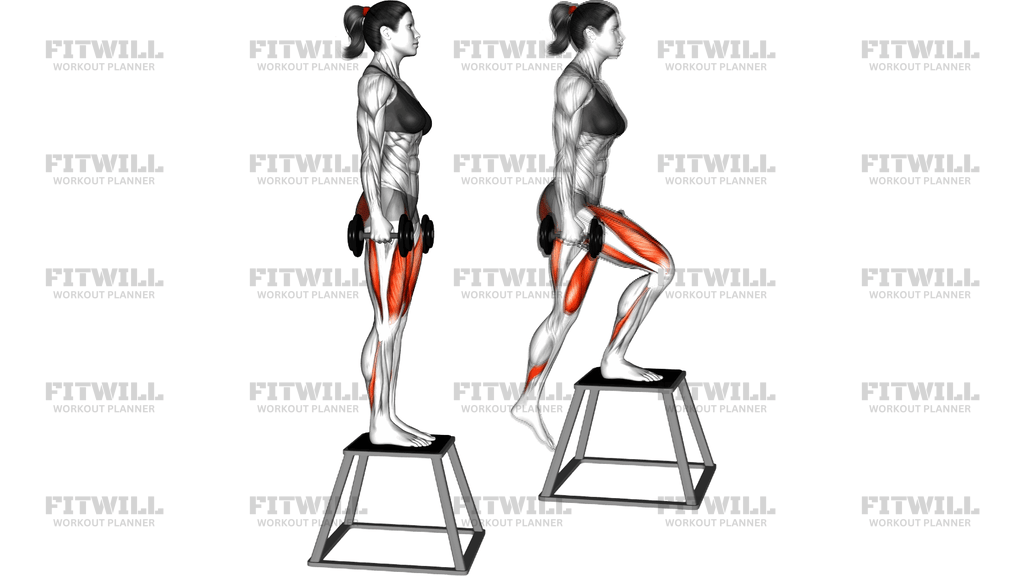
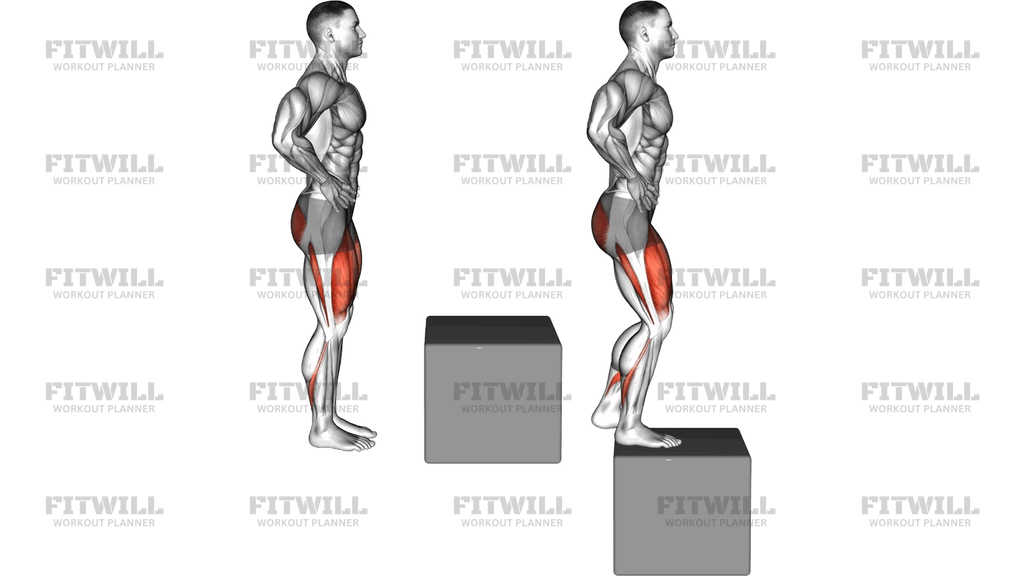
Step Up On Box is one of the simplest and most transferable lower body exercises you can do. You place one foot on a sturdy box or step platform, drive through that lead leg to stand fully upright on top, then lower yourself back down under control. In the bodyweight version shown here, your hands rest on your hips and the box provides all the challenge — no dumbbells or bars needed until you're ready for them.
The work is done almost entirely by the leading leg. The quads extend the knee as you rise, the glutes drive the hip into full extension at the top, and the hamstrings and calves help stabilize and finish the step. Because your trailing leg only comes along for the ride, this is one of the few single-leg exercises where you can't secretly lean on your stronger side. That makes it excellent for spotting and fixing left-to-right imbalances.
This movement suits a very wide range of people. Beginners can use a low box to learn single-leg strength safely, since the step limits how deep the working knee has to bend. Older adults and anyone returning from time off benefit from the balance and hip stability demands without heavy loading. More experienced lifters use Step Up On Box as an accessory after squats or deadlifts, or as a primary single-leg builder when they want volume without spinal loading.
Setup matters more than it looks. Box height determines difficulty: a knee-height box challenges the glutes hard, while a lower box around mid-shin keeps the emphasis on the quads and is far easier to control. The box must be stable and on a non-slip surface — a rocking box is the biggest safety risk in this exercise. Stand facing the box, close enough that your lead foot lands flat on top without you having to hop or shuffle forward.
To execute it well, plant your whole foot on the box, keep your torso tall, and push the floor away through your heel and mid-foot rather than lunging forward onto the top leg. Stand all the way up so your hip and knee are fully extended, then lower yourself slowly by bending the lead knee and letting the trailing foot tap the ground softly. That lowering phase is where most of the benefit lives, so don't dump it.
You'll see Step Up On Box in warm-ups, in rehab and general-strength programs, and in conditioning circuits where repeated steps raise the heart rate quickly. However you use it, the rule is the same: let the working leg do the lifting, keep the movement controlled both ways, and only increase box height or add weight once you can perform every rep without pushing off the back foot or wobbling at the top.
[ Workout Log & Planner ]
Put your next workout in Fitwill
Keep your plan and training log ready when you are.


Instructions
- Stand facing a sturdy box or step platform on a non-slip surface, roughly one step away, with your feet hip-width apart.
- Place your right foot fully on top of the box so it sits flat, with your heel and the ball of your foot both supported.
- Rest your hands on your hips and brace your trunk as if preparing for a light nudge from the front.
- Shift your weight over the lead foot and lean your torso slightly forward from the hips, keeping your back tall rather than rounded.
- Drive through your heel and mid-foot to straighten the lead leg and bring your left foot up onto the box, standing fully upright with hips and knees extended.
- Pause briefly at the top with balanced posture and no lean to either side.
- Lower under control by bending the lead knee and letting your left foot touch the floor softly behind you.
- Exhale as you step up, inhale as you lower back down.
- Complete all reps on the right leg, then switch so your left foot leads.
- Reset your stance between sets and check that the box has not shifted before continuing.
Tips & Tricks
- If you find yourself pushing off the ball of your trailing foot to get up, the box is too high — drop the height until the lead leg can lift you alone.
- Keep your lead knee tracking over your toes; if it collapses inward as you drive up, consciously spread the floor with your foot and slow the rep down.
- Aim to place the whole foot on the box, not just the toes. Toe-only contact makes the calf take over and destabilizes the ankle.
- Avoid slamming the trailing foot down on the descent. A soft tap means you're controlling the lowering phase with the working leg.
- Don't bounce off the bottom to start the next rep. Reset to a dead stop each time so every lift starts from the lead leg, not momentum.
- Keep your hips level at the top of the step. If you lean or drop one hip, you're relying on the trailing leg or losing balance — pause and straighten up.
- Start with a box around mid-shin height and only raise it once you can do all reps smoothly; knee height is a big jump in difficulty, not a small one.
- Hold a wall or rack lightly with one hand if balance is the limiting factor at first, then wean off as your single-leg stability improves.
Frequently Asked Questions
What muscles does Step Up On Box work?
The quadriceps on the leading leg do most of the knee extension, while the glutes drive the hip to full extension at the top. The hamstrings and calves assist and stabilize throughout the step.
How high should the box be for Step Up On Box?
Beginners should start around mid-shin to lower-knee height, where the lead leg can lift them without pushing off the back foot. As strength improves, moving toward knee height shifts more load onto the glutes.
Is Step Up On Box good for beginners?
Yes, it's one of the most approachable single-leg exercises because the box height controls the range of motion. Start low, keep the tempo slow, and progress the height rather than adding weight early on.
Why can't I use my back leg to help during the step up?
Pushing off the trailing foot turns the exercise into a small hop and takes work away from the lead leg. If you need to push off, the box is too high — lower it until the working leg can lift you by itself.
Should I step down or jump down from the box?
Step down. The controlled lowering phase builds strength in the quads and trains the same knee control you use going down stairs or downhill, while jumping down adds impact with no strength benefit.
Can I add weight to Step Up On Box?
Once you can perform all reps smoothly at your chosen height, hold dumbbells at your sides or wear a weighted vest. Keep the box height the same and recheck your balance before increasing either variable.
My knee hurts when stepping up — what should I check first?
Look at whether your lead knee is caving inward, whether only your toes are on the box, and whether the box is too high for your current strength. Lower the height, place the whole foot flat, and slow the tempo before continuing.
How is Step Up On Box different from lunges?
In a lunge both legs share the work, while in a step-up the trailing leg contributes almost nothing, forcing the lead leg to handle the full load. This makes it a sharper tool for correcting side-to-side strength differences.
How many reps and sets should I do?
Two to three sets of 8 to 12 steps per leg works well for general strength. For balance and stability focus, use lower boxes with more controlled reps and slightly higher volumes.
Is Step Up On Box safe if I have balance issues?
It can be, as long as the box is stable and placed against a wall or on a non-slip surface. Keep a light hand on a wall or rack for support, use a low step, and avoid rushing the reps.