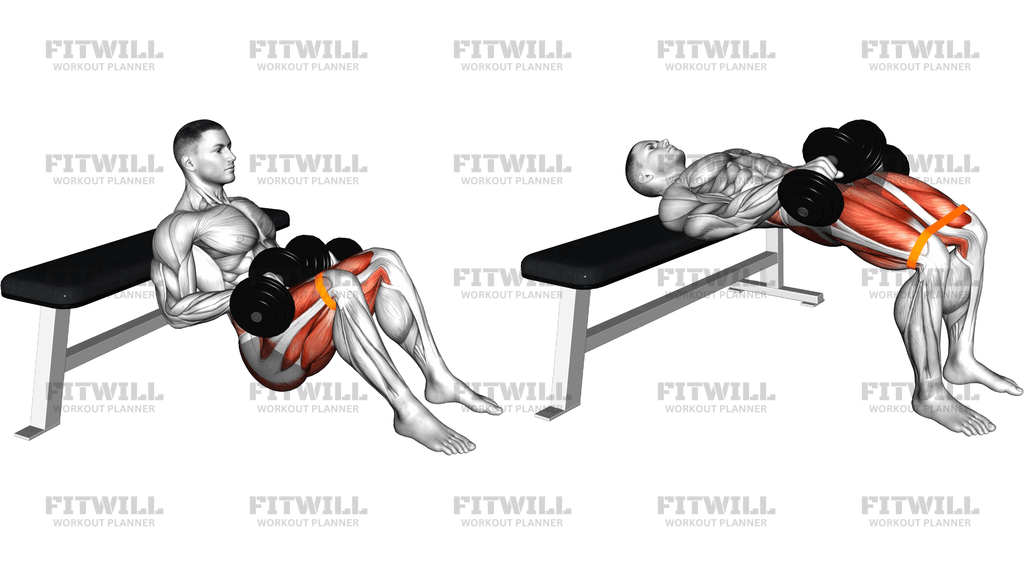
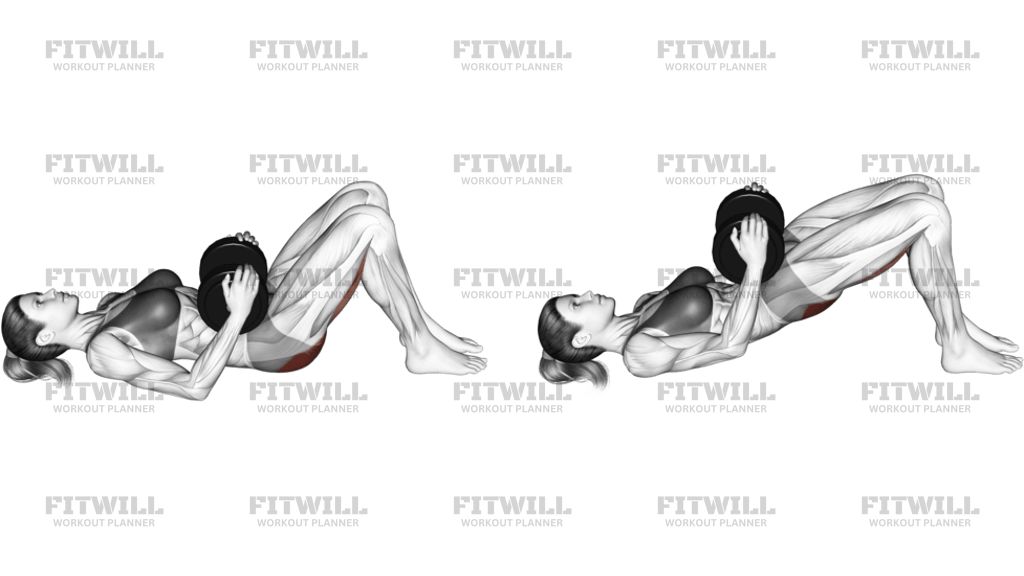
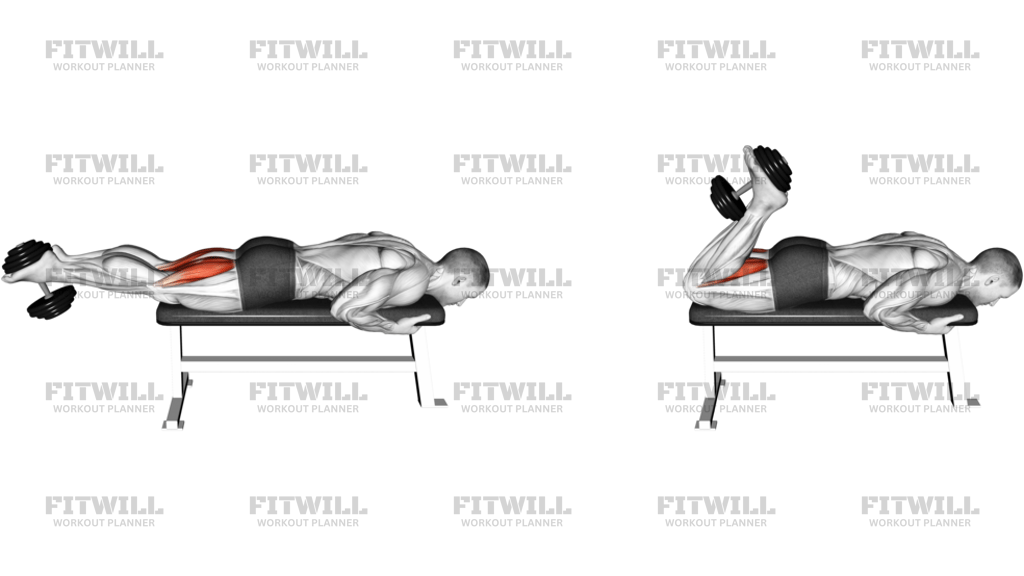
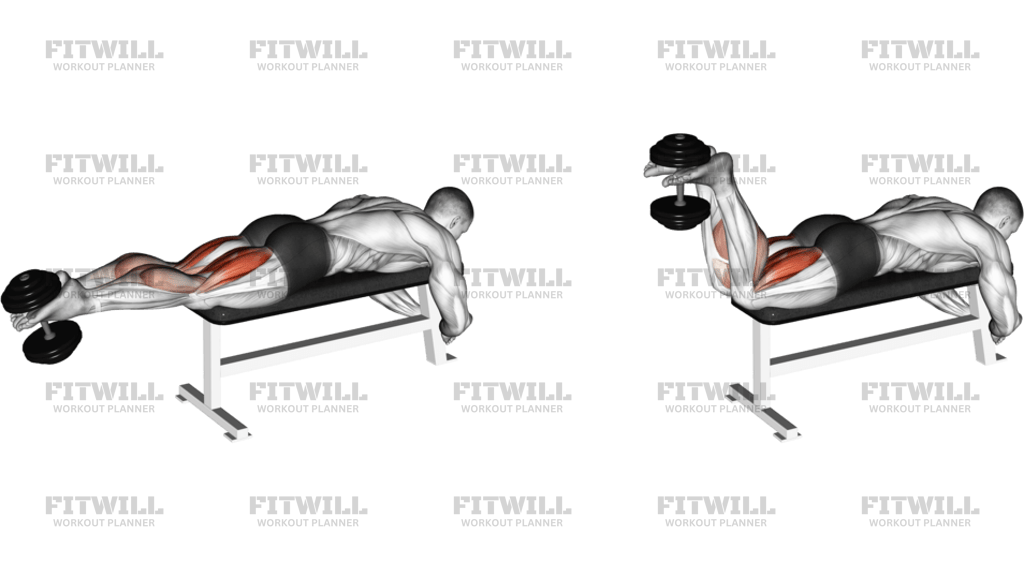
Dumbbell Single Leg Hyperextension (Version 2)
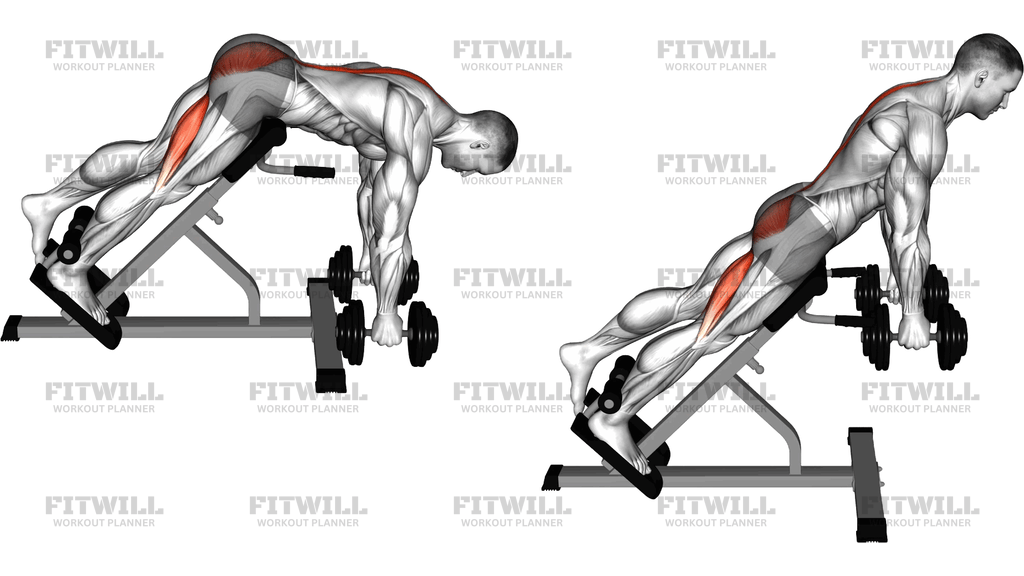
The Dumbbell Single Leg Hyperextension (Version 2) is a unilateral back extension performed on a hyperextension bench, sometimes called a Roman chair, with a dumbbell in each hand hanging from your arms. Unlike the standard two-legged version, you anchor one leg under the ankle pads and let the other leg provide no help, so the glute and hamstring of the working side have to drive the entire lift on their own. The torso hinges down from the hip and rises back up until the body forms one straight line from head to heel.
This movement is especially useful for lifters who have noticed a strength or size difference between their left and right glutes or hamstrings, and for anyone whose lower back tends to take over during regular back extensions. Because only one leg is working, the load on the spine stays modest for the same training effect at the hip, and the side-to-side imbalance gets corrected directly. It also builds the kind of single-side hip extension that carries over to running, sprinting, and unilateral lower body lifts.
The setup matters more here than in most hinge variations. Your hip pad position determines whether the movement happens at the hip joint or degenerates into a low back arch. Place the upper pad just below the hip crease so the pelvis can tilt freely, secure the working ankle firmly under the roller pads, and let the dumbbells hang straight down from relaxed arms. If your torso rounds or your hips slide off the pad mid-set, the working leg loses leverage and the erector spinae start compensating.
Execution is a controlled hip hinge with a strong but not exaggerated finish. Lower the torso until you feel a stretch across the hamstring and glute of the working leg, keep the non-working leg either resting on the bench or lifted alongside, then squeeze that glute to raise your trunk until your ears, shoulders, hips, and heel of the anchored leg line up. Resist the urge to hyperextend and look at the ceiling; stopping at a straight body line keeps tension on the glute and off the lumbar spine.
Use this exercise as an accessory after your main hinge lifts, typically for two to four sets of eight to twelve reps per side with a light pair of dumbbells. Start lighter than you think you need, because removing one leg roughly doubles the demand on the working hip extensors. If balance or grip becomes the limiting factor before you feel your glute working, hold a single dumbbell with both hands at your chest instead.
[ Workout Log & Planner ]
Put your next workout in Fitwill
Keep your plan and training log ready when you are.


Instructions
- Set the hip pad of the hyperextension bench just below your hip crease and adjust the ankle pads so one leg can be anchored securely with a slight bend in the knee.
- Pick up a light dumbbell in each hand, mount the bench face down, and hook your working leg under the roller pads with the foot against the platform.
- Let the dumbbells hang straight down from your arms and cross your arms or let them hang freely; keep your neck in line with your spine and your gaze down.
- Brace your abdominal muscles and squeeze the glute of the working leg before you start descending, so the pelvis stays level.
- Hinge at the hip and lower your torso under control until you feel a stretch in the hamstring and glute of the anchored leg, keeping the dumbbells close to your body.
- Pause briefly at the bottom, then drive the working heel back into the pad and squeeze the glute to raise your trunk.
- Finish with your body in one straight line from head to heel; do not arch past neutral or swing the dumbbells upward.
- Lower slowly over two to three seconds to the stretched position and complete all reps on one side before switching legs.
- Exhale as you rise, inhale at the bottom, and keep breathing steadily instead of holding your breath through the rep.
- To finish the set, set the dumbbells on the floor first, then unhook your leg and step off the bench with a hand on the frame for support.
Tips & Tricks
- If your lower back fatigues before your glute, you are probably arching at the top; stop the rep as soon as your torso aligns with your legs instead of continuing upward.
- A twisting torso is the most common fault on this setup. Press both hands straight down toward the floor and keep the dumbbells parallel to each other so the shoulders stay square.
- Do not let the hip of the non-working side sag or rotate up; if the pelvis tilts, that leg is sneaking in to help, so lighten the dumbbells and reset.
- Position matters: if the pad sits across your thigh instead of your hip, your range gets cut short, and if it sits on your waist, your lower back does the hinging.
- Grip failure often ends single-leg sets early because one leg means slower, grinding reps; use a thumbless crush grip on the dumbbells or switch to one dumbbell held at the chest.
- Move slower than you would on a two-legged hyperextension. Momentum from a fast descent is what usually causes the torso to twist on the way back up.
- Start with body weight for a set on each side. The single-leg version is far harder than the standard exercise, and learning the hip path first makes the dumbbell version productive.
- Keep a small bend in the anchored knee rather than locking it out; a hard lock shifts tension toward the knee joint and away from the hamstring.
- Point your working foot down into the platform or pull the heel back deliberately during the lift to increase glute engagement without adding weight.
Frequently Asked Questions
Which muscles does the Dumbbell Single Leg Hyperextension (Version 2) work?
The gluteus maximus and hamstrings of the working leg do most of the lifting, with the erector spinae of the lower back stabilizing the trunk isometrically. Because one leg is anchored, the working glute handles roughly the load two glutes would share in the standard version.
How is this different from a regular dumbbell hyperextension?
Only one leg is secured under the ankle pads, so the hip extensors on that side work alone and any left-right strength gap becomes obvious. The trunk also has to resist rotation, which adds a stability demand the two-legged version does not have.
Should the dumbbells hang from my arms or be held at my chest?
The standard setup for this version is a dumbbell in each hand with the arms hanging straight down and close to the body. If your grip or shoulder positioning breaks down before your glute is challenged, holding a single dumbbell against your chest is a reasonable alternative.
What should I do with the leg that is not anchored?
Rest it on the bench beside the pad or hold it lightly lifted alongside the working leg. The key is that it never pushes off the platform or twists the hips, since that turns the exercise back into a two-legged extension.
How far down should I lower my torso?
Lower until you feel a clear stretch in the hamstring and glute of the working leg, which for most people is roughly a 90-degree hip angle. Going deeper usually comes from rounding the lower back rather than extra hip flexion.
Is it safe to arch my back at the top of the movement?
Rising slightly past a straight body line is common in back extensions, but on this single-leg setup the pelvis is less stable, so finishing at neutral is the safer choice. Squeeze the glute to finish the rep rather than extending the lumbar spine.
What weight should a beginner use?
Begin with no dumbbells at all and practice five to eight controlled reps per side to learn the hip path and pelvic stability. Once the movement feels solid, start with very light dumbbells and progress in small jumps.
Can I substitute another exercise if I do not have a hyperextension bench?
A single-leg dumbbell Romanian deadlift trains a similar unilateral hip extension pattern, and a glute bridge or hip thrust with one leg can substitute for the glute emphasis. Neither fully replaces the stabilized trunk position of the bench version, but both are practical alternatives.
Why does my lower back feel this more than my glutes?
Usually the pad is too high on your torso, your pelvis is not pressing into the pad, or you are initiating the lift by arching the spine instead of driving the heel back. Lower the pad to hip level, brace before descending, and think about pushing the working heel into the platform as you rise.
How many sets and reps work best for this exercise?
Two to four sets of eight to twelve reps per side works well as an accessory movement after your main lower body lifts. Because one leg carries the whole demand, keep the dumbbells light and prioritize a slow, controlled tempo over added weight.