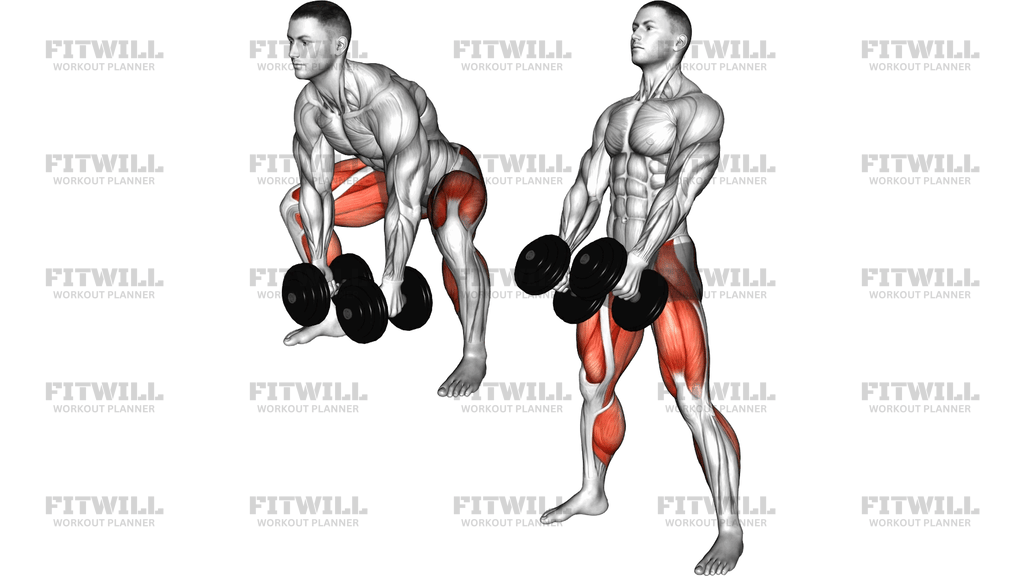
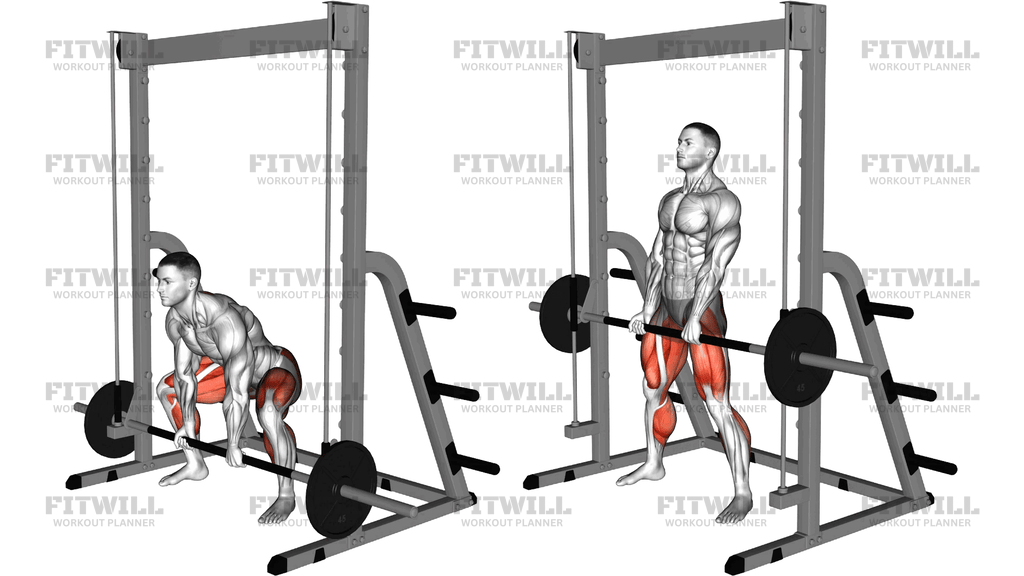
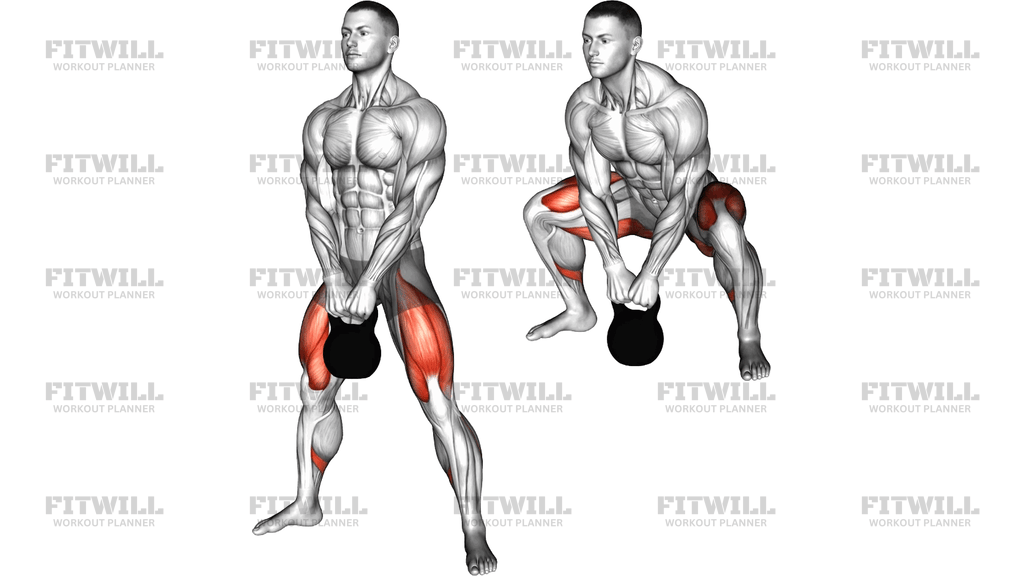
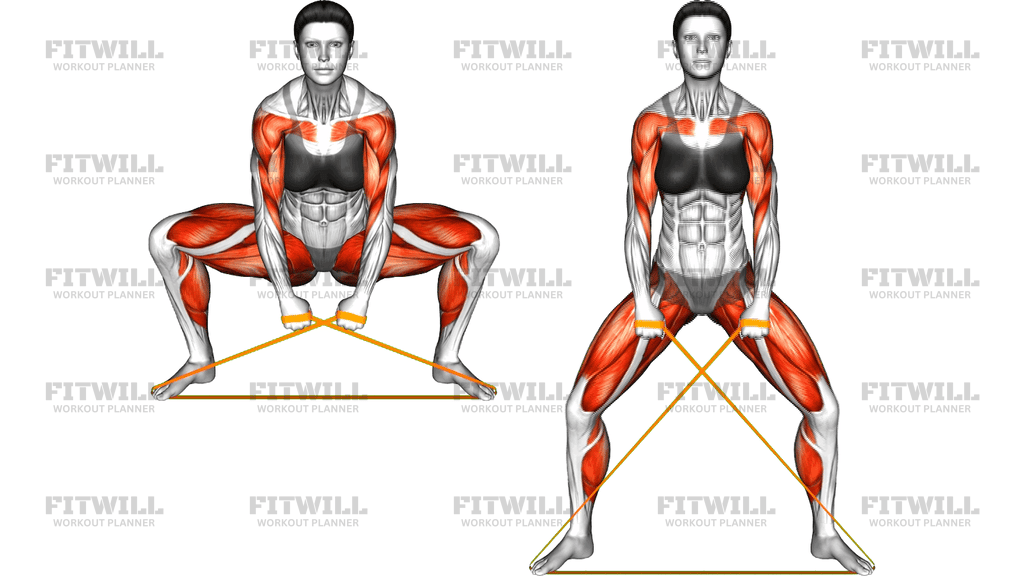
Sumo Deadlift High Pull
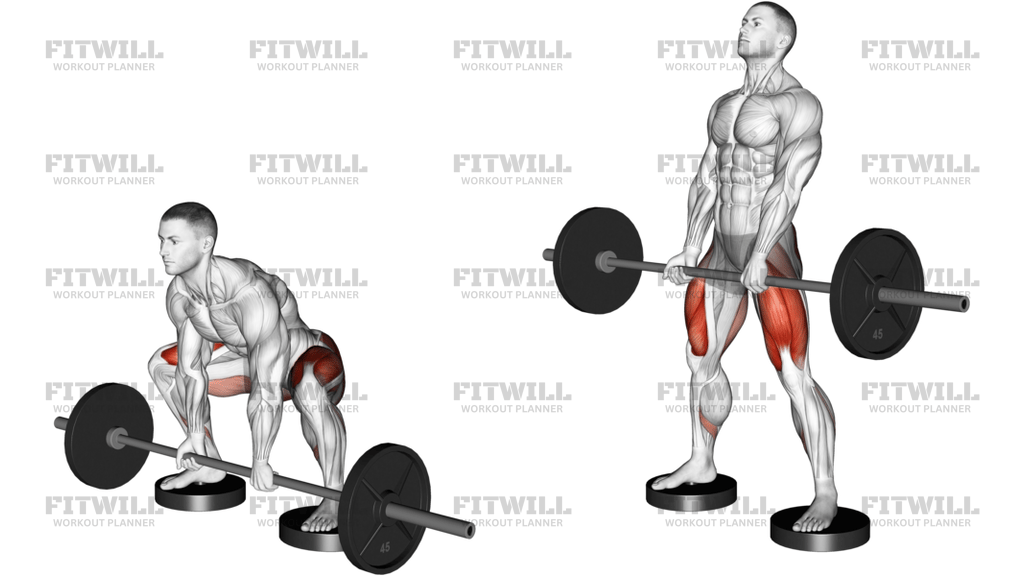
The Sumo Deadlift High Pull is a barbell movement that blends a wide-stance deadlift with an explosive upward pull, finishing with the bar around chest or upper-ab height as the hips and knees extend. It comes from weightlifting and CrossFit programming, where it is prized as a full-body power builder that teaches the hips to drive hard and the arms to finish the pull in one coordinated sequence.
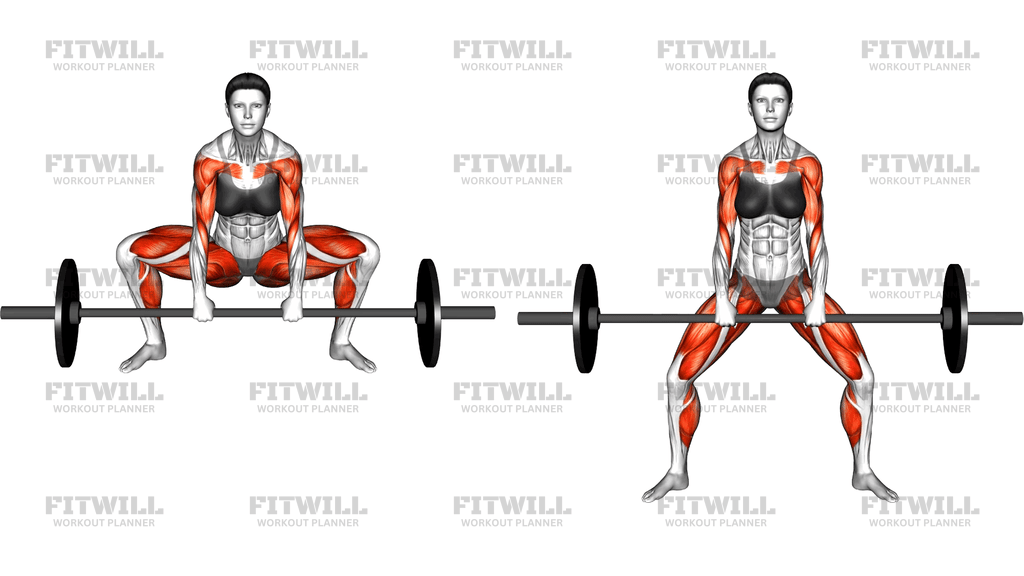
Because it links the lower and upper body in a single explosive action, the exercise trains a lot at once. The quads and glutes extend the hips and knees, the inner thighs work hard in the wide stance, the lower back keeps the spine braced and neutral, and the traps, shoulders, and forearms finish the pull as the bar travels up. It is a pull, a hinge, and a squat pattern compressed into one rep.
The setup matters more than people expect. The wide sumo stance with toes turned slightly out shortens the range the bar has to travel and lets you keep your torso more upright than a conventional pull. Your hands grip inside your knees, which means the knees must track out over the toes or the bar path will be blocked. If the stance is sloppy or the grip is wrong, every rep afterward gets harder and less safe.
To execute it well, drive the floor away with your legs first, keep the bar close to your body, and only after the hips reach full extension do the elbows travel up and out, pulling the bar to around sternum height. The most common fault is yanking with the arms early, which turns an explosive hip movement into a slow upright row and robs the legs of their contribution.
The Sumo Deadlift High Pull suits lifters who already have a comfortable deadlift or squat base and want a metabolic, high-rep power option, as well as athletes training hip drive for sport. It is often done for timed sets or moderate reps rather than heavy singles. Start light, master the sequence of hips then arms, and only add load once the bar path stays close and consistent.
[ Workout Log & Planner ]
Put your next workout in Fitwill
Keep your plan and training log ready when you are.


Instructions
- Set a barbell on the floor and stand over it with a wide stance, roughly one and a half to two shoulder widths apart, toes turned out about 30 to 45 degrees.
- Grip the bar with both hands inside your knees, about a hand-width apart, and lower into a deep squat with your shins close to the bar and your chest up.
- Brace your core, pull your shoulder blades back, and keep your spine neutral with your weight spread across your whole foot.
- Inhale and drive your heels into the floor, pushing the hips forward aggressively while keeping the bar tight against your legs.
- As the hips reach full extension, pull the elbows up and out to the sides, letting the bar rise to around sternum or upper-ab height.
- Keep the wrists neutral and slightly above the elbows at the top, with the bar as close to the body as possible throughout the pull.
- Lower the bar under control by extending the arms first, then hinging the hips back and bending the knees to return the bar to the floor.
- Exhale at the top of the pull, and take a fresh breath and re-brace before each rep rather than rushing the reset.
- Reset your grip, stance, and back position before the next repetition, especially as fatigue sets in.
Tips & Tricks
- The most common mistake is bending the arms before the hips are extended. Think of the arms as hooks that only pull once you feel your hips finish driving.
- If your knees collapse inward as you pull, narrow your stance slightly or spend time on adductor mobility, since the wide position demands active inner-thigh control.
- Keep the bar sliding up your body. If it drifts forward, your lower back takes extra strain and the pull becomes weaker.
- Do not aim the bar for your chin. A pull to sternum height with full hip extension beats a higher pull with a rounded back or shrugging shoulders.
- Use a hook grip or lifting straps on heavier sets, because the inside-knee grip position is narrower and grip often fails before the legs do.
- Warm up the hip and ankle positions with a few empty-bar deadlifts before adding weight, since a deep sumo start exposes tight hips quickly.
- If your lower back rounds off the floor, reduce the load or elevate the bar on blocks until you can hold a neutral spine from the first inch of the pull.
- For high-rep conditioning sets, drop the bar from the top rather than grinding slow negatives, and only do this with rubber plates and a controlled drop.
- Film yourself from the side occasionally. The bar path should be a straight vertical line close to the body, and a video makes drift easy to spot.
Frequently Asked Questions
Which muscles does the Sumo Deadlift High Pull work most?
The quads and glutes do the main driving work, the inner thighs stabilize the wide stance, and the traps, shoulders, and forearms finish the pull. The lower back works isometrically to keep the spine neutral throughout.
How is the Sumo Deadlift High Pull different from a regular sumo deadlift?
A sumo deadlift ends when you stand tall with the bar at your hips, while the Sumo Deadlift High Pull continues with an explosive upward pull to around sternum height. That second phase adds significant traps, shoulder, and arm involvement.
Is the Sumo Deadlift High Pull suitable for beginners?
Beginners can learn it, but it is best attempted after a basic deadlift and squat feel natural. Start with an empty bar or a light stick and practice the sequence of hips first, arms second before adding any meaningful load.
How high should I pull the bar at the top?
Around sternum or upper-abdomen height is enough for most lifters, with elbows up and out and the hips fully extended. Forcing the bar higher usually means the arms are doing work the hips should have finished.
Why do my arms fatigue before my legs during Sumo Deadlift High Pulls?
That usually means you are pulling with the arms too early instead of driving the floor away first. Cue yourself to finish the hip extension, and let the elbows whip up only after the hips are fully open.
What can I substitute if the wide stance bothers my hips?
A conventional deadlift high pull with a narrower stance is the closest substitute, or you can use kettlebell swings to train the same hip-drive pattern. Both keep the explosive hip extension without the deep sumo position.
Should I use a hook grip or straps for this exercise?
Either works. The grip is narrower than a snatch grip and inside the knees, so heavier sets often outlast your grip, and a hook grip or straps let the pulling muscles stay the limiting factor.
How many reps should I do of the Sumo Deadlift High Pull?
Sets of 5 to 10 reps work well for strength and technique, while higher-rep or timed sets of 15 to 21 are common in conditioning workouts. Keep the load moderate in long sets so the bar path does not break down.
Is it safe for my lower back?
With a neutral spine, a braced torso, and a bar that stays close to the body, the movement is a normal strength exercise for a healthy back. The risk rises when fatigue rounds the back or the bar swings away, so cut the set when form slips.