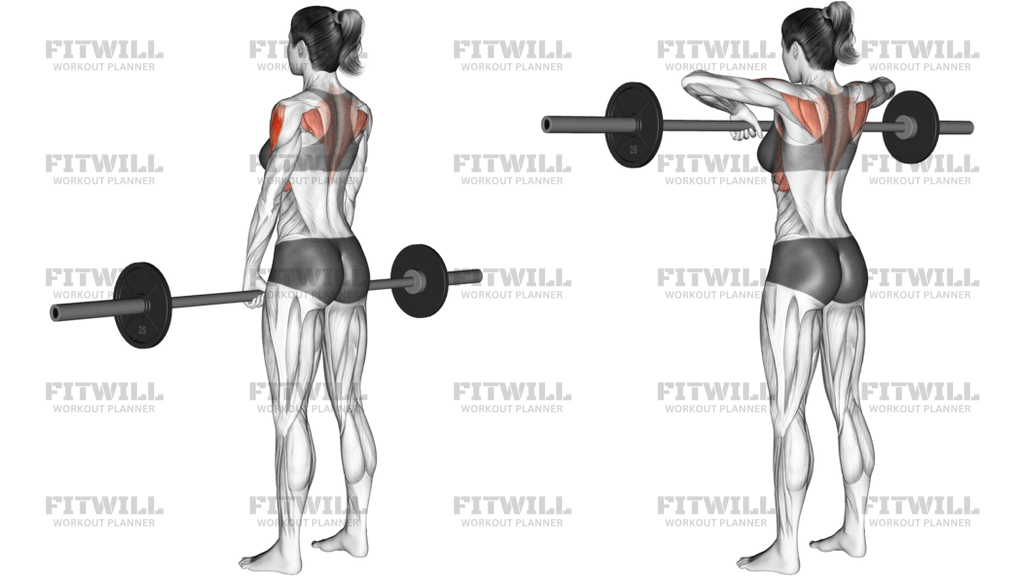
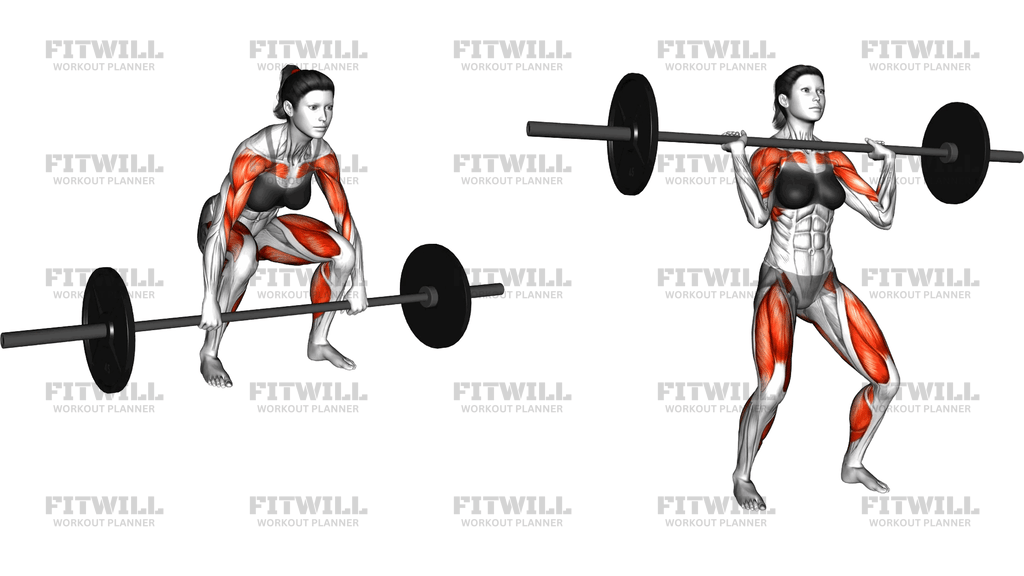
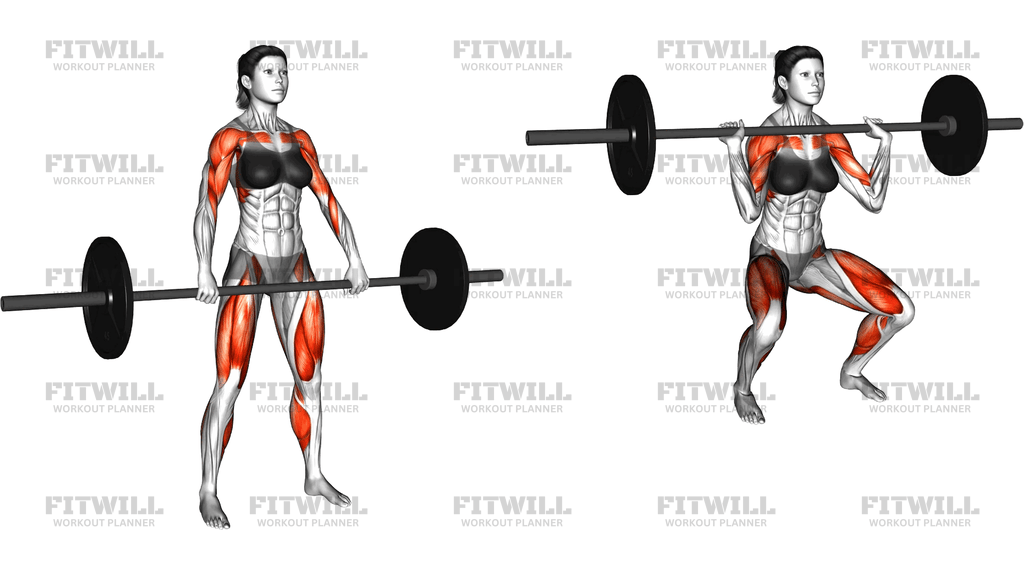
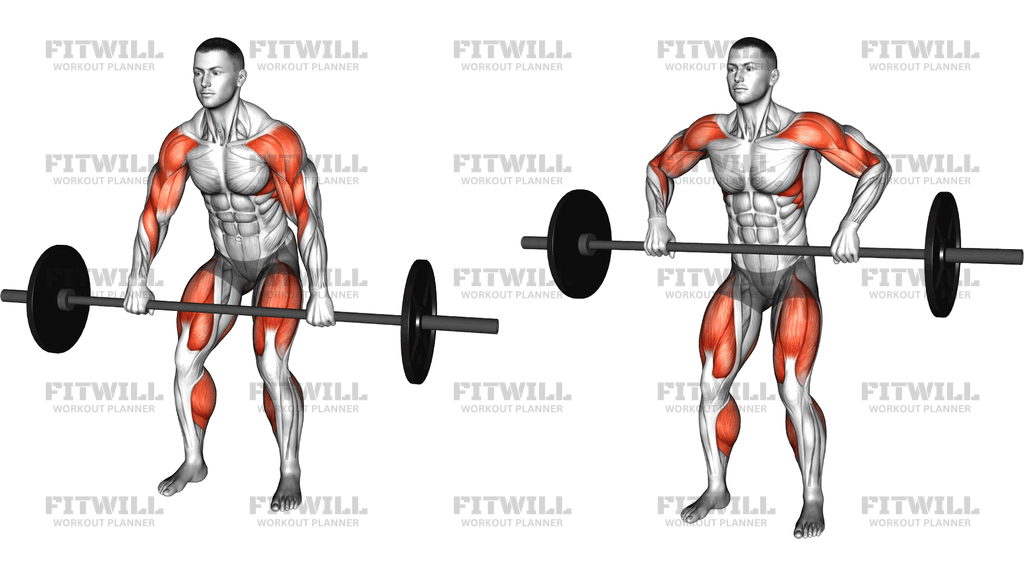
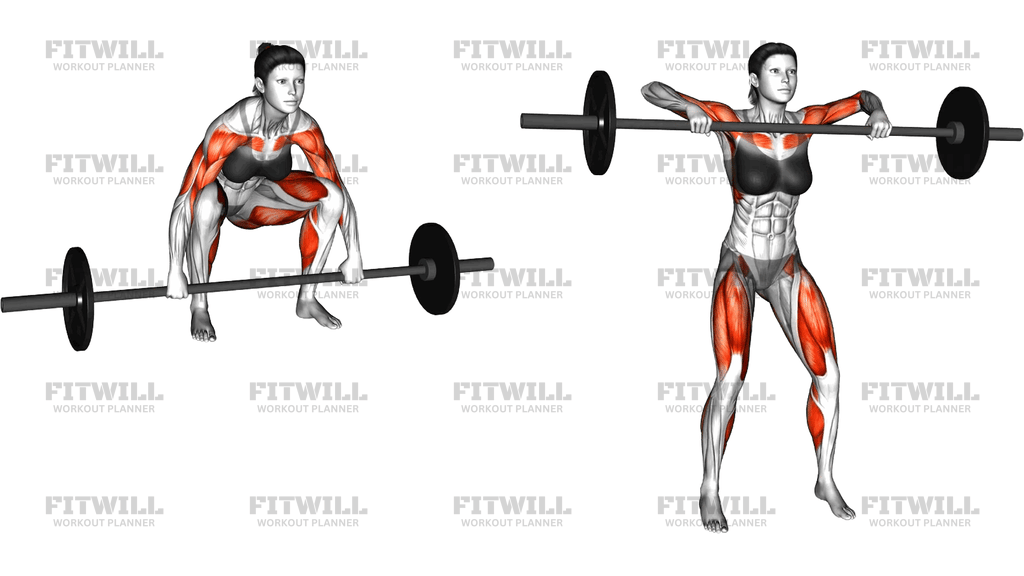
Snatch High Pull
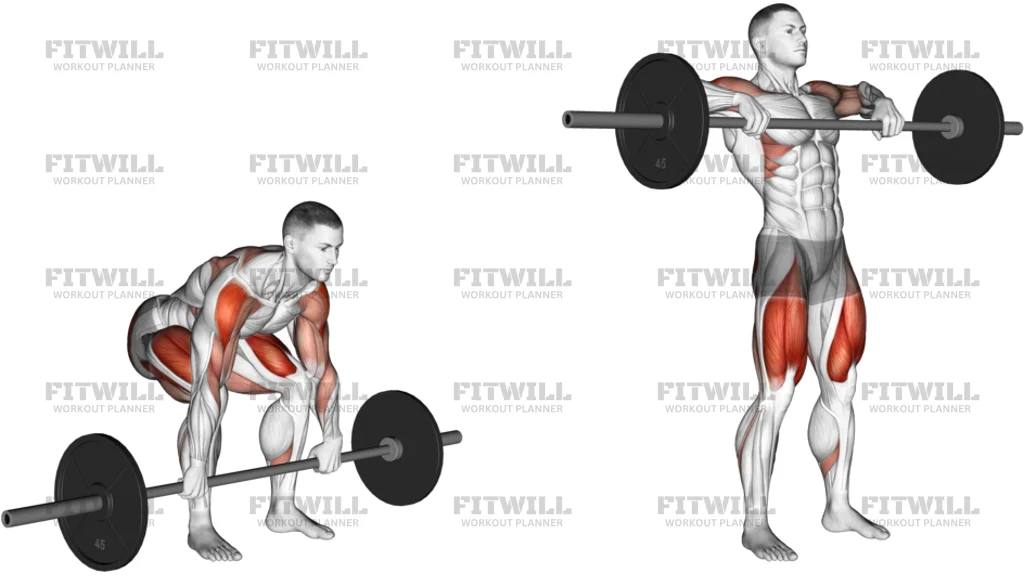
The Snatch High Pull is an explosive weightlifting pull that takes the bar from the floor to around upper-chest height using a wide snatch grip. Unlike a clean pull, the wider hand position and taller pull mean the bar travels further up the body, and the elbows finish high and out to the sides rather than tucked forward. It is essentially the first two-thirds of a snatch without the overhead catch, which makes it one of the best teaching and strengthening tools for Olympic lifting.
Because the movement runs from a deep start position through a violent hip and knee extension, it trains the whole posterior chain under speed. The quads and glutes drive the floor away, the hamstrings and lower back hold your position over the bar, and then the traps and upper back finish the pull as the hips fully extend. The wide grip also places a real demand on the upper back and shoulder girdle to keep the bar close and controlled.
This exercise is most useful for weightlifters and CrossFit athletes who want a stronger, faster snatch pull without accumulating the overhead stress of full snatches every session. It is equally valuable for general strength training, since few barbell exercises combine triple extension with an upper-back pull the way this one does. Sprinters, jumpers, and field athletes often use it for exactly that reason.
Setup matters more here than in most pulls. A snatch-width grip means the bar sits lower on the thighs relative to your hands, your torso starts in a deeper hip position, and any rounding in the mid-back gets magnified as the bar accelerates. Take the time to set your shoulders slightly ahead of the bar, keep the lats engaged, and pull the slack out of the bar before you initiate the movement.
To execute it well, think of the pull in phases: push the floor away with the legs, keep the bar brushing close against the thighs, then finish tall with an aggressive hip extension and elbows punching up and out. The bar should rise in a straight, vertical path close to the body, not swing forward. A common error is pulling with the arms too early, which shortens the pull and robs you of the leg drive that makes this lift valuable.
Start light and treat the Snatch High Pull as a technique and power exercise, not a max-effort grind. Because the finish position puts the shoulder in internal rotation with a high elbow, anyone with cranky shoulders should work within a comfortable range and consider height pulls or clean-grip pulls as alternatives.
Fitwill
Log Workouts, Track Progress & Build Strength.
Achieve more with Fitwill: explore over 9600 exercises with images and videos, access built-in and custom workouts, perfect for both gym and home sessions, and see real results.
Start your journey. Download today!




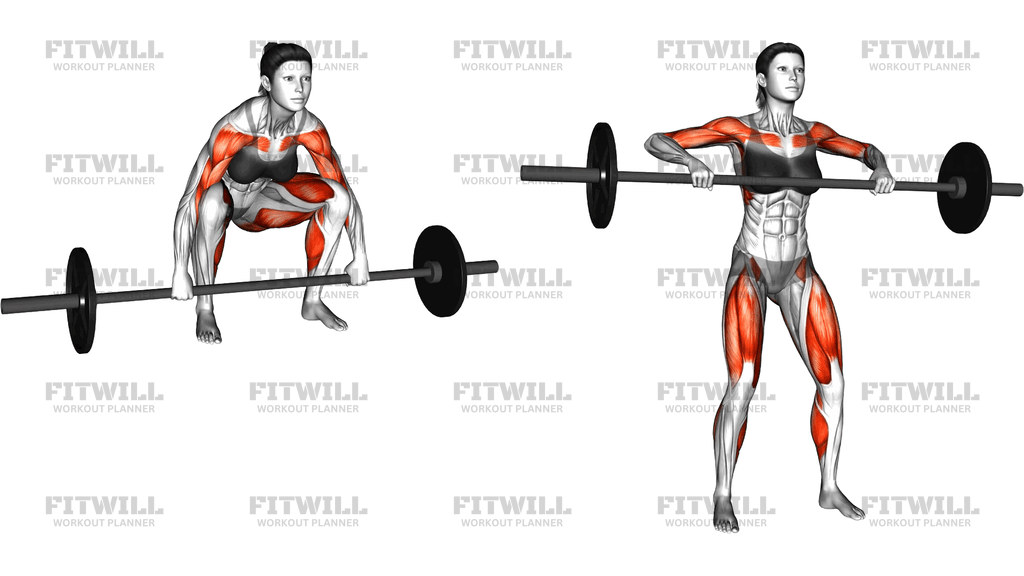
Instructions
- Set a barbell on the floor over the middle of your feet with your feet about hip-width apart and toes turned slightly out.
- Take a snatch-width grip, roughly one and a half shoulder-widths or wider per side, and squat down until your shoulders are over the bar with a flat back.
- Pull the slack out of the bar, brace your core, and set your chest up tall with your weight balanced over the midfoot.
- Inhale and tighten before the pull begins, keeping the bar pressed close against your shins.
- Drive through the floor to extend your knees and hips, keeping the bar in contact with your legs as it travels up the thighs.
- As your hips reach full extension, continue the pull hard with the traps and let the elbows fly up and out to the sides, pulling the bar to upper-chest height.
- Finish tall on your feet with the bar high on the chest and elbows above the forearms, not bent forward.
- Lower the bar under control back down the thighs to the floor, keeping tension in the back rather than letting it drop.
- Exhale at the top or between reps, then reset your brace and start position before the next repetition.
- Complete the set, then step away from the bar and rest before the next set so every rep stays explosive.
Tips & Tricks
- If your elbows bend before the bar reaches mid-thigh, you are pulling with your arms too soon; cue yourself to keep the arms long until the hips finish extending.
- A bar that drifts forward off the thighs usually means the hips shot up first. Sit into the start a touch longer and push the floor away instead of standing up early.
- Keep the bar sliding up the body rather than letting it swing away; with a snatch grip the wide hands make any loop in the bar path much more obvious.
- Do not let the lower back round in the start position. If you cannot hold a flat back with the bar on the floor, pull from blocks or a hang position until your position improves.
- The finish of the Snatch High Pull is a shrug with high, outside-traveling elbows, not a curl. If the bar stalls at your waist, your leg drive is cutting off early.
- Use a hook grip or straps for heavier sets; a snatch-width grip fatigues the forearms quickly and a slipping grip ruins the pull.
- Aim for every rep to be fast and tall. If the last reps slow to a grind, end the set, because the exercise trains speed as much as strength.
- Drop the weight if your heels rise or you end up on your toes before the hips finish extending; balance over the midfoot keeps the bar path vertical.
- Warm up the shoulders and upper back first, since the wide grip and high-elbow finish demand more mobility than a clean pull.
Frequently Asked Questions
What muscles does the Snatch High Pull work?
The traps and upper back do the finishing work, while the glutes, hamstrings, quads, and lower back produce and support the explosive leg drive. The forearms and shoulders also work hard to control the bar with the wide snatch grip.
How wide should my grip be for the Snatch High Pull?
Use a snatch-width grip, typically about one and a half shoulder-widths per side, so the bar hangs near the crease of your hip when standing. If you already snatch, simply match your snatch grip.
Is the Snatch High Pull suitable for beginners?
Yes, provided you start with a light bar or empty barbell and focus on the sequence of leg drive first, then hips, then elbows. Many coaches use it as a teaching tool before introducing the full snatch.
How high should the bar travel at the top of the pull?
The bar should reach roughly upper-chest height with your elbows high and out to the sides, driven by the hips and traps. It should never require bending the arms to drag the bar up to your chin.
Why do my elbows point down instead of up during the Snatch High Pull?
Dropping elbows usually means the arms are doing the pulling instead of the legs and traps. Reduce the load and practice extending the hips fully before letting the elbows fly up and outward.
Can I use straps on the Snatch High Pull?
Yes, straps are common for heavier sets because a snatch-width grip fatigues the forearms fast. Many lifters use a hook grip for moderate loads and straps for heavier pulls.
What can I substitute if the wide grip bothers my shoulders?
Clean-grip high pulls, hang high pulls, or pulls from blocks to knee or mid-thigh height all train the same pattern with less shoulder demand. Choose the variation that lets you keep a vertical bar path and comfortable elbows.
How is the Snatch High Pull different from a clean pull?
The snatch grip is much wider and the pull travels higher up the body, finishing with elbows out to the sides rather than tucked forward. This places more demand on the traps, upper back, and shoulder mobility.
Where should I put this exercise in my training?
Place it early in a session when you are fresh, typically for 3 to 5 sets of 3 to 5 explosive reps. It works well as a power primer before squats or pulls, or as main pulling work on Olympic lifting days.
Is it safe to do the Snatch High Pull with lower back issues?
The bent-over start loads the lower back significantly, so if you have a history of back problems, build up gradually and keep the load light. Pulling from blocks or a hang reduces the range and makes the start position easier to hold.