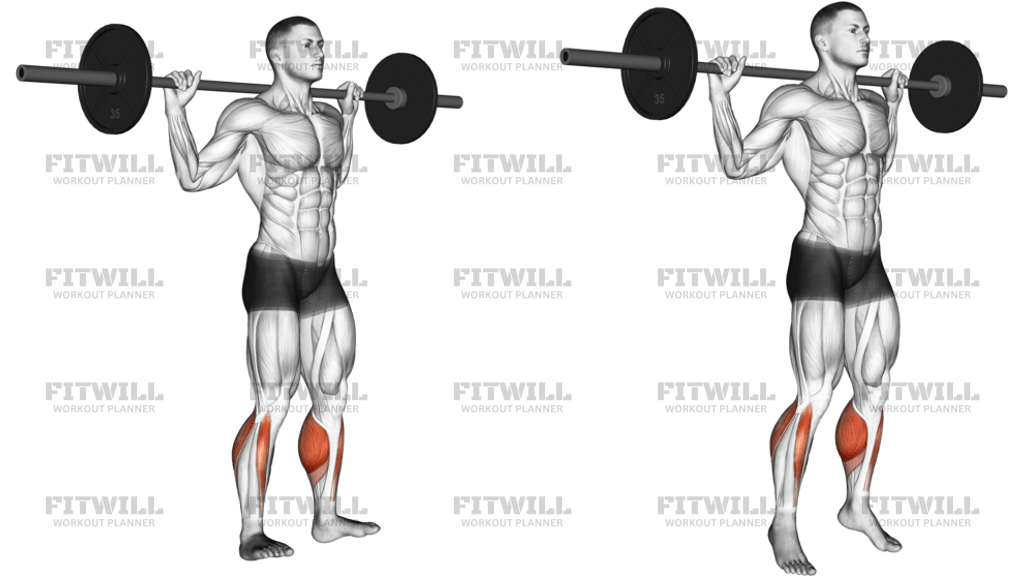
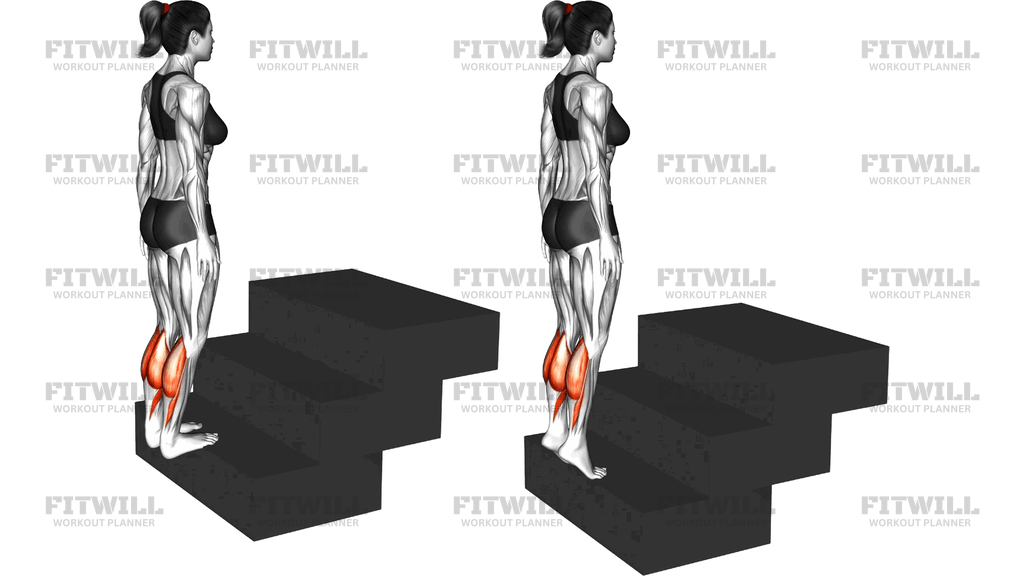
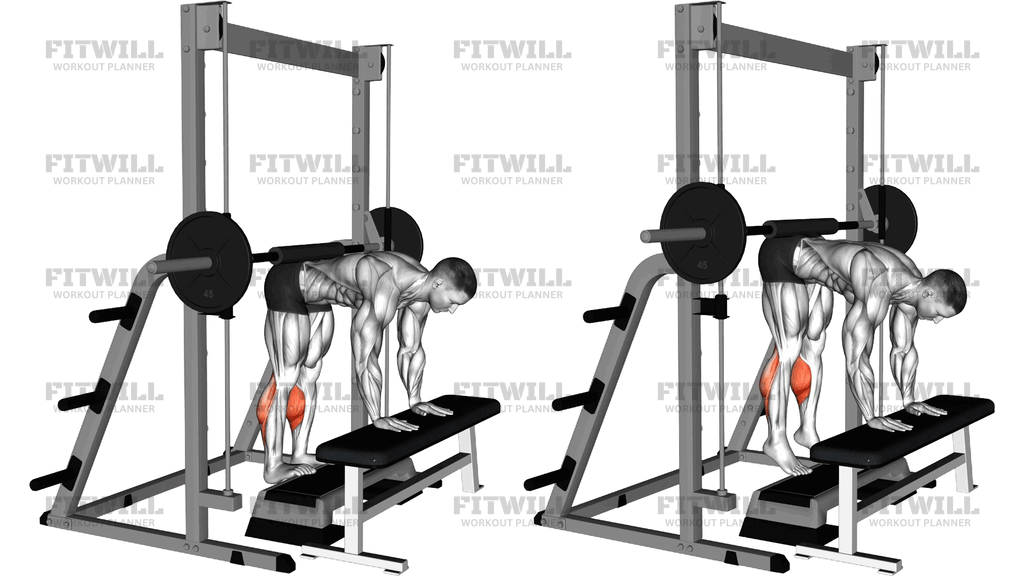
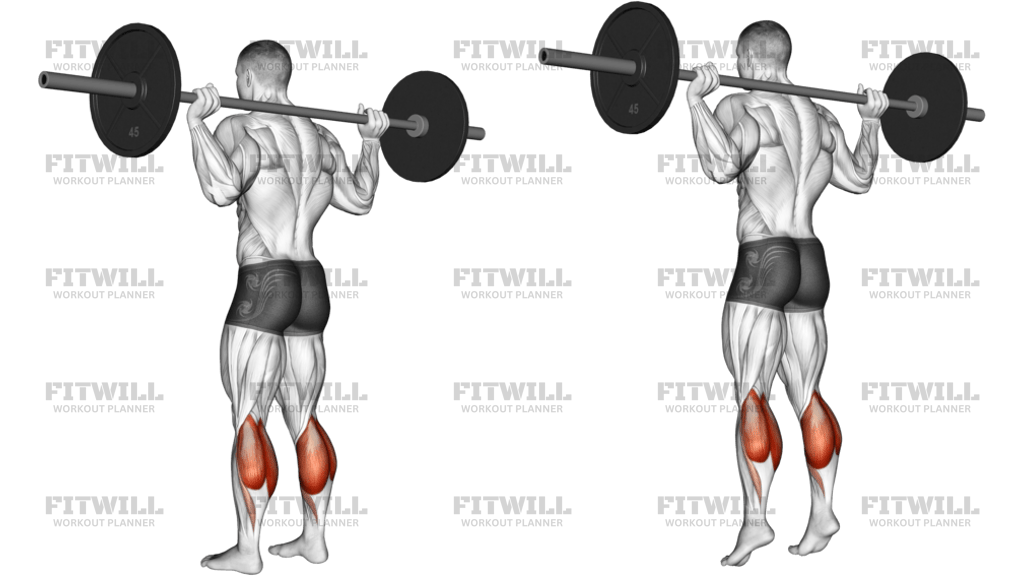
Barbell Standing Single Leg Calf Raise
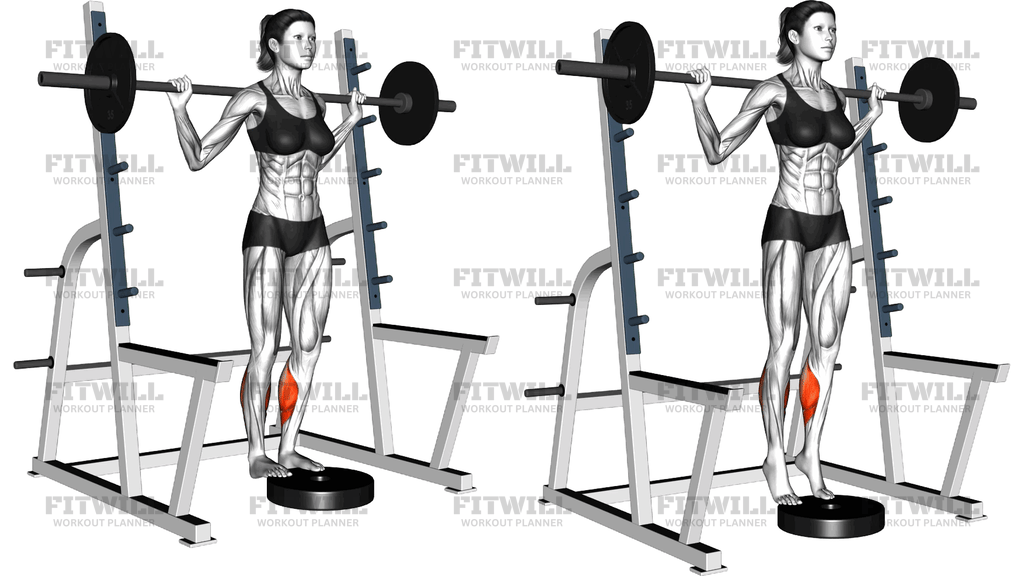
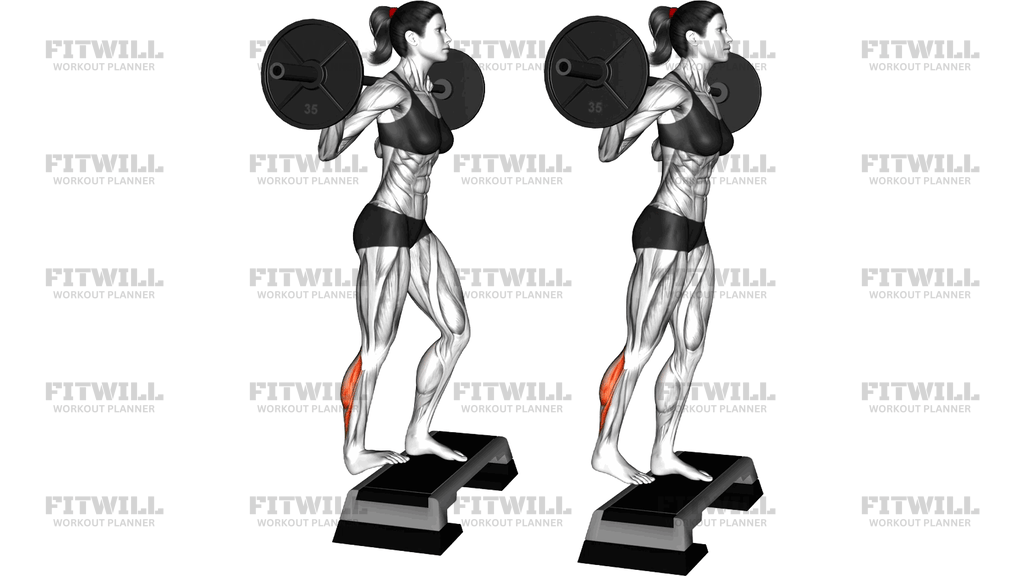
The Barbell Standing Single Leg Calf Raise is a single-leg calf exercise performed with a barbell resting across your upper back, exactly as it would sit for a back squat. You stand on the edge of a step platform with only the ball of one foot on the surface, let the heel sink below the level of the step for a full stretch, then press up onto your toes as high as the ankle will allow. Because one leg does all the work, the load requirement on the bar is far lower than a two-leg version, yet the tension on the calf is much higher.
This movement primarily trains the gastrocnemius, the large visible muscle at the top of the calf, with the soleus and smaller ankle-stabilizing muscles assisting throughout. The single-leg format also exposes and gradually corrects left-to-right strength differences, which is one of the main reasons coaches choose it over bilateral raises. Balancing on one foot under load additionally challenges the ankle stabilizers and the small muscles of the foot in a way that machine-based calf work does not.
The setup matters more here than in most calf exercises. The step platform creates the range of motion — without a surface to stand on, your heel cannot drop below your toes and you only get the top half of the rep. The barbell placement on your upper traps keeps your hands free and your torso upright, so the spine stays neutral and the load travels straight through the working ankle. The free leg is held slightly behind the body, out of the way but ready to catch you if balance shifts.
To execute it well, keep the working knee mostly straight but never locked, and think about driving the big toe and ball of the foot into the step as you rise. Move through the full range deliberately: a slow stretch at the bottom, a strong press to the top, and a brief pause before lowering. Rushing the eccentric is the most common error and the one that costs you the most results, since the stretch portion is where much of the muscle-building stimulus lives.
This exercise suits lifters who have outgrown bodyweight calf raises, athletes addressing a weaker or smaller calf on one side, and anyone who wants serious calf loading without access to a calf machine. Because balance is a limiting factor early on, start lighter than you think you need, and do not hesitate to work near a rack or squat stand you can touch for support until the single-leg position feels secure.
[ Workout Log & Planner ]
Put your next workout in Fitwill
Keep your plan and training log ready when you are.


Instructions
- Set a barbell in a squat rack at roughly upper-chest height, load it appropriately, and step under it so it rests across your upper traps, not your neck.
- Grip the bar wider than shoulder width, lift it out of the rack, and step back onto a step platform with feet hip-width apart.
- Shift your weight onto one foot so only the ball of that foot is on the step and the heel hangs off the edge; place the other foot behind your body with it relaxed and slightly raised.
- Brace your core, keep your chest tall and gaze forward, and make sure your hips stay level rather than tilting toward the working side.
- Lower the heel of your working leg slowly below the level of the step until you feel a firm stretch in the calf.
- Press through the ball of your foot and drive up as high as possible onto your toes, keeping the knee nearly straight.
- Pause briefly at the top and squeeze the calf before beginning the descent.
- Lower the heel under control to a full stretch — do not let it drop or bounce off the bottom position.
- Exhale as you press up, inhale as you lower, and keep your breathing steady through the set.
- Complete all reps on one leg, re-rack the bar or rest it safely, then switch legs and match the rep count on the other side.
Tips & Tricks
- If you wobble at the bottom, the fix is usually foot pressure, not strength — actively press your big toe into the step before each rep to anchor the ankle.
- Keep the knee of the working leg soft and straight; bending it turns the movement into a soleus-biased raise and reduces the stretch on the gastrocnemius.
- Do not let the free leg touch down mid-set to push you up. If you need it for balance only, that is fine, but it should never assist the lift.
- A common mistake is shortening the range — half reps from the top only. Let the heel drop fully below the step on every rep or you are losing the most valuable portion of the exercise.
- Start with a much lighter bar than your two-leg calf raise. A single leg handles roughly half the load, and balance demands reduce it further.
- If balance is the bottleneck, stand next to a squat rack and place one fingertip on it for stability rather than cutting the set short.
- Avoid bouncing out of the stretched position. The Achilles tendon will happily rebound you through the bottom, which removes tension from the muscle.
- Point your toes straight ahead or very slightly outward. A sharply turned-out foot shifts stress around the ankle and makes the rep harder to control.
- Place the bar squarely on your traps and keep your torso vertical; letting the bar roll forward or leaning at the waist will pull your balance backward off the step.
- If your calf cramps at the top, which is common with single-leg work, reduce the load and hold the top contraction for shorter periods until the muscle adapts.
Frequently Asked Questions
Which muscles does the Barbell Standing Single Leg Calf Raise work?
The gastrocnemius is the primary muscle, with the soleus assisting and the small ankle-stabilizing muscles of the lower leg working hard to keep you balanced on one foot.
Why perform calf raises on one leg instead of two?
The single-leg version doubles the load each calf must handle relative to your bodyweight and reveals side-to-side strength differences that a two-leg raise can hide. It also demands more balance, which trains the ankle stabilizers.
Do I need a step platform for the Barbell Standing Single Leg Calf Raise?
A raised surface is strongly recommended because it lets your heel drop below your toes for a full stretch. On the flat floor you only work the top portion of the range, which cuts the stimulus considerably.
Is this exercise suitable for beginners?
Beginners can do it, but it is smart to master bodyweight single-leg raises first. Once you can control 15 or so clean reps per leg without holding support, adding a light barbell is a reasonable progression.
Where should the barbell sit during the Barbell Standing Single Leg Calf Raise?
It sits across the upper traps as in a back squat, with a wide grip and elbows down. Never rest it on your neck, and keep your torso upright so the load stays balanced over the working foot.
What is the most common mistake with this movement?
Bouncing at the bottom of the rep and using partial range. Letting the Achilles rebound you off the stretch removes tension from the calf, so lower slowly and pause at both ends of each rep.
Can I use a Smith machine instead of a free barbell?
Yes, and it is a sensible substitute if balance limits your loading. The fixed bar path removes the stabilization demand, so treat it as a stepping stone rather than a permanent replacement.
How many reps and sets should I do?
Because each leg works alone and the range is long, moderate rep ranges of 8 to 15 per leg for 3 to 4 sets work well. Prioritize controlled tempo over maximum weight.
Is it safe for my knees and Achilles?
The knee stays nearly straight and the ankle moves through its natural range, so the exercise is generally joint-friendly when loaded sensibly. Warm up the calves first and stop increasing weight if you feel strain in the Achilles tendon rather than the muscle belly.
What can I use if I have no barbell?
Hold a dumbbell in the hand on the same side as the working leg, or use the two-dumbbell version with one weight, and perform the same single-leg raise on a step. The movement pattern and calf demand stay essentially the same.