Aquabike
Aquabike is stationary cycling performed on a purpose-built bike that stands in a swimming pool, so you pedal with your legs submerged in water. The water creates resistance in every direction the pedals travel, which means you push and pull against it throughout the whole revolution instead of relying only on a mechanical flywheel. This makes the effort smooth, continuous, and surprisingly demanding even at moderate cadences.
This exercise works well for a wide range of people. Because the water supports a large share of your body weight, Aquabike is gentle on the knees, hips, and ankles, which makes it a smart choice for anyone returning to training after a layoff, carrying extra body weight, or managing joint sensitivity. At the same time, the water resistance scales naturally: pedal harder and the water pushes back harder, so beginners and fitter swimmers can share the same pool and each work at an appropriate intensity.
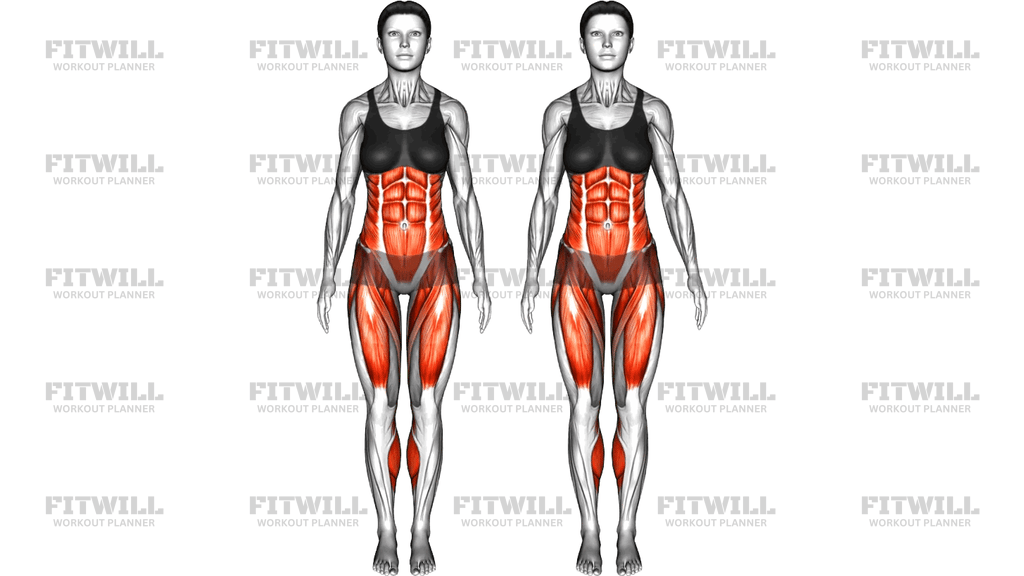
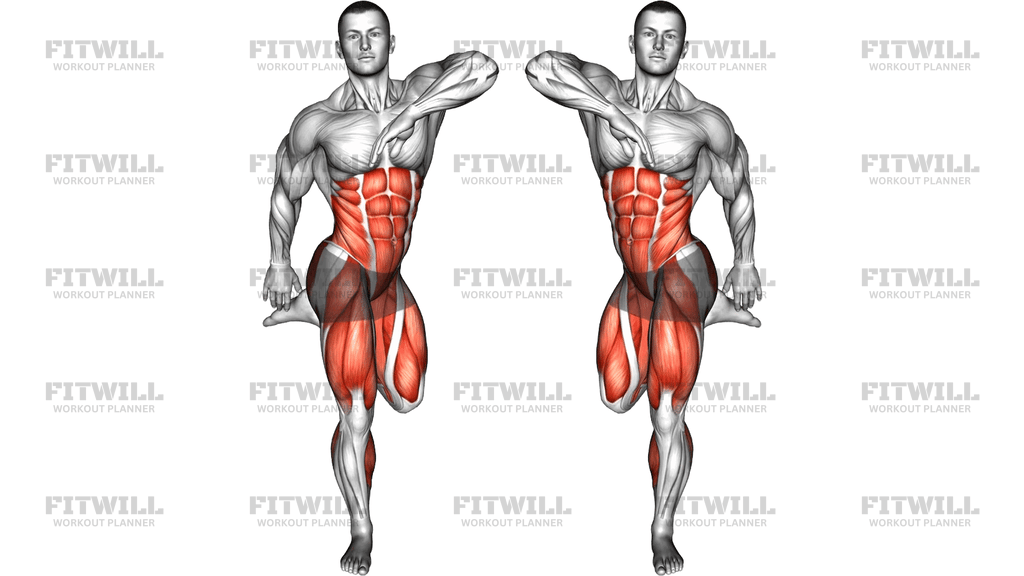
The main muscles at work are the quads and hamstrings driving the pedal circle, with the glutes contributing on the downstroke and the calves assisting around the bottom of the revolution. Your core stays quietly busy the whole time, since sitting on a moving saddle in water asks your trunk to stabilize with every stroke. Because you are working against water in all directions, hip flexors also get involved as the knee drives up and forward.
Setup matters more than most people expect. The saddle height should allow a slight bend in the knee at the bottom of the pedal stroke, and the handlebars should sit high enough that you can hold them with soft elbows rather than sagging onto your hands. The bike must be stable and secured on the pool floor so it cannot tip or slide while you pedal. A good setup keeps your hips level and your lower back comfortable for the duration of the session.
To execute the movement well, sit tall, grip the handles lightly, and pedal in full, round circles rather than short stomping pushes. Expect the water to slow your cadence compared to land cycling; aim for steady rhythm rather than speed. Many sessions mix comfortable continuous pedaling with short faster intervals or positions such as standing on the pedals for extra glute and quad work.
Aquabike is most commonly used for low-impact conditioning, general leg endurance, and active recovery, and it is a staple in group aqua-fitness classes. Practical safety points: enter and exit the pool carefully around the equipment, keep feet strapped or flat on the pedals so they cannot slip, and stay hydrated even though the water keeps you cool.
[ Workout Log & Planner ]
Put your next workout in Fitwill
Keep your plan and training log ready when you are.


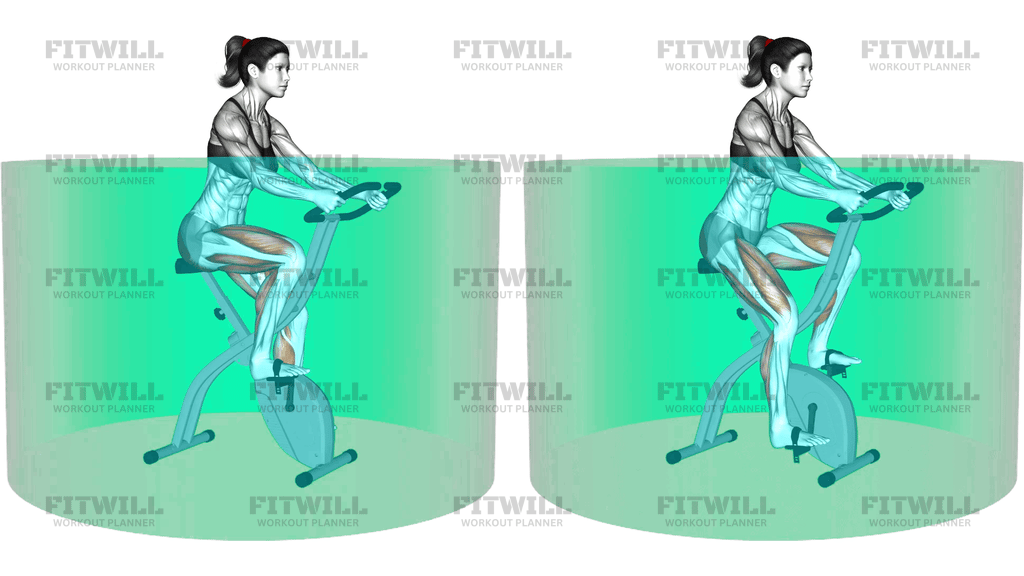
Instructions
- Place the aquabike on a stable section of the pool floor with the water typically around waist to chest depth, and check that the frame sits level and does not rock before mounting.
- Adjust the saddle height so that when your foot is at the lowest pedal position, your knee still has a slight bend rather than locking out; adjust the handlebars so you can reach them without rounding your back.
- Step onto the bike from the pool floor, place both feet securely on the pedals or into the straps, and settle your sit bones onto the middle of the saddle.
- Sit tall with your shoulders relaxed and down, hold the handles with a light grip and soft elbows, and gently draw your belly button in to brace your core.
- Begin pedaling forward in smooth, full circles, letting the water resistance slow the revolution rather than forcing speed.
- Keep your knees tracking roughly over the pedals instead of flaring outward, and keep your hips level on the saddle as you rotate.
- Breathe steadily and rhythmically, exhaling during harder efforts such as speed intervals or standing climbs.
- For a harder effort, lift slightly off the saddle onto the pedals and drive down through your whole foot, keeping your weight back over the saddle rather than hunched over the handles.
- Finish with a few minutes of easy pedaling to bring your breathing down, then stop, hold the handles for balance, and step off onto the pool floor with care.
Tips & Tricks
- If your knees feel cramped at the top of each revolution, the saddle is usually too low; raise it until the leg extends with a soft bend at the bottom.
- Avoid pedaling on the ball of the foot only; the water resistance makes the pedal stroke slow and deliberate, so drive through the whole foot to spread the load over the thigh and hip.
- Do not slouch your chest onto the handles when tired. This rounds the lower back and loads the shoulders; instead, lift your chest and rest by slowing the cadence.
- Watch for your hips rocking side to side on the saddle, a sign you are mashing unevenly or the saddle is too high; slow down and pedal in smaller, rounder circles.
- Because water hides effort, use your breathing and talk test rather than cadence to gauge intensity; if you can chat easily, you are working lightly.
- Try brief intervals of 20 to 40 seconds of hard pedaling followed by easy spinning; the water resists you in both directions so the harder pushes fatigue the quads and hip flexors quickly.
- Check that your feet cannot slip off the pedals before adding speed; a slipping foot in water can scrape the shin or ankle against the frame.
- If you get shoulder or neck discomfort, drop your grip to the straight section of the handles and relax the elbows rather than locking the arms straight.
Frequently Asked Questions
Which muscles does Aquabike work the most?
The quads and hamstrings do most of the work driving the pedal circle, with the glutes helping on the downstroke and the calves assisting near the bottom. The core works continuously to keep you steady on the saddle.
Is Aquabike suitable for complete beginners?
Yes, it is one of the friendlier starting points because the water supports your body weight and the resistance matches your own effort. Start with 15 to 20 minutes of easy continuous pedaling and build from there.
How deep should the water be for Aquabike?
Most setups use waist to chest depth, which gives good resistance while keeping you stable and comfortable. Follow the pool or class guidelines for the specific bike model, since saddle height is designed around a set water level.
Why does pedaling feel so much slower than on a normal exercise bike?
Water is dense and resists movement in every direction, so each revolution pushes against far more drag than a flywheel at low settings. A slow, effortful cadence in water can still be a solid workout.
What is the most common mistake on Aquabike?
Sitting too low with the saddle set for land cycling, which crams the knees at the top of each stroke. Raise the saddle until the knee keeps a slight bend at the bottom of the pedal circle.
Can Aquabike help if my knees are sensitive to land running?
The buoyancy of the water reduces the load through the knees and hips while still letting the legs work, which is why many people use it as a low-impact alternative. Start gently and stop if a specific joint pain worsens.
How long should an Aquabike session last?
Twenty to forty five minutes covers most goals, whether that is easy continuous pedaling or a mix of steady work and short intervals. Warm up with a few minutes of light spinning before pushing harder.
What can I do if I do not have access to an aquabike?
A regular stationary bike, water walking, or aqua jogging in chest-deep water give comparable low-impact leg and cardio benefits. None replicate the pedal resistance exactly, but they train the same general qualities.
Do I need any special gear for Aquabike?
A swimsuit is the only requirement, though water shoes can improve grip on the pedals and protect the feet around the pool. Avoid loose footwear that could slip off during fast pedaling.