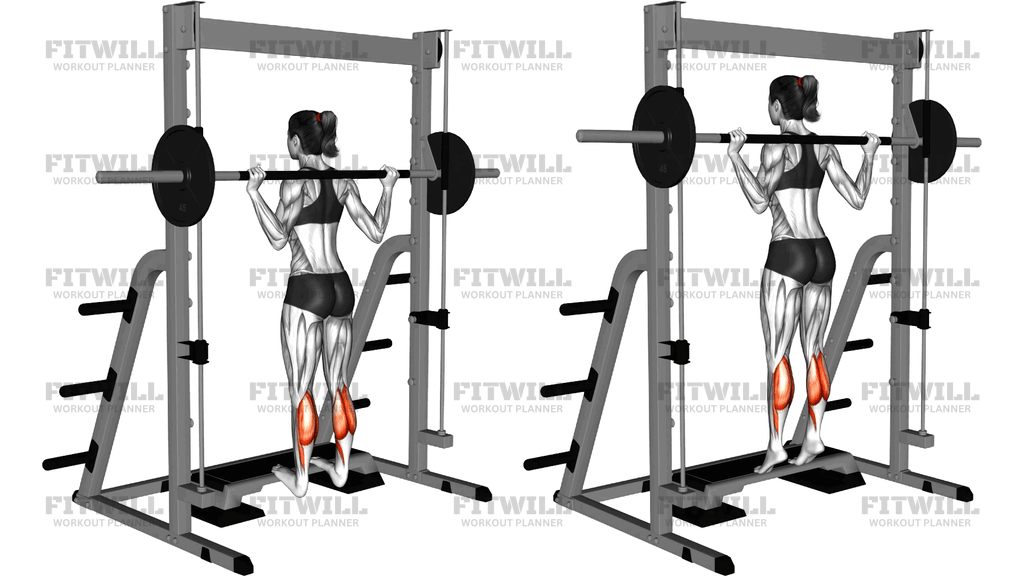
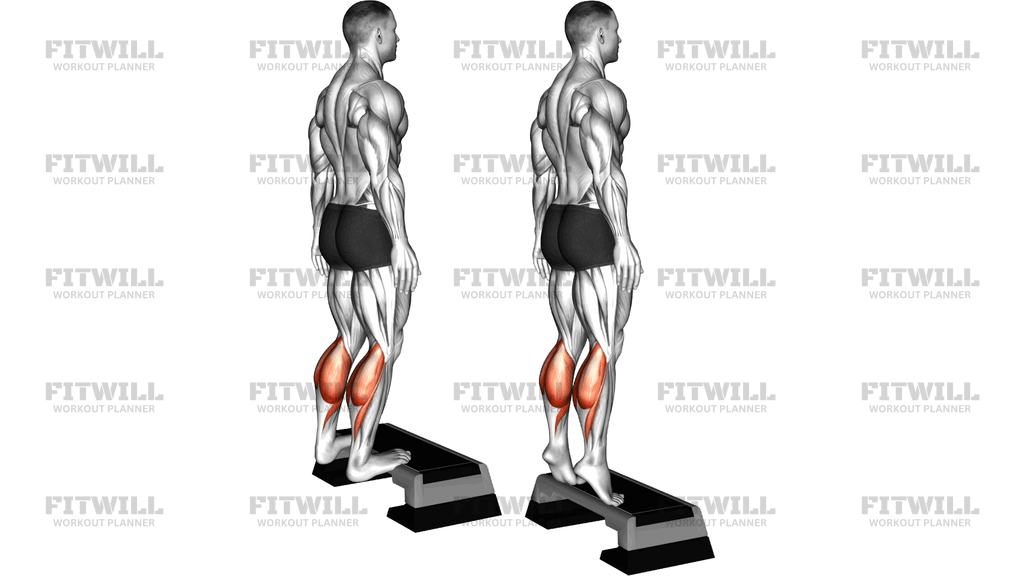
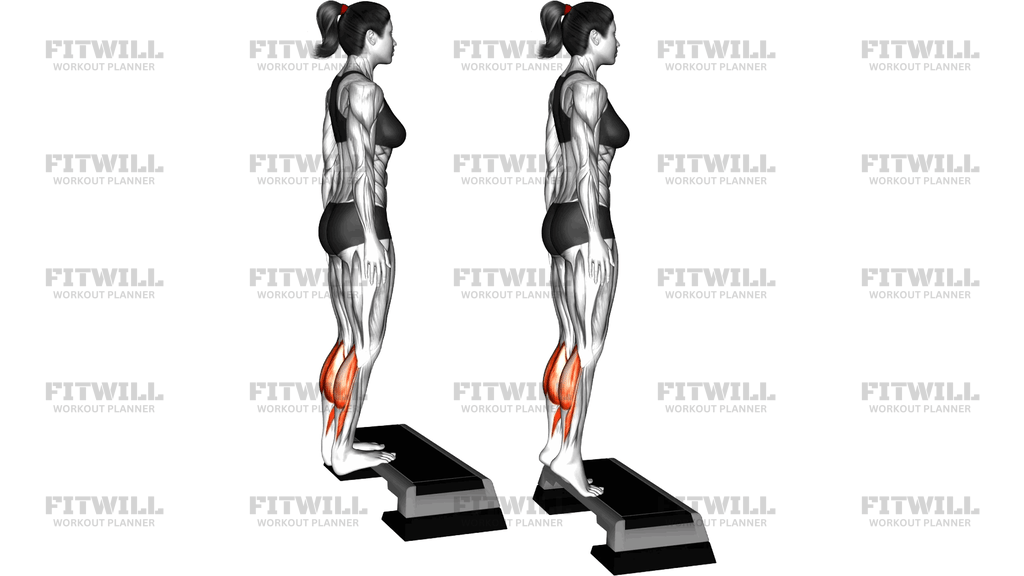
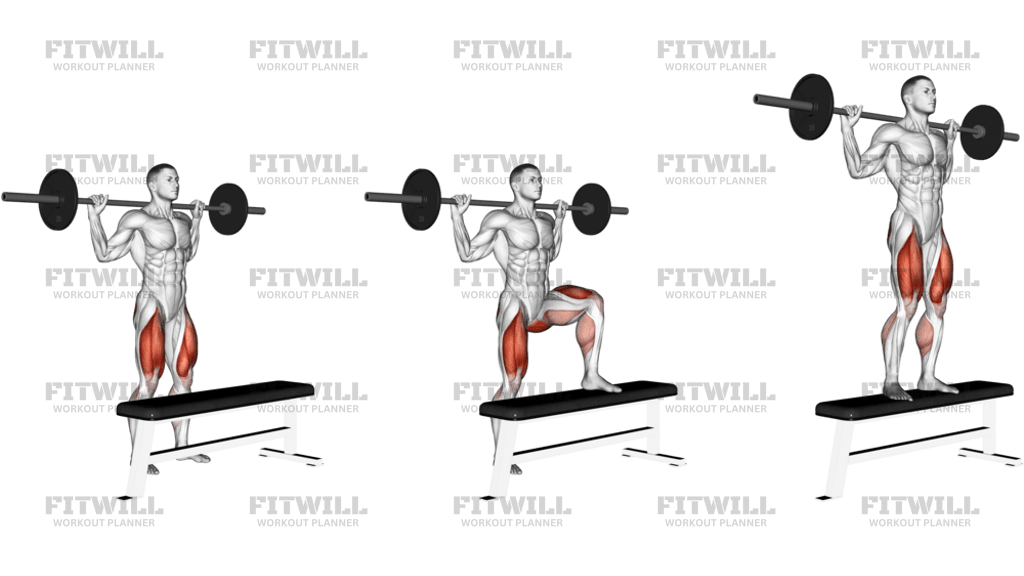
Single Leg Calf Jump Stepbox Supported
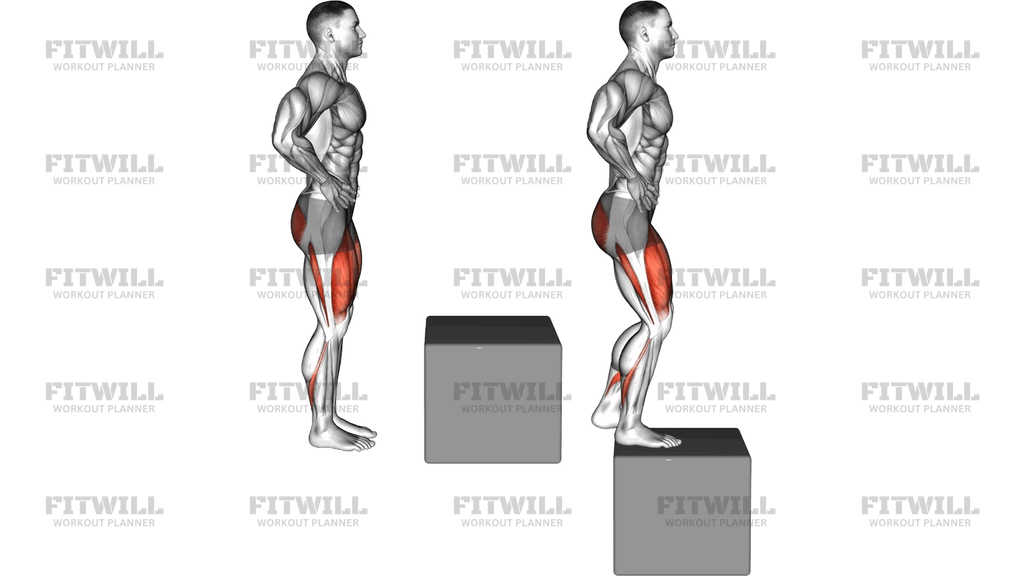
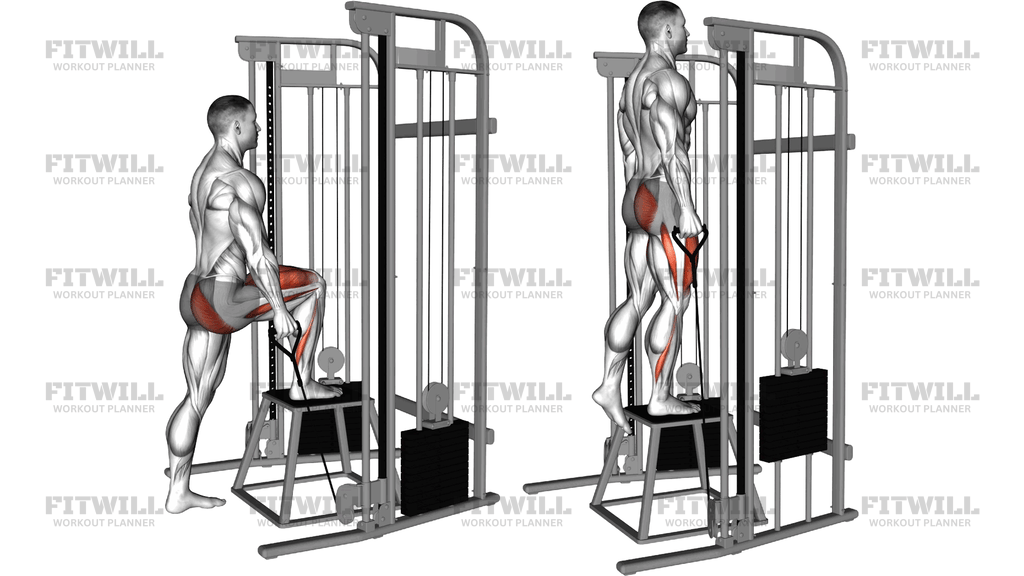
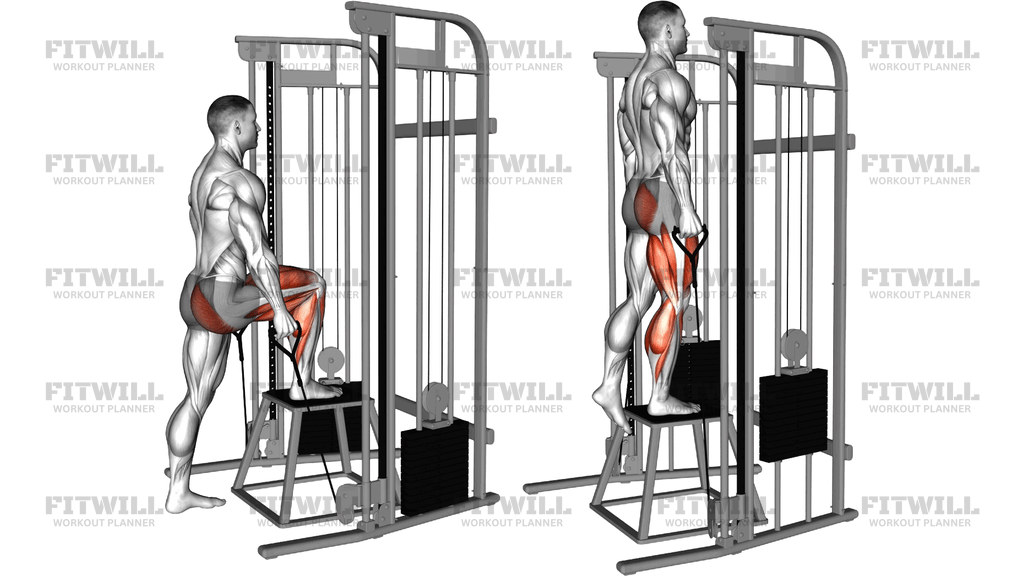
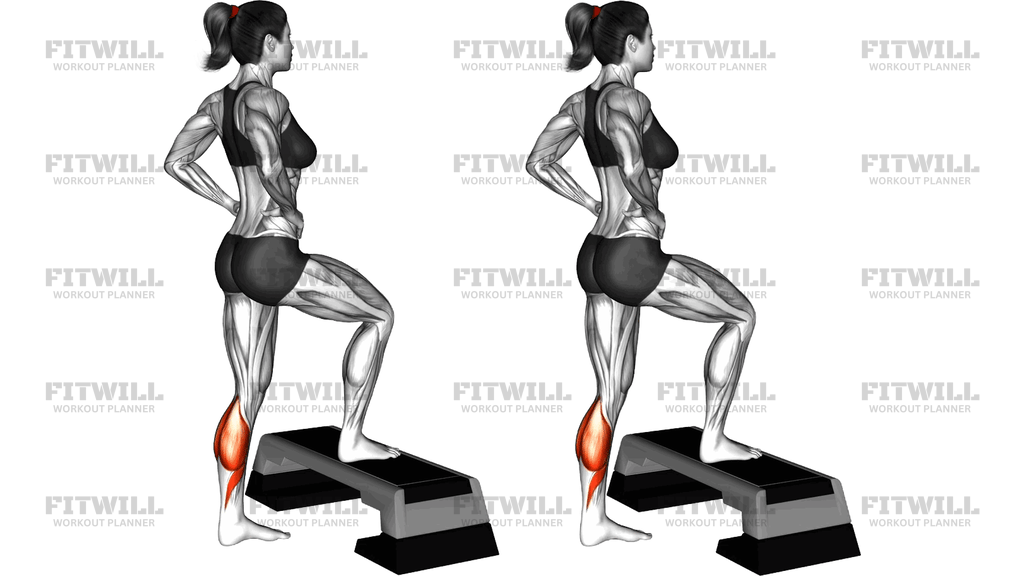
The Single Leg Calf Jump Stepbox Supported is a single-leg plyometric drill that targets the calf of your working leg while the opposite foot rests on a step platform for balance and stability. You set up in a split stance with your front foot placed on top of the step and your rear leg on the floor, then drive off the ball of the rear foot to hop vertically and land back on the same leg. The highlighted calf in the exercise artwork is the trailing leg, which confirms that the rear leg is the one doing the jumping.
This movement suits intermediate lifters and athletes who already handle basic standing calf raises and low-level hops, and who want to build reactive strength through the ankle. Sprinters, jumpers, and court-sport athletes get a lot out of it because it trains the exact stretch-shortening action the calf performs during acceleration and change of direction. It also helps correct side-to-side imbalances, since each calf has to produce force on its own without the other leg compensating.
The main muscles working are the gastrocnemius and soleus of the jumping leg, with the smaller muscles around the ankle and foot stabilizing every landing. The front leg on the stepbox is largely there for support, though it carries some load when you reset between reps. Keeping your torso tall and your core braced stops you from folding forward as you fatigue.
The stepbox setup matters because it fixes your front foot at a consistent height, locking in your stance width and letting you focus entirely on the jumping leg. A step that is too high pulls you into an awkward lunge position; a low step or flat platform keeps the emphasis on the calf rather than the thigh. Place the step close enough that your front shin stays roughly vertical.
To execute well, think of pushing the floor away through the ball of the rear foot, pointing the ankle fully at the top of the hop, and absorbing the landing by letting the heel sink toward the floor under control. Quality beats height here, especially early on. Stop the set as soon as your landings get loud or sloppy, because calf power fades quickly and tired landings load the Achilles tendon heavily.
[ Workout Log & Planner ]
Put your next workout in Fitwill
Keep your plan and training log ready when you are.


Instructions
- Place a step platform on a non-slip floor and stand facing along its length.
- Put the ball of your front foot on top of the step platform and leave your rear leg on the floor about one step-length behind it, both knees slightly bent.
- Shift your weight onto the rear leg so it becomes the jumping leg, with its heel free to drop below the ankle at the bottom of each rep.
- Stand tall, brace your core, and let your arms hang at your sides or hold them lightly at your hips for balance.
- Drop the heel of the rear foot toward the floor, then immediately push through the ball of that foot to jump straight up, extending the ankle fully at the top.
- Land back on the ball of the same rear foot, letting the heel lower under control to absorb the impact before the next rep.
- Keep your front foot resting on the step throughout the set, using it only for balance and not to drive the jump.
- Exhale as you jump and inhale during the controlled landing and reset.
- Complete all reps on one leg, then switch so the other foot sits on the step and the opposite calf jumps.
- Step both feet back to the floor between sets and shake out the ankles before starting the next side.
Tips & Tricks
- The most common mistake is turning this into a front-leg step-up jump. Check that the rear calf is doing the work and the foot on the stepbox is only kissing the platform for balance.
- Silent landings are the quality test. If you hear a heavy slap, your calf is no longer absorbing the impact, so cut the set.
- Avoid locking the standing knee completely straight. A small bend protects the knee and keeps the calf under tension through the whole hop.
- Keep your torso vertical. Leaning over the front leg shifts effort toward the thigh and turns the drill into a lunge pattern.
- Start with low, crisp hops for higher reps before chasing height. The Achilles takes more load per jump than most people expect from a calf-only movement.
- If you wobble on landing, widen the split stance slightly or lightly hold a wall or rack with one hand until your ankle stabilizers adapt.
- Do these early in a session while your calves are fresh, not after heavy leg training when landing mechanics deteriorate.
- Warm up the ankle first with slow single-leg calf raises on the same leg so you can feel the full plantarflexion range before adding the jump.
- Progress by adding reps, then height, then a light landing on a slightly soft surface before considering any added load.
Frequently Asked Questions
Which calf does the Single Leg Calf Jump Stepbox Supported train?
The gastrocnemius and soleus of the rear, floor-based leg do the jumping, which is why that calf is highlighted as the prime mover. The front foot on the step platform is for support rather than work.
Why is one foot on a stepbox for this exercise?
The step locks in a consistent split stance and gives your non-working leg a stable resting point, so the jumping calf gets full focus without a balance penalty. It also keeps your front shin vertical, which keeps the load off the front of the thigh.
Is the Single Leg Calf Jump Stepbox Supported good for beginners?
Beginners should first master two-legged calf raises and single-leg calf raises, then low two-leg hops. Once those feel controlled, start with small, low jumps on this drill before adding height.
How high should I jump?
Jump only as high as you can land quietly on the ball of the working foot with the heel lowering smoothly. Height can increase once every landing stays crisp.
Can I do this exercise if my Achilles feels sore?
Skip it if you have active Achilles or ankle pain, since hopping places a high tendon load at each landing. Slow single-leg calf raises are a gentler way to keep training the area, and persistent soreness deserves a professional assessment.
How many reps and sets should I use?
Start with 2 to 3 sets of 6 to 10 hops per leg, resting between sides. Stop each set when landings get loud or your ankle starts drifting inward, rather than pushing to exhaustion.
What can I use if I don't have a step platform?
A low, stable step, a sturdy aerobic box, or even a flat floor works, as long as the surface will not slide. With no step at all, simply use a comfortable split stance with both feet on the ground.
How is this different from a regular single-leg calf jump?
With the front foot on the stepbox, your stance width and balance point are fixed, which makes the drill easier to control and keeps the working calf in the same position every rep. Free-standing single-leg hops demand more ankle stability and are a harder progression.
Should my heel touch the floor on each landing?
Let the heel lower toward the floor under control after landing so the calf works through its full stretch, but do not slam it down. The heel drive down and the push back up are what make the rep effective.