Scapular Pull Up
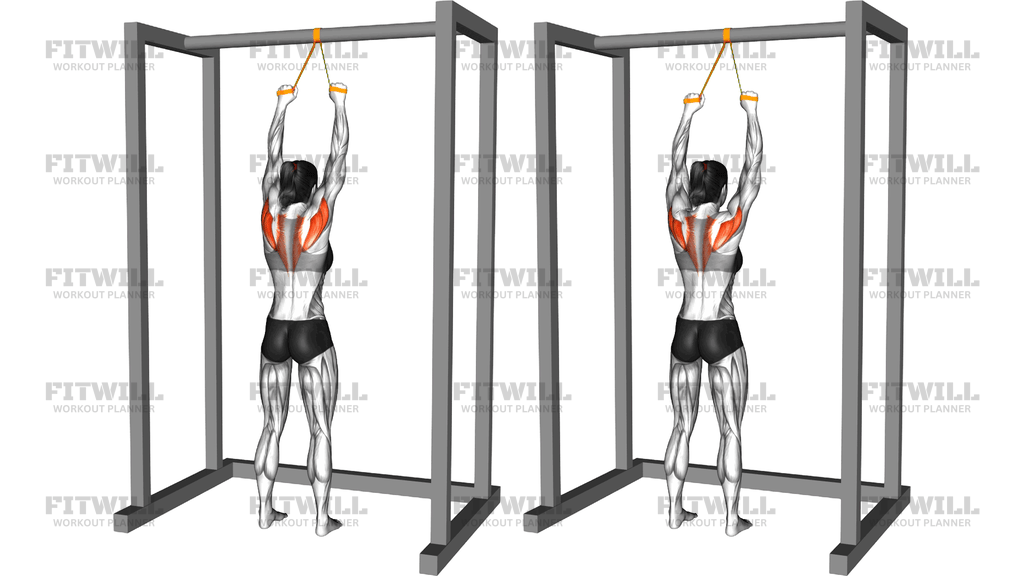
The Scapular Pull Up is a small, deliberate hanging movement where you pull your shoulder blades down and together while keeping your arms completely straight. You start from a dead hang on a pull-up bar, and instead of bending your elbows to lift your body, you only move your shoulder girdle — depressing and slightly retracting the scapulae so your torso rises a few inches. Then you lower back into a relaxed hang with control. It looks like almost nothing from the outside, but it is one of the most valuable exercises you can do on a bar.
This movement trains the lower trapezius, rhomboids, and lats — the muscles responsible for controlling the position of your shoulder blades. It also teaches you the correct starting action of a real pull-up. Most people who struggle with pull-ups don't fail because their arms are weak; they fail because they yank with the elbows while their shoulder blades stay loose. The Scapular Pull Up fixes that by isolating the exact first phase of the pull, so it is one of the best progressions for beginners working toward their first pull-up.
The setup matters more here than in most exercises. Because your feet are off the floor and your full body weight hangs from your grip, any slack in your shoulders or trunk changes what the movement trains. A dead hang with relaxed, elevated shoulders is the true starting point, and the entire exercise is the transition from that relaxed hang into an active, packed-shoulder position. If you cheat by bending the elbows or kinking the hips, you shift work away from the scapular muscles and defeat the purpose.
To perform it well, grip the bar roughly shoulder-width with your arms fully extended, let your body hang tall, then draw your shoulder blades down toward your back pockets without moving your elbows. Your head and chest rise slightly, your neck lengthens, and there is a small but clear gap between your ears and shoulders at the top. Pause there for a second, then lower slowly back into the hang. Breathing should be steady: inhale at the bottom, exhale as you pull the blades down.
Beyond pull-up preparation, the Scapular Pull Up is widely used for shoulder health and hanging strength. It builds tolerance for carrying your body weight on the bar, strengthens the muscles that stabilize the shoulder joint under load, and pairs well with dead hangs, rows, and lat pulldowns. Because it involves no elbow bending, it also serves as a low-fatigue way to accumulate back volume on days when full pull-ups would be too much.
Keep the reps controlled rather than fast, and stop the set when you can no longer lift the shoulder blades cleanly. If your grip gives out before your back does, use a shorter set or lift slightly with a band or assisted setup, since the point of the exercise is scapular control, not grip endurance.
Fitwill
Log Workouts, Track Progress & Build Strength.
Achieve more with Fitwill: explore over 9600 exercises with images and videos, access built-in and custom workouts, perfect for both gym and home sessions, and see real results.
Start your journey. Download today!




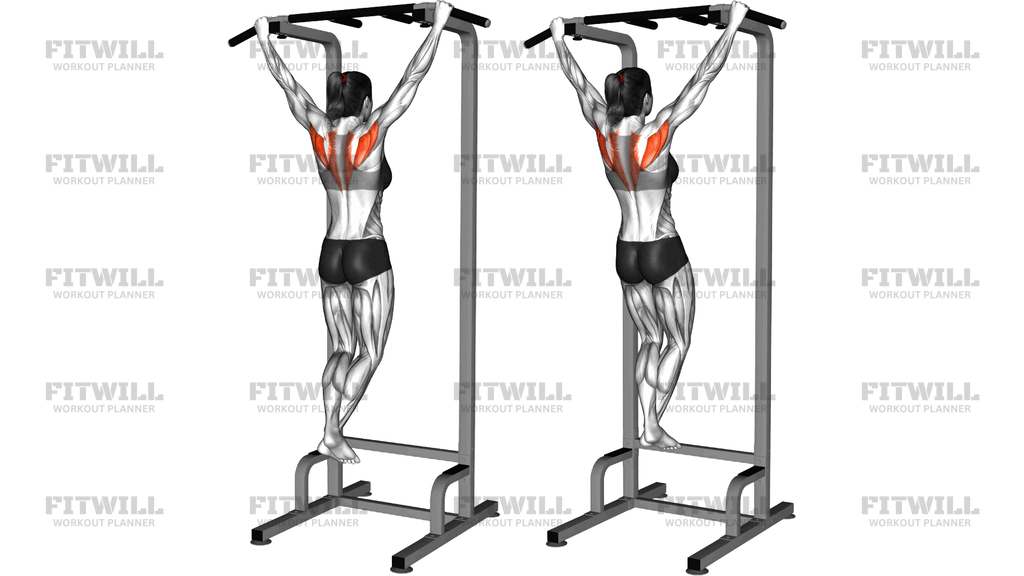
Instructions
- Stand under a pull-up bar and take an overhand grip slightly wider than shoulder-width, wrapping your thumbs around the bar.
- Let your body hang with your arms fully straight and your feet off the floor, allowing your shoulders to rise toward your ears into a relaxed dead hang.
- Brace your trunk lightly and squeeze your glutes so your legs stop swinging and your body hangs in one quiet line.
- Inhale at the bottom, then pull your shoulder blades straight down toward your hips while keeping your elbows locked and straight.
- Continue until your shoulders drop away from your ears and your upper back feels tight, with your head and chest lifted a few inches higher than the start.
- Pause at the top for one to two seconds and feel the muscles between your shoulder blades and along the sides of your back working.
- Exhale as you lower slowly, letting your shoulder blades rise and spread until you return to the fully relaxed dead hang.
- Reset your grip and brace if your body has swung, then repeat for the desired number of repetitions.
- End the set before your grip fails or your elbows start bending to help the movement.
Tips & Tricks
- Think 'push the bar away and down' rather than pulling with your arms — this keeps the elbows straight and forces the shoulder blades to do the work.
- A common mistake is bending the elbows a few inches to lift higher. Watch yourself from the side or film a set: if your elbows flex, reduce the range and move only at the shoulder blades.
- Keep your neck long at the top. Shrugging and jamming your head toward the bar means the upper traps are taking over from the lower traps you are trying to train.
- Do not rush the bottom position. Dropping straight back into a slack hang removes half the training effect — lower over two to three seconds so the scapulae control the descent.
- If your grip burns out early, use lifting straps or an assisted pull-up setup so the back muscles, not your forearms, limit the set.
- Stop your legs from swinging by squeezing them together and pointing your toes slightly; a still body makes the scapular motion much easier to feel.
- Aim for a small but honest range. A controlled two-inch lift with a strong squeeze beats a bigger, bouncy movement that comes from the arms or trunk.
- Practice this before every pull-up session as a warm-up — it primes the same muscles and sets the shoulder position you want when you start pulling.
- If you cannot lift at all from a hang, start with a slight foot support, such as standing on a low box with your toes touching, and gradually take away the assistance.
Frequently Asked Questions
What muscles does the Scapular Pull Up work?
It primarily trains the lower trapezius and rhomboids, which pull the shoulder blades down and together, with strong help from the lats. The forearms and grip work isometrically to hold you on the bar.
How is the Scapular Pull Up different from a regular Pull Up?
In a regular Pull Up your elbows bend and your chin travels over the bar. In the Scapular Pull Up your arms stay completely straight and only your shoulder blades move, so it isolates the first phase of the pull.
Can beginners do the Scapular Pull Up?
Yes, and it is one of the best starting points for anyone working toward a first pull-up. If a full dead hang is too demanding, begin with your toes lightly supported on a low box and reduce the support over time.
How many reps and sets should I do?
Start with 2-3 sets of 5-8 slow repetitions, holding each rep for a second at the top. Because the movement is low-fatigue, you can perform it several times per week, either as a warm-up or as part of your back work.
Why do my arms keep bending during the exercise?
This usually means you are trying to lift too high or pulling with your biceps out of habit. Focus on driving the shoulder blades down while pushing the bar away, and accept a smaller range of motion until the pattern feels clean.
Should my shoulders be relaxed or tight at the start?
Start from a genuinely relaxed dead hang with your shoulders near your ears. The exercise is the transition from that slack position into an active, packed-shoulder hang, so you need the full range to travel.
Can the Scapular Pull Up help with shoulder stability?
It can. Hanging while controlling the shoulder blades strengthens the muscles that guide the scapula under your body weight, which supports healthy shoulder mechanics in pressing, pulling, and carrying.
What can I use instead if I don't have a pull-up bar?
Scapular pull-ups can be performed on sturdy rings, a suspension trainer with your body angled, or a lat pulldown machine by isolating the same blade-down motion. The key in every version is straight arms and movement coming only from the shoulder blades.
My grip fails before my back feels anything — what should I do?
Use lifting straps, chalk up, or switch to an assisted pull-up machine so the load on your grip drops. The goal of this exercise is scapular control, so do not let forearm fatigue cut the set short.