Suspension Jack Knife Pike
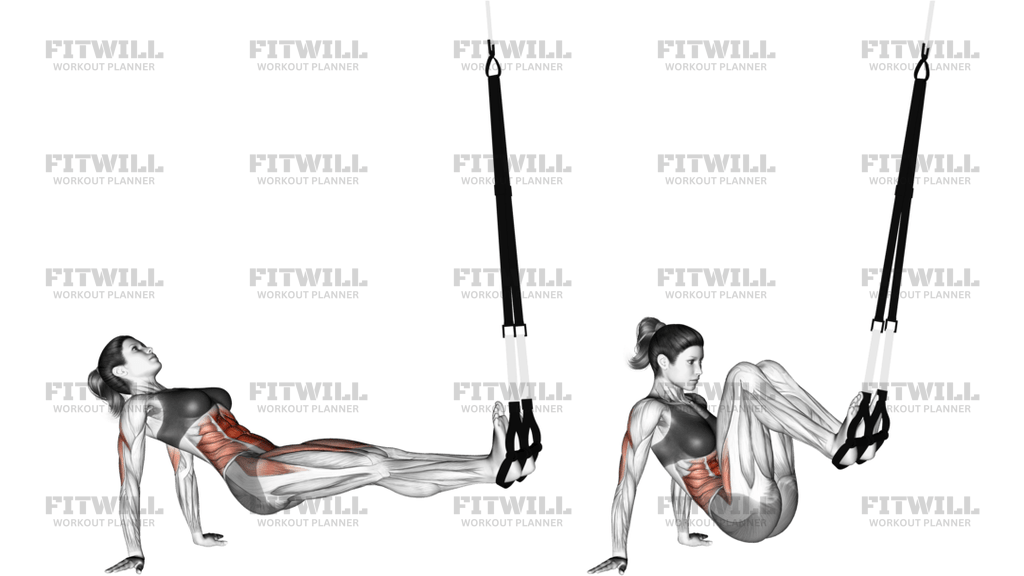
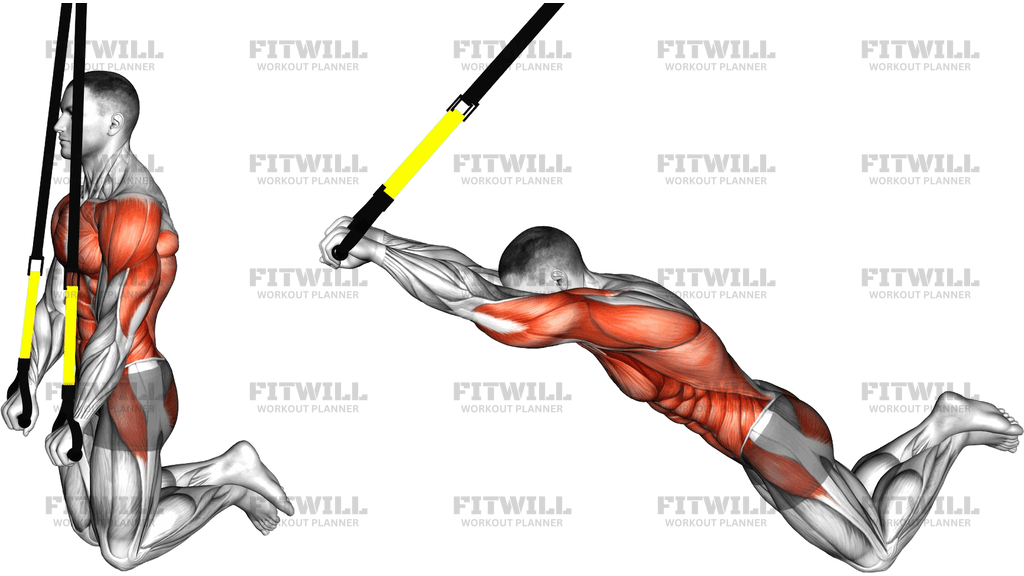
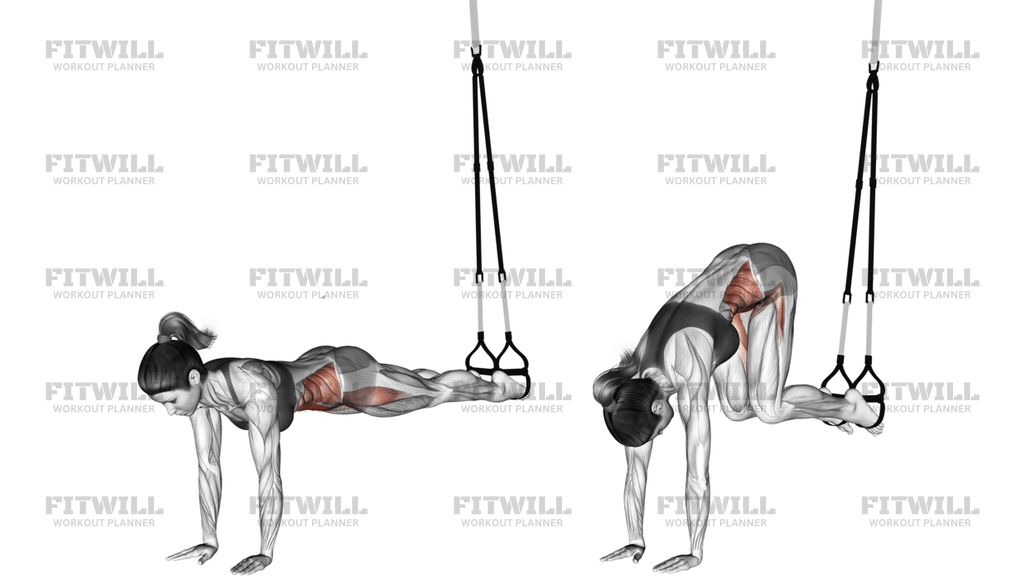
Suspension Jack Knife Pike is a suspended core exercise that combines a strong plank with a knee tuck and hip lift. With the feet in the straps and the hands planted on the floor, the body has to stay long and organized while the knees travel inward and the hips fold up. That instability is what makes the exercise useful: it asks the rectus abdominis to shorten hard while the obliques, iliopsoas, and deep core muscles keep the pelvis and spine from swinging out of line.
The movement is not just about getting higher off the floor. A good rep starts from a rigid plank, then the knees are pulled toward the chest as the hips rise into the pike. The ribs stay controlled instead of flaring, the shoulders stay stacked over the wrists, and the feet stay centered in the suspension loops. If the set turns into a swing, the abs lose most of the work and the shoulders and hip flexors end up taking over.
The setup matters because the straps amplify every small mistake. If the hands are too far forward, the shoulders collapse; if the hips start loose, the low back sags before the first rep is even underway. The clean version looks smooth and deliberate: brace, tuck, fold, then return to a long plank without bouncing. Breathing should stay rhythmical, with an exhale during the tuck and a controlled inhale on the way back out.
Use this exercise as a higher-skill core accessory when you want more than a static plank or basic knee tuck. It fits well in core circuits, athletic conditioning blocks, or accessory work after the main lifts. Beginners usually need a regression first, such as suspended knee tucks with a shorter range, because the combination of suspension and piking demands good shoulder stability, trunk control, and hip flexor strength. Keep the reps strict, stop before the straps start swinging, and let the abs finish the set rather than momentum.
[ Workout Log & Planner ]
Put your next workout in Fitwill
Keep your plan and training log ready when you are.


Instructions
- Place both feet securely in the suspension straps and walk your hands forward until you can hold a straight plank with your hands under your shoulders.
- Spread your fingers, press the floor away, and keep your shoulders active so your upper back does not sink.
- Brace your abs and glutes before the first rep, then settle the straps so both feet hang evenly.
- Start from a long plank with your body in one line from shoulders to heels and your gaze a few feet in front of your hands.
- Pull both knees toward your chest while keeping your hands planted and your shoulders steady.
- As the knees travel in, lift your hips into the pike so your pelvis folds toward your ribs instead of letting your lower back arch.
- Reverse the motion under control by extending the legs back to a straight plank without letting the feet swing wide or drop fast.
- Reset your brace after each repetition, exhale on the tuck, inhale on the return, and stop the set when you can no longer keep the plank rigid.
Tips & Tricks
- Keep your hands directly under your shoulders; if they drift too far forward, the shoulders usually cave and the straps start to wobble.
- Think about pulling your ribs toward your pelvis rather than just throwing your hips up; that cue keeps the abs in charge instead of the low back.
- Use a shorter range if the suspension starts to swing, then earn the full pike once the plank stays quiet.
- Press hard through the floor with your palms so your shoulder blades stay stable instead of collapsing between your ears.
- Keep your knees tracking together as they come in; letting them flare apart makes the movement sloppy and reduces the abdominal squeeze.
- Move slowly enough that you can feel the return phase; a controlled extension back to plank is where a lot of the core work happens.
- If your hip flexors burn before your abs, pause the set and reduce the range or rep count so you can keep the pelvis tucked.
- Finish the set the moment your low back starts to sag or the straps begin to swing from side to side.
Frequently Asked Questions
What muscles does Suspension Jack Knife Pike work most?
It primarily targets the rectus abdominis, with strong help from the obliques, hip flexors, and deep core muscles that keep the body from swinging.
What makes this different from a suspended knee tuck?
A knee tuck mainly brings the knees in, while a jack knife pike combines that tuck with a higher hip fold, which increases abdominal demand.
Where should my hands be during the exercise?
Keep your hands under your shoulders in a firm plank position. If the hands drift too far forward, the shoulders usually collapse and the movement gets unstable.
Why do I feel my shoulders working so hard?
The suspension setup forces your shoulders to stabilize the whole body while the feet move. That is normal, but the shoulder work should support the core, not take over the set.
Can beginners do Suspension Jack Knife Pike?
Usually only after they can hold a solid plank and control suspended knee tucks. A shorter range or an easier regression is often a better starting point.
What is the most common mistake with this exercise?
Letting the low back sag and using momentum to swing the feet through the rep. The movement should look controlled and folded, not whipped.
How should I breathe during each rep?
Exhale as you pull the knees in and lift the hips, then inhale as you extend back to the plank without losing tension.
How can I make the exercise easier or harder?
Make it easier by shortening the range and slowing the tempo; make it harder by keeping the plank stricter, extending farther back, and controlling every inch of the return.