Suspension Rollout
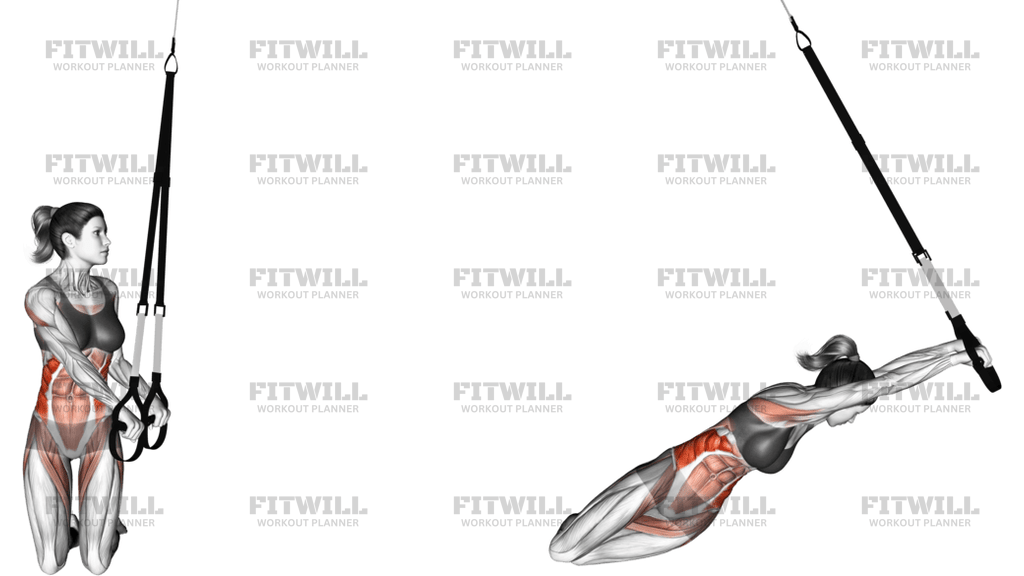
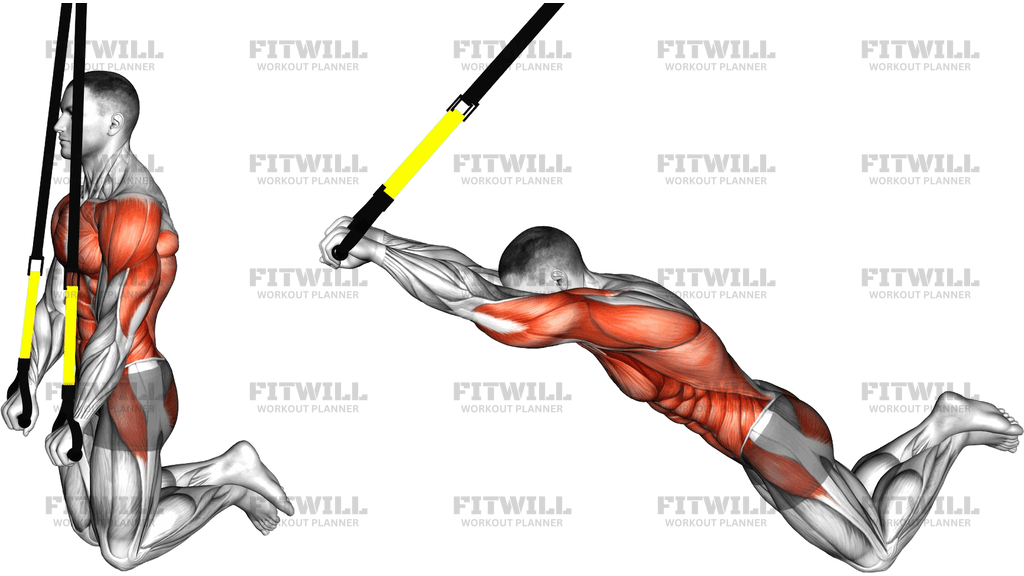
Suspension Rollout is a kneeling suspension-trainer core exercise that challenges the abs to resist low-back extension while the shoulders move overhead. It looks simple, but the value comes from controlling the long lever created by the straps: as your hands travel forward, your trunk has to stay stacked and your pelvis has to stay quiet.
This movement places the main demand on the rectus abdominis, with the obliques, serratus anterior, lats, and deep core muscles helping you keep the ribs down and the torso aligned. The suspension setup adds instability, so even a small change in strap length, knee position, or arm angle can make the rollout much easier or much harder. That is why the start position matters more here than on a basic floor rollout.
The cleanest reps begin from a tall kneel with the handles in front of the shoulders, arms long, wrists neutral, and glutes lightly engaged. From there, let the body travel forward as one unit instead of hinging at the hips. Keep the reach smooth, stop before the lower back arches, then pull the handles back by tightening the abs and lats while exhaling through the return.
Use Suspension Rollout when you want a demanding anti-extension core drill that carries over to bracing, overhead control, and trunk stiffness in compound lifts. It is also useful as accessory work in core sessions or conditioning blocks, provided the range stays controlled. If your shoulders shrug, your ribs flare, or your hips dump forward, shorten the rollout and rebuild the pattern before adding more distance or tension.
[ Workout Log & Planner ]
Put your next workout in Fitwill
Keep your plan and training log ready when you are.


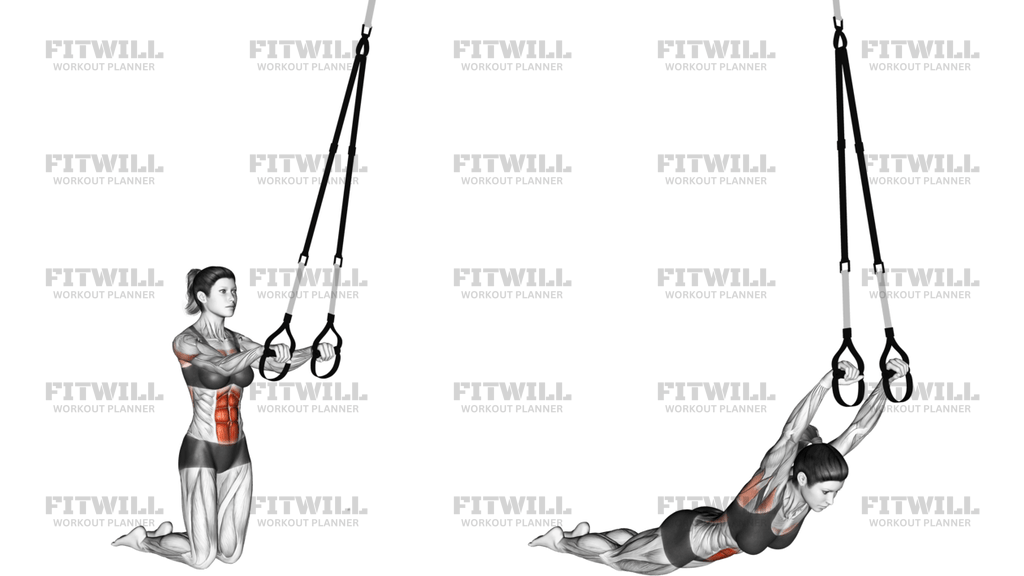
Instructions
- Kneel facing the anchor point with the straps set high enough that the handles start around shoulder height, and hold one handle in each hand with your arms straight.
- Place your knees under your hips, keep your toes relaxed, and stack your ribs over your pelvis before you move.
- Lightly squeeze your glutes and brace your abs so your torso stays long instead of arching through the lower back.
- Press the handles forward until your shoulders are in front of your knees, keeping your wrists neutral and your elbows mostly straight.
- Let your body travel forward as one piece, reaching the arms out overhead while keeping the chest from collapsing toward the floor.
- Roll out only as far as you can maintain a quiet pelvis and a flat, controlled line from knees through shoulders.
- Exhale as you pull the handles back toward the starting point by tightening the abs and lats, not by bending the hips first.
- Finish back over the knees under control, reset your brace, and repeat for the planned number of reps.
Tips & Tricks
- Shorten the straps or bring the anchor higher if the rollout feels too long or your shoulders cannot stay packed.
- Keep your elbows nearly straight; turning the movement into a triceps press changes the exercise and makes the core work less direct.
- Think about pulling your ribs down toward your pelvis as the handles move forward so the low back does not take over.
- A smaller rollout range with perfect position is better than chasing the floor and losing trunk control.
- If your hips drift back toward your heels, you are unloading the core; keep the knees planted and the torso moving forward together.
- Use a slow return on every rep so the abs have to control the straps instead of dropping back to the start.
- Keep your neck long and gaze slightly ahead of the hands to avoid cranking the head upward during the reach.
- Stop the set when the straps start wobbling hard or your shoulders shrug into your ears.
Frequently Asked Questions
What muscles do suspension rollouts train?
They mainly train the rectus abdominis, with the obliques, lats, serratus anterior, and deep core muscles helping you stay braced.
Why does this exercise use a kneeling position?
The kneeling setup lets you keep the knees anchored while the torso reaches forward, which makes the anti-extension demand on the abs much clearer.
Should my arms stay straight during the rollout?
Yes, keep a slight softness in the elbows if needed, but do not turn the rep into an elbow bend. The reach should come from the shoulders and trunk.
How far should I roll out?
Go only as far as you can keep the ribs down, the pelvis level, and the lower back from sagging. A shorter range is the right choice if position breaks.
What is the most common mistake?
The biggest mistake is letting the low back arch while the arms reach forward. That usually means the range is too long or the brace is not set before the rep starts.
Can beginners use suspension rollouts?
Yes, but they should start with a shorter range, slower tempo, and a higher anchor so the body does not get pulled too far forward too soon.
Why do my shoulders feel this exercise too?
The shoulders have to stabilize the long lever created by the straps, so some front-shoulder and serratus work is normal even though the abs should lead the rep.
How do I make the movement harder?
Lower the anchor, roll farther forward, or slow the eccentric return while keeping the same strict kneeling position.