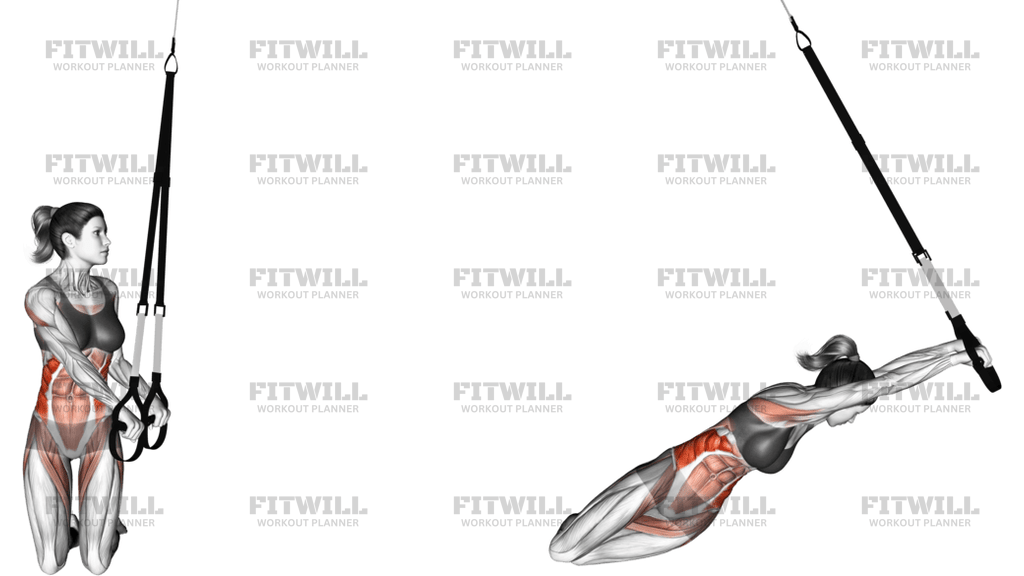
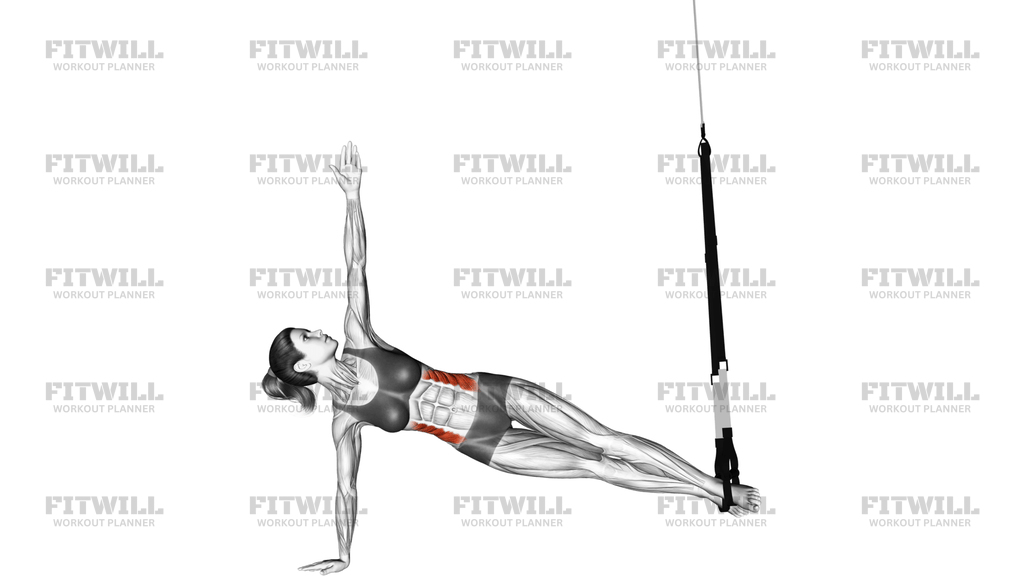
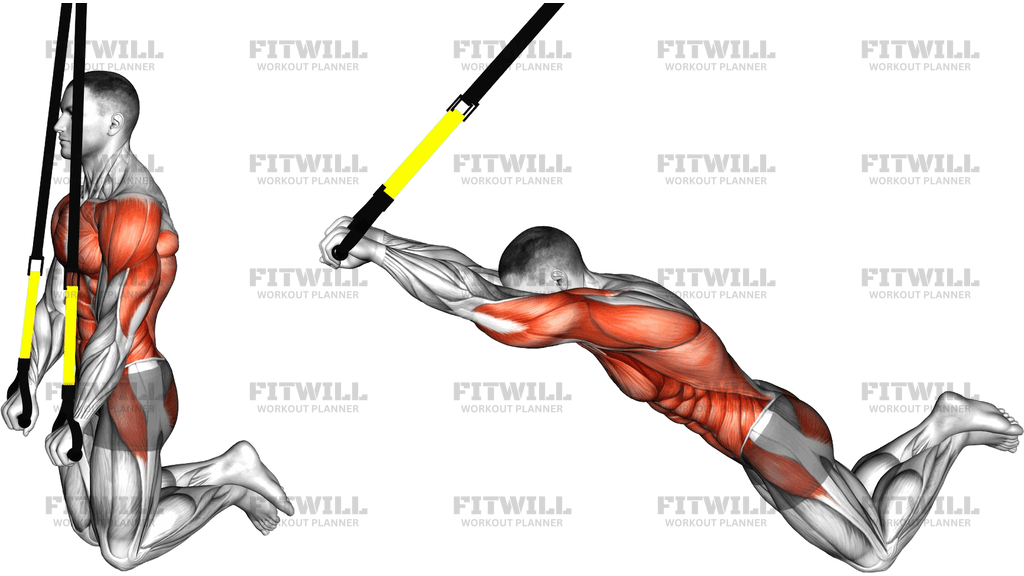
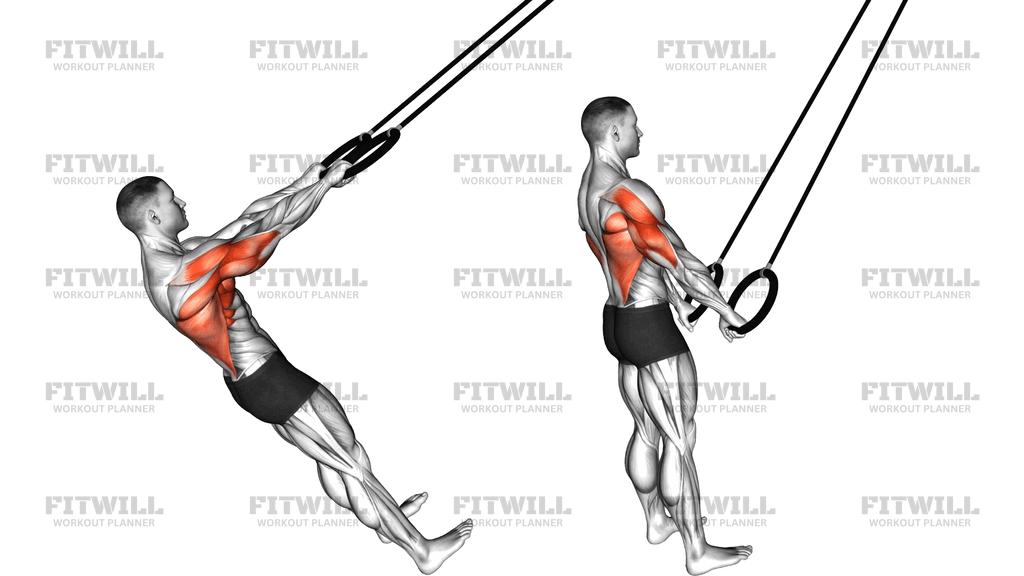
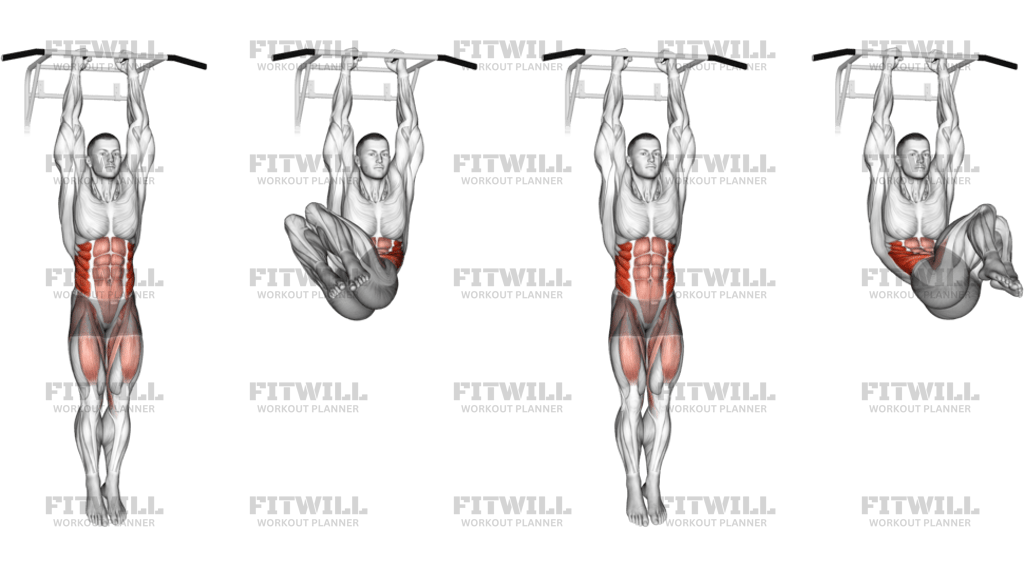
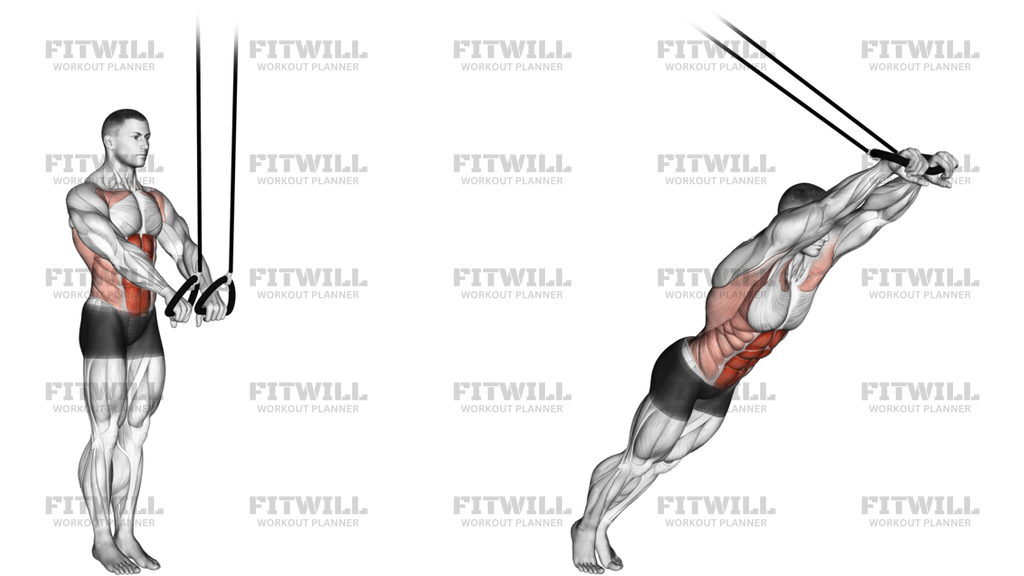
Suspension Single Leg Plank Straight Arm
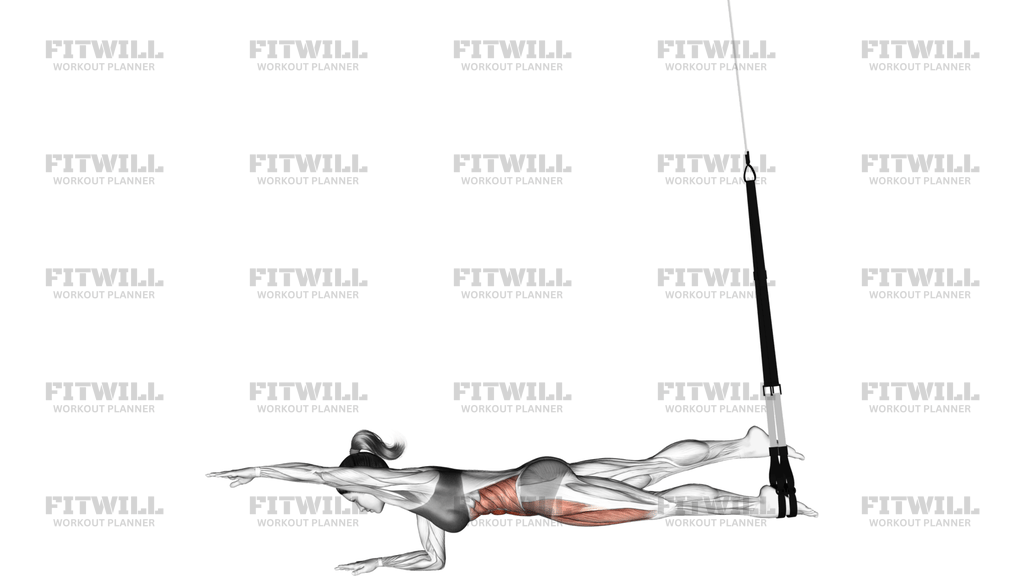
Suspension Single Leg Plank Straight Arm is a suspension-based core stability exercise that asks you to hold a long, rigid plank while one leg is supported by the straps. The moving leg and the unstable suspension point make the trunk work harder than a standard floor plank, so the goal is not to chase motion but to keep the pelvis level, the ribs stacked, and the shoulders quiet.
This exercise loads the rectus abdominis most directly, with the obliques, transverse abdominis, hip flexors, glutes, and shoulder stabilizers contributing to keep the body from rotating or sagging. In practical terms, that means the exercise trains anti-extension and anti-rotation strength at the same time. If the hips drift, the low back arches, or the suspension straps start swinging, the core is losing its job.
The setup matters more here than in a normal plank. Place the hands under the shoulders, keep the elbows straight but not locked hard, and set the strap so the suspended foot can stay secure without forcing the hips too high or pulling them out of alignment. Before you start the hold, squeeze the glutes, draw the ribs down, and lengthen the body from crown to heel so the torso is already braced before the load settles into the shoulders and waist.
During the hold, press the floor away, keep the neck neutral, and maintain a steady line through the head, spine, and free leg. The suspended side should feel controlled, not loose. Use short, calm breaths behind the brace and avoid letting the torso rotate toward the supported leg. If the low back starts taking over or the straps begin to swing, the set is too hard or too long.
Use this movement as a core accessory, part of a suspension-training circuit, or a stability drill before heavier lower-body work. It is most useful when you want trunk stiffness, shoulder control, and pelvic control in the same drill. Keep the reps or holds clean and controlled, and stop the set as soon as you can no longer keep the hips square and the body long.
[ Workout Log & Planner ]
Put your next workout in Fitwill
Keep your plan and training log ready when you are.


Instructions
- Set the suspension straps to a height that lets the foot stay secure without pulling your hips out of line.
- Place both hands under your shoulders on the floor, then step one foot into the strap cradle and extend the other leg straight behind you.
- Stack your shoulders over your wrists and keep your elbows straight but soft, with your head in line with your spine.
- Squeeze your glutes, draw your ribs down, and level your pelvis before you take any weight into the position.
- Press the floor away and reach long through the free leg so your body forms one straight line from head to heel.
- Hold the plank without letting the hips rotate, drop, or pike upward.
- Breathe in short, controlled breaths while keeping the brace firm and the straps still.
- Lower out of the position with control, then reset before the next hold or rep.
Tips & Tricks
- If the suspended foot pulls your hips open, shorten the straps or reduce the lever by bringing the free leg slightly closer to the floor.
- Keep your hands directly under your shoulders so the front of the shoulder does not take over the set.
- A small posterior pelvic tilt helps keep the low back out of the movement and puts more tension into the abs.
- Do not let the hanging leg swing; every extra sway steals tension from the trunk.
- Keep the neck long and look slightly ahead of your hands rather than tucking hard or craning up.
- Squeeze the glute on the extended leg to help keep the pelvis square.
- Stop the set as soon as the ribs flare or the low back starts to arch.
- Use short holds before chasing long time-under-tension, especially if the suspension straps are new to you.
Frequently Asked Questions
What muscles work most during a Suspension Single Leg Plank Straight Arm?
The abs and deep core do most of the work, with the obliques, hip flexors, glutes, and shoulders helping to keep the body stable.
Why does the suspension make this plank harder than the floor version?
The straps create more instability, so your core has to resist rotation and hip drop while your shoulders keep the plank steady.
How do I keep my hips level during the hold?
Tighten your glutes, draw your ribs down, and keep pressure evenly through both hands so the pelvis does not twist toward the suspended side.
Should my lower back feel this exercise?
No. You should feel the abs working to keep the spine neutral. If the low back is taking over, shorten the hold or make the setup easier.
Can a beginner use this movement?
Yes, but only with short holds and a very stable strap setup. Start with a basic plank on the floor if you cannot keep the pelvis square.
What is the biggest form mistake to avoid?
Letting the hips rotate or sag is the main error. Once the torso starts to twist, the set has become too difficult.
How long should I hold each rep?
Hold only as long as you can keep a straight line from head to heel with the straps quiet and the ribs down.
How can I progress this exercise?
Increase hold time, make the strap position less supportive, or move to a harder plank variation only after your hips stay level consistently.