Cable Squat Row (With Rope Attachment)
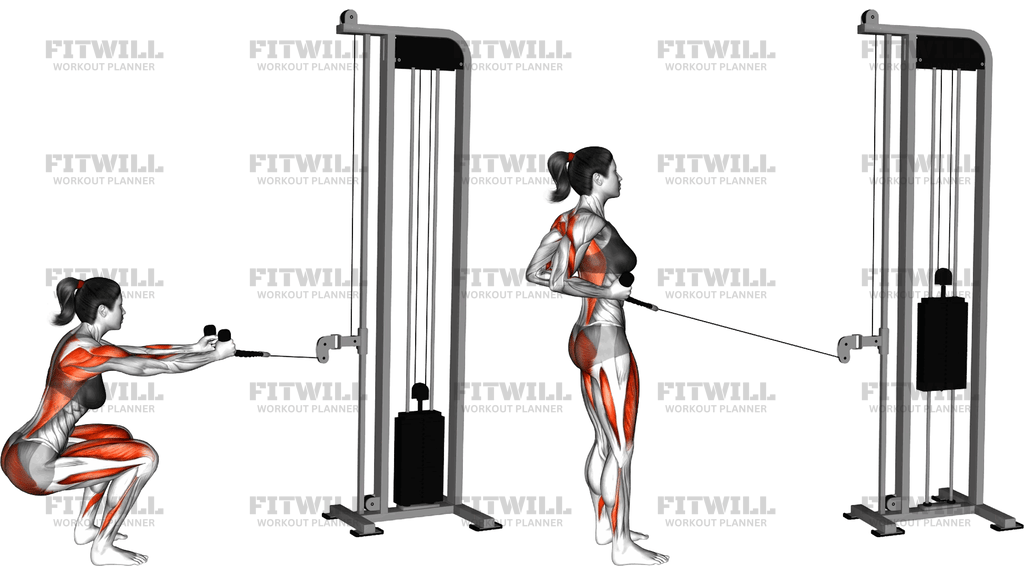
The Cable Squat Row (With Rope Attachment) combines two movements most people train separately: a bodyweight squat and a horizontal cable row. You stand facing away from a low pulley, hold a rope attachment with both hands, sink into a squat with your arms extended in front of you, then stand up while pulling the rope toward your waist. The finished position has you fully upright with the rope drawn in at your sides, elbows driven past your torso.
Because the two actions overlap, this exercise trains your legs and upper back in one continuous pattern. The squat phase loads the quads, glutes, and hamstrings, while the pull phase works the rhomboids, mid traps, lats, rear shoulders, and biceps. Your lower back and core stay busy the entire time holding your torso upright against the backward pull of the cable, which is exactly what makes this movement different from a seated row where a bench does that job for you.
The setup matters more than it might seem. Standing far enough from the machine creates tension before you even move, and keeping the cable angle low means the resistance pulls you backward and down, so you have to brace properly to stay tall. If you stand too close or let the weight stack rest between reps, you lose that anti-extension challenge and the exercise turns into two disconnected movements.
Execution is about sequencing. Sink into the squat with control, keep your chest up and arms long, then drive through your heels to stand while the pull toward your waist happens naturally as you rise. The row should finish as your hips reach full extension, not before, so you never end up half-squatting with the rope already pulled in. Reverse the order on the way down: extend your arms first, then lower into the next squat.
This is a practical choice for busy lifters who want a full-body stimulus from a single station, for beginners learning to connect hip movement with pulling strength, and for anyone who finds barbell rows hard on their lower back since the cable load and upright torso are easier to manage. It also works well as a finisher on leg day or back day, using light to moderate weight for higher reps.
Keep the weight honest. The moment the load forces you to lean forward, yank with your arms, or cut the squat short, you lose the value of the combination. Master the pattern bodyweight or with a light stack first, then build up.
[ Workout Log & Planner ]
Put your next workout in Fitwill
Keep your plan and training log ready when you are.


Instructions
- Clip a rope attachment to the low pulley of a cable machine and set the weight stack to a light-to-moderate load.
- Grip an end of the rope in each hand and step back so your body faces away from the machine with your arms fully extended in front of you and slight tension on the cable.
- Set your feet roughly hip-width to shoulder-width apart, toes turned out slightly, and keep the cable running between your legs or just past your outer thighs.
- Brace your core, lift your chest, and pull your shoulders down and back before you descend.
- Push your hips back and bend your knees to lower into a full squat, letting your arms extend forward with the rope as you go down, torso leaning only slightly.
- Drive through your heels to stand up, and as you rise, pull the rope toward your waist by driving your elbows back past your ribs, squeezing your shoulder blades together at the top.
- Finish standing fully upright, hips extended, with the rope pulled in at your sides and your chest tall.
- Reverse the movement in order: extend your arms forward first, then lower into the next squat under control.
- Exhale as you stand and pull, inhale as you extend your arms and lower back into the squat.
- Complete all reps, then step toward the machine and let the stack settle before releasing the rope.
Tips & Tricks
- The most common mistake is pulling the rope in before you start standing, which turns the lift into a bent-over row and loads your lower back. Time the pull so your elbows reach your sides as your hips reach full extension.
- If you get yanked backward at the bottom of the squat, you are standing too close to the machine or the weight is too heavy. Step back a bit and lighten the load until you can hold the bottom position without being pulled off balance.
- Keep your weight in your heels and mid-foot during the squat. The backward cable pull makes it easy to drift onto your toes, so consciously press the floor away through your heels.
- Avoid shrugging your shoulders toward your ears as you pull. Keep them pressed down so the movement comes from your mid-back rather than your upper traps.
- Do not let your chest collapse forward at the bottom of the squat. If your torso pitches down, drop the weight and work on keeping a proud chest with a neutral spine.
- Let your arms stay long and relaxed during the descent. Your grip should hold the rope, not fight it, so your legs and back can do the actual work.
- Squeeze your glutes hard at the top of each rep to finish hip extension and take strain off your lower back.
- Use smooth, even tension on the rope with both hands. If one arm finishes the pull noticeably sooner, slow down and match your sides.
- Control the eccentric. Snapping back into the squat with a heavy stack swinging is the fastest way to lose form and lose tension.
Frequently Asked Questions
Which muscles does the Cable Squat Row (With Rope Attachment) work?
The pull targets your upper back, especially the rhomboids and mid traps, along with your lats and biceps. The squat portion works your quads and glutes, and your lower back and core stabilize your torso against the cable pull throughout.
Is the Cable Squat Row (With Rope Attachment) good for beginners?
Yes, because the cable provides steady, adjustable resistance and the movement teaches you to link a squat with a pull. Start with a light stack and focus on timing the row to finish as you stand up.
How far should I stand from the cable machine during this exercise?
Far enough that the cable stays taut even at the bottom of your squat, usually one to two steps back from the pulley. If the weight stack touches down between reps or you feel pulled off balance, adjust your distance before changing the load.
Why use a rope attachment instead of a straight bar for the Cable Squat Row?
A rope lets each hand move independently and gives you a neutral grip, which is friendlier to the wrists and shoulders. It also allows you to pull slightly apart at the end, encouraging a stronger shoulder blade squeeze.
Should I pull the rope to my waist or lower chest?
Aim for your waist or lower ribcage with your elbows driving past your sides, which keeps the emphasis on your upper back. Pulling to the chest usually means the elbows flare and the shoulders take over.
What is the most common mistake with this exercise?
Starting the pull while still low in the squat, which turns it into a bent-over row and strains the lower back. The correct order is squat down, arms stay long, then stand and row together.
Can I substitute another exercise for the Cable Squat Row (With Rope Attachment)?
A dumbbell squat paired with a bent-over row covers similar ground, though with more lower back demand. A seated cable row plus separate squats also works if you do not mind splitting the movement into two exercises.
How deep should I squat when the cable is pulling me backward?
Go as deep as you can while keeping your heels down, chest up, and spine neutral. If depth forces your torso to pitch forward, reduce the weight first, then work on depth.
How many sets and reps should I do?
Because it blends two movement patterns, moderate reps work well: two to four sets of 10 to 15 reps with a controlled tempo. Go heavier only once the timing of the squat and row feels automatic.
Is this exercise safe for people with lower back issues?
The upright torso and cable resistance are generally easier on the back than heavy free-weight rows, but the squat and bracing demands are still real. Use a light load, keep the chest tall, and stop if you feel pressure in your lower back rather than your legs and mid-back.