Weighted Ball Reverse Hyperextension On Ghd
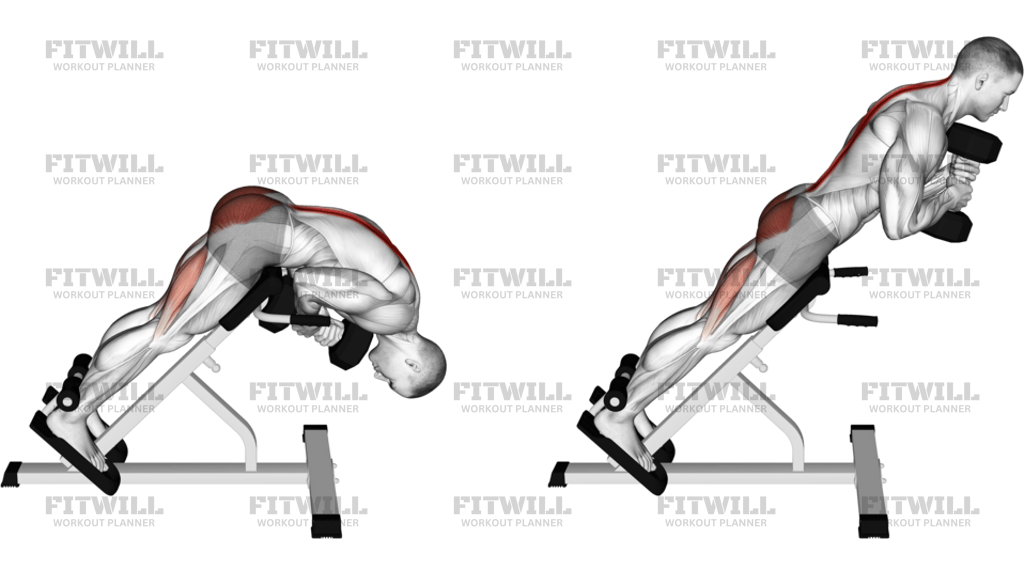
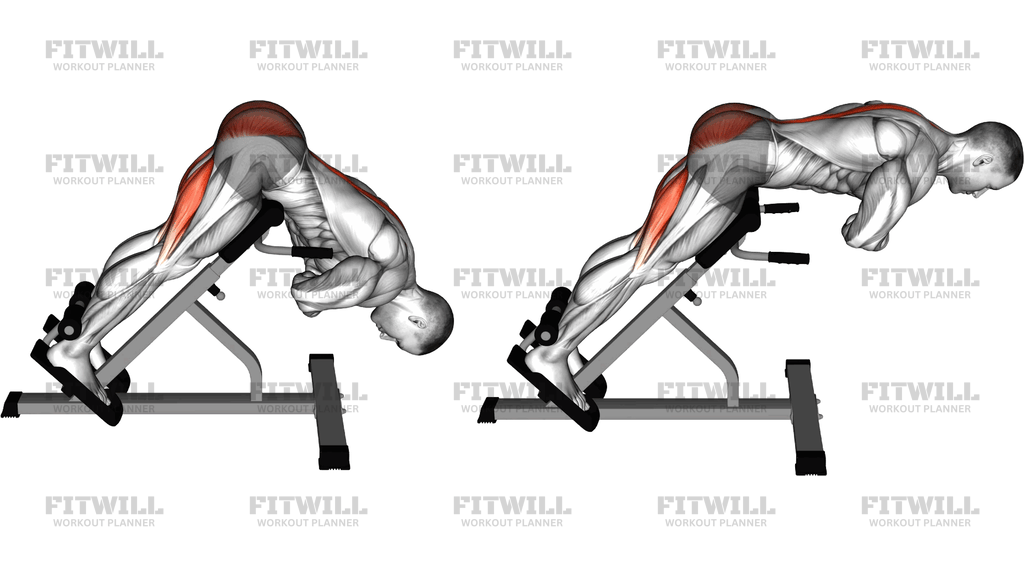
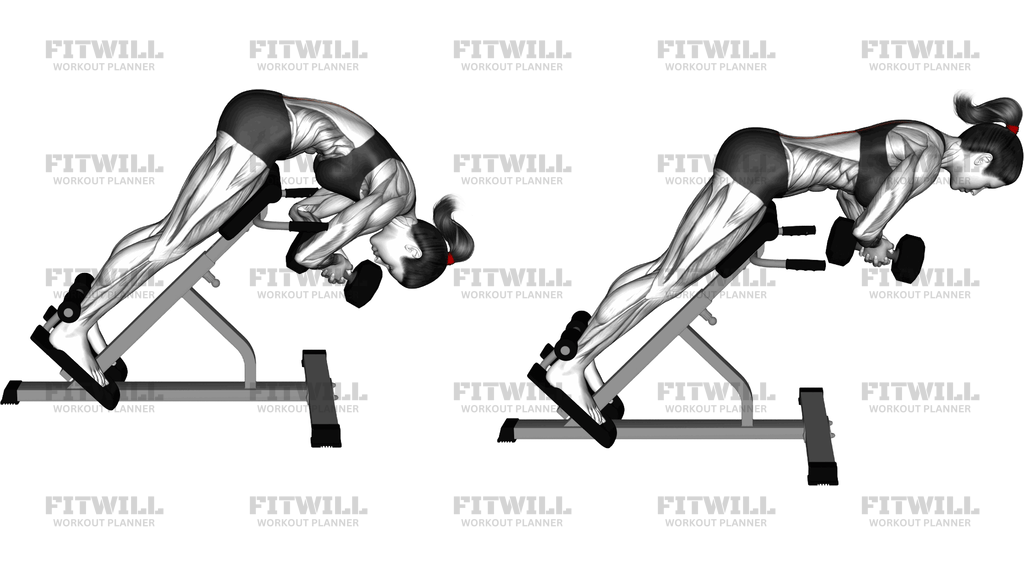
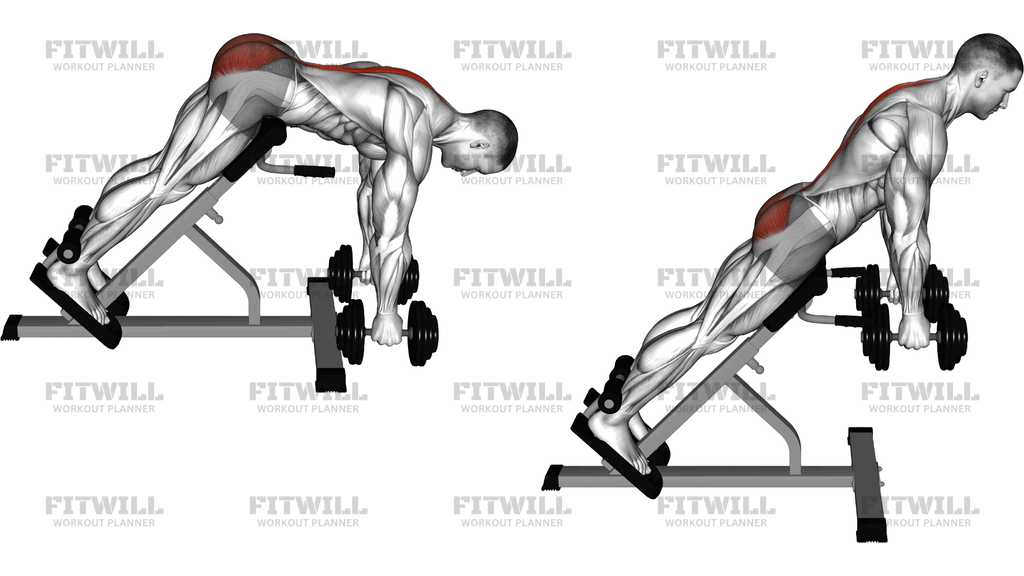
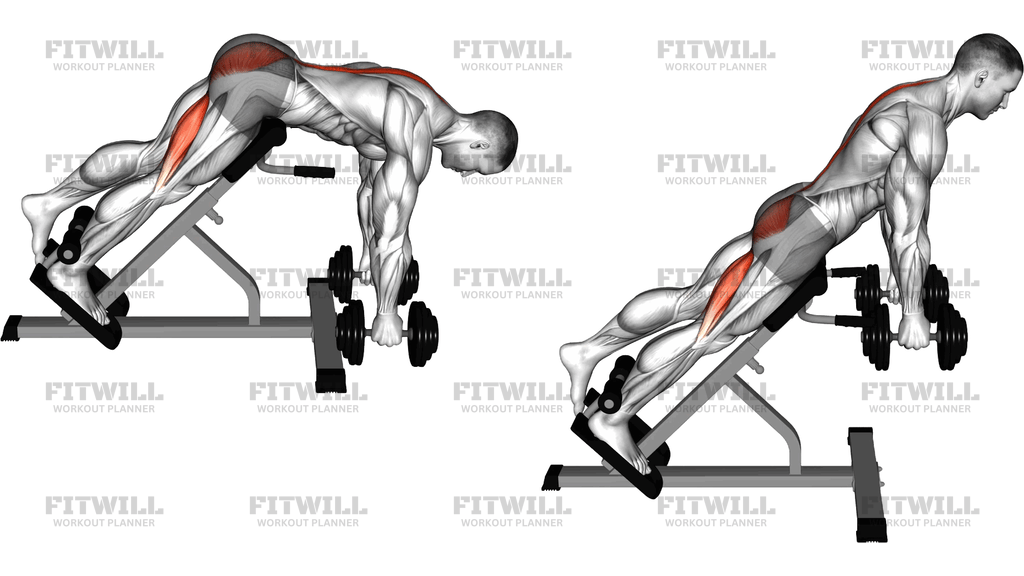
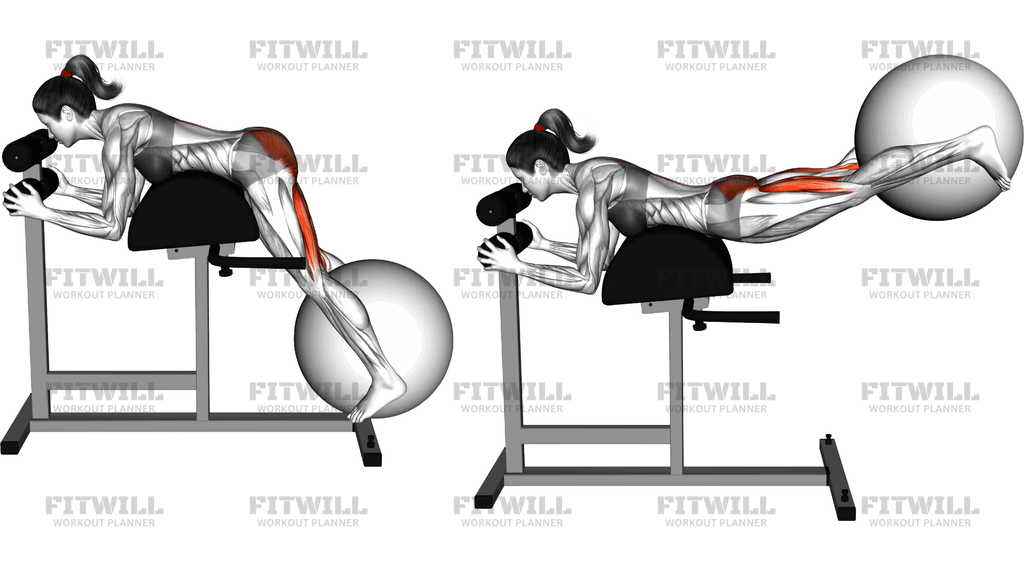
Weighted Ball Reverse Hyperextension On Ghd is a posterior-chain movement performed face-down on a glute-ham developer or Roman chair. Instead of letting the legs hang free or holding a dumbbell between the feet, you squeeze a stability ball between your lower legs and raise your legs up to hip level or slightly beyond by extending at the hips. The ball acts as the added load while also forcing your adductors and hamstrings to work isometrically just to keep it from slipping.
The setup on the pad is what makes this exercise work. Your hips need to rest on top of the rounded pad so they can hinge freely, with your torso anchored by holding the handles or pad in front of you and your upper body braced. If your hips slide back off the pad, the movement turns into a short, choppy leg lift that mostly stresses the lower back. If your hips are too far forward, you lose leverage and the range shortens.
This exercise suits lifters who already handle bodyweight reverse hyperextensions comfortably and want more resistance without clutching a dumbbell between their feet. The ball is easier on the ankles and knees than a hard implement, and because it deforms slightly, it lets the legs stay in a more natural position at the top. It is a solid choice for glute and hamstring development, and many lifters use it as a accessory after squats, deadlifts, or hip thrusts.
To execute it well, think of the lift as a hip extension, not a leg raise. Squeeze the ball firmly, brace your trunk, and drive the legs upward by contracting the glutes until your body forms a straight or slightly extended line from shoulders to feet. Pause briefly at the top, feel the glutes working, then lower under control rather than dropping the legs. Swinging kills the effect and loads the lumbar spine with momentum.
Because the ball adds instability, start lighter than you think you need to and keep the repetitions in a moderate range. The most common failure points are arching the lower back excessively at the top, yanking with the arms to lift the torso, and letting the ball drift out from between the legs. Keep the arms as passive anchors, move only at the hips, and treat a smooth, quiet return as part of every rep.
[ Workout Log & Planner ]
Put your next workout in Fitwill
Keep your plan and training log ready when you are.


Instructions
- Set the pad of the GHD or Roman chair so that when you lie face-down on it, your hip crests sit right at the top edge of the pad and your legs hang free below it.
- Lie chest-down on the pad and grip the handles or the front edge firmly; your forearms and chest should carry your upper body while your hips stay on top of the pad.
- Place a stability ball between your lower legs or ankles and squeeze it firmly with both legs so it cannot slip during the set.
- Brace your core, tuck your chin slightly, and pull your shoulders down away from your ears so your upper body stays anchored and still.
- Exhale and raise your legs by extending at the hips, squeezing the glutes until your legs are level with or slightly above your torso, keeping the ball locked between your calves.
- Pause for one to two seconds at the top, actively squeezing the glutes rather than arching your lower back to gain extra height.
- Inhale and lower your legs slowly back to the hanging start position, resisting gravity the whole way down instead of dropping.
- Re-squeeze the ball and reset your brace before starting the next repetition.
- Complete your set, then release the ball carefully from between your legs before dismounting from the bench.
Tips & Tricks
- If the ball starts slipping toward your feet mid-set, squeeze higher up between the calves and ankles, or use a slightly larger ball for a firmer contact point.
- Hip position on the pad is everything: if your hips slide backward off the edge, the exercise becomes a low-back-dominant leg lift, so reset your position between sets.
- Stop the leg raise at or just above torso level. Chasing extra height by hyperextending the spine shifts work away from the glutes and onto the lumbar area.
- Keep your arms as passive hooks on the handles. Pulling with the arms to lever the chest up is a sign the load or range is too aggressive.
- A slow three-second lowering phase dramatically increases glute and hamstring demand without adding any ball weight.
- If your hamstrings cramp, that usually means the knees are bending and the ball is being pulled toward the hips; think about extending the whole leg as one rigid unit.
- Warm up with two or three bodyweight reverse hyperextension sets before adding the ball, since the contact squeeze changes the movement pattern slightly.
- Avoid bouncing the legs off the bottom position; a dead stop at the hang keeps tension on the hips instead of momentum.
- Progress by slowing the tempo or adding a longer top pause before moving to a heavier medicine ball or ankle-weight version.
Frequently Asked Questions
Which muscles does Weighted Ball Reverse Hyperextension On Ghd work?
The glutes are the primary mover, with the hamstrings contributing strongly during hip extension. The lower back muscles work to stabilize the spine, and the inner thighs help hold the ball in place.
Why use a stability ball instead of a dumbbell for this exercise?
The ball is softer on the ankles and knees, spreads the load over more of the lower leg, and forces the legs to work as one unit to keep it from dropping. It also lets you increase resistance gradually by choosing a larger or firmer ball.
Is Weighted Ball Reverse Hyperextension On Ghd suitable for beginners?
Beginners should master the bodyweight version first, learning to move at the hips without arching the lower back. Once that pattern is solid and the ball can be held comfortably for a full set, the weighted version is a reasonable next step.
How high should my legs rise during the movement?
Lift until your legs are roughly in line with your torso, or slightly above it if you can do so by squeezing the glutes. Height gained by arching the lower back reduces the glute stimulus and increases lumbar stress.
Where exactly should my hips sit on the GHD pad?
Your hip crests should rest on top of the pad so they can flex and extend freely, with the legs hanging clear of the machine. If the hips hang off the back edge, you lose leverage and the exercise becomes a shorter, back-dominant lift.
What should I do if the ball keeps slipping out between my legs?
Squeeze between the calves and ankles rather than the knees, deflate the ball slightly for a better grip, or dry your legs if sweat is the problem. A slipping ball breaks concentration and shortens the range, so fix contact before adding more reps.
Can I substitute Weighted Ball Reverse Hyperextension On Ghd if I don't have a GHD bench?
A Roman chair, hyperextension bench set at a flat angle, or even lying hips-down on a high flat bench with a partner anchoring your torso can work. The key requirement is that your hips are supported and your legs hang free behind you.
How many sets and repetitions should I use?
Two to four sets of eight to fifteen controlled repetitions works well for most lifters using it as a glute and hamstring accessory. Because the ball adds a stabilizing squeeze, expect the legs to fatigue faster than in the unweighted version.
Is it safe for my lower back?
When performed with controlled range, a braced trunk, and no spinal arching at the top, it is a generally safe posterior-chain exercise. If you feel sharp lumbar discomfort rather than muscle effort, reduce the range, lower the load, or check your hip position on the pad.