Stick Assisted Lying Supine Shoulder Flexion
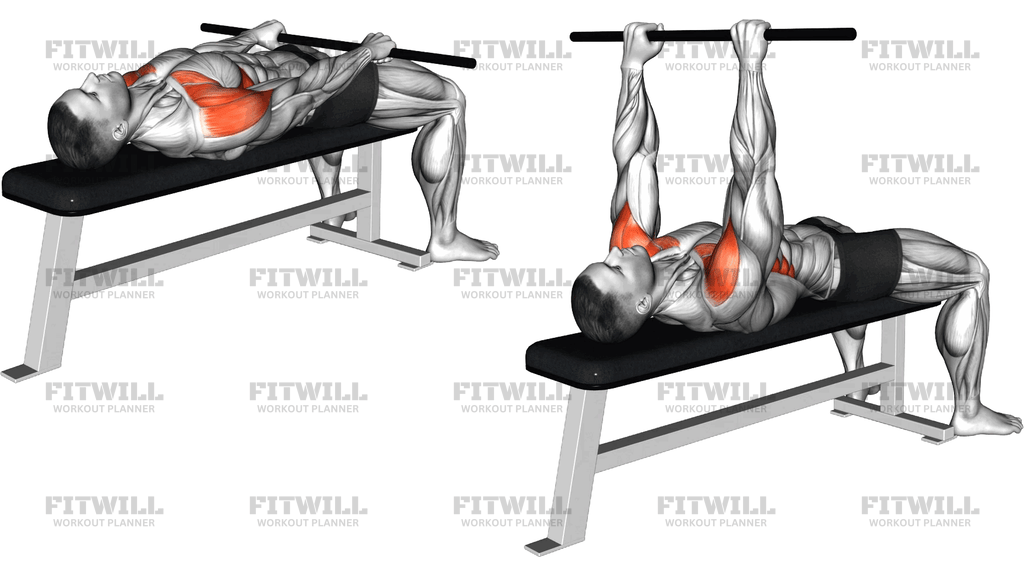
The Stick Assisted Lying Supine Shoulder Flexion is a controlled mobility drill performed on your back with a light stick held in both hands. You lie supine with your knees bent and feet flat, grip the stick a little wider than shoulder width, and slowly sweep your straight arms from your thighs up overhead until the stick touches or nearly touches the floor above your head, then reverse the path back down. Lying on the floor gives you constant feedback, because the ground prevents your ribs from flaring and your lower back from arching away as the arms travel overhead.
This movement is most useful for people who feel a pinch or a block when reaching overhead, whether that comes from tight lats and chest muscles, limited shoulder flexion after an injury or long periods of sitting, or simply a nervous system that has never been asked to move through that range. It is also a common warm-up drill before pressing, pulling, or throwing, and a gentle recovery drill on days between heavier training sessions.
The main work happens at the shoulder joint as the front shoulders and the surrounding muscles lengthen and control the arm as it passes the torso and travels overhead. Because the stick keeps both hands at a fixed width, each side is encouraged to contribute evenly, which makes the drill a practical way to expose and gently correct side-to-side differences in overhead range. The chest and lats receive a passive stretch in the end position, while the upper back and the small stabilizing muscles around the shoulder blade work to keep the arm path steady.
The setup matters more than it looks. Bent knees flatten the lower back against the floor so the lumbar spine cannot borrow range that the shoulders should be producing. A light grip on the stick is important too; squeezing hard turns the drill into an arm exercise and makes the shoulders guard rather than release. Move only as far as the arms can stay straight and the ribs can stay quiet, and let the end range expand gradually over weeks rather than forcing it on day one.
Done well, the stick glides through a smooth arc with no shrugging, no elbow bend, and no back arching, and the point of greatest difficulty moves slowly higher over time. Done carelessly, it becomes a rapid arm swing that irritates the very structures you are trying to mobilize. Treat it as a patient, repeatable practice: a few slow, clean passes at the start of a session will do more for your overhead motion than one aggressive, forced reach.
As with any flexibility work, discomfort is a signal to shorten the range, not to push through it. Keep the movement pain-free, breathe steadily, and stop if you feel sharp pain, numbness, or tingling in the shoulder or arm.
[ Workout Log & Planner ]
Put your next workout in Fitwill
Keep your plan and training log ready when you are.


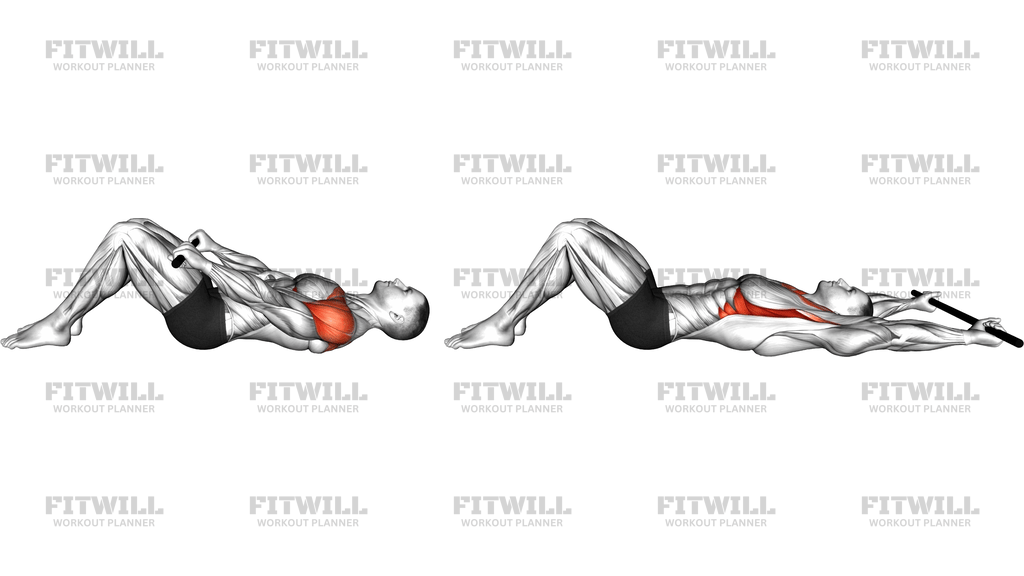
Instructions
- Lie on your back on an exercise mat with your knees bent and feet flat on the floor, so your lower back rests comfortably against the ground.
- Hold a light stick with an overhand grip slightly wider than shoulder width, arms straight, resting the stick across the front of your thighs.
- Set your ribs down and gently brace your core so your lower back stays in contact with the floor throughout the drill.
- Keeping both elbows locked straight, slowly raise the stick up from your thighs toward the ceiling, letting the shoulders rotate naturally as the arms pass vertical.
- Continue the arc until the stick reaches the floor overhead or your arms reach their comfortable end range, keeping your head relaxed and neutral.
- Pause for one or two breaths in the stretched position, letting the chest and lats lengthen without forcing the stick down.
- Reverse the path with the same control, sweeping the stick back down until it returns to your thighs.
- Exhale as you lift the stick and inhale on the way down, keeping the breathing smooth and unhurried.
- Complete 8 to 12 slow passes, or hold the top position for 20 to 30 seconds if you are using the drill as a stretch.
- Reset between reps by relaxing your grip and letting the shoulders settle before starting the next pass.
Tips & Tricks
- If the stick cannot reach the floor overhead, stop where the elbows want to bend and work there; the range will improve faster without forcing it.
- Watch for the ribs lifting or the lower back peeling off the floor near the top of the arc, which usually means the range is coming from the spine instead of the shoulders; shorten the range and keep the back down.
- Keep the grip light, just enough to control the stick, so the shoulders stay relaxed and the chest muscles do not tense against the stretch.
- If one arm travels noticeably further than the other, let the stiffer side set the range for both arms rather than pushing the loose side deeper.
- Keep the stick level throughout the arc; a tilted stick usually means the lead hand is doing the steering while the trailing shoulder lags behind.
- Do not shrug the shoulders toward your ears as the arms go overhead; think of keeping the shoulders gently drawn down the back as the arms rise.
- A few slow passes before pressing or overhead work often feels better than a long static hold, so adjust the rep style to the session.
- If your shoulders feel pinched at the very top, angle your grip slightly wider on the stick, which shortens the lever and reduces the demand at end range.
- Keep the head resting flat on the mat; craning the chin up to watch the stick pulls on the neck and changes the shoulder path.
Frequently Asked Questions
Which muscles does the Stick Assisted Lying Supine Shoulder Flexion work?
It primarily targets the front shoulders as they lengthen and control the arm overhead, with a stretch through the chest and lats in the end position. The small stabilizing muscles around the shoulder blades work to keep the arm path smooth.
Why lie on the floor instead of doing standing shoulder flexion with a stick?
Lying supine stops your lower back from arching and your ribs from flaring, so the range you gain has to come from the shoulders rather than the spine. The floor also supports the arms, which makes it easier to relax into the end range.
How wide should my grip be on the stick?
Start slightly wider than shoulder width so both shoulders can move freely. If the top of the movement feels pinched or forced, widen the grip; as your range improves you can gradually bring the hands closer together.
Why do my knees need to be bent?
Bent knees tilt the pelvis and flatten the lower back against the floor, which prevents the lumbar spine from substituting for shoulder range. If you stretched out with straight legs, your back would arch and the drill would lose its precision.
Is the Stick Assisted Lying Supine Shoulder Flexion good for beginners?
Yes, it is one of the gentler ways to work on overhead mobility because the floor supports the arms and the stick sets a fixed, even hand width. Beginners should keep the range short of any pinching and prioritize slow, controlled passes.
How close to the floor should the stick get overhead?
Only as close as it can come with straight elbows and your lower back staying flat on the floor. Many people start several inches short, and the stick touches down naturally as mobility improves over weeks of practice.
What is the most common mistake in this drill?
Bending the elbows or arching the back to make the stick reach the floor, both of which fake extra shoulder range. If either happens, stop at that point in the arc and let the true end range expand gradually instead.
Can I use a broomstick or PVC pipe instead of a training stick?
Yes, any light, straight bar of similar length works well. The key is that it is rigid, comfortable to grip, and light enough that your arms are not working against load during the stretch.
Should I use this as a warm-up or as a stretch?
Both, depending on the format. Slow, continuous passes with brief pauses work well as a warm-up before pressing or pulling, while holding the top position for 20 to 30 seconds turns it into a longer stretch for the chest and lats.
Is it safe if I have a shoulder injury?
The supine position and the support of the stick make this a low-load drill, but you should stay well short of any pinching, sharp pain, or tingling, and check with a qualified professional first if you are recovering from a shoulder problem.