Dumbbell Chest Supported Row
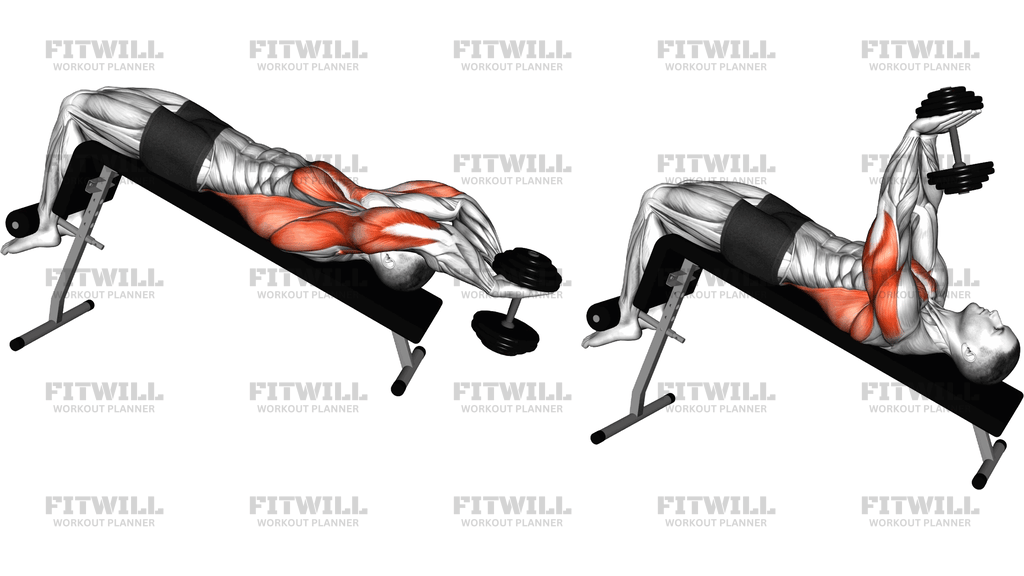
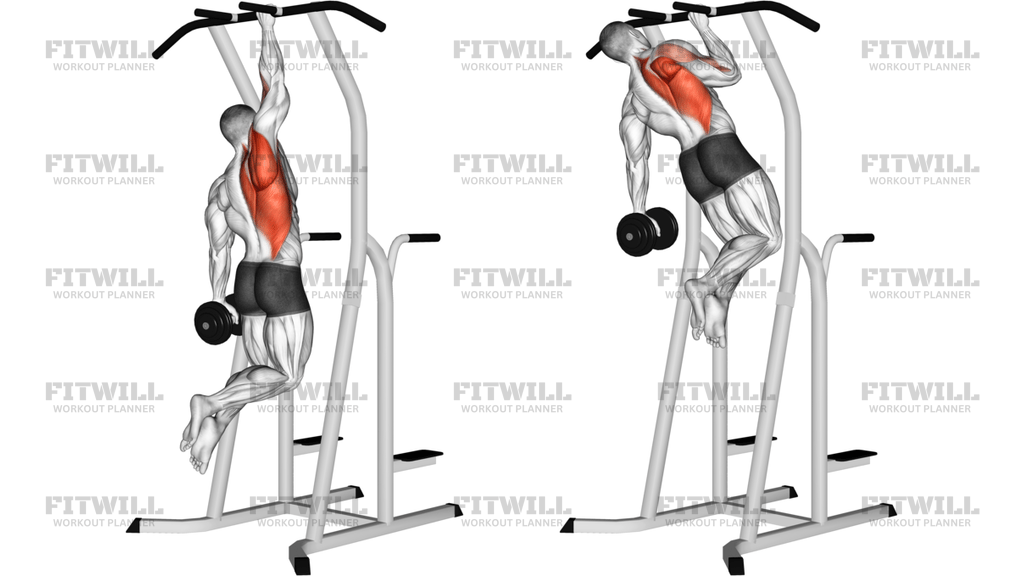
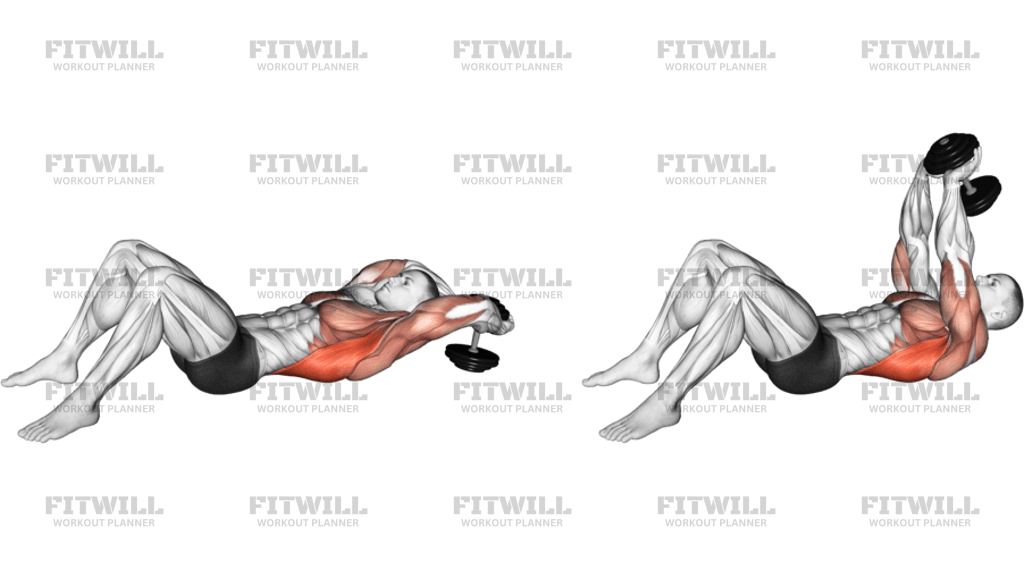
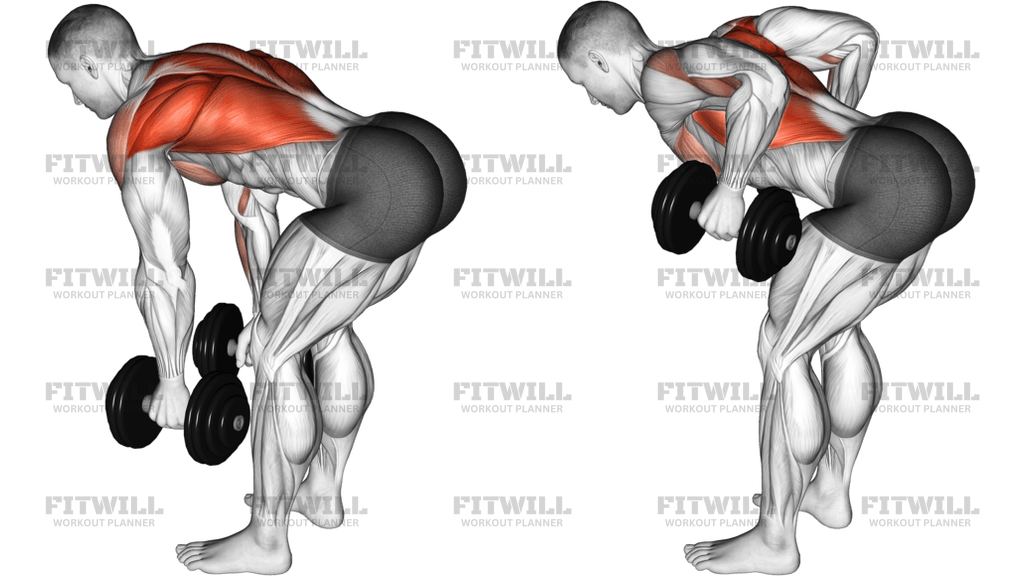
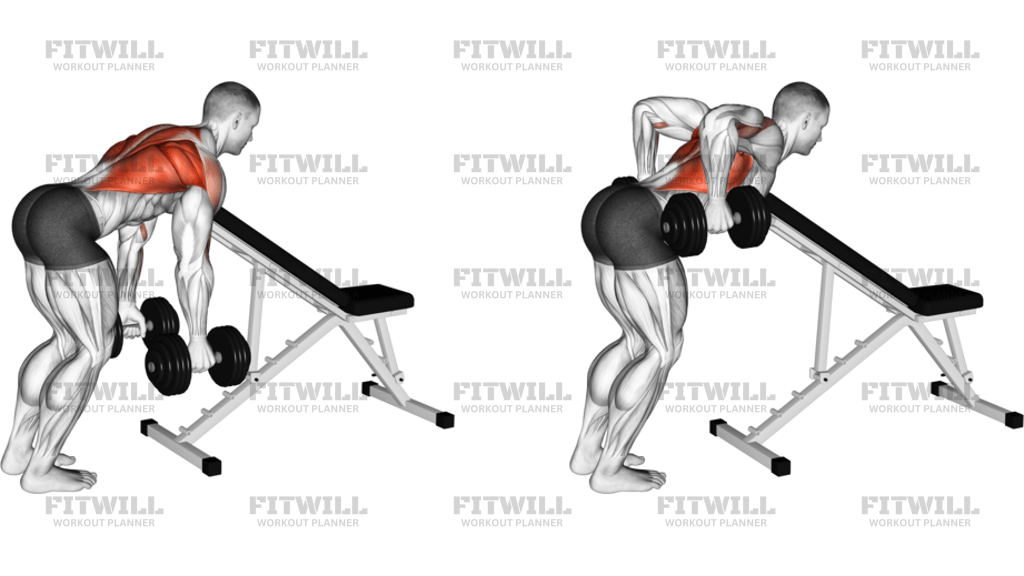
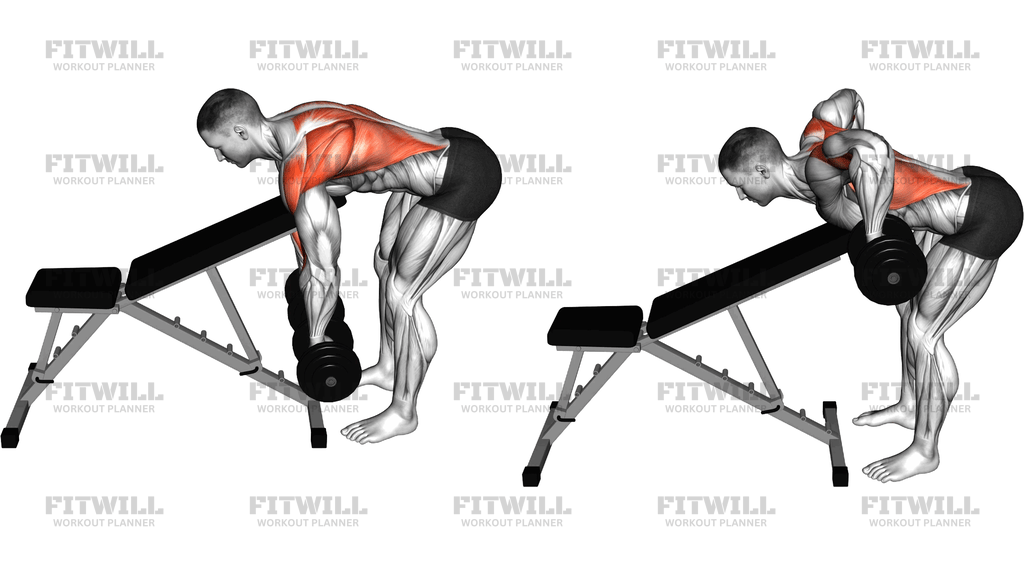
The Dumbbell Chest Supported Row is a horizontal pulling exercise performed lying face down on an incline bench with a dumbbell in each hand. Because your chest stays glued to the pad for the entire set, your lower back and legs are taken out of the equation, and the work lands squarely on the lats, rhomboids, traps, and rear shoulders. The version shown starts with the arms hanging straight down from the shoulders, then pulls the dumbbells up until the elbows pass just behind the torso before lowering them back under control.
The main reason lifters choose this over a bent-over row is stability. In a standing row, fatigue tends to show up in your lower back before your upper back gets enough work, and heavier weights turn the set into a battle against gravity and body position rather than a focused pull. With the chest braced on an incline bench, you can push the target muscles close to failure without your torso collapsing or your hips drifting upward. That makes it a favorite for anyone building back thickness, cleaning up posture from long hours of sitting, or working around a cranky lower back that dislikes free-standing rows.
Setup determines how well this exercise works. The bench angle matters more than most people realize: set it around 30 to 45 degrees. Too shallow and your chest has trouble staying in contact as you pull; too steep and the row turns into something closer to a shrug with the arms, and the range shortens. Your feet stay planted on the floor on either side of the bench, and your head rests in a neutral line with your spine rather than craning up to watch the dumbbells.
Execution comes down to pulling with the elbows, not the hands. Think about driving your elbows up and back toward your hips while your shoulder blades pinch together at the top. Pause briefly where the dumbbells reach the bench line or just past it, then lower them with control until your arms are fully extended again. Letting the shoulder blades prostrate slightly at the bottom stretches the lats and upper back before the next rep, giving you a full working range rather than short, bouncy pulls.
This movement slots into almost any upper body or pull-focused day. It pairs naturally with pressing work like bench press or push-ups, balances out shoulder-heavy programs, and works well as a back finisher when performed for higher reps with moderate dumbbells, or as a primary strength movement with heavier loads. Since the bench removes most of the balance demand, it is also one of the more approachable rowing variations for lifters who are new to free-weight pulling.
[ Workout Log & Planner ]
Put your next workout in Fitwill
Keep your plan and training log ready when you are.


Instructions
- Set an adjustable bench to roughly 30-45 degrees and place a dumbbell of your chosen weight on each side of the bench within easy reach.
- Lie face down on the bench so your chest and upper abdomen are fully supported, with your feet planted flat on the floor on either side of the bench for stability.
- Pick up both dumbbells and let your arms hang straight down toward the floor, palms facing each other or turned slightly inward, with a light, secure grip.
- Rest your chin slightly off the pad so your head stays in line with your spine, and brace your core as if preparing for a light punch to the stomach.
- Start the pull by driving your elbows up and back toward your hips, keeping them around 45 degrees from your torso rather than flaring straight out.
- Pull until the dumbbells reach the top of the bench line or your elbows move just past your torso, and squeeze your shoulder blades together at the top for a one-second pause.
- Lower the dumbbells slowly under control until your arms are fully extended and your shoulder blades have spread slightly apart at the bottom.
- Exhale as you pull the weights up, and inhale as you lower them back down, keeping the breathing steady throughout the set.
- Keep your chest in contact with the pad for every rep, and reset your grip and brace between reps if the weights shift or you lose tension.
Tips & Tricks
- If your chest keeps lifting off the pad, the angle is too shallow or the weight is too heavy; raise the bench slightly and drop the load before continuing.
- Avoid shrugging the dumbbells up with your upper traps. If your shoulders creep toward your ears, consciously pull your elbows down and back instead of up.
- Do not bounce the dumbbells off the bottom position. Touching the floor kills tension and invites jerky reps; stop the descent just before the plates reach the ground.
- Keep your neck neutral by looking at a spot on the floor a few inches in front of the bench rather than craning up, which strains the neck and shortens the pull.
- Squeeze the top for a full second on each rep. Because the bench removes momentum, the pause is what turns this from an arm exercise into an upper back builder.
- If your biceps fatigue before your back, lighten the weight and focus on leading with your elbows; a death grip on the handles also recruits extra forearm work you don't need.
- Keep your hips pressed into the bench. Letting them rise turns the movement into a partial body-weight row and shifts tension away from the lats.
- Set the dumbbells down on the floor, not back onto the bench, when you finish the set so you don't have to twist awkwardly under load.
Frequently Asked Questions
What muscles does the Dumbbell Chest Supported Row work?
The primary movers are the lats and the muscles of the upper back, including the rhomboids and mid traps, with the rear shoulders and biceps assisting. The chest support means the lower back works only to stabilize, not to hold your torso up.
What bench angle should I use for the Dumbbell Chest Supported Row?
Around 30 to 45 degrees works best for most lifters. Lower angles let the chest drift off the pad as you pull, while higher angles shorten the range and shift the work upward toward the traps.
Is the Dumbbell Chest Supported Row good for beginners?
Yes, it is one of the most beginner-friendly rowing variations because the bench stabilizes your torso and removes the balance and lower back demands of a standing row. Start with light dumbbells and focus on pulling with the elbows rather than the hands.
Why is my lower back sore after this exercise if my chest is supported?
Some lower back activity is normal since the erector spinae stabilize you against the bench angle, but sharp or lingering soreness usually means your hips are lifting off the pad or the bench angle is too steep. Keep your hips in contact with the bench and your feet planted firmly.
Should I use a prone or neutral grip on the Dumbbell Chest Supported Row?
A neutral grip with palms facing each other is the most comfortable default and keeps the shoulders in a friendly position. Rotating the palms slightly forward as you pull can increase lat emphasis, but stop if you feel any shoulder pinching.
How does this differ from a regular bent-over dumbbell row?
The chest support removes the isometric hold on your hips and lower back, so you can load the upper back harder and more consistently. The bent-over row allows more body english, which makes it easier to cheat and harder to gauge whether the back or the lower back is doing the work.
What can I substitute if I don't have an adjustable bench?
A seated cable row, a chest-supported machine row, or dumbbell rows done with one hand braced on a flat bench are all reasonable options. If only a flat bench is available, a single-arm dumbbell row with knee and hand on the bench is the closest match.
How many sets and reps should I do?
For strength and back thickness, 3 to 4 sets of 8 to 12 reps with a controlled tempo works well. For a higher-rep finisher, 2 to 3 sets of 12 to 15 with a pause at the top is very effective.
Is it safe to go heavy on the Dumbbell Chest Supported Row?
It handles heavy loads better than most rows because the bench supports your torso, but the setup becomes the limiting factor. If getting into position or hoisting the dumbbells up requires twisting or straining, the weight is too heavy; ask for a hand-off or use a lighter pair.