Dumbbell Incline Pullover
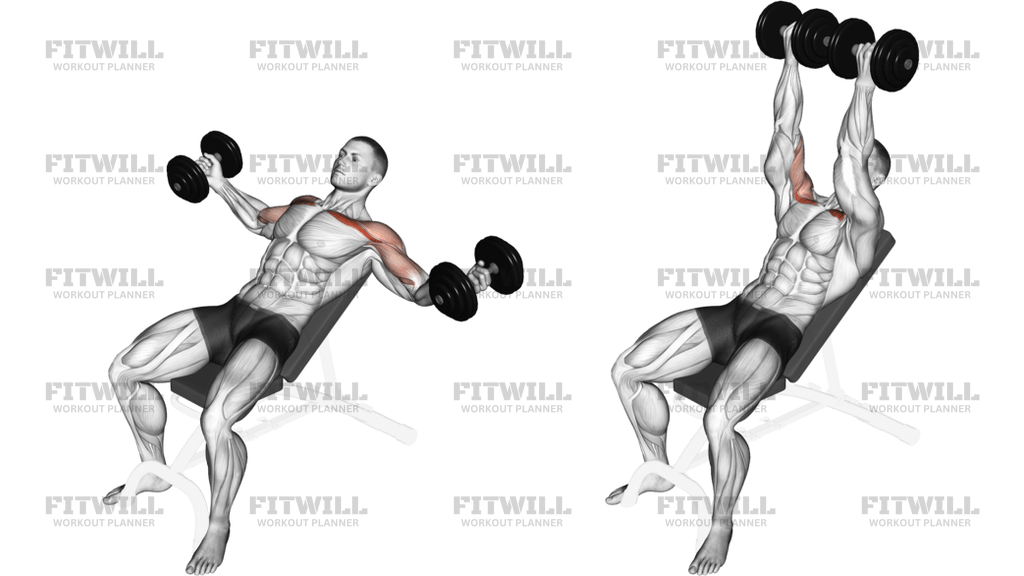
The Dumbbell Incline Pullover is an arc-based upper body movement performed lying back on an incline bench, usually set between 30 and 45 degrees. You hold a single dumbbell in both hands, press it to arm's length over your chest, and then sweep it back over your head in a controlled arc before pulling it forward again along the same path. Compared with the classic flat-bench version, the incline angle shifts more of the work toward the upper chest while still loading the lats hard through the stretched position.
This exercise earns its spot as a finisher or accessory lift because it trains the chest and lats simultaneously through a long range of motion that pressing and rowing movements never touch. The stretched position behind your head puts the pec fibers and lat fibers under tension at full elongation, which is a strong stimulus for hypertrophy, and the serratus anterior works to control the shoulder blades as the arms travel overhead. Your triceps hold an isometric contraction to keep the elbow angle fixed, and your core stays engaged to keep your ribs from flaring as the weight passes over your face.
Setup matters more here than in most dumbbell movements. Because the weight travels behind your head on an angled bench, your body position determines whether the load stays on the target muscles or dumps stress into your lower back and shoulders. Sit squarely on the bench, keep your hips and upper back in contact with the pad the entire time, and choose a weight you can control at the bottom of the arc. Hands cupping the top head of the dumbbell, thumbs wrapped around or crossing under the handle, keep the bell from slipping.
Execution is a smooth semicircle, not a press and not a straight-arm raise. Lower the dumbbell back until your upper arms are roughly in line with your torso or slightly beyond, feeling a deep stretch across the chest and sides of the ribs, then pull the bell back up by driving your elbows toward your hips. Keep a soft, fixed bend in the elbows throughout, around 15 to 20 degrees, so the movement comes from the shoulders rather than the arms straightening and bending.
The Dumbbell Incline Pullover fits well at the end of a chest or back day, when the target muscles are pre-fatigued and a moderate weight is enough to create a strong stimulus. It is also popular with lifters who want to improve overhead shoulder mobility and thoracic extension under load, since the bottom position gently encourages the upper back to extend. Start conservatively with the weight and range, and expand both gradually as your shoulders adapt.
The main safety point is respecting the position of the dumbbell over your face and throat. Never let the arc drift wide or lose control at the bottom, and if you feel pinching at the front of the shoulder or strain in the neck, shorten the range or reduce the load before continuing.
[ Workout Log & Planner ]
Put your next workout in Fitwill
Keep your plan and training log ready when you are.


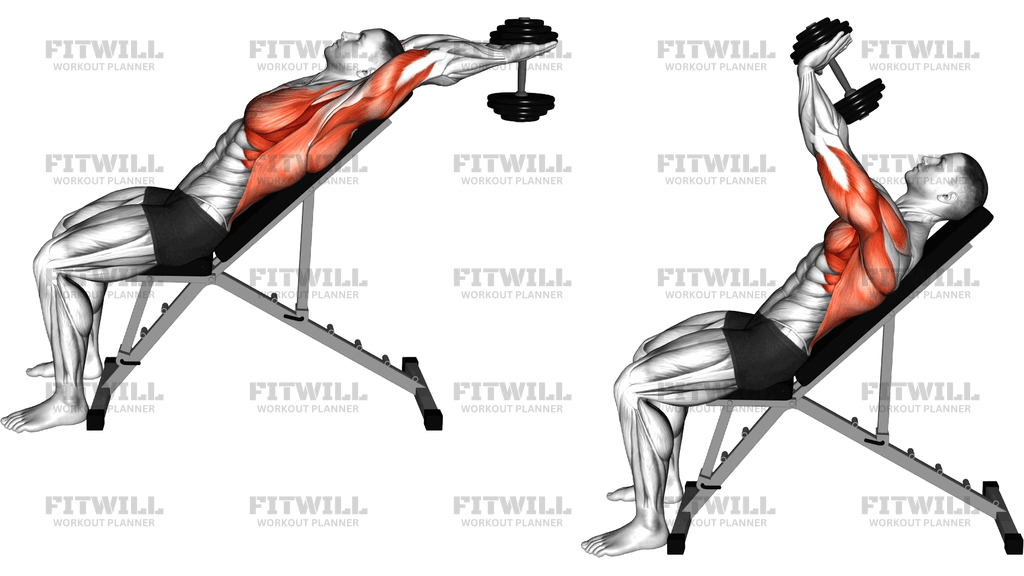
Instructions
- Set an incline bench to roughly 30 to 45 degrees and place a dumbbell on the floor within easy reach of the seat.
- Sit on the bench with your feet flat on the floor, then pick up the dumbbell with both hands cupping the top head of the bell, thumbs around the weight or crossed beneath the handle.
- Walk the weight up to your chest, lean back onto the bench, and press the dumbbell to arm's length directly above your chest with a slight bend in both elbows.
- Draw your shoulder blades down and back, brace your abdominals lightly, and keep your hips and upper back glued to the pad.
- Inhale and lower the dumbbell in a smooth arc back over your head until your upper arms are in line with or slightly behind your torso, keeping the elbow bend fixed.
- Pause briefly in the stretched position and feel the tension across the chest and lats without letting your lower back arch off the bench.
- Exhale and pull the dumbbell back over your face in the same arc by driving your elbows down and toward your hips, leading with the elbows rather than the hands.
- Finish each rep with the dumbbell stacked over your chest, arms extended, before starting the next lowering phase.
- Complete all reps, then bring the dumbbell back to your chest, sit up, and set it on the floor.
- Keep breathing steady throughout, inhaling as the weight travels back and exhaling as you pull it forward.
Tips & Tricks
- If the dumbbell feels like it is pulling your shoulders off the bench at the bottom, the angle is too steep or the weight is too heavy, so lower the bench toward 30 degrees or drop the load.
- Bending and straightening the elbows turns the pullover into a triceps extension; lock your elbow angle at setup and hold it for every rep.
- Flared or shrugging shoulders at the top are a common fault; reset your shoulder blades down into the pad before each lowering phase.
- Letting the ribs flare and the lower back arch off the bench shifts work away from the chest and lats; exhale as you pull forward and keep the core braced.
- A deep stretch feels productive, but going far past your shoulder range invites strain at the front of the shoulder, so stop the arc where control remains.
- Keep the arc narrow and directly over the midline of your body; letting the bell drift out to one side loads the shoulders unevenly.
- Grip the dumbbell by one head rather than the handle with both hands stacked, which keeps the bell balanced and your wrists neutral.
- If your grip fatigues before your chest and lats do, use a lighter bell for higher reps or chalk your hands instead of squeezing harder.
- Treat this as a stretch-focused accessory lift, so use moderate weight, slower lowering, and higher reps rather than chasing heavy loads.
Frequently Asked Questions
What muscles does the Dumbbell Incline Pullover work?
The primary movers are the chest, with emphasis on the upper fibers due to the incline angle, and the lats through the stretched overhead position. The serratus anterior, teres major, and triceps, which work isometrically, assist throughout.
Why use an incline bench instead of a flat bench for pullovers?
The incline changes the arc of the dumbbell relative to your torso, placing greater tension on the upper chest and allowing a slightly different lat stretch. It also tends to feel friendlier on the shoulders for lifters who find flat-bench pullovers uncomfortable.
How do I hold the dumbbell during the Dumbbell Incline Pullover?
Cup both hands around the top head of the dumbbell so the bell hangs vertically, with your thumbs wrapped around the weight or crossed beneath the handle. This grip keeps the dumbbell balanced and prevents it from slipping as the angle changes.
Should my arms stay straight during the Dumbbell Incline Pullover?
Keep a fixed, slight bend of about 15 to 20 degrees in the elbows from start to finish. Fully locked arms strain the elbow joints, and bending the elbows further turns the exercise into a triceps extension.
Is the Dumbbell Incline Pullover suitable for beginners?
Yes, provided you start with a light dumbbell and a conservative range of motion. Practice the arc over your chest and head with a weight you could stop mid-rep before progressing.
What is the most common mistake with this exercise?
The most common mistake is turning the pullover into a pressing or extension movement by bending the elbows and lifting with the arms. The second is arching the lower back off the bench as the weight goes overhead, which shifts tension away from the target muscles.
How deep should I lower the dumbbell behind my head?
Lower until your upper arms are roughly in line with your torso or just slightly past, and only go deeper if you can keep your hips and upper back on the pad with no shoulder discomfort. The stretch should feel broad across the ribs, not pinched at the front of the shoulder.
Can I substitute the Dumbbell Incline Pullover if I have no incline bench?
A flat-bench dumbbell pullover is the closest substitute and trains similar muscles with a different emphasis. A straight-arm cable pulldown also covers the lat work but loses the chest emphasis and the free-weight arc.
Where should the Dumbbell Incline Pullover fit in my workout?
Use it as an accessory or finisher after your main presses or rows, when a moderate weight is enough to create a strong stimulus. Two to four sets of 10 to 15 controlled reps works well for most lifters.
Is it safe to do the Dumbbell Incline Pullover with a heavy weight?
The position of the dumbbell over your face and throat makes heavy loading risky, so treat this as a controlled, moderate-load movement. Stop the set as soon as you cannot keep the arc smooth and the bell over your midline.