Smith Elevated Heel Squat (Version 2)
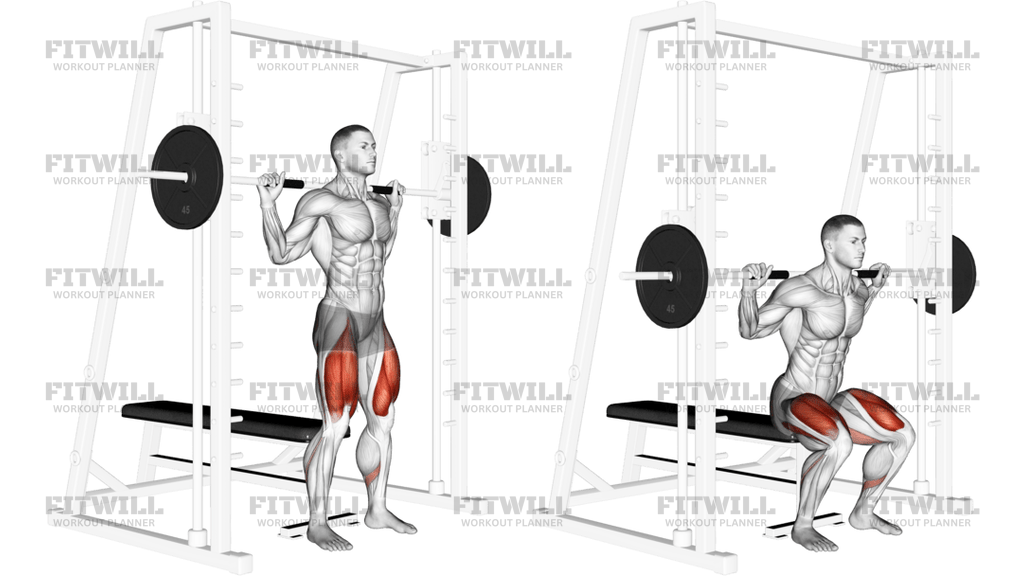
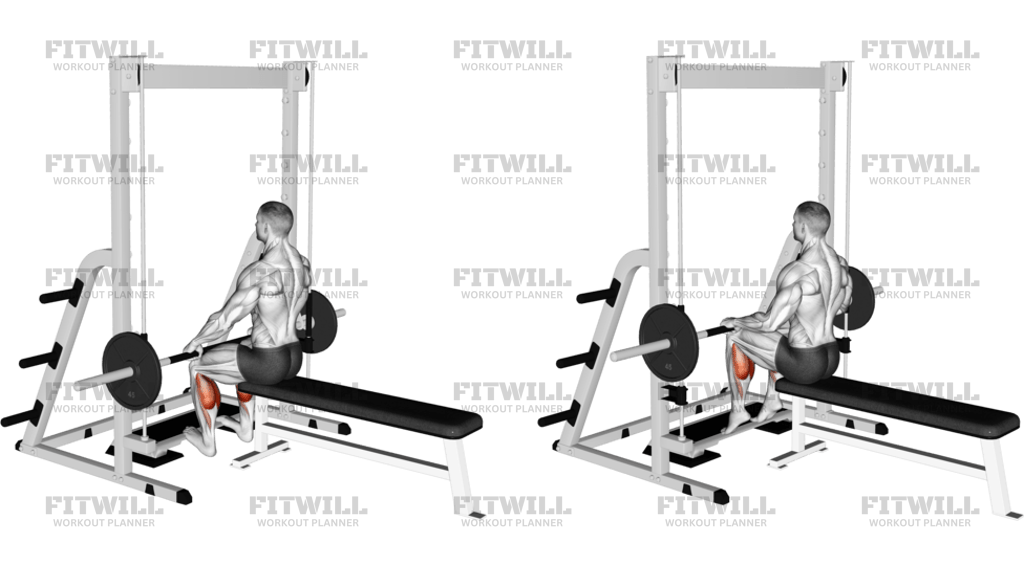
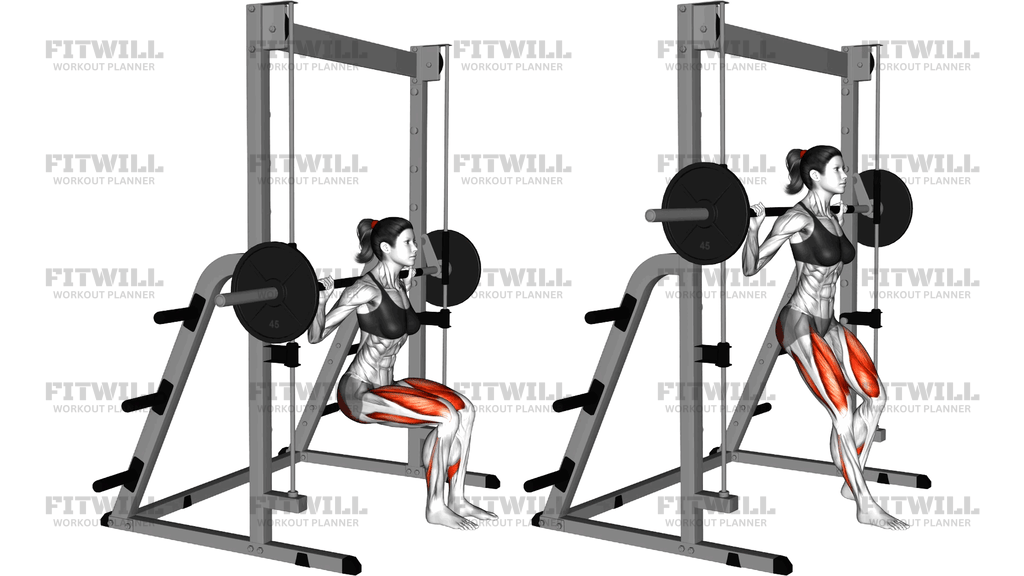
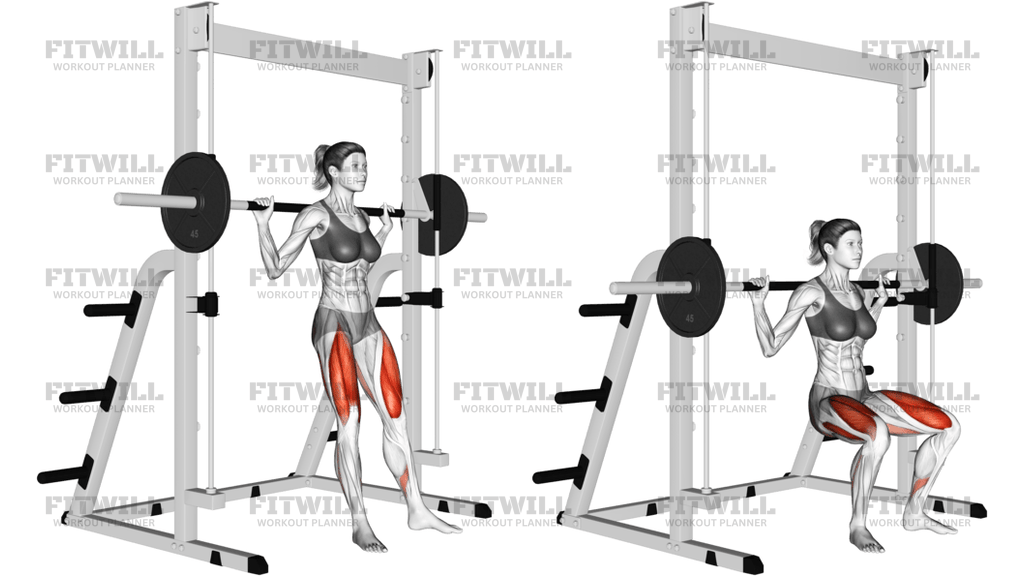
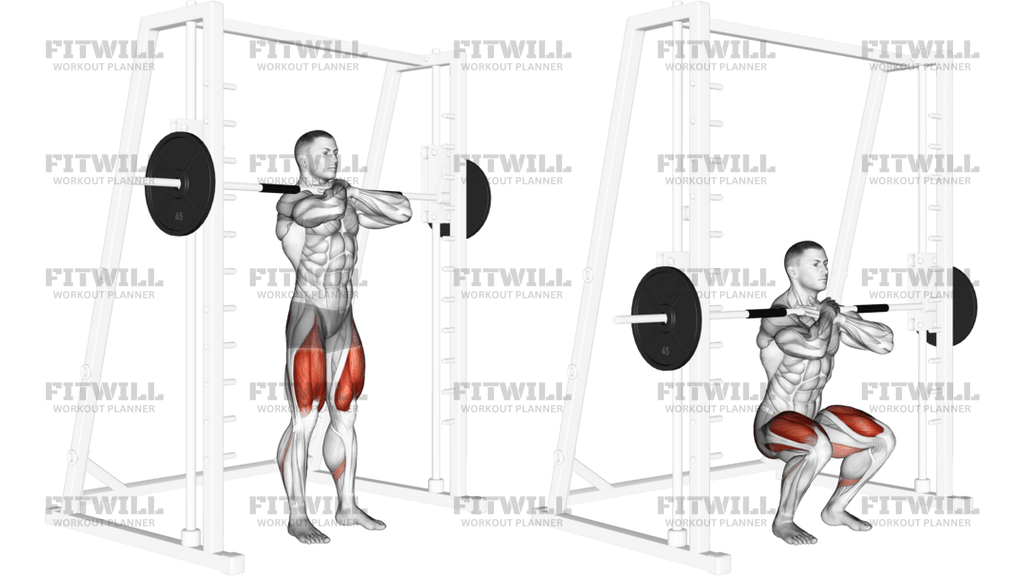
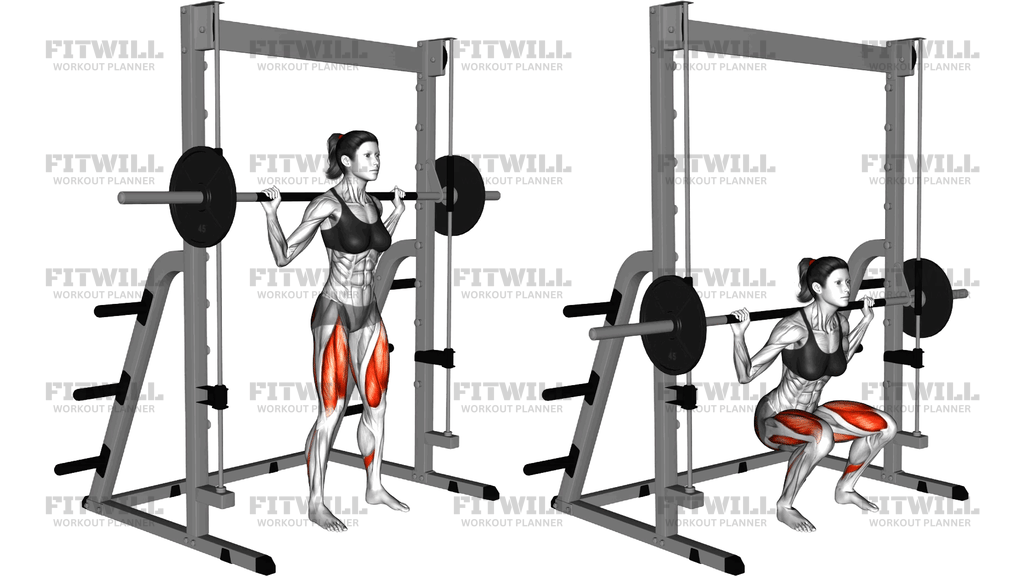
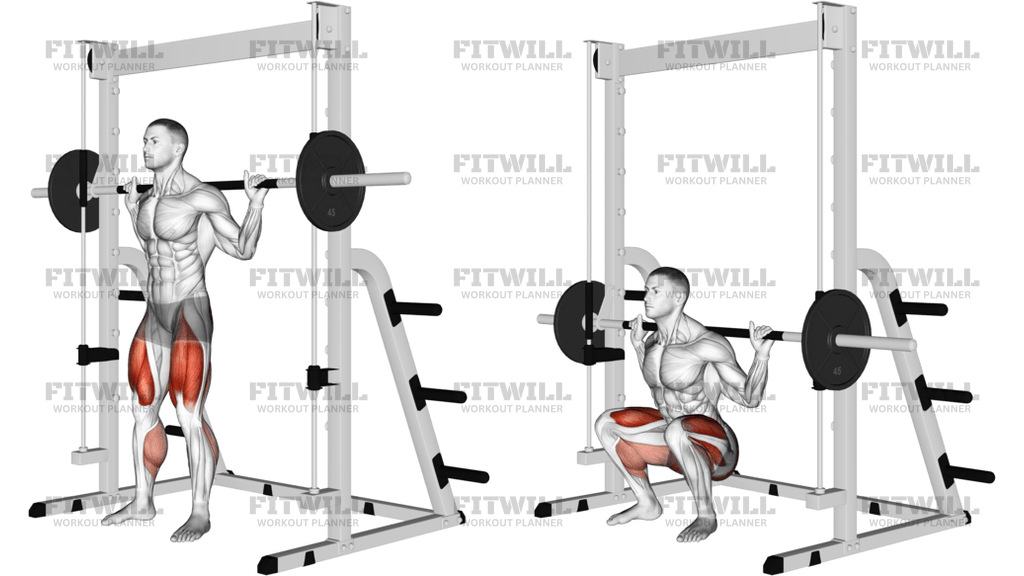
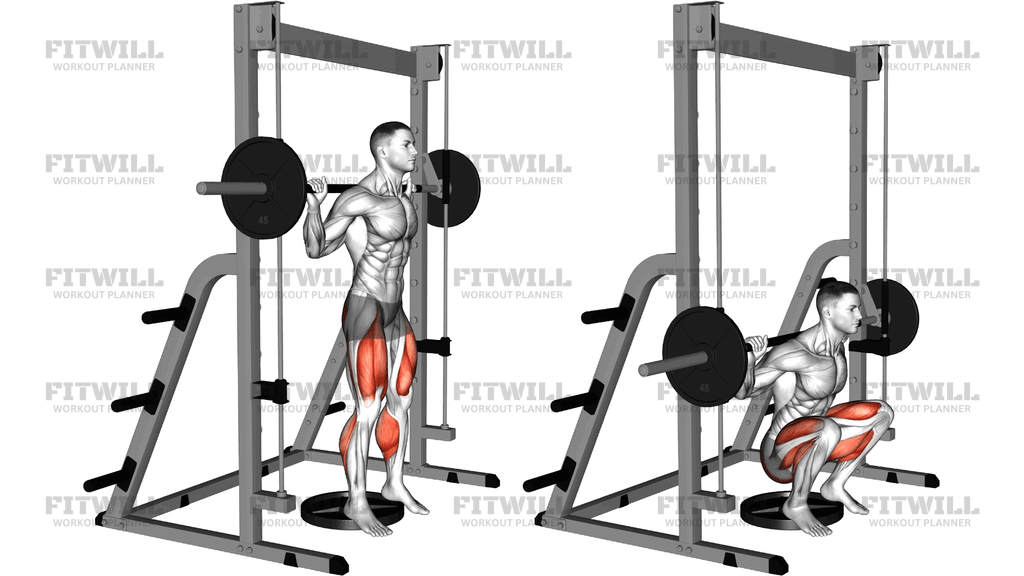
The Smith Elevated Heel Squat is a quad-focused version of the machine squat performed with your heels raised on a plate or wedge. Setting up inside a Smith machine with the bar resting across your upper traps, you place a flat plate under the balls of your feet so your heels hang slightly off the edge. This small change in foot position shifts more of the workload to the front of your thighs and lets you sit deeper into the squat with a more upright torso than a flat-footed squat usually allows.
Elevating the heels reduces how much ankle mobility you need to reach a deep position, which is why this variation is popular with lifters who feel stuck or pitch forward in regular squats. With the fixed bar path of the Smith machine handling balance, you can concentrate fully on driving through the movement and feeling your quadriceps work through a long range of motion. The glutes and adductors assist, especially as you approach the bottom, but the quads remain the star of the show.
This setup suits several groups well: beginners learning what a deep squat feels like without fighting for balance, intermediate lifters adding focused quad volume after their free-weight work, and anyone with limited ankle flexibility who struggles to keep their heels down. Because the machine guides the bar, it is also a reasonable choice for training near fatigue with less risk of losing your footing under load.
Execution is straightforward but rewards attention to detail. Keep your feet about shoulder-width apart and slightly ahead of the bar so your knees track forward over your toes as you descend. Break at the hips and knees together, lower until your thighs reach at least parallel or deeper if your hips stay comfortable, then press the floor away and stand back up under control. Avoid letting the plate tip or your heels slam down between reps.
As with any heavy lower-body movement, warm up your hips and knees first, start with a light weight to find your foot placement on the plate, and never relax at the bottom. If you feel pinching in the front of your hips or stress in your knees rather than working muscles, adjust your stance width or depth before adding load. Done consistently, this exercise builds strength and size in the thighs with a level of stability free-weight squats cannot match.
[ Workout Log & Planner ]
Put your next workout in Fitwill
Keep your plan and training log ready when you are.


Instructions
- Set a flat weight plate on the floor inside the Smith machine and position the bar across your upper traps, gripping it slightly wider than shoulder-width with elbows tucked under the bar.
- Step your feet onto the plate about shoulder-width apart, with the balls of your feet on the plate and your heels lowered just off the edge, toes pointing slightly outward.
- Unrack the bar by rotating it forward to release the safety hooks, then take one small step forward if needed so the bar can travel freely without rubbing the hooks.
- Brace your core, lift your chest, and keep your gaze forward with a tall, upright spine before starting the descent.
- Bend your hips and knees together and lower yourself until your thighs are at least parallel to the floor, letting your knees travel forward over your toes.
- Pause briefly at the bottom without bouncing, keeping tension in your quads and your heels in contact with the ground.
- Press through your whole foot and drive the floor away to stand back up, extending your hips and knees fully at the top.
- Exhale as you rise and inhale as you lower, keeping your breathing steady throughout the set.
- After your final rep, walk the bar back onto the hooks and rotate it fully into the safety catches before releasing your grip.
Tips & Tricks
- Adjust your foot position on the plate before adding weight: if your knees feel compressed at the bottom, move your feet slightly forward; if your heels lift off, move them back.
- Keep the plate flat and stable on the floor. A rocking plate is the most common setup mistake with this exercise and throws off your balance mid-rep.
- Because the Smith machine bar path is fixed, do not fight it by leaning back at the top or drifting your hips toward the machine. Let your body follow the bar.
- Lower for two to three seconds on each rep. Fast, bouncy descents are risky with heels elevated because your base is narrower over the plate edge.
- If your heels hover or your weight shifts to your toes, your feet are too far forward on the plate rather than centered on it.
- Keep your knees tracking in line with your toes instead of caving inward, especially as fatigue builds on later reps.
- Do not fully lock your knees with a bang at the top; stand tall but stay under control to keep tension on the thighs.
- Start lighter than your flat-footed Smith squat. The longer quad range of motion from the elevated heel usually means you need less load at first.
- Wear flat, thin-soled shoes or train barefoot-style so you can feel the plate edge and keep your heels planted reliably.
Frequently Asked Questions
What muscles does the Smith Elevated Heel Squat work?
The quadriceps are the primary muscle, working through a long range because the elevated heels let you sit deeper with an upright torso. The glutes and adductors assist, and the calves help stabilize your feet on the plate.
Why are the heels elevated on a plate in this exercise?
Raising the heels reduces the ankle mobility needed to squat deep, which lets you keep a more upright torso and places greater emphasis on the quads. It is a useful workaround for lifters whose heels lift or who lean forward in flat-footed squats.
Is the Smith Elevated Heel Squat good for beginners?
Yes. The fixed bar path removes the balance demands of a free-weight squat, so beginners can focus on learning a deep, controlled squat pattern. Start with just the bar or a light load to find your foot placement on the plate.
How deep should I squat with my heels elevated?
Aim to lower until your thighs are at least parallel to the floor, and go deeper only if your hips and knees stay comfortable without your lower back rounding. The elevated heels often make full depth more accessible than in a regular squat.
Where exactly should my feet sit on the plate?
Place the balls of your feet on the plate with your heels just off the edge, roughly shoulder-width apart and slightly ahead of the bar. If your heels lift or your knees feel jammed at the bottom, adjust your position before adding weight.
What is the most common mistake with this exercise?
Letting the plate rock or the heels drift off the floor, usually from feet placed too far forward on the plate or a rushed descent. Keep the movement slow and check that the plate sits flat on the floor before every set.
Can I substitute the Smith Elevated Heel Squat if I do not have a Smith machine?
You can do a barbell squat with heels elevated on small plates, ideally inside a power rack with safety pins, or use a hack squat or leg press for similar quad-focused loading. The Smith machine simply adds a guided bar path and easier safety catches.
Is it safe to squat with heels elevated if I have knee issues?
The elevated heel increases forward knee travel, which is generally fine for healthy knees but can aggravate existing knee discomfort. If you have a history of knee problems, use a shallower depth, lighter loads, and check with a qualified professional first.
How is this different from a regular Smith machine squat?
The main difference is foot position: the elevated heels shift stress toward the quadriceps and allow a deeper, more upright squat, while a flat-footed version involves the glutes and posterior chain a bit more and demands more ankle mobility.