Exercise Ball Serratus Anterior Activation
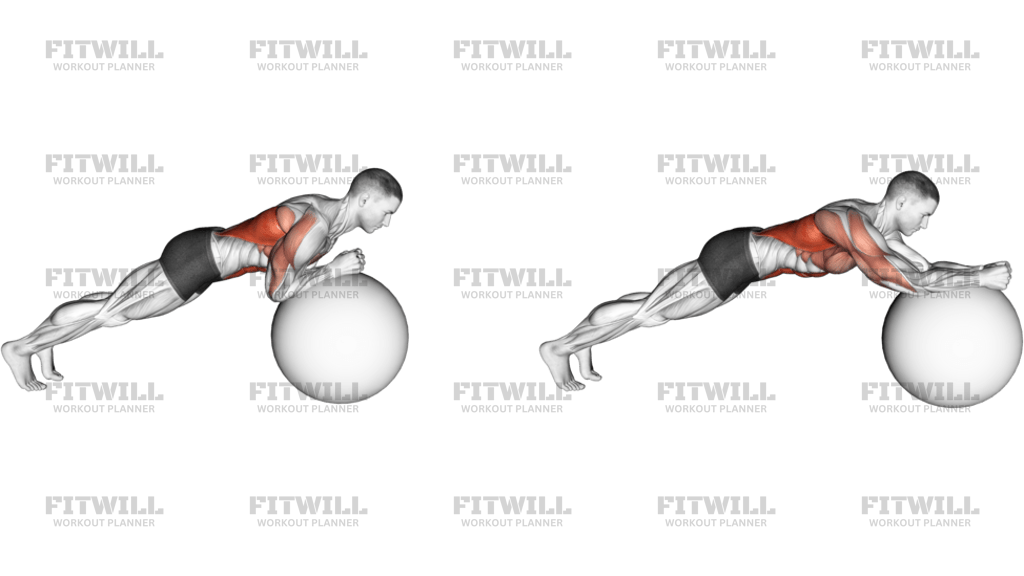
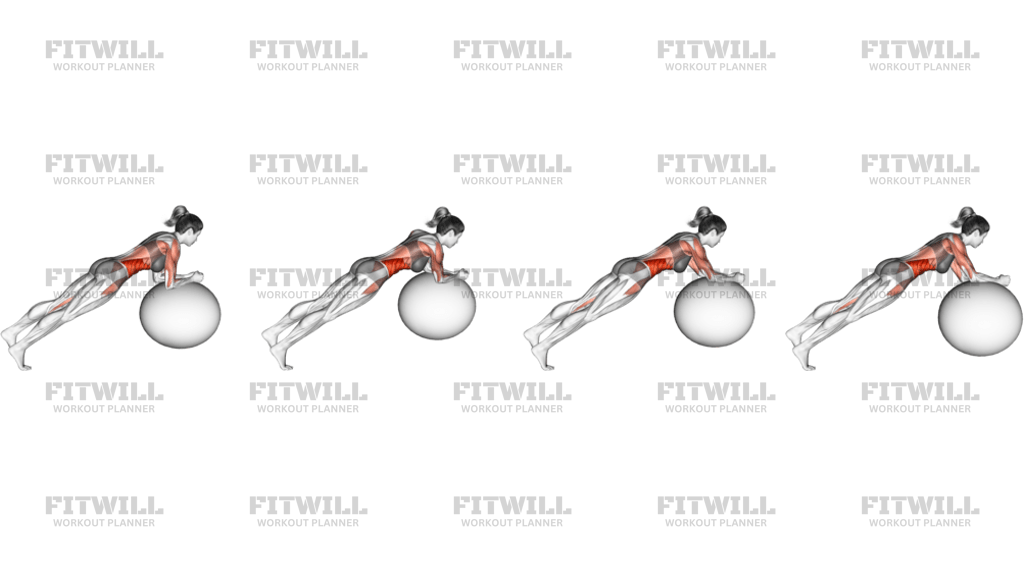
Exercise Ball Serratus Anterior Activation is a low-load scapular control drill performed standing, with the hands pressed into a stability ball that rests against a wall at roughly shoulder height. Instead of moving the arms through a large range, you gently lean into the ball and drive the shoulder blades forward around the ribcage, then ease back. The soft, unstable surface of the ball forces you to control the movement precisely, which is exactly what the serratus anterior is responsible for.
The serratus anterior is a small but important muscle that wraps around the side of the ribcage and pulls the shoulder blade forward and upward. When it works well, it keeps the shoulder blade flat against the ribs and lets the arm move overhead without the shoulder joint compensating. People who spend long hours sitting, lift weights regularly, or are rebuilding shoulder function after a period of pain or inactivity often find this muscle sleepy, and this drill is one of the cleanest ways to wake it up.
The setup matters more than it looks. Standing upright with the ball against a wall means gravity is not compressing the shoulder the way it would in a push-up position, so the serratus can be isolated without loading the joint. The ball adds just enough instability that small errors — shrugging, rolling the shoulders in, pushing with the chest alone — become immediately obvious, because the ball drifts or slips. That feedback is the whole point of using it instead of pressing into a flat wall.
To execute it well, keep the arms straight but not locked, the ribs stacked over the pelvis, and the neck relaxed. The movement itself is short: think of widening the space between your shoulder blades as you press the ball gently into the wall, letting the upper back round slightly, then slowly letting the shoulder blades glide back together as the ball returns toward you. Nothing should move except the shoulder blades gliding on the ribcage and a small, controlled rounding of the upper back.
This drill is commonly used as a warm-up before pressing or overhead work, as activation work in shoulder rehab and prehab programs, and as corrective exercise for people whose shoulder blades wing out or whose shoulders roll forward. Because the load is minimal, it belongs in the quality-and-control category rather than the strength-and-fatigue category. Treat it like practice, not a workout: smooth reps, full attention, and no rushing.
For safety, keep the pressure into the ball light to moderate — this is a precision exercise, not a maximal push. If you feel it mainly in the neck or the front of the shoulder, you are compensating; reduce the pressure and shrink the range until the work is felt around the side of the ribs and between the shoulder blades.
[ Workout Log & Planner ]
Put your next workout in Fitwill
Keep your plan and training log ready when you are.


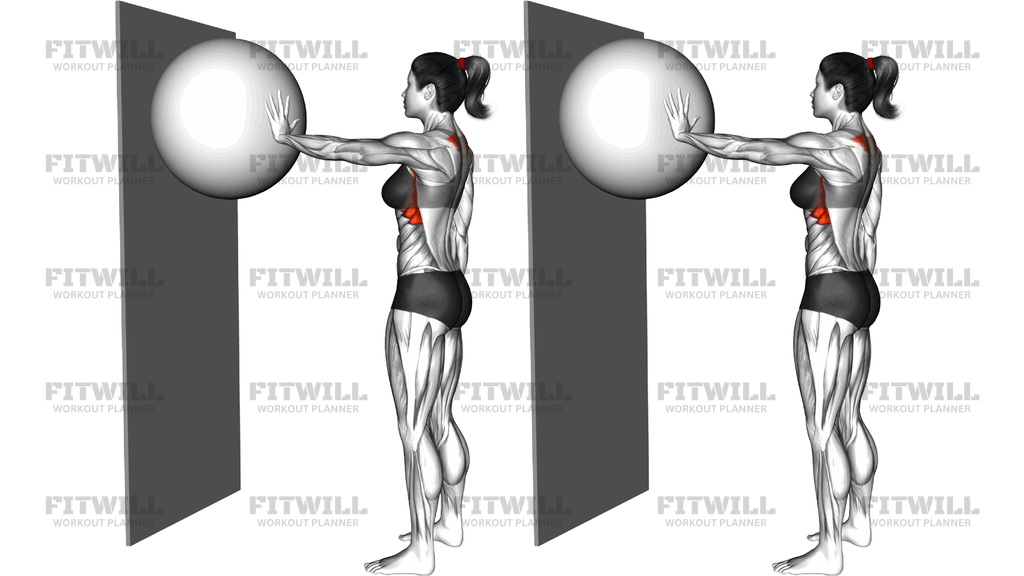
Instructions
- Stand facing a wall and place a stability ball against it at about shoulder height, far enough back that your arms can rest on the ball while nearly extended.
- Place both palms flat on the front of the ball with the fingers spread, arms straight, elbows soft, and feet set hip-width apart in a comfortable staggered or square stance.
- Stand tall and lightly brace the abdominals so the ribs stay stacked over the pelvis; keep the shoulders relaxed away from the ears before the movement starts.
- Lean a small amount of body weight into the ball through the palms so the ball is lightly compressed against the wall.
- Press the ball away from you into the wall, letting the shoulder blades glide forward around the ribcage and the upper back round slightly — imagine spreading the shoulder blades apart.
- Hold the pressed position for one to two seconds, keeping the neck loose and the elbows from bending.
- Slowly let the ball travel back toward you as the shoulder blades glide together and the chest opens slightly, controlling the return rather than letting the ball spring back.
- Breathe out as you press the ball away and in as you return to the start.
- Complete the planned number of smooth reps, then step back from the ball rather than releasing the pressure abruptly.
Tips & Tricks
- If the ball slips or skids on the wall, you are pushing too hard — this drill needs light, steady pressure, not force.
- Shrugging toward the ears is the most common fault; check your neck length at the top of each press and lower the shoulder blades before starting the next rep.
- The movement should happen between the shoulder blades, not at the elbows — if your elbows bend, the range is too large or the pressure too heavy.
- Feel for work on the side of the ribcage below the armpit; if you only feel the chest or the front of the shoulder, lighten the contact and make the press smaller.
- Keep the wrists flat and the fingers spread on the ball; collapsing the wrist changes the push angle and reduces the scapular work.
- Move slowly enough that each full rep takes several seconds — speed hides the instability the ball is supposed to expose.
- If standing feels awkward, step one foot slightly back for balance, but keep the hips square to the wall.
- Use this as a primer before bench or overhead pressing rather than as a finisher; a couple of controlled sets is usually enough.
- If one side feels weaker or less coordinated, do a few extra single-arm sets with one hand on the ball, keeping the trunk square.
Frequently Asked Questions
What muscles does Exercise Ball Serratus Anterior Activation work?
The primary target is the serratus anterior, the muscle that pulls the shoulder blade forward around the ribcage. The front delts and chest assist the press, and the muscles between the shoulder blades work eccentrically as you control the return.
Why use a stability ball instead of just pressing into a wall?
The ball's slight movement forces constant small adjustments from the serratus anterior and gives instant feedback when your form drifts. A flat wall is stable enough that you can push with compensations and never notice.
How high should the ball be during Exercise Ball Serratus Anterior Activation?
Set it at roughly shoulder height so your arms extend naturally with the elbows soft. Too low turns it into a downward push that reduces the protraction focus; too high makes you shrug.
Is this exercise suitable for beginners?
Yes — it is a low-load control drill, which makes it very approachable. Beginners should focus on slow tempo and light pressure rather than reps or effort.
Should I feel this in my neck?
No. Neck tension almost always means you are shrugging or pressing too hard. Drop the shoulders down, lighten the pressure, and make the pressing range smaller until the work sits around the ribs and shoulder blades.
How many reps and sets should I do of Exercise Ball Serratus Anterior Activation?
One to three sets of eight to fifteen slow, controlled reps works well, either as a warm-up before pressing or as part of a shoulder routine. Quality matters far more than volume here.
What can I use if I don't have a stability ball?
Wall slides and push-up plus variations train the same protraction pattern. The ball version is unique in combining low load with an unstable surface, so treat the alternatives as close substitutes rather than equals.
Can I do Exercise Ball Serratus Anterior Activation with shoulder pain?
Because the load is light and the arm is supported, many people tolerate it well, but stop if it reproduces pain and get individual guidance from a qualified professional before continuing.
How do I know I'm actually using the serratus anterior?
You should feel a broad effort around the side of the ribcage below the armpit as you press, with the shoulder blade visibly gliding forward. If the ball drifts sideways or your torso twists, the press is off-center.