Reverse Lunge Arm Reach Twist
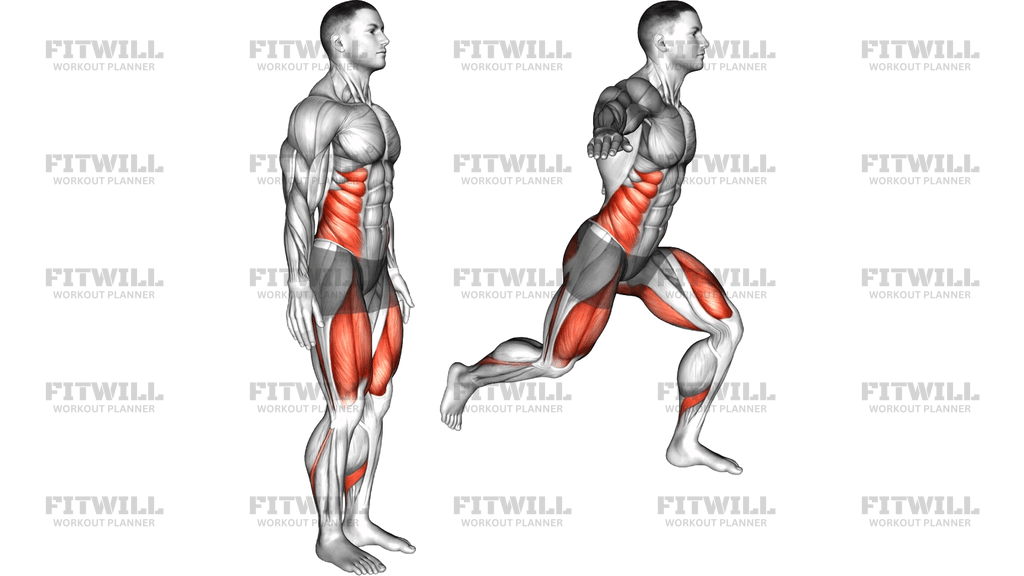
The Reverse Lunge Arm Reach Twist is a body weight compound movement that combines a backward-stepping lunge with a rotational arm reach toward the front leg. As you drop into the lunge, both arms swing across your body in the direction of your lead knee, adding a controlled spinal rotation on top of the lower-body work. The result is one fluid rep that trains your legs and your trunk together, the way they actually cooperate during running, throwing, swinging, and everyday bending and turning.
This exercise is especially useful for anyone who wants rotational strength without loading the spine with external weight. The lunge itself builds strength and stability through the quads, glutes, and hamstrings, while the twist recruits the obliques and deep core musculature to rotate the torso against a stable lower half. Because you are stepping backward instead of forward, the front knee experiences less shear stress and your balance demands shift to the rear leg, making it a friendlier lunge variation for people with cranky knees.
The setup matters more than it looks. A tall spine, braced midsection, and足够 wide reverse step give the twist a stable base to rotate from. If your stance is too narrow or your torso collapses forward, the rotation turns into a rounded-back lean instead of a true twist, and the obliques stop doing the work. Think of the rotation as coming from the ribcage turning over the front thigh, not from the arms flailing across the body.
To execute it well, step straight back into a lunge with roughly ninety degrees at both knees, then drive both arms across your lead thigh, rotating from the waist while keeping your hips square and your chest tall. Pause briefly at the end of the reach, then unwind the torso as you push through the front heel to return to standing. Alternate legs rep by rep, or complete all reps on one side before switching.
You will see this movement in warm-ups for field and racket sports, in general strength circuits, and in rehab-adjacent programming where controlled rotation is the goal. It also works well as a low-impact core exercise on travel days or in small spaces, since it needs nothing more than a couple of square meters of floor. Move deliberately at first; speed can come once the pattern feels automatic.
[ Workout Log & Planner ]
Put your next workout in Fitwill
Keep your plan and training log ready when you are.


Instructions
- Stand tall with your feet hip-width apart, arms relaxed at your sides, and your weight spread evenly across both feet.
- Brace your abdominal wall lightly, as if preparing for a light push, and keep your ribcage stacked over your pelvis.
- Step one foot straight back into a long reverse lunge, lowering until both knees are bent close to ninety degrees and your back knee hovers just above the floor.
- Keep your torso upright and your front shin close to vertical, with your front heel firmly planted.
- From the bottom of the lunge, reach both arms across your body toward the outside of your front knee, rotating through your waist and ribcage while your hips stay facing forward.
- Hold the twisted position for a moment, feeling the tension along the side of your trunk.
- Unwind your torso back to center, then press through your front heel and pull your back leg forward to return to a full standing position.
- Exhale as you rotate and reach, inhale as you unwind and rise back to standing.
- Repeat on the opposite leg, alternating sides for your desired number of reps, resetting your posture and brace between each rep.
Tips & Tricks
- Rotate from the ribcage, not just the arms. If your shoulders move but your chest still faces forward, the obliques are barely involved—turn your torso until you feel the side of your waist shorten.
- Keep your hips square to the front. A common mistake is letting the pelvis rotate with the shoulders, which turns the movement into a hip twist and steals the work from your core.
- Take a longer backward step than feels natural. Short steps push the front knee forward and make the twist feel cramped at the bottom.
- If you lose balance during the reach, slow the arm swing down before widening your stance—most wobble comes from reaching too fast, not from standing too narrow.
- Do not let your front knee collapse inward as you rotate. Actively press it slightly outward over your second toe throughout the rep.
- Keep the back heel lifted and the back knee soft. Dropping the back knee hard onto the floor usually means you are rushing the descent.
- Move the arms with intent and control, like a smooth pendulum, rather than whipping them across. The reach is the resistance for your waist, so own the range.
- If your shoulders tighten during the reach, keep a slight bend in the elbows and let the rotation come from your trunk rather than forcing maximum arm extension.
- Master the reverse lunge with no twist first. If your legs shake on the descent, the added rotation will only magnify the instability.
Frequently Asked Questions
What muscles does the Reverse Lunge Arm Reach Twist work?
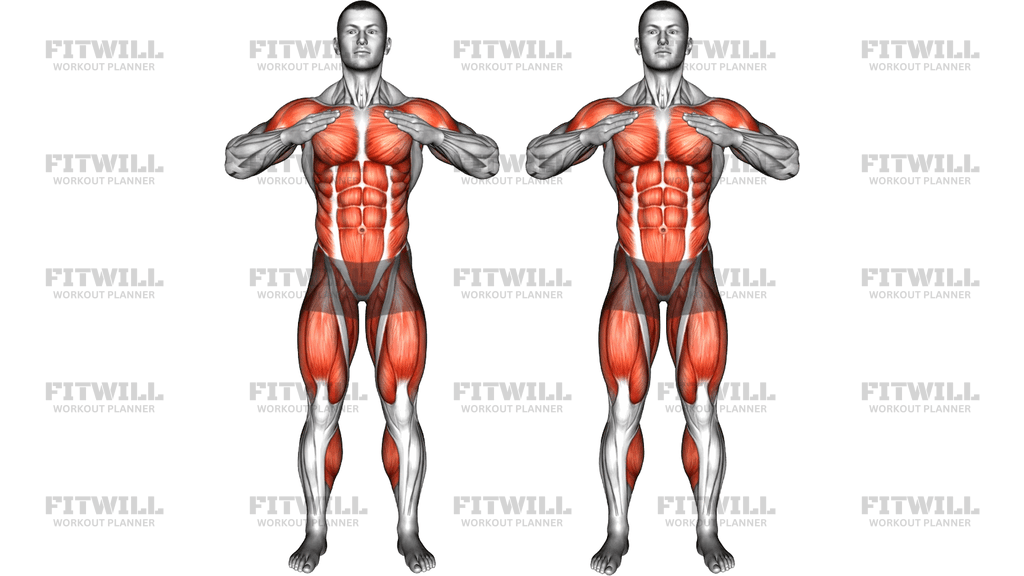
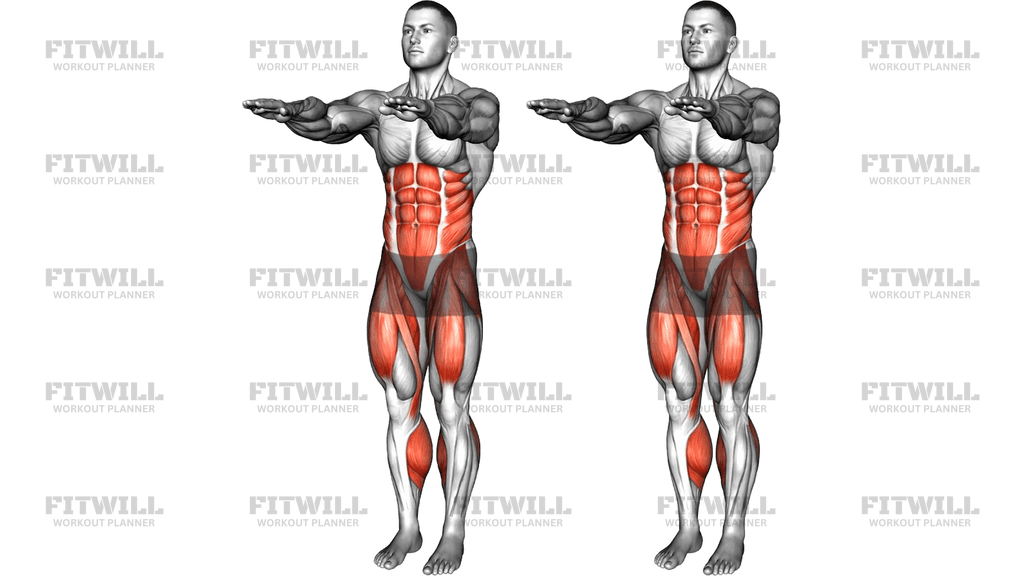
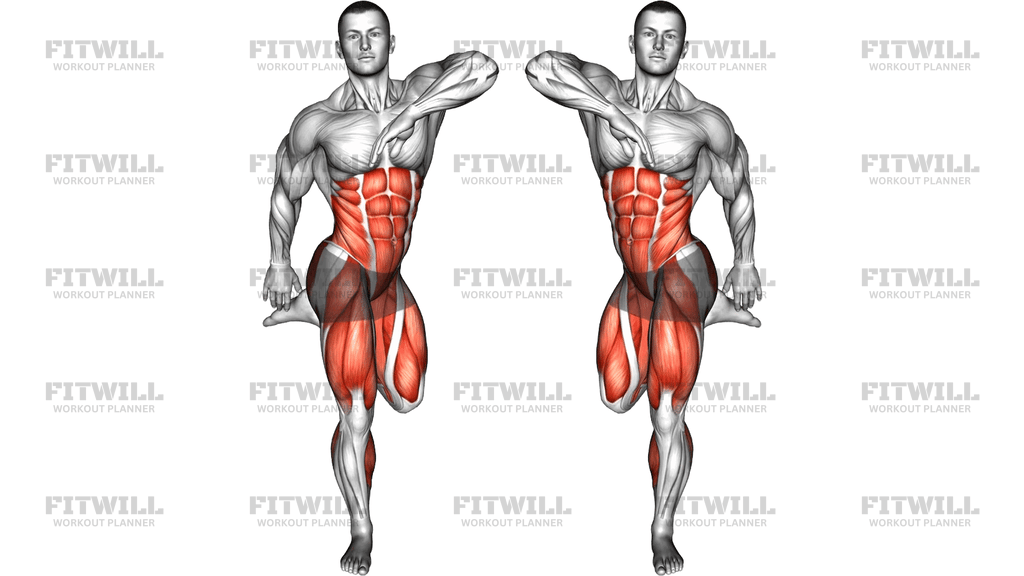
The obliques and deep core drive the twisting reach, while the quads, glutes, and hamstrings handle the lunge itself. Hip flexors and stabilizers around the ankle and hip also work to keep you balanced on one leg.
Is the Reverse Lunge Arm Reach Twist suitable for beginners?
Yes, provided you start with a modest range. Beginners can reduce the depth of the lunge and limit the twist to a comfortable arc before progressing to a full reach.
Why step backward instead of forward in this twist lunge?
A reverse step keeps your weight on the front heel, reduces stress on the front knee, and gives you a more stable base for the rotation. It is easier to keep an upright torso from a reverse lunge, which makes the twist cleaner.
Should my hips turn with my shoulders during the twist?
No. Keep your hips facing forward and let the rotation come from your ribcage and waist. If your pelvis swings around, the obliques lose tension and the exercise becomes a hip movement.
Can I add weight to the Reverse Lunge Arm Reach Twist?
You can hold a light medicine ball or plate at your chest once the body weight version feels smooth. Add load only when you can keep your hips square and your spine tall through every rep.
How deep should the lunge be?
Lower until both knees are bent close to ninety degrees with the back knee just above the floor. Depth is less important than keeping your torso upright and your front heel down.
What can I substitute if lunges bother my knees?
Try a shorter-range reverse lunge, a static split-stance twist where both feet stay planted, or a standing torso rotation with a staggered stance. Each keeps the rotational core work while limiting knee flexion.
How many reps should I do of the Reverse Lunge Arm Reach Twist?
Eight to twelve reps per side works well for strength and control, or ten to fifteen per side at a brisker pace as a warm-up. Alternate legs unless your program calls for single-side sets.
Is twisting while lunging safe for the spine?
For most healthy people, yes, when the rotation is controlled and the spine stays tall. Avoid twisting if you cannot brace your midsection, and reduce the range if you feel any pinching or sharp discomfort.
Should I exhale on the twist or the lunge?
Exhale as you rotate and reach, since that is the hardest part of the rep and exhaling helps your core stay braced. Inhale as you unwind and return to standing.