Suspension One Leg Chest Press
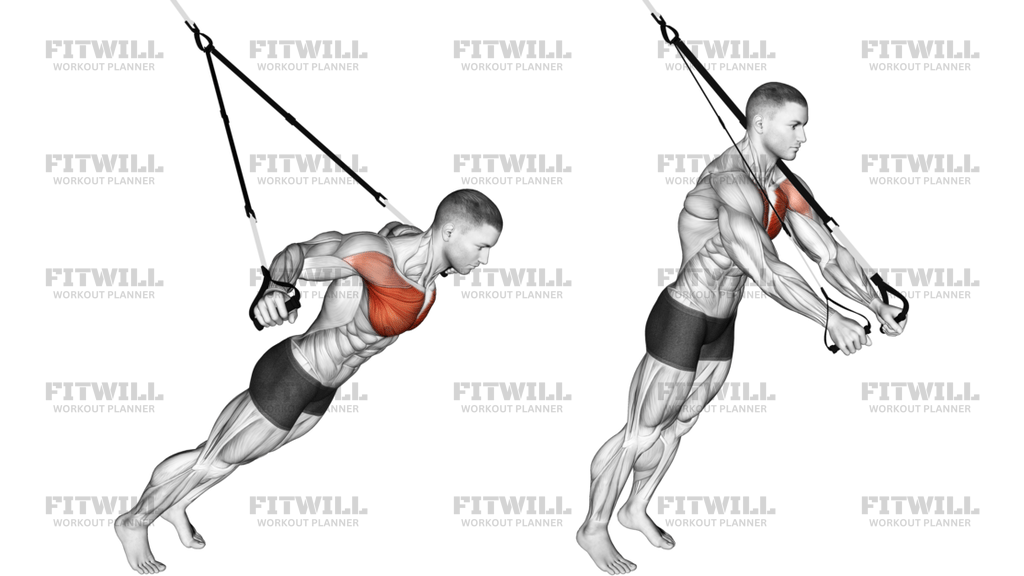
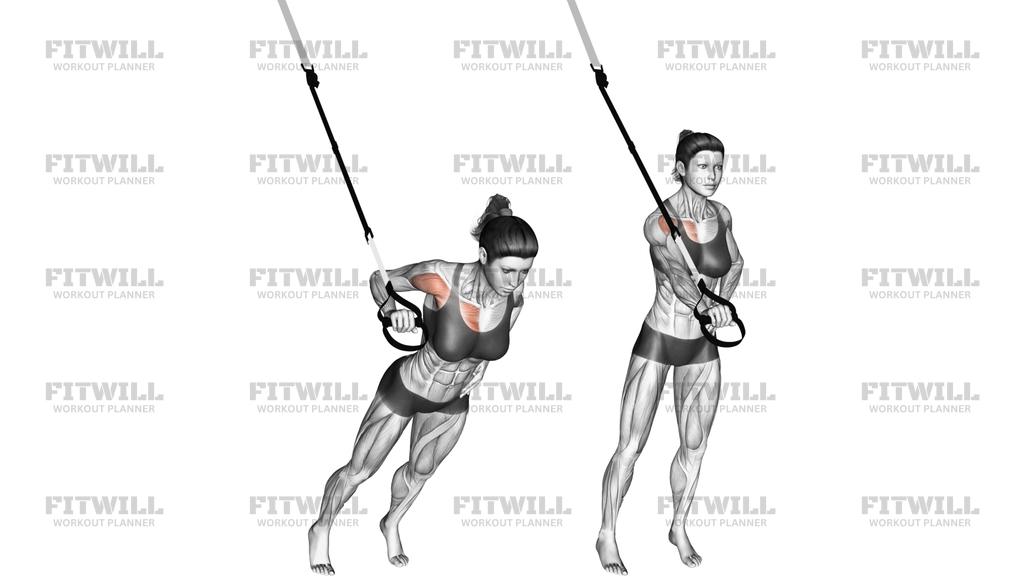
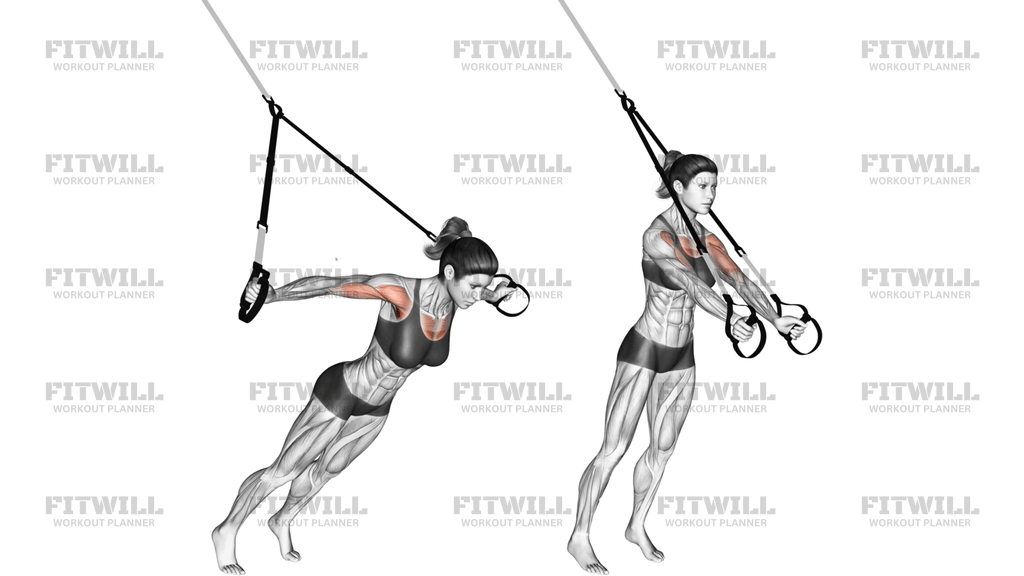
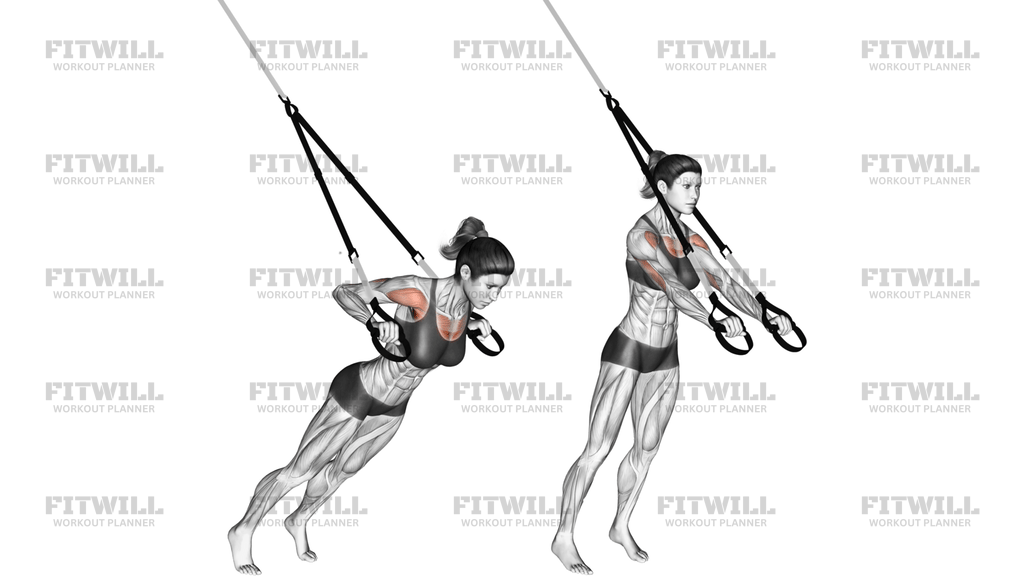
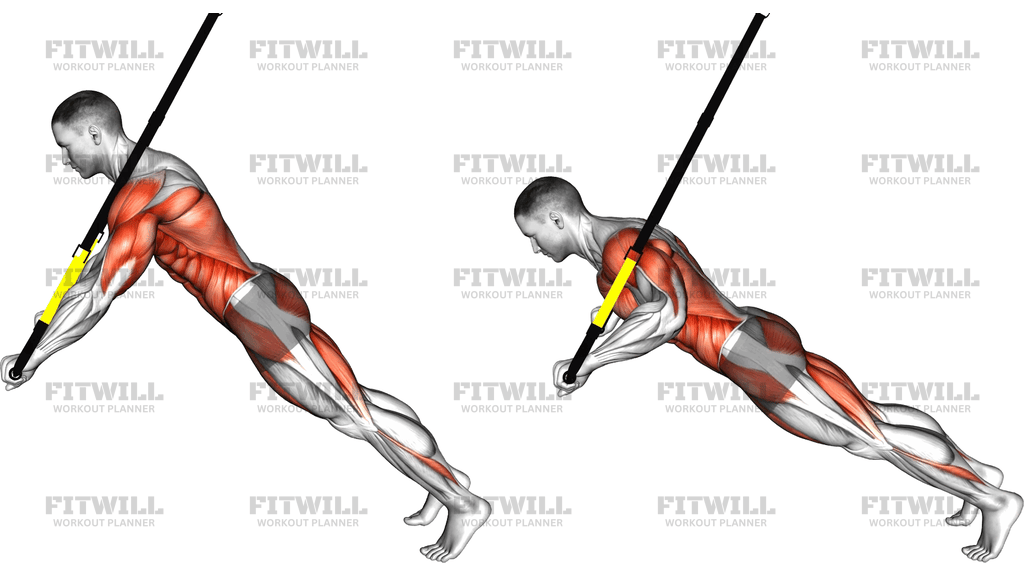
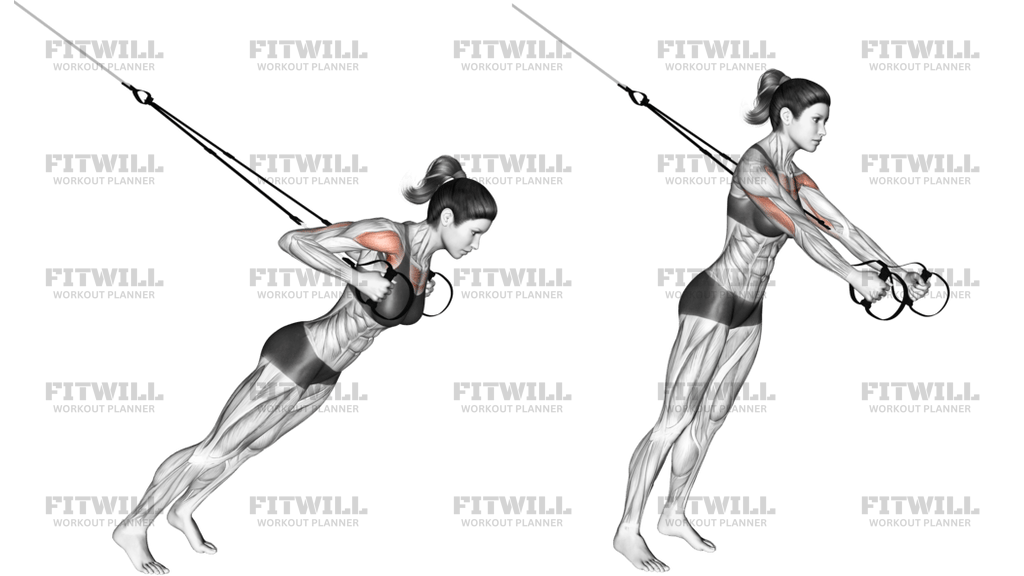
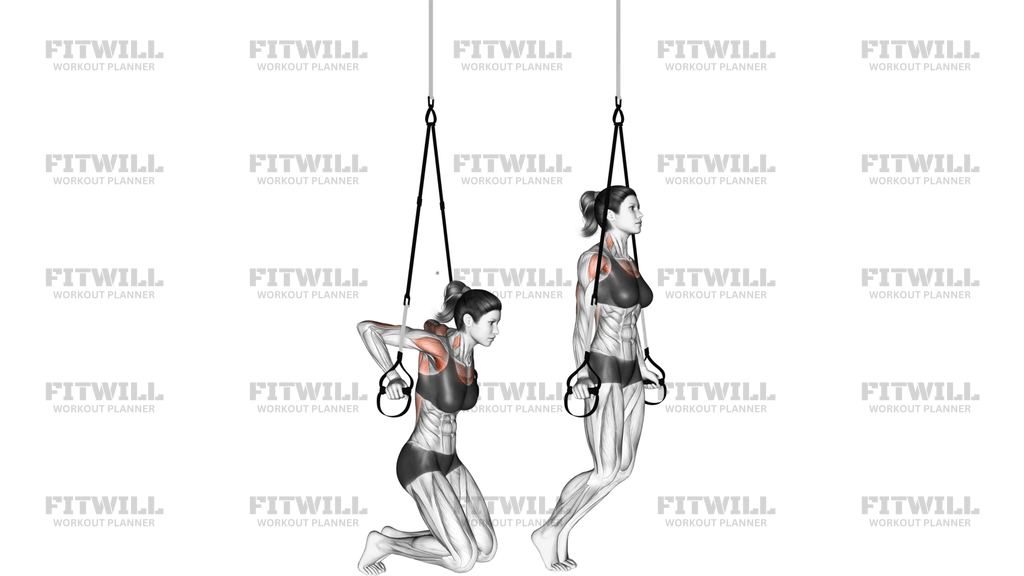
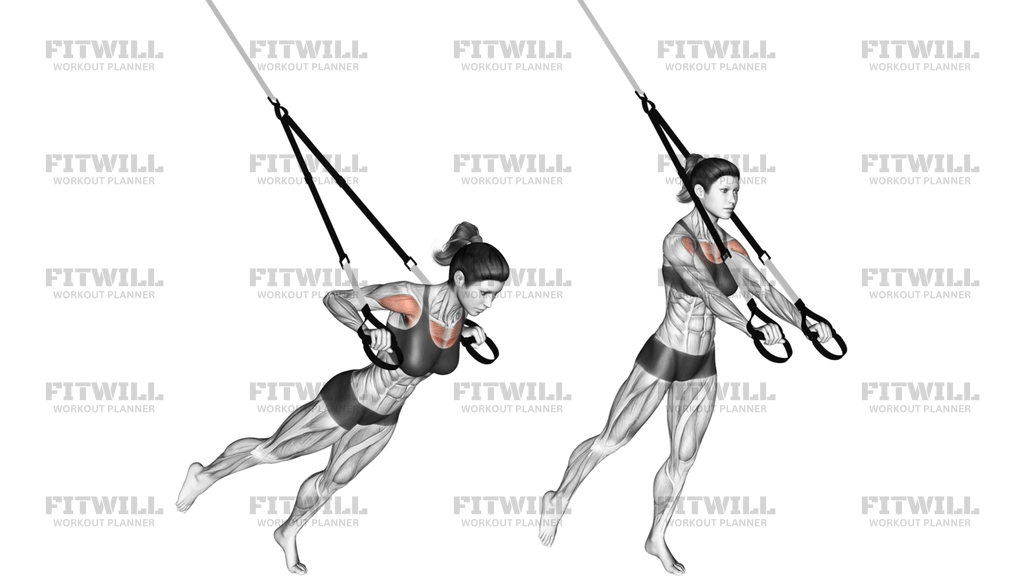
Suspension One Leg Chest Press is a single-leg suspension pressing exercise that challenges the chest while forcing the torso, hips, and standing leg to stay organized. In the image, the working position is a forward lean with one foot on the floor, the other leg lifted behind for counterbalance, and the hands pressing the suspension handles away from the chest.
The main training effect is horizontal pressing strength for the chest, with the front shoulders and triceps assisting through the press. Because only one leg is on the floor, the core, glute, ankle, and small stabilizers around the hip and ribcage work hard to keep the body from rotating or drifting toward the anchor. That makes this a useful option when you want upper-body pressing work plus balance and anti-rotation demand in the same rep.
The setup matters more here than in a standard suspension chest press. The handles should start near the lower chest or ribcage when the straps are loaded, and the body should form one long line from head to the lifted heel. If the stance is too short or the torso is too upright, the press becomes easy and unstable in the wrong way. If the lean is too deep, the shoulders take over and the movement turns into a wobble.
Each repetition should feel like a controlled press away from the anchor, not a dive and bounce. Bend the elbows to lower the chest between the hands, keep the wrists neutral, and press the handles forward until the arms are nearly straight without shrugging the shoulders. The torso should stay square to the floor, the hips should stay level, and the standing foot should keep a firm tripod contact so the body does not twist as the handles move.
This exercise works well as accessory strength work, a unilateral upper-body drill, or part of a core-focused circuit where you want pressing mechanics under a stability challenge. It is also useful for building awareness of rib position and shoulder control because the suspension straps make compensations easy to feel. Reduce the body angle or use a two-foot stance if you cannot keep the chest, pelvis, and handles aligned through the whole set. Stop a set if the shoulder rolls forward, the hips spin open, or the free leg starts to swing to create momentum.
[ Workout Log & Planner ]
Put your next workout in Fitwill
Keep your plan and training log ready when you are.


Instructions
- Adjust the suspension straps so the handles sit around lower-chest height when you lean into them.
- Face the anchor, hold a handle in each hand, and step into a single-leg stance with the free leg lifted lightly behind you.
- Lean forward from the ankles until your body forms a long line from head to the lifted heel, then keep the standing foot planted firmly.
- Set your ribs down, keep your shoulders away from your ears, and stack your wrists under the handles.
- Lower your chest toward your hands by bending the elbows and letting them track slightly out from the torso.
- Keep your hips square and your trunk steady as you lower, without letting the standing side collapse or twist open.
- Press the handles forward and slightly upward until your arms are nearly straight and your chest moves away from the anchor.
- Exhale as you press, inhale as you return, then step out carefully and reset before the next set.
Tips & Tricks
- Keep the standing foot active as a tripod through the heel, big toe, and little toe so the body does not rotate on the floor.
- If the free hip opens or the torso twists, shorten the lean before trying to force more range.
- Let the handles stay level with each other; if one drifts ahead, the press is turning into a twist instead of a clean chest press.
- Use only enough forward lean to feel the chest work. A bigger lean increases demand, but too much lean shifts the load into the shoulders.
- Keep the elbows from flaring straight out at shoulder height; a slightly tucked path is usually friendlier on the front of the shoulder.
- Pause for a moment at the lowered position so you are not bouncing out of the bottom with momentum.
- Lower under control for a stronger chest stimulus and better balance feedback from the straps.
- If the straps wobble, slow the rep and reduce range before adding speed or load.
Frequently Asked Questions
What does Suspension One Leg Chest Press train most?
It primarily trains the chest, with the front shoulders and triceps helping during the press.
Why is this version done on one leg?
The single-leg stance adds balance and anti-rotation work, so your core and hips have to stabilize while you press.
Where should the handles start before each rep?
They should start around the lower chest or ribcage when the straps are loaded and your body is leaning forward.
How do I keep from twisting during the press?
Keep your hips square, press both handles together, and keep the standing foot firmly planted so the body does not spin toward one side.
Should my elbow flare out wide?
No. A moderate elbow path is usually better; let the elbows track slightly out instead of flaring straight sideways.
Is this a good beginner exercise?
Yes, if you keep the torso more upright, use a smaller lean, and focus on smooth control rather than a deep press angle.
What is the most common form mistake?
The most common mistake is letting the shoulder shrug and the torso rotate as the handles move.
How can I make the exercise harder without changing equipment?
Increase the forward lean, slow the lowering phase, or add a brief pause at the bottom while keeping the body square.