Dumbbell Goblet Box Squat
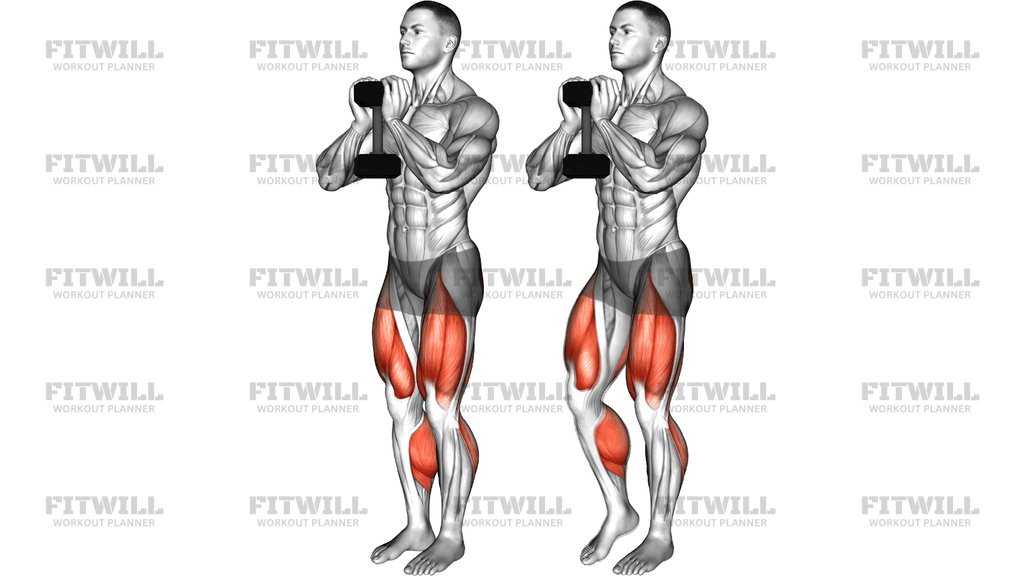
The Dumbbell Goblet Box Squat is a beginner-friendly squat variation where you hold a single dumbbell vertically against your chest with both hands and lower yourself onto a flat bench behind you. The bench acts as a depth gauge and safety net: every rep ends with a brief pause in a seated position before you drive back up to standing. This takes the guesswork out of how deep to squat and lets you focus entirely on keeping your torso upright and your knees tracking well.
The goblet hold is what makes this movement so teachable. Cradling the dumbbell at your sternum counterbalances your hips, which naturally helps you sit back with a tall chest instead of collapsing forward. Because the load sits in front of your body rather than on your back, the position also demands steady work from your core and upper back to keep the weight from pulling you forward or dragging your shoulders down.
The box element changes the character of the rep compared with a free-standing goblet squat. Touching or fully sitting on the bench removes the stretch reflex at the bottom, so you have to generate drive from a dead stop each time. That pause builds strength out of the hole, teaches control on the way down, and gives you a consistent target for depth. It is especially useful for anyone learning the squat pattern, returning from time off, or working around knees or hips that dislike uncontrolled bottom positions.
The main work goes to the quadriceps, with strong contributions from the glutes and hamstrings as you unfold from the seat and stand tall. Your calves and ankle stabilizers keep you balanced over your feet, while your core, forearms, and grip hold the dumbbell in place for the whole set. Because the bench defines the range, most people can use this variation with more confidence and less fatigue than deep free squats.
Setup matters more than it looks. Bench height controls your depth: a standard flat bench roughly knee height works for most lifters, while a lower surface makes the pattern harder. Position the bench directly behind you so your hips travel straight back onto it, and keep your feet far enough forward that your shins stay near vertical as you sit. If your feet are too close to the bench, you will either bang your shins or pitch forward.
To perform it well, think of the descent as sitting, not squatting. Push your hips back, let your torso lean only slightly forward, and lower under control until you are fully seated. Keep your weight spread across your whole foot, pause for a beat without relaxing your brace, then drive through the floor to stand up tall. This combination makes the Dumbbell Goblet Box Squat a reliable teaching tool for squat mechanics and a legitimately useful strength exercise in its own right, whether it is the main lift of a leg session or a warm-up groove before heavier work.
[ Workout Log & Planner ]
Put your next workout in Fitwill
Keep your plan and training log ready when you are.


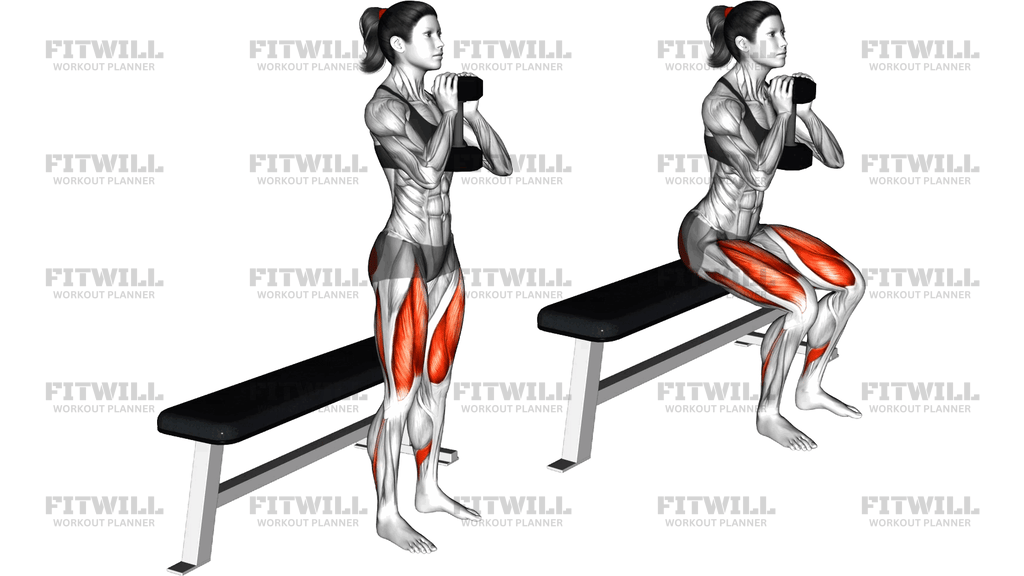
Instructions
- Place a flat bench behind you and stand facing away from it, with your heels roughly a foot in front of the bench edge and your feet about shoulder-width apart with toes turned slightly out.
- Hold one dumbbell vertically by one end with both hands, cupping the top head so the weight hangs against your sternum, elbows tucked close to your ribcage.
- Set your gaze on a point straight ahead, pull your shoulders back and down, and take a breath into your belly to brace your core before you move.
- Unlock your hips and knees at the same time and push your hips back toward the bench, keeping your chest tall and the dumbbell glued to your sternum.
- Lower under control until your hips are fully seated on the bench, letting your knees bend forward over your toes without letting your heels lift.
- Pause for one to two seconds in the seated position, keeping your torso upright and your bracing tension instead of slumping back.
- Drive your feet down into the floor and push your hips forward to stand up, keeping the dumbbell against your chest until you reach a full lockout with hips and knees extended.
- Exhale as you stand and take a fresh breath at the top, then reset your brace before starting the next repetition.
- Complete all repetitions on one set, then either set the dumbbell down on the bench or lower it to the floor with a flat back before resting.
Tips & Tricks
- If you keep knocking the bench with your legs, your feet are too close to it — step them forward slightly so your shins stay vertical as you sit.
- Do not plop onto the bench. The controlled touch-down is where the strength is built; a crash landing turns the rep into a bounce and removes the training effect.
- Keep the dumbbell pressed lightly against your sternum the whole time. Letting it drift forward or away from your chest is usually the first sign your torso is collapsing.
- If your heels rise as you lower, widen your stance slightly and point your toes out a touch more — ankle mobility is often the limiting factor, not technique.
- Stay braced while seated. Relaxing your midsection on the bench and then trying to re-tighten as you stand is a common cause of a rounded-back start to the lift.
- Choose a bench height that lets you sit fully without your hips dropping below your knees. If the bench is too low and you cannot control the depth, start with something higher and progress down.
- Exhale at the top of each rep rather than dumping your air at the bottom, so your brace holds through the seated pause.
- If the dumbbell feels awkward in a vertical hold, switch to hugging it horizontally under both hands — the coaching points and muscle work stay the same.
- Push the floor apart with your feet as you stand up rather than leaning the dumbbell forward; this keeps the work in your legs instead of your lower back.
Frequently Asked Questions
What muscles does the Dumbbell Goblet Box Squat work?
The quadriceps do most of the work as you extend from the seated position, with the glutes and hamstrings driving your hips forward to stand. Your core, upper back, forearms, and grip hold the dumbbell steady against your chest throughout the set.
Is the Dumbbell Goblet Box Squat good for beginners?
Yes, it is one of the best squat variations to learn with. The bench sets your depth and gives you a safe target, so you can practice the hip-hinge-and-sit pattern without worrying about losing balance at the bottom.
How high should the bench be for this exercise?
A standard flat bench at roughly knee height suits most people. If you struggle to control the descent or your hips end up well below your knees, start with a higher surface and work toward a lower one over time.
Should I sit fully on the bench or just touch it?
Sitting fully is the classic box squat version and removes the rebound at the bottom, forcing you to drive from a dead stop. A light touch works if you want to keep more tension on the legs, but stay controlled either way rather than dropping onto the bench.
Why do I keep falling backward when trying to sit on the bench?
Your feet are probably too close to the bench or your weight is drifting back to your heels. Step your feet slightly forward and keep your pressure spread across the whole foot, with the dumbbell pressed against your chest as a counterbalance.
Can I use a kettlebell instead of a dumbbell for the Dumbbell Goblet Box Squat?
Absolutely. A kettlebell held by the horns in front of your chest works the same way and is actually the more traditional goblet load. The bench, stance, and coaching points stay identical.
How heavy should the dumbbell be?
Start light enough that you can complete all reps with an upright torso and a controlled two-second sit on the bench. Because the pause eliminates the bounce, the movement feels harder than a regular goblet squat with the same weight.
How is the Dumbbell Goblet Box Squat different from a regular goblet squat?
The bench gives you a fixed depth target and a pause at the bottom, which removes the stretch reflex and emphasizes control on the way down. A regular goblet squat goes deeper through your own range of motion and relies on you to judge depth and reversal.
Is it safe for my knees if I am coming back from knee discomfort?
The controlled tempo, defined depth, and upright torso of this variation are generally knee-friendly, but the right depth and load depend on your situation. Stay within a pain-free range, sit to a comfortable height, and clear any return-to-training plan with a qualified professional first.
How many sets and reps should I do?
For learning the pattern, three to four sets of eight to twelve reps at a moderate pace works well. For strength, use a heavier dumbbell with three to five reps per set, pausing one to two seconds on the bench each rep.