Barbell Lying Seal Row On Rack
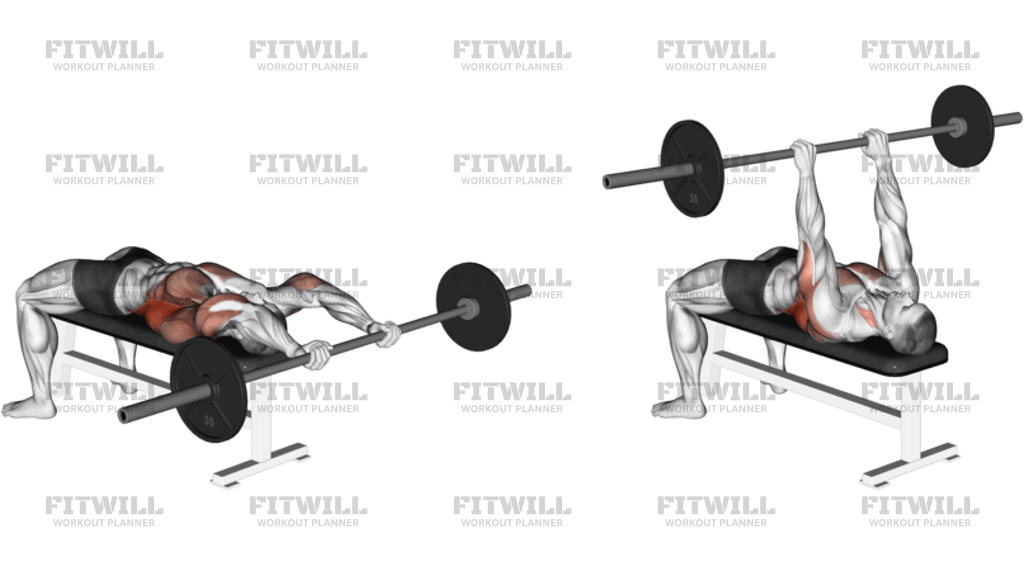
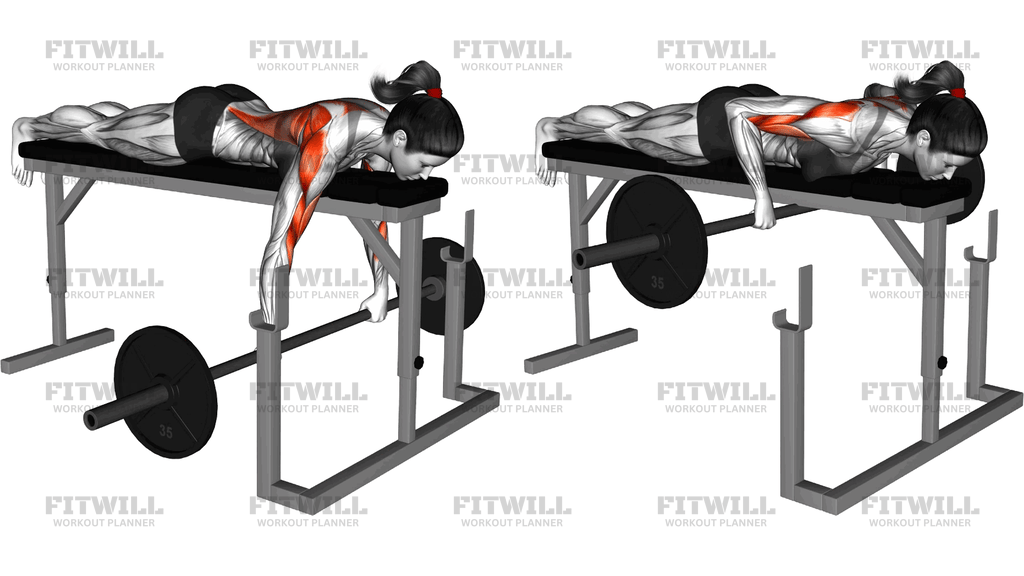
The Barbell Lying Seal Row On Rack is a strict horizontal rowing exercise performed face down on a high flat bench, with the barbell hanging beneath you. The bench sits high enough that your arms can hang fully extended toward the floor, and the bar is positioned on rack pins below the bench so you can pull it up toward the underside of the bench and lower it back down between repetitions. Because your chest and torso are fully supported, your lower back and legs cannot assist by swinging or arching, which forces the upper back, lats, and arms to do all of the work.
This movement gets its unusual name from the prone position: like a seal propped up on its belly, you lift your chest slightly and row with nothing but your arms and back. It is one of the few barbell rows where the torso is completely locked in place, making it an excellent tool for lifters who tend to cheat on bent-over rows by using body English. If you find that your standard barbell row turns into a blurry hybrid of a row and a deadlift, the seal row will expose that immediately and give you an honest way to train the horizontal pull.
The primary muscles working are the lats and the muscles of the upper back, including the rhomboids and mid traps, with strong contributions from the rear shoulders and biceps. Grip strength is also challenged because you are holding a loaded bar with no straps or support for the duration of the set. Since the barbell must clear the bench on each rep, the range of motion is generous, and pulling the bar toward the bench edge lets you squeeze the shoulder blades together at the top in a way that is hard to replicate on a machine.
The setup matters more here than in most rowing variations. The bench needs to be tall enough that the plates on the bar can hang freely without touching the floor at the bottom, and the rack pins should sit just below the level of the bench so the bar is easy to grab and safe to re-rack. A spotter or training partner can hand the bar to you at the start, but once you are set, the exercise is self-contained. Keep your chin tucked so your face rests on the bench and your neck stays neutral throughout.
The Barbell Lying Seal Row On Rack works well as a main pulling exercise on back days, as a strict accessory after heavier rows or pull-ups, or as a way to accumulate quality upper-back volume without fatiguing the lower back. Powerlifters and strength athletes often use it to build thickness in the mid back, and it is also a favorite of lifters rehabilitating their training after lower-back issues, since the supported position removes spinal loading from the equation. Start light, get comfortable with the setup, and progress the weight only when you can complete every rep with a full squeeze at the top and a controlled lower.
[ Workout Log & Planner ]
Put your next workout in Fitwill
Keep your plan and training log ready when you are.


Instructions
- Set a tall flat bench over a power rack so the barbell can rest on pins just below bench height, and load the bar with plates that leave clearance between the plates and the floor.
- Lie face down on the bench with your chest near the far edge, your face resting on the bench, and your arms hanging straight down toward the bar.
- Reach down and grip the barbell with an overhand grip, hands roughly shoulder-width apart, keeping the bar centered between the rack pins.
- Lift your chest slightly off the bench, brace your core, and let the bar hang with your arms fully extended; this is your starting position.
- Pull the bar up by driving your elbows toward the ceiling until the bar touches the underside of the bench or the edge of the frame.
- Squeeze your shoulder blades together at the top for a brief pause before lowering.
- Lower the bar under control until your arms are fully extended again, letting it briefly settle toward the pins between reps if you want a complete reset.
- Exhale as you pull the bar up and inhale as you lower it back down.
- Complete all repetitions, then carefully lower the bar onto the rack pins or set it on the floor before letting go.
- Rest your face and torso back on the bench between sets, adjusting your position if your chest has slid off the edge.
Tips & Tricks
- If the plates scrape the floor at the bottom of the rep, raise the bench on small plates or platforms, or start the bar from slightly higher pins so your arms still reach full extension.
- Bouncing the bar off the rack pins between reps is the most common way to turn this strict movement into a momentum exercise; touch and go is fine, but a bounce means you are unloading the muscles you are trying to train.
- Do not lift your head to watch the bar; keep your face on the bench so your neck stays aligned and the row is driven by your elbows, not by your eyes tracking the weight.
- Squeeze the bar tight and consider chalk or straps on heavier sets, because grip failure usually arrives before back fatigue on this exercise.
- Keep your elbows tracking at roughly a 45-degree angle from your torso; flaring them to a full T-position shifts work to the rear shoulders and traps, while tucking them too close turns it into a lat-only pull.
- If your hips rise off the bench as you pull, the weight is too heavy or you are trying to help with your lower body; drop the load and let your torso stay flat.
- Pull the bar toward the front edge of the bench rather than your stomach, since the bench blocks the path of a low pull and you will lose range trying to row too deep.
- Because your chest is pinned, cheating is nearly impossible, which makes this a great exercise to use as a barometer: if your bent-over row weight vastly exceeds what you can seal row, your bent-over row form probably needs work.
Frequently Asked Questions
Which muscles does the Barbell Lying Seal Row On Rack work?
The lats and upper-back muscles such as the rhomboids and mid traps do most of the work, with the rear shoulders and biceps assisting on every pull. Your grip and forearms work continuously to hold the bar, while the supported position keeps the lower back largely uninvolved.
Why is the bench positioned so high for the Barbell Lying Seal Row On Rack?
The bench height determines your range of motion. You need enough clearance that your arms can hang straight down and the loaded plates can swing freely without touching the floor, which usually means a high bench or a bench elevated on blocks.
Can beginners do the Barbell Lying Seal Row On Rack?
Yes, as long as the setup is safe and the starting weight is light. Beginners often benefit from it because the supported torso makes cheating impossible and teaches what a proper horizontal row should feel like before moving to harder standing variations.
What is the difference between the Barbell Lying Seal Row On Rack and a regular barbell row?
In a regular barbell row you are standing and bent over, so your lower back, hips, and legs can assist by moving the torso. In the seal row your chest is pinned to the bench, so only your arms and upper back move the bar, making the tension far more isolated.
How should I get the bar into position for the Barbell Lying Seal Row On Rack?
Set the bar on the rack pins below the bench and reach down to grip it once you are lying in position, or have a partner hand it to you. Never try to wrangle a loaded bar into place while balanced face down on a bench.
Why does the bar only come up to the bench and not to my chest?
The bench physically blocks the bar from traveling higher, and touching the underside of the bench or the frame marks a full-range rep. Attempting to row the bar to your stomach would require an arm angle the bench simply does not allow.
What should I do if my shoulders feel pinched at the top of the Barbell Lying Seal Row On Rack?
Reduce the weight and check your elbow path, keeping them closer to a 45-degree angle rather than fully flared. If discomfort persists, narrow your grip slightly or switch to a supported chest-supported row on an incline bench while you build tolerance.
Can I use straps for the Barbell Lying Seal Row On Rack?
Yes. Grip fatigue often limits this exercise before the back muscles are properly worked, especially on heavier sets, so straps are a reasonable choice when your goal is upper-back development rather than grip training.
What can I substitute for the Barbell Lying Seal Row On Rack if I don't have a high bench and rack?
A chest-supported row on an incline bench with dumbbells is the closest substitute, since it pins the torso in the same way. A seal row can also be improvised with a bench elevated on sturdy blocks and a barbell pulled from the floor, provided the plates have clearance.
Is it safe to let the bar settle on the pins between reps?
It is safe, and it can be useful if you want to eliminate momentum and start every rep from a dead stop. Just make sure the pins are level and secure so the bar does not roll away from your grip when you set it down.