Suspension Squat Arms Overhead
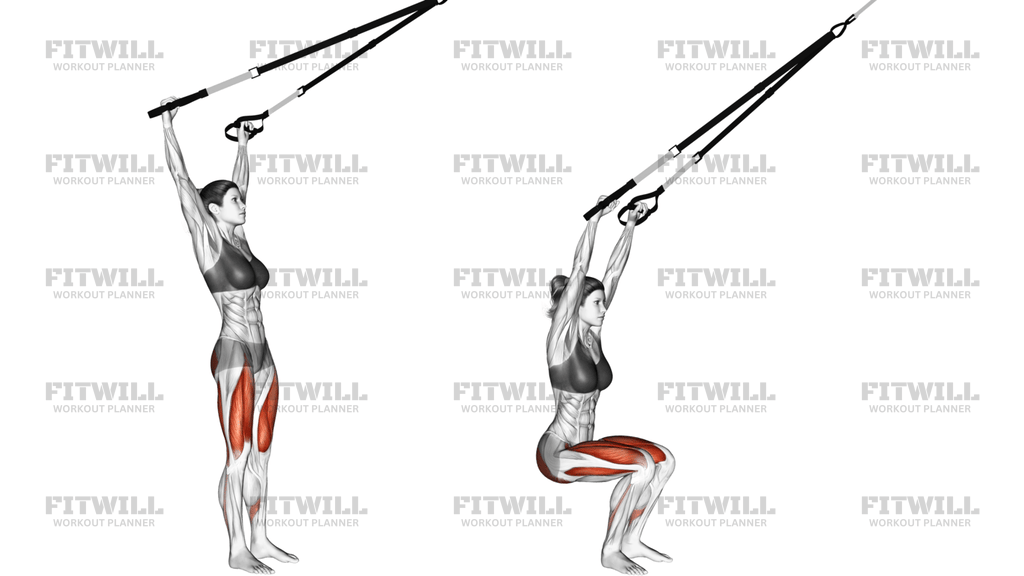
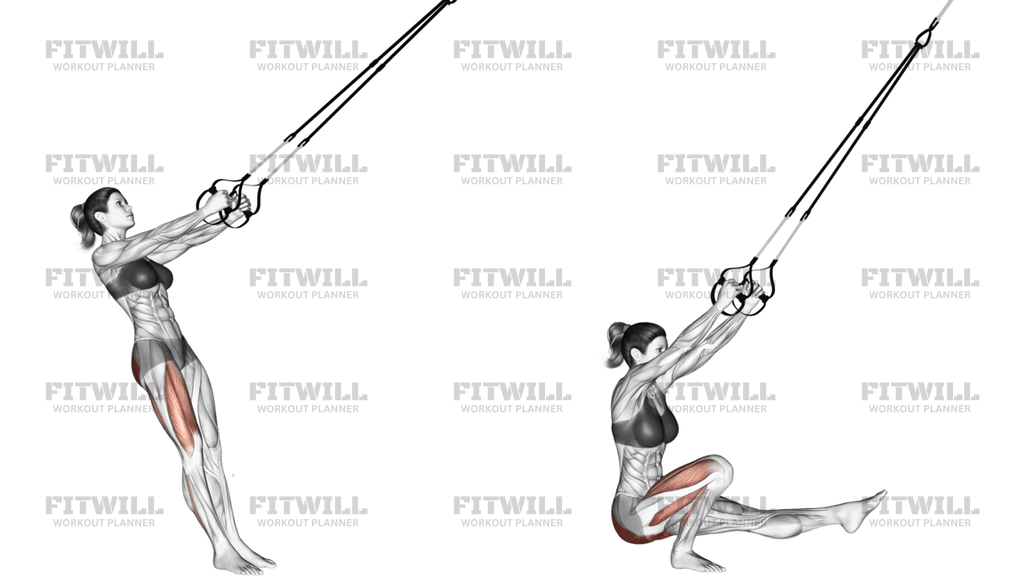
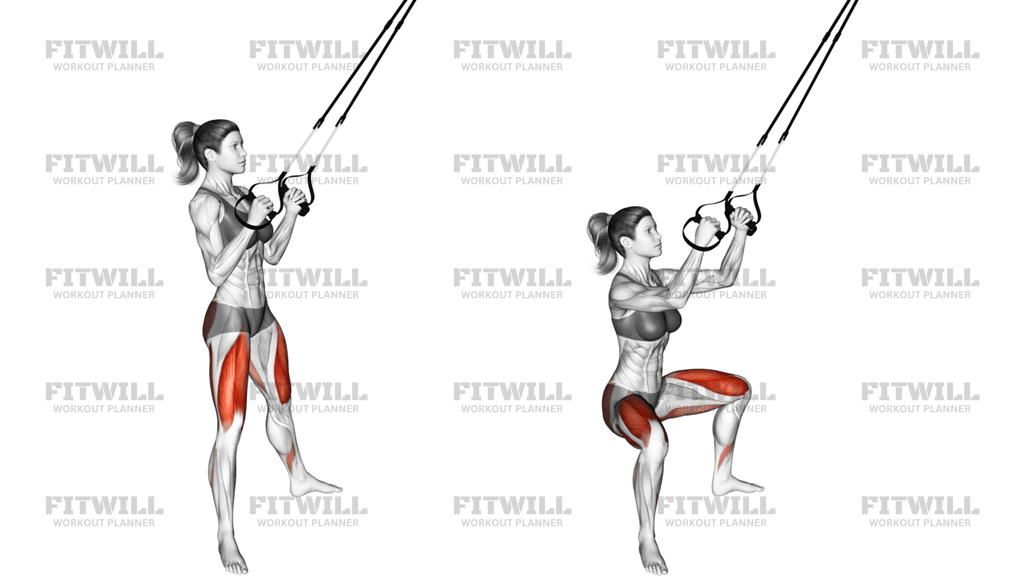
Suspension Squat (Arms Overhead) is a suspension-based squat variation that uses the straps to help you stay balanced while you sit down and stand up with the arms held overhead. The setup shifts some of your bodyweight into the handles, which makes the movement easier to balance than a free squat but still demanding on the legs, trunk, and upper back. It is useful when you want a squat pattern with clear feedback on posture, depth, and control.
The main training emphasis is on the thighs and glutes, with the core, hamstrings, and lower back contributing to stability as you descend and rise. Keeping the arms overhead changes the torso position and challenges the shoulders, lats, and ribcage control, so the exercise is not just about leg drive. In practice, that means the best reps come from a steady setup, a controlled sit-back, and a strong stand without letting the chest flare or the lower back overextend.
Start by setting the suspension straps to a height that lets you hold the handles overhead with a slight bend in the elbows and enough slack to squat comfortably. Stand with both feet flat, about shoulder width or slightly wider, and keep the handles stacked above or just in front of the shoulders rather than drifting behind the body. From there, lower by bending the knees and hips together, keeping the heels grounded and the torso tall enough that the straps stay supportive without pulling you forward.
On the way up, press through the whole foot and drive the knees in line with the toes as you return to standing. The straps should assist balance, not carry the whole rep, so stay light in the hands and avoid yanking yourself upward. This movement fits well in warmups, conditioning circuits, and accessory leg work when you want quad and glute loading with a strong posture requirement. If your shoulders pinch or your lower back arches hard to keep the arms overhead, shorten the range or lower the strap tension until the position feels controlled and repeatable.
[ Workout Log & Planner ]
Put your next workout in Fitwill
Keep your plan and training log ready when you are.


Instructions
- Set the suspension straps so you can hold the handles overhead with a slight bend in the elbows and no slack pulling you off balance.
- Stand tall facing the anchor point, feet about shoulder width apart, and grip both handles with the arms extended overhead or just in front of the ears.
- Plant both feet flat, lift the chest, and keep the ribs stacked so the lower back does not arch as you begin the squat.
- Bend the knees and hips together to sit down between your heels while the straps help you stay centered.
- Keep the knees tracking over the toes and let the hips move back only as far as you can control without tipping forward.
- Descend until your thighs reach a comfortable depth or your heels start to lighten, then pause briefly if you can hold the position cleanly.
- Drive up by pushing through the whole foot, squeezing the glutes, and standing tall without letting the handles drop behind you.
- Exhale as you rise, inhale on the way down, and reset the shoulders overhead before the next repetition.
Tips & Tricks
- Keep the handles slightly in front of the shoulders if the overhead position makes you lean back or flare your ribs.
- A longer strap setup usually gives you a more comfortable squat path; if the cords feel tight at the bottom, raise the anchor or shorten the range.
- Let the straps guide balance, but do not hang passively through the shoulders or elbows.
- If your heels lift early, reduce depth and think about sitting straight down instead of reaching the hips far back.
- Keep the knees moving in the same direction as the toes so the squat does not collapse inward on the rise.
- The overhead position will expose rib flare quickly; keep the lower ribs tucked so the torso stays stacked.
- Use a smooth tempo on the way down so the straps never jerk your body forward.
- If you cannot keep the arms comfortably overhead, lower the hands slightly instead of forcing a painful shoulder position.
- Stop each set when you start losing depth, balance, or symmetry, because that is usually the first sign the suspension support is being overused.
Frequently Asked Questions
What muscle does Suspension Squat (Arms Overhead) target most?
The thighs and glutes do most of the work, with the core and upper back helping you stay stacked under the straps.
Can beginners perform this exercise?
Yes, if the straps are set high enough and the squat depth stays comfortable. Beginners should keep the motion shallow at first and focus on balance.
How should the handles sit during the squat?
Keep the handles overhead or slightly in front of the shoulders. If they drift behind you, the torso usually arches and the squat becomes harder to control.
How low should I squat?
Go only as low as you can while keeping both heels grounded, the chest tall, and the straps supportive rather than strained.
What does the suspension add to the movement?
It gives you balance assistance and a clear cue for posture, but it also makes shoulder and trunk position more demanding than a normal bodyweight squat.
Why do my heels come up in this squat?
That usually means you are dropping too deep for your ankle mobility or leaning forward too far. Shorten the range and keep the weight through the midfoot.
What should I do if my shoulders feel cramped overhead?
Bring the hands a little forward, soften the elbows, or reduce the depth. The overhead position should feel controlled, not pinchy.
How can I make this exercise harder?
Use a deeper but still controlled squat, slow the lowering phase, or reduce how much support you take from the straps while keeping the same movement path.