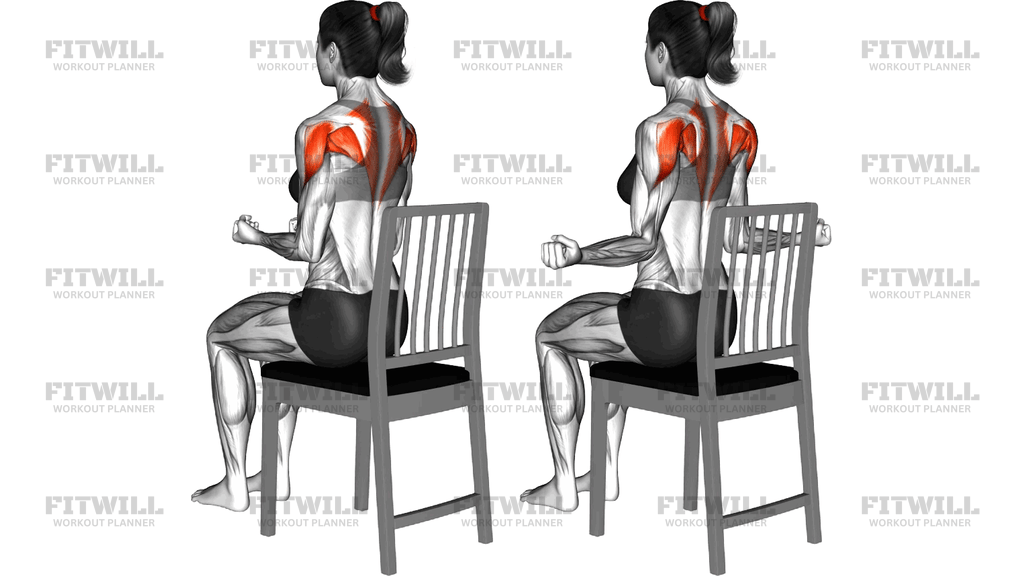
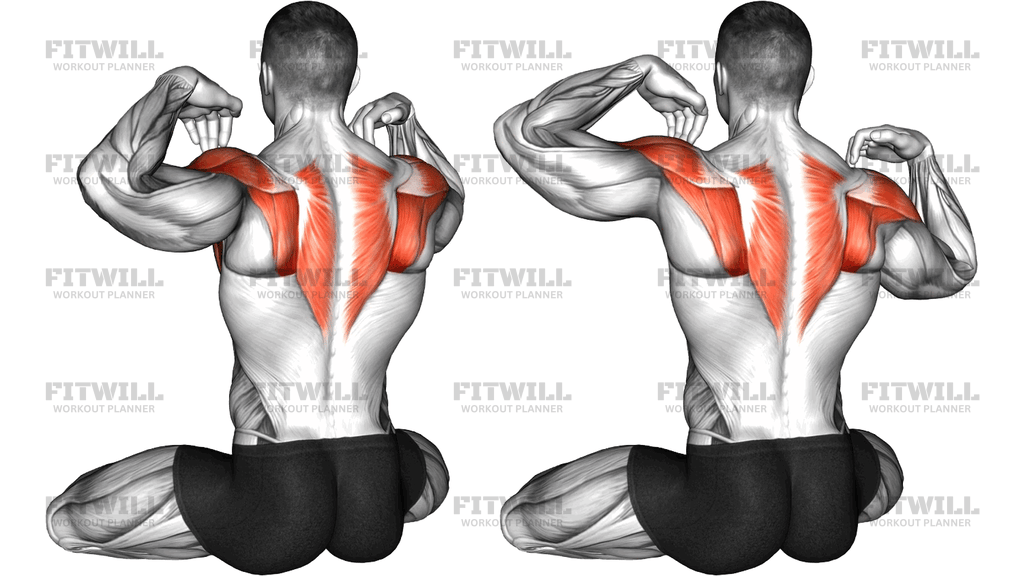
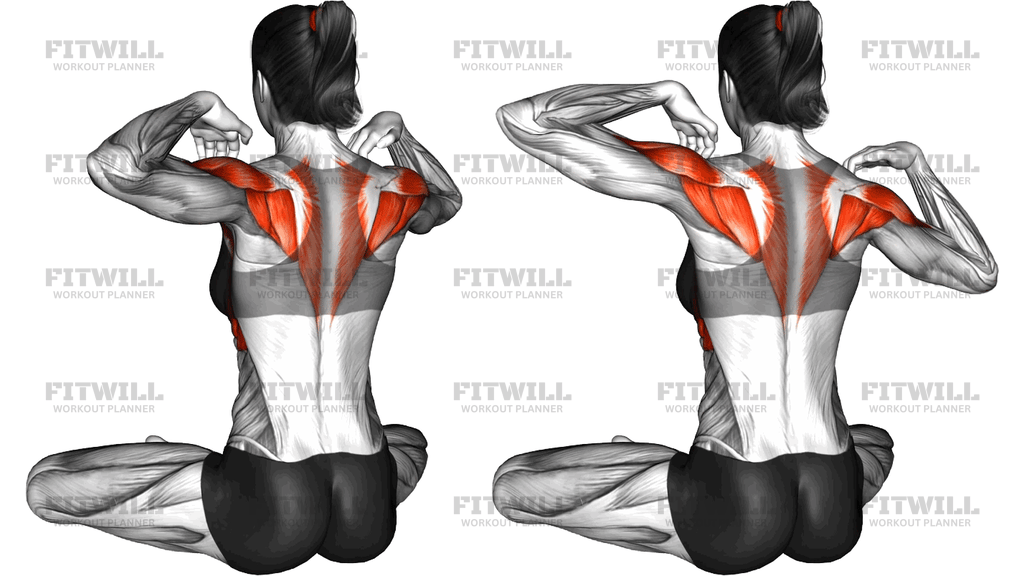
Shoulder Medial Rotation (Internal Rotation)
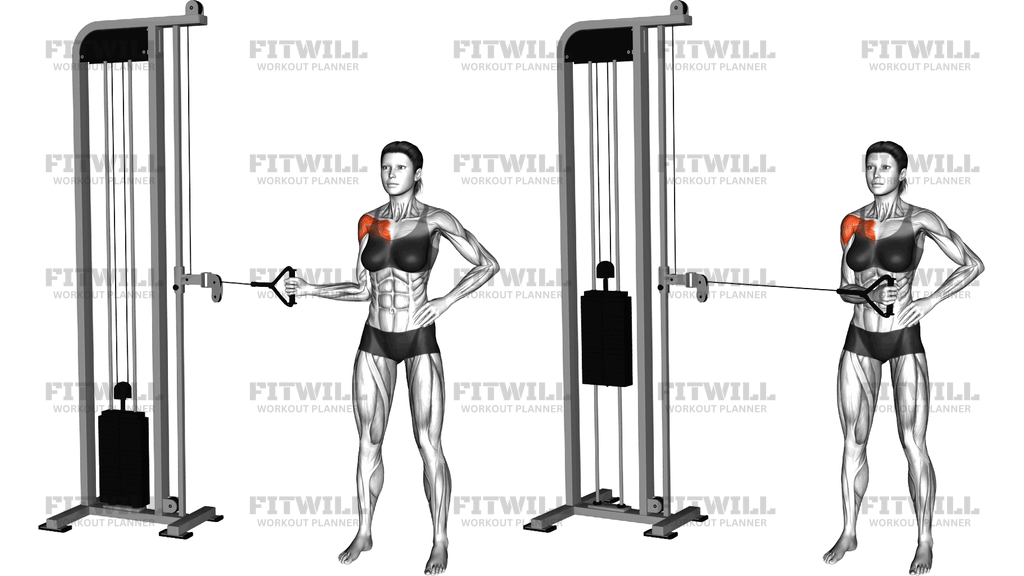
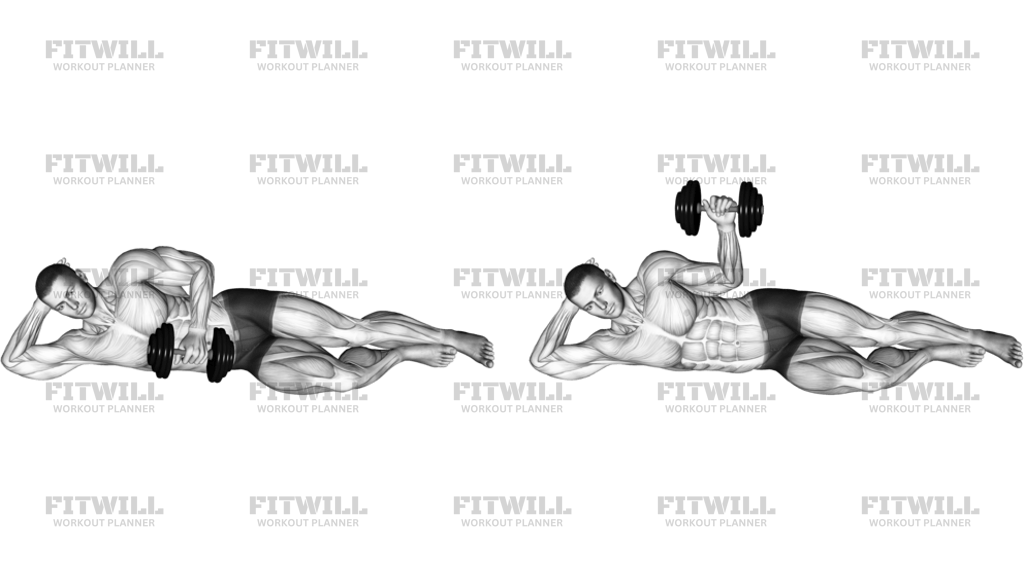
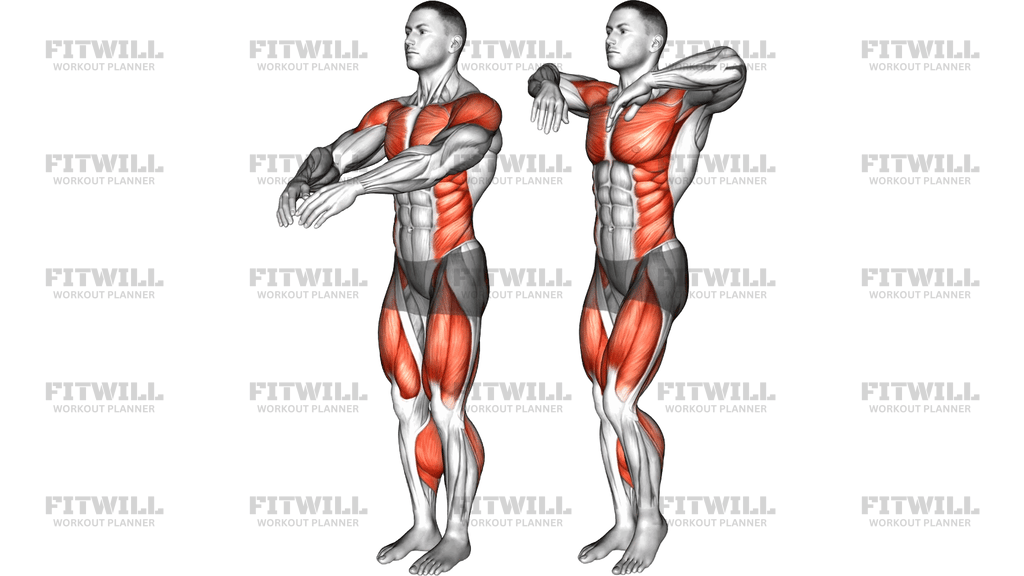
Shoulder Medial Rotation (Internal Rotation) is a standing rotation drill for the front of the shoulder joint. From the setup shown, you stand tall with your elbow lifted out to the side and bent to roughly ninety degrees, then sweep your forearm down and across your body until your palm turns in toward your stomach. Because it is done with just your arm weight, it works as a controlled activation and mobility exercise rather than a heavy strength lift.
The main muscle at work here is the subscapularis, the rotator cuff muscle on the front underside of the shoulder blade that pulls the upper arm inward. The anterior deltoid and the chest muscles assist as the arm rotates across the torso. These muscles are involved in nearly every pushing, reaching, and throwing action, yet they rarely get trained directly, which is exactly the gap this movement fills.
This exercise is a staple in shoulder warm-ups, post-rehab routines, and throwing-arm maintenance programs. Overhead lifters, swimmers, and racket sport players benefit from keeping the internal rotators strong and responsive, since balanced cuff strength helps the humeral head stay centered in the socket during demanding arm movements. It is also a gentle starting point for anyone reintroducing rotation after a layoff, provided a professional has cleared them for it.
Setup quality decides everything in this drill. Your elbow should stay pinned at roughly shoulder height and bent at a right angle, acting as a fixed hinge, while only the forearm travels. If the elbow drops toward your ribs or the shoulder shrugs upward, the arm takes over and the rotator cuff stops doing its job. Keep your ribs stacked over your hips and avoid leaning the torso to help the forearm across.
Execution should be slow and deliberate. Rotate the forearm through its comfortable arc, pause briefly at the end range where the palm faces your midline, then rotate back with the same control. Two to three sets of ten to fifteen slow repetitions per side is a practical dose, either as a warm-up before pressing or pulling work or as focused cuff training on its own. Stop short of any pinching sensation at the front of the shoulder, and reduce the range before you reduce the effort.
[ Workout Log & Planner ]
Put your next workout in Fitwill
Keep your plan and training log ready when you are.


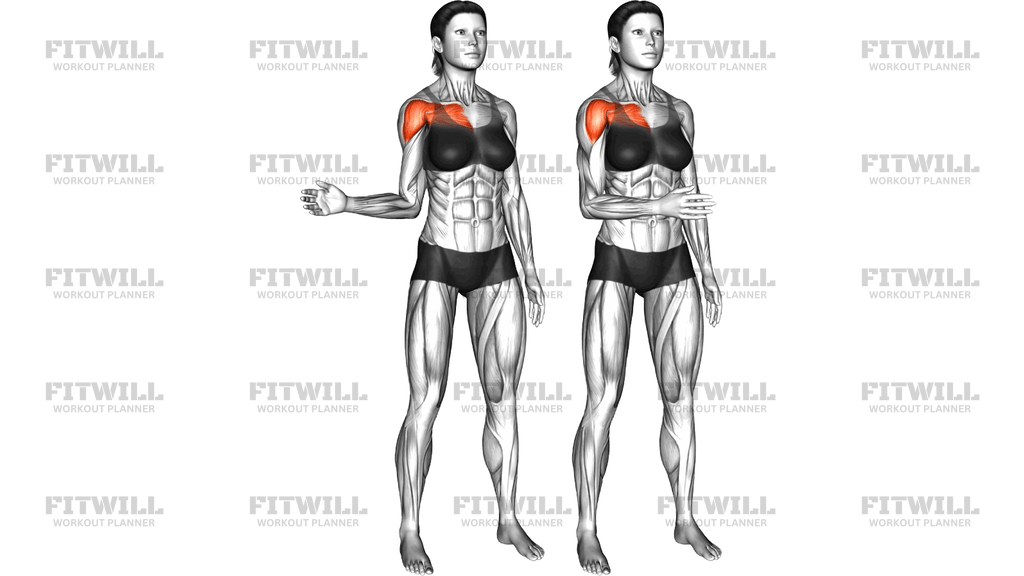
Instructions
- Stand upright with your feet about hip-width apart, weight balanced evenly through both feet.
- Lift one arm out to your side and bend the elbow to about ninety degrees, keeping the elbow at roughly shoulder height with the palm facing forward.
- Draw your shoulder blade down and back so the shoulder sits level, and lightly brace your stomach to stop the torso from swaying.
- Keeping the elbow fixed in place, rotate your forearm down and across your body until your palm turns in toward your stomach.
- Pause for a moment at the end of the rotation without letting the elbow drop or the shoulder shrug.
- Slowly rotate the forearm back up to the starting position with the palm facing forward again.
- Exhale as you rotate across the body and inhale as you return to the start.
- Complete all repetitions on one side, then reset your posture and switch arms.
- If the front of the shoulder pinches, shorten the arc slightly and keep the rotation within a comfortable range.
Tips & Tricks
- The most common mistake is letting the elbow sink toward the ribs, which turns this into a chest squeeze instead of a shoulder rotation. Check the elbow height before every rep.
- Do not shrug the working shoulder toward your ear; if it creeps up, lower your elbow a touch and consciously settle the shoulder blade down.
- Keep the wrist neutral and the hand relaxed. Gripping or bending the wrist adds tension that has nothing to do with the rotation.
- Resist the urge to swing the forearm. If momentum is moving the hand, slow the tempo down until the muscle, not momentum, controls each rep.
- Watch for torso rotation or a hip shift as the arm crosses the body. Stand near a mirror side-on to catch this leakage.
- To add gentle resistance later, hold a very light dumbbell or a short stick upright in the hand while keeping the same elbow position.
- If one side feels stiffer, start with that side and match its repetitions with the other rather than letting the mobile side do more volume.
- Pair this with an external rotation drill in the same session so the cuff is trained in both directions, not just inward.
Frequently Asked Questions
Which muscles does Shoulder Medial Rotation (Internal Rotation) work?
The primary mover is the subscapularis, a rotator cuff muscle on the front of the shoulder blade, with the anterior deltoid and chest muscles assisting as the arm rotates inward.
Why is my elbow bent at ninety degrees in this exercise?
The right-angle bend creates a fixed hinge so the rotation happens at the shoulder joint itself. A straighter arm lets the shoulder blade and torso compensate and takes the work away from the cuff.
Is Shoulder Medial Rotation (Internal Rotation) suitable for beginners?
Yes, it is a low-load body weight drill that suits beginners well. Focus on keeping the elbow still and moving the forearm slowly through a comfortable arc.
Should I feel this in the front of my shoulder?
You should feel working effort around the front and deep in the shoulder, but not sharp pain or pinching. If pinching occurs, reduce the range of rotation and check that your shoulder is not shrugging.
How many reps and sets should I do?
Two to three sets of ten to fifteen slow controlled repetitions per arm works well, either as a shoulder warm-up before training or as focused rotator cuff work.
Can I add weight to Shoulder Medial Rotation (Internal Rotation)?
You can hold a very light dumbbell or a short stick in the hand once your form is consistent, but keep the load minimal since the rotator cuff responds better to control than to heavy resistance.
What is the most common mistake in this movement?
Letting the elbow drop down beside the ribs as the forearm rotates across the body. Pin the elbow at shoulder height and monitor it in a mirror to keep the rotation on the shoulder joint.
Do I need to train external rotation too?
Yes, pairing internal rotation with an external rotation drill keeps the cuff balanced around the joint, which is especially useful if you press, throw, or swim regularly.
When is the best time to include this exercise in a workout?
It works well early in a session as a warm-up before pressing or pulling, or as a dedicated shoulder health block on upper body days.