Lying Supine Abdominal Breathing
Lying Supine Abdominal Breathing is a foundational breathing drill performed on your back with the knees bent and one or both hands resting over the belly. Instead of forcing movement through the trunk, the goal is to let the diaphragm do its job: as you inhale through the nose, the abdominal wall rises as the diaphragm descends; as you exhale slowly, the belly settles back down. Because the floor gives you constant feedback about how the torso is positioned, the supine position is the easiest and most reliable place to learn diaphragmatic breathing before taking the skill into seated, standing, or loaded situations.
This drill is useful for almost anyone. Beginners learning how to brace properly before lifting benefit from it because it teaches them to fill the belly and lower ribs rather than shrugging the chest and shoulders. People who carry a lot of tension in the neck and upper back often discover they are chronic chest breathers, and this exercise gives them a way to retrain that pattern. It is also commonly used in warm-ups, cool-downs, and recovery sessions because the slow exhale promotes relaxation without any joint stress.
What the exercise actually trains is coordination rather than strength in the traditional sense. The diaphragm is the prime mover of every breath, and the deep abdominal wall — especially the transverse abdominis — works with it to manage pressure inside the trunk. The obliques and pelvic floor contribute as well. You will not feel a burn the way you would during crunches, and that is expected. Success shows up as smoother breaths, ribs that stay relatively quiet, and a belly that rises and falls without effort.
Setup matters more than it looks. Lying flat with the knees bent removes gravity's pull on the abdominal wall in a way standing does not, and resting the hands on the stomach turns them into a feedback tool — you should literally feel the belly press into your palms on the inhale. Keep the head neutral, the shoulders relaxed, and the low back resting comfortably on the floor rather than pressed hard down or excessively arched.
To execute it well, breathe in slowly through the nose for roughly three to four seconds, directing the air down into the abdomen and lower ribs while the chest stays calm. Pause briefly if that feels natural, then exhale through the mouth or nose over four to six seconds, letting the belly fall without pushing or gripping. Continue for five to ten minutes, or a set number of breaths such as ten cycles, keeping the rhythm unhurried the entire time.
The most common errors are lifting the chest toward the chin, shrugging the shoulders on the inhale, forcing the belly outward with muscular effort, or rushing the exhale. None of these are dangerous, but they all defeat the purpose of the drill. Stay patient, keep the effort low, and treat this as practice rather than a workout — the carryover to bracing under load, better posture, and calmer recovery is where the real value lies.
[ Workout Log & Planner ]
Put your next workout in Fitwill
Keep your plan and training log ready when you are.


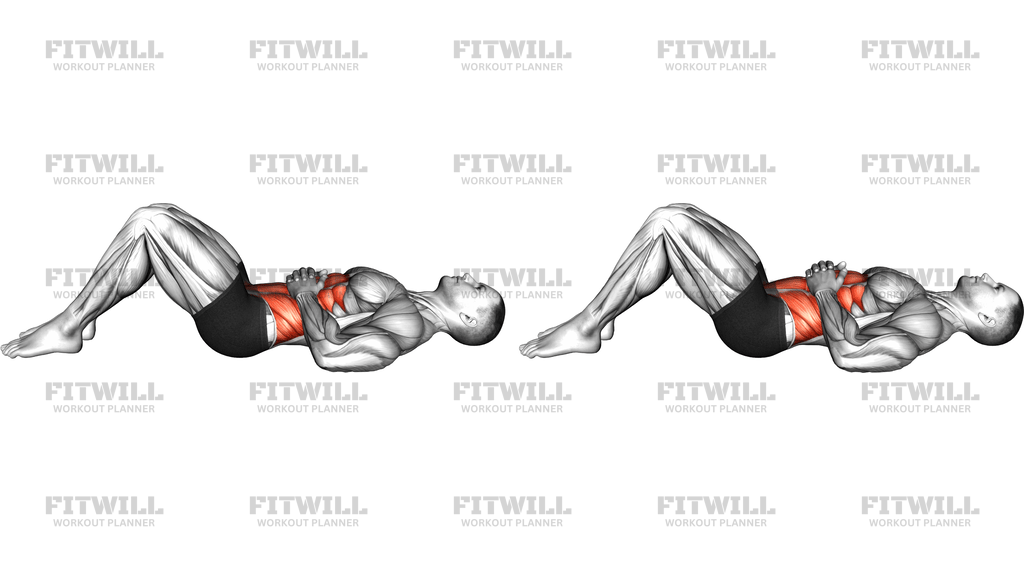
Instructions
- Lie flat on your back on an exercise mat with your knees bent and your feet flat on the floor, about hip-width apart.
- Rest both hands on your lower abdomen, fingertips roughly touching just below the navel, and let your elbows and shoulders drop toward the floor.
- Relax your head and neck, keep your gaze straight up, and let your low back rest in a comfortable neutral position — neither pressed flat nor heavily arched.
- Inhale slowly through your nose for about three to four seconds, directing the breath downward so your belly rises into your hands while your chest and shoulders stay quiet.
- Pause for a moment at the top of the inhale without straining or tensing the throat.
- Exhale gradually through your mouth or nose over four to six seconds, allowing the abdominal wall to fall away from your hands on its own.
- Keep the exhale controlled and passive at the end — do not force the belly down or squeeze the abdominals hard.
- Continue this inhale-exhale rhythm for 8 to 12 breath cycles, or five to ten minutes if used as a relaxation practice.
- When finished, take two or three normal breaths, then roll onto your side and press up to a seated position rather than sitting straight up off your back.
Tips & Tricks
- If your belly refuses to rise, stop trying harder — effort makes chest breathing worse. Picture filling the stomach and lower ribs like a balloon instead.
- A common mistake is elevating the chest toward the chin on the inhale; check that your upper chest stays still and all the visible movement happens at the belly.
- Do not confuse this with a vacuum or hard abdominal brace. The belly should rise because air moves the diaphragm, not because you are pushing it out with muscle.
- Place a small book or light towel on your abdomen instead of your hands if you find hand contact distracting — watching it rise and fall gives the same feedback.
- If your low back aches from lying flat, slide a cushion or folded towel under the knees to reduce the arch; comfort helps breathing stay relaxed.
- Count silently — in for four, out for six — to keep from rushing. The exhale should always be as long as or longer than the inhale.
- Breathe through the nose whenever possible; nasal breathing naturally limits over-breathing and encourages a slower, lower breath.
- Once the supine pattern feels automatic, rehearse the same belly-first breath sitting and standing before using it to support bracing during lifts.
- Stop and breathe normally if you feel lightheaded; this usually means you are breathing too deeply or too fast rather than calmly.
Frequently Asked Questions
Which muscles does Lying Supine Abdominal Breathing work?
The diaphragm is the primary muscle of the breath, and the deep core — particularly the transverse abdominis — coordinates with it to manage trunk pressure. The obliques and pelvic floor assist, but the demand is coordination, not force.
Why is this exercise done lying on the back with bent knees instead of standing?
The floor supports the spine and gives clear feedback through the hands on the belly, which makes faulty chest-breathing habits easier to notice and correct. Once the pattern is solid, you can transfer it to seated, standing, and loaded positions.
Can beginners do Lying Supine Abdominal Breathing?
Yes — it is one of the best starting points for anyone new to training. There is no load, no complex movement, and the only equipment needed is a mat or a soft floor surface.
How is this different from doing crunches or other ab exercises?
Crunches flex the spine against resistance to build the rectus abdominis, while Lying Supine Abdominal Breathing trains the diaphragm and deep trunk muscles without spinal movement. The two serve different purposes and complement each other.
My belly will not rise when I inhale — what am I doing wrong?
You are likely breathing into the chest or trying too hard, which tenses the abdominal wall. Slow the breath down, relax the abdominals completely, and focus on letting the belly soften and expand rather than pushing it out.
How long should each session last?
Five to ten minutes of relaxed breathing is plenty, or about ten breath cycles if you are using it as part of a warm-up or cool-down. Consistency matters far more than duration.
Can I substitute a different position if lying down is uncomfortable?
Yes. Lying on your side, sitting upright in a chair, or placing a cushion under the knees all work. The key elements — hands on the belly, quiet chest, slow exhale — stay the same in any position.
Is it normal to feel sleepy or very relaxed during this drill?
That is a common and expected response to slow, extended exhales. For that reason, many people use it in the evening or after training rather than right before heavy lifting.
Are there any safety concerns with Lying Supine Abdominal Breathing?
The drill is very low risk, but lightheadedness can occur if you over-breathe or force the depth of each breath. Breathe calmly, return to normal breathing if you feel dizzy, and never hold the breath to the point of strain.
When is the best time to use this exercise in a workout?
It works well at the start of a session to establish breathing and trunk control before lifting, or at the end to downshift and recover. It is also valuable as a standalone daily practice outside of training.