Kettlebell Glute Bridge
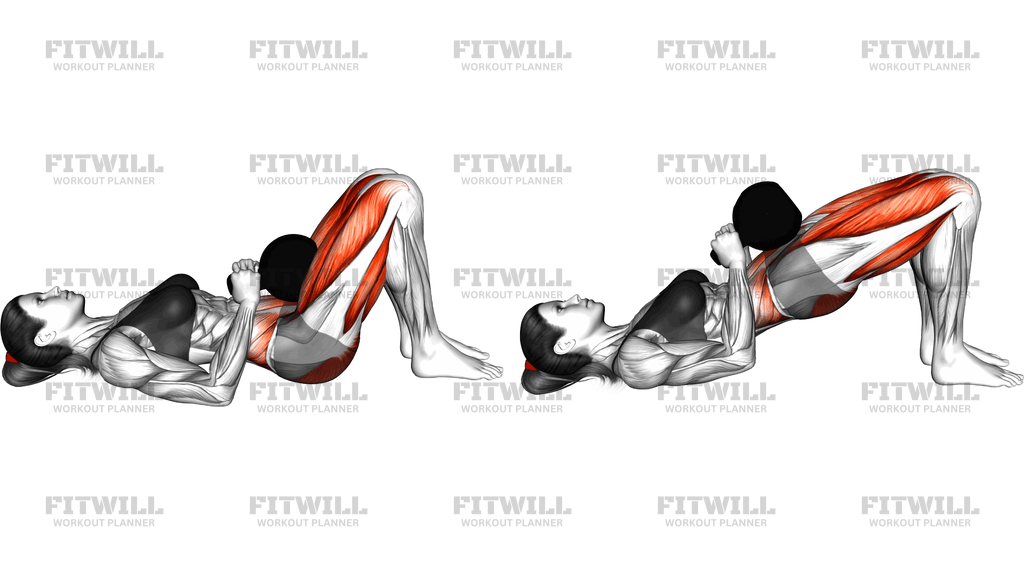
The Kettlebell Glute Bridge is a floor-based hip extension exercise where you lie on your back, rest a kettlebell across your pelvis, and drive your hips upward until your body forms a straight line from shoulders to knees. Adding a kettlebell to the classic bodyweight glute bridge turns a simple activation drill into a genuine strength exercise, letting you load the glutes progressively without needing a barbell, bench, or hip thrust setup.
The main muscles worked are the glutes, with the hamstrings assisting on the lift and the lower back and core working to keep your ribcage and pelvis stable throughout. Because your torso stays on the floor and the hips move through a fixed, supported arc, the movement is easy on the knees and lower back compared with standing hip extension work, which makes it a good fit for people rebuilding strength after time away from training or anyone who struggles to feel their glutes in squats and deadlifts.
Setup matters more than most people expect. The kettlebell should sit on the crease of your hip, not on your abdomen, and padding it with a folded towel or mat edge makes heavier sets far more comfortable. Your feet stay flat on the floor with knees bent, and the distance of your feet from your hips changes the emphasis: heels closer to the glutes bias the glutes and quads, while heels slightly further away shift more work into the hamstrings. A stance roughly hip-width apart with toes pointing forward or slightly out keeps the knees tracking cleanly.
To execute the lift well, brace your core first, then push the floor away through your heels and squeeze the glutes to raise the hips. The top position is a straight line from knees to shoulders, with a strong glute contraction, not an exaggerated arch. Lower under control until the kettlebell lightly touches the floor, then drive straight back up. Pausing for a beat at the top of each rep is one of the simplest ways to get more out of this exercise without adding weight.
Common use cases include glute-focused lower body days, warm-up ramping before squats or deadlifts, home workouts with minimal equipment, and accessory work for hip strength that supports running, jumping, and daily movement. Because the setup is quick and the equipment is a single kettlebell, it also works well in circuits and time-efficient sessions.
A few practical points keep the exercise safe and effective: keep the neck relaxed and eyes up rather than craning sideways, avoid pushing through the toes, and stop the set if you feel the work shifting into your lower back. If your hamstrings cramp, shorten the range slightly and re-focus on squeezing the glutes at the top rather than lifting higher.
Fitwill
Log Workouts, Track Progress & Build Strength.
Achieve more with Fitwill: explore over 9600 exercises with images and videos, access built-in and custom workouts, perfect for both gym and home sessions, and see real results.
Start your journey. Download today!




Instructions
- Sit on the floor with your knees bent, and place a kettlebell of your chosen weight beside one hip.
- Lie back onto the floor and roll the kettlebell onto the crease of your front hip, holding it in place with both hands; slide a folded towel between the kettlebell and your hip if the weight presses uncomfortably.
- Position your feet flat on the floor, hip-width apart, with heels roughly a hand-span away from your glutes and knees pointing up.
- Exhale and brace your core lightly so your ribs stay down and your lower back is not already arched before you lift.
- Drive your heels into the floor and squeeze your glutes to raise your hips until your shoulders, hips, and knees form a straight line.
- At the top, pause for one or two seconds with the glutes fully contracted; your knees should stay in line with your feet, not collapsing inward.
- Inhale and lower your hips slowly, letting the kettlebell lightly touch the floor without fully relaxing between reps.
- Breathe out as you drive up and in as you lower, keeping the rhythm steady from rep to rep.
- Complete your set, then use both hands to roll the kettlebell off your hip and to the side before sitting up.
Tips & Tricks
- If the kettlebell digs into your hip bone on heavy sets, place a folded towel, sweatband, or foam pad on the crease of the hip before rolling the weight into position.
- Keep the weight on the hip crease, not the belly; a kettlebell resting on your abdomen turns the set into an uncomfortable breathing challenge and reduces your bracing quality.
- If you feel the exercise in your lower back, you are likely arching past the straight-line top position. Cut the height of each lift slightly and focus on squeezing the glutes harder instead of lifting higher.
- Hamstring cramps are common on this movement when heels are placed too far from the body. Move the feet closer to your glutes and warm up with a few bodyweight reps first.
- Do not let the knees fall inward as you lift. Think about gently pressing them out over your pinky toes to keep the glutes, not the inner thighs, driving the movement.
- Push through the whole foot with the weight biased toward the heels; driving through the toes lifts the heels and shifts tension away from the glutes.
- Keep your gaze on the ceiling and your neck relaxed. Twisting the head sideways to watch your hips can strain the neck as the weight gets heavier.
- Avoid bouncing the kettlebell off the floor between reps. Touching down lightly and pausing keeps tension on the glutes and makes each rep more productive.
- Start lighter than you think you need. Unlike a squat, the weight sits directly on the working area, so an overambitious first set often ends because of hip discomfort rather than muscle fatigue.
Frequently Asked Questions
Which muscles does the Kettlebell Glute Bridge work?
The glutes are the primary movers, with the hamstrings assisting the hip extension and the lower back and core stabilizing your torso. The quads help hold the knee position at the top of each rep.
How is the Kettlebell Glute Bridge different from a bodyweight glute bridge?
The kettlebell adds external load across the pelvis, so the glutes work against real resistance instead of just your bodyweight. This makes the exercise viable for building strength over time rather than only for activation.
Where exactly should I place the kettlebell on my body?
Place it on the crease of your hip, right at the top of the thigh, and hold it steady with both hands. If it sits on your abdomen it becomes uncomfortable and interferes with breathing and bracing.
Is the Kettlebell Glute Bridge good for beginners?
Yes, it is one of the most beginner-friendly loaded glute exercises because the floor supports your torso and the range of motion is short and controlled. Beginners should start with a light kettlebell and master the top-position squeeze before adding weight.
Why do my hamstrings cramp during Kettlebell Glute Bridge reps?
Cramping usually happens when the heels are placed too far from the glutes, which shifts the work toward the hamstrings, or when the glutes are not fully engaging. Move your feet closer and practice squeezing the glutes hard at the top of each rep.
How heavy should the kettlebell be for this exercise?
Choose a weight you can lift for 10 to 15 reps with a pause at the top while keeping your ribs down and knees in line. Progress the load only when the last few reps no longer feel challenging.
Can the Kettlebell Glute Bridge replace hip thrusts?
It covers similar ground for glute strength and is easier to set up at home, but a barbell hip thrust allows heavier loading and shoulder elevation for a longer range. The kettlebell bridge is an excellent substitute when you lack a bench or barbell.
Should my feet be flat during the Kettlebell Glute Bridge?
Yes, keep both feet flat on the floor with knees bent and pointing up. Pushing through the toes or lifting the heels shifts tension away from the glutes and makes the movement less stable.
Is it safe to do the Kettlebell Glute Bridge with lower back sensitivity?
The supported floor position makes it a reasonable option for many people, but the key is staying within a range where you can keep a neutral spine and avoid arching at the top. Stop and adjust if you feel the work moving into your lower back rather than your glutes.
How many sets and reps should I do?
Two to four sets of 10 to 15 reps with a one to two second pause at the top works well for most goals. Use lighter weight and higher reps for activation before squats or deadlifts, and heavier weight in the 8 to 12 range for direct glute strength work.