Lever Seated Hammer Grip Shoulder Press
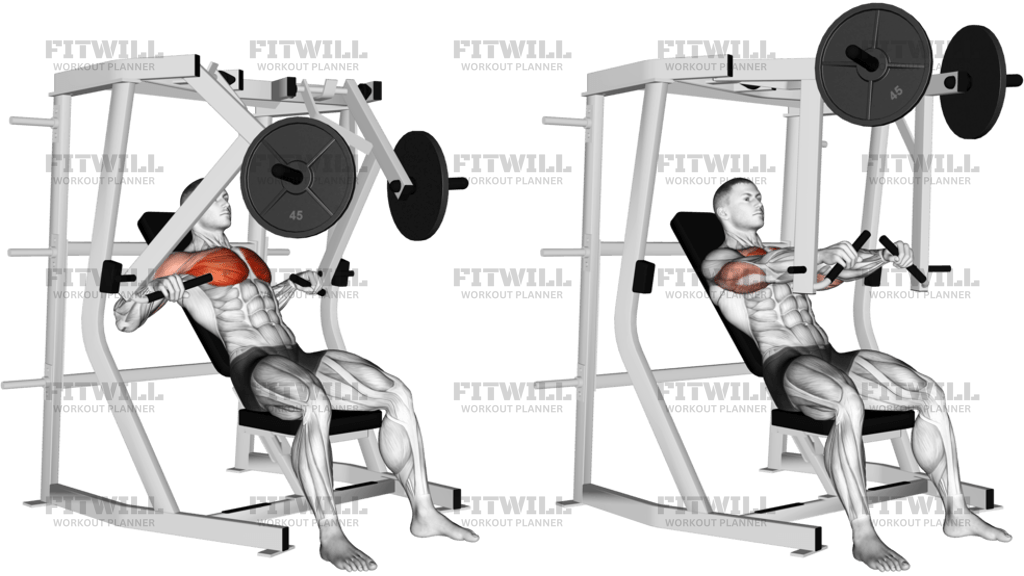
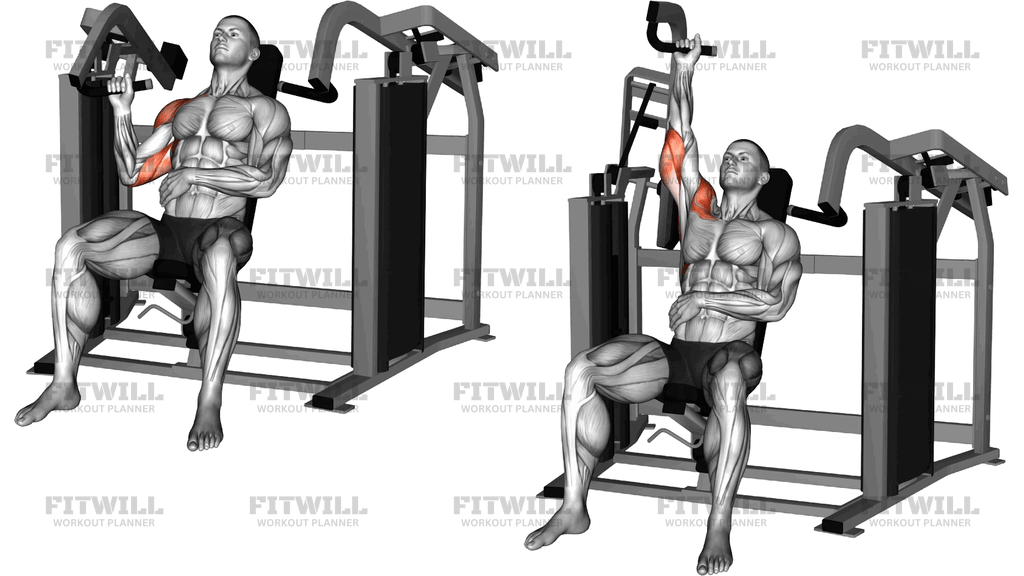
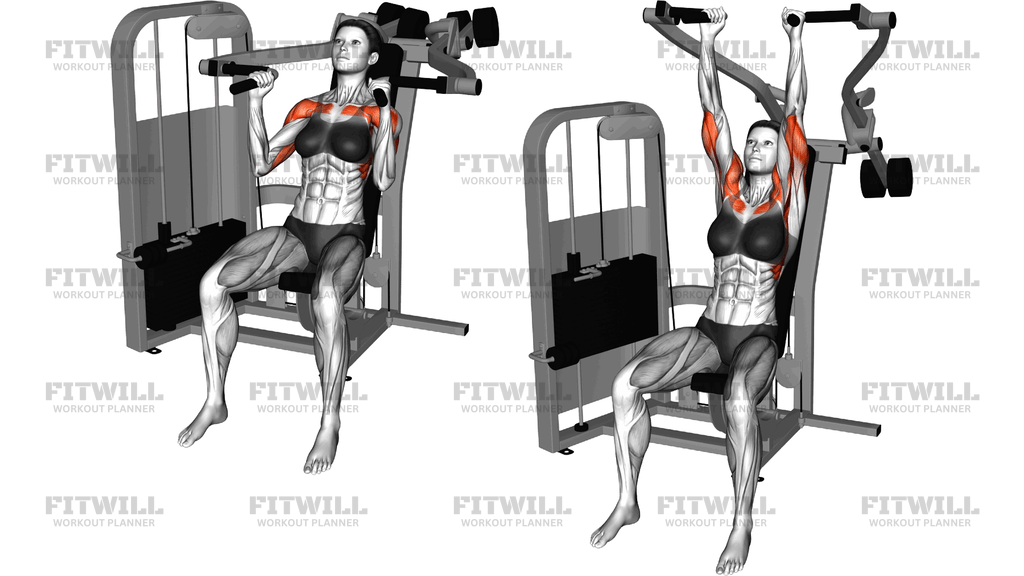
The Lever Seated Hammer Grip Shoulder Press is a machine-based overhead press performed from an upright seated position, using a leverage apparatus with handles oriented so your palms face each other. Instead of balancing free weights overhead, you push against weighted lever arms that travel along a fixed path, which lets you concentrate fully on driving the shoulders and triceps without worrying about stabilizing a barbell or dumbbells.
The neutral, hammer-style grip is the defining feature here. With palms facing inward, the upper arms naturally track closer to the front of the body than in a standard palms-forward press, which many lifters find friendlier to the shoulder joint while still loading the side and front delts hard. Because you are seated with your back against the pad and your feet planted, your torso stays honest and the work stays on the upper body rather than drifting into a standing lean-back.
This movement suits a wide range of lifters. Beginners appreciate the guided path and easy weight adjustments while learning what a proper overhead press feels like. More experienced lifters use it as a heavy primary press on shoulder day or as a burnout and volume tool after barbell or dumbbell pressing, since the machine lets you push close to failure safely without a spotter. It is also a practical choice for anyone returning from a layoff who wants overhead pressing practice with less stability demand.
Setup matters more than people expect on a machine press. Adjust the seat so the handles sit roughly at ear or chin height when you are seated tall, and make sure your entire back, especially the head and shoulders, stays in contact with the pad. If the seat is too low you will reach forward and strain the neck; too high and you lose range at the bottom. Take a grip that keeps your forearms roughly vertical at the start, elbows tucked slightly in front of the shoulders rather than flared straight out to the sides.
Execution is straightforward but deserves attention. Brace the core, press the handles up in a slight arc until the arms are extended overhead without jamming the elbows, then lower under control until the handles return to ear height. Exhale on the press, inhale on the way down, and keep the wrists straight and stacked over the elbows throughout. Avoid bouncing out of the bottom or locking out violently at the top, both of which shift stress away from the delts and onto the joints.
The main safety points are simple: choose a weight you can control through the full range, never sacrifice seat position for extra reps, and stop the set if you feel pinching at the shoulders or strain in the neck. Because the lever path is fixed, respect any position that forces your joints slightly outside that path rather than muscling through it.
[ Workout Log & Planner ]
Put your next workout in Fitwill
Keep your plan and training log ready when you are.


Instructions
- Sit on the machine seat with your back flat against the upright pad and your feet planted flat on the floor about hip-width apart.
- Adjust the seat height so the machine handles line up at or just below ear level with your palms facing each other in a hammer grip.
- Select your weight on the leverage machine and take a firm grip on both handles, keeping your wrists straight and forearms roughly vertical.
- Draw the shoulder blades down and back, brace the abdominal muscles, and press the lower back gently into the pad so the torso stays upright.
- Press both handles upward in a smooth arc until your arms are nearly extended overhead, keeping the elbows slightly soft at the top.
- Pause briefly at full extension with the handles directly over the shoulders, not drifting forward behind the head.
- Inhale and lower the handles under control until they return to ear or chin height and the elbows sit slightly in front of the shoulders.
- Repeat for your target number of reps, breathing out on each press and in on each descent.
- After the final rep, guide the lever arms back to the starting rest position before letting go of the handles.
Tips & Tricks
- If your shoulders feel pinched at the bottom, raise the seat one notch so the handles start higher; this shortens the range slightly and keeps the elbows from dropping too far below shoulder line.
- A common mistake is gripping the handles with the palms rotating forward as fatigue sets in. Reset to a true palms-in hammer grip at the start of every set and hold it.
- Watch for the hips sliding forward off the pad during hard reps. If your lower body is pushing you out of the seat, the weight is too heavy or you are leaning into the press instead of pressing overhead.
- Do not let the elbows flare directly out to the sides at the start position. Keeping them angled slightly forward protects the shoulder capsule and matches the neutral grip.
- The fixed lever path means a partial rep at the very bottom is safer than fighting a range your structure dislikes. Use the top two-thirds of the range if the first inch feels uncomfortable.
- Keep the head against the back pad rather than craning forward to watch the handles rise, which strains the neck on the final reps.
- Slow the lowering phase to about two seconds. The eccentric on a lever press is easy to rush because the machine assists the path, and rushing it costs you much of the delt stimulus.
- If one arm starts lagging or twisting, drop the weight and do a few sets focusing on even hand height rather than letting the stronger side set the pace.
Frequently Asked Questions
What muscles does the Lever Seated Hammer Grip Shoulder Press work?
The side and front shoulders are the primary movers, with the triceps extending the elbows to finish each press. The upper traps assist near the top, and the core works lightly to keep the torso braced against the pad.
How is the hammer grip different from a regular machine shoulder press grip?
With the hammer grip your palms face each other, so the elbows stay closer to the front of the body instead of flaring wide. Many lifters find this position more comfortable at the shoulder while still heavily loading the deltoids.
Is the Lever Seated Hammer Grip Shoulder Press good for beginners?
Yes. The fixed lever path removes the balance demands of a barbell or dumbbell press, so a beginner can focus on bracing, seat position, and a controlled pressing line while learning the movement.
How high should I set the seat for this exercise?
Set the seat so the handles sit around ear or chin height when you sit tall against the pad. If you have to reach down for the handles or hunch forward to grip them, adjust one notch higher.
Should I lock my elbows out at the top of the press?
Extend fully but keep a small amount of softness in the elbows rather than snapping into a hard lockout. This keeps continuous tension on the triceps and shoulders and avoids dumping stress into the joint.
Why do my shoulders pinch at the bottom of the rep?
The handles are likely starting too low, dropping your elbows well below shoulder height. Raise the seat a notch or use the top portion of the range, keeping the elbows level with or slightly above the shoulders at the turnaround.
Can I use this machine press instead of a barbell overhead press?
It can replace the barbell press as your main overhead movement, especially when you have no spotter, though it does not train the same stabilization demand. A good approach is to alternate the two or use the machine for higher-rep work after free-weight pressing.
How can I tell if I am using too much weight on this exercise?
If your hips slide forward, your lower back arches off the pad, or your head juts forward to finish reps, the load is beyond what you can press with a stable torso. Reduce the weight until every rep stays against the pad.
Is the Lever Seated Hammer Grip Shoulder Press safe for people with shoulder discomfort?
The neutral grip and guided path are often easier on the shoulders than a palms-forward press, but discomfort during the movement is a signal to stop. Shorten the range, adjust the seat, and consult a qualified professional if the pinching continues.