Lever Standing Lateral Raise
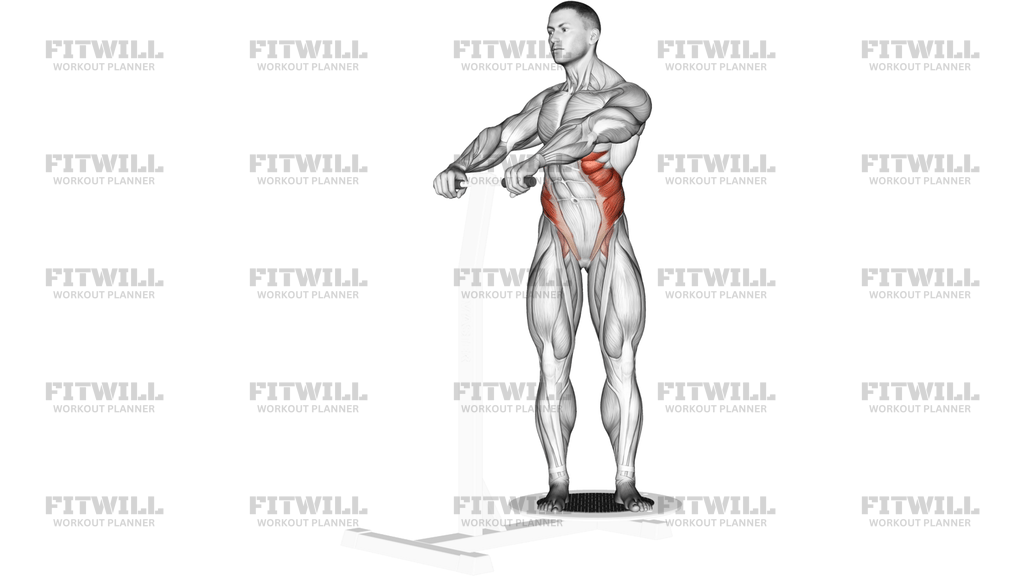
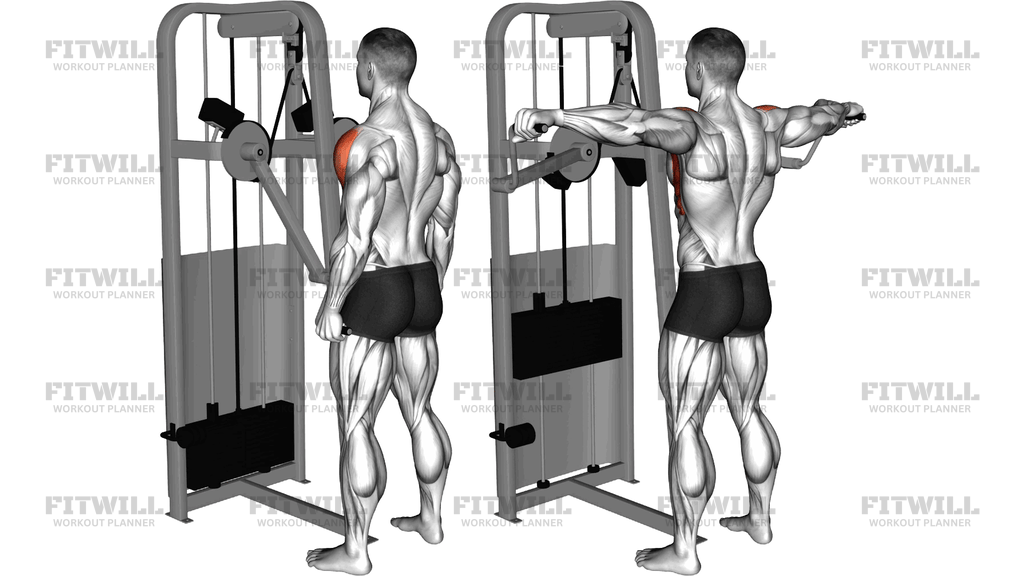
The Lever Standing Lateral Raise is a machine-based shoulder isolation exercise performed on a leverage machine fitted with low side handles and a fixed movement arc. You stand upright between the arms of the machine, grip the handles at hip height with your arms hanging naturally at your sides, and raise both arms outward and upward until they reach shoulder level. Because the resistance travels along a predetermined lever path, the exercise removes the stability demands of a dumbbell lateral raise while keeping constant tension on the side delts through the entire range of motion.
This movement primarily targets the lateral deltoids, the muscles on the outer edge of the shoulders that create width and shape in the upper body. The anterior deltoids assist during the first portion of the lift, while the upper traps contribute as the arms approach shoulder height. Unlike free weights, where resistance is heaviest at the top, the lever arm maintains a consistent load curve, which makes it easier to keep tension on the side delts even at the bottom of each rep.
The standing position matters more than it might seem. With no seat or backrest, your torso has to stay tall and stable on its own, so the exercise quietly reinforces good posture and trunk control. Standing also lets you keep a slight, natural bend in the elbows and move strictly within the machine's arc, which protects the shoulder joint from the swinging and body english that often creep into dumbbell lateral raises.
This exercise suits a wide range of lifters. Beginners appreciate the guided path because it teaches what a proper lateral raise feels like without requiring them to manage a free-weight arc. Intermediate and advanced lifters use it as a strict, low-fuss way to accumulate volume on the side delts, whether as a pre-exhaust movement before pressing or as a finishing exercise after heavier shoulder work. It is also a reasonable option for anyone with wrist or elbow discomfort from dumbbells, since the neutral handle position and fixed path reduce joint stress.
To execute it well, keep the setup disciplined. Stand centered between the machine's arms, feet roughly hip-width apart, ribs stacked over the pelvis, and shoulders pulled gently back. Lift only to shoulder height, pause briefly, and lower under control rather than letting the weight stack or lever arm drop. If you find yourself leaning back or shrugging to finish reps, the load is too heavy. The Lever Standing Lateral Raise rewards patience and clean tempo far more than it rewards big numbers.
[ Workout Log & Planner ]
Put your next workout in Fitwill
Keep your plan and training log ready when you are.


Instructions
- Stand centered between the two lever arms of the machine with a handle in each hand, feet about hip-width apart and weight spread evenly across both feet.
- Let your arms hang straight down at your sides with a neutral grip, palms facing your thighs, and hold the handles firmly but without squeezing excessively.
- Set your posture: lift the chest, stack your ribs over your pelvis, brace your abdominals lightly, and pull your shoulder blades down and back.
- Allow a small, fixed bend in your elbows, roughly 10 to 20 degrees, and commit to keeping that bend the same throughout the set.
- Exhale and raise both arms out to the sides along the machine's arc, leading with your elbows and keeping your shoulders down away from your ears.
- Stop when your upper arms are parallel to the floor at shoulder height, and hold that position for a brief count of one second.
- Inhale as you lower your arms slowly back along the same path until the handles return to the starting position beside your thighs.
- Keep the movement smooth and continuous, avoiding any jerk at the bottom or lean backward at the top.
- Reset your posture between reps if you feel it slip, and stop the set as soon as your torso starts swinging to complete the lift.
Tips & Tricks
- Do not let the lever arm free-fall on the way down; the lowering phase builds as much muscle as the lift, so take two to three seconds to return each rep.
- If your traps creep up and your shoulders ride toward your ears, consciously press your shoulder blades down before starting the next rep and reduce the weight if needed.
- Raising the arms higher than shoulder height shifts work toward the upper traps and can pinch the shoulder; stop at parallel to keep the emphasis on the side delts.
- Keep the slight elbow bend constant. Straightening the arms at the top or bottom turns the exercise into a different lever length and changes the feel on the shoulders.
- Stand far enough from the machine's pivot that the handles track in line with your shoulders rather than dragging forward, which keeps resistance on the lateral delt instead of the front delt.
- Avoid leaning your torso backward to help the handles up; if the last few reps require body english, the weight exceeds what your side delts can handle strictly.
- A neutral grip with palms facing your thighs is the most shoulder-friendly hand position for this machine; rotating the palms up as you lift is unnecessary and adds front-delt involvement.
- Use this machine late in a shoulder session when your stabilizers are fatigued, since the fixed path lets you keep training the delts safely with strict form.
- If one arm fatigues before the other, the single-arm version with one hand on the machine for balance lets you address the imbalance directly.
Frequently Asked Questions
Which muscles does the Lever Standing Lateral Raise work?
The lateral deltoids on the sides of the shoulders are the primary movers. The anterior deltoids assist early in the lift, and the upper traps contribute near the top when the arms approach shoulder height.
How high should I raise my arms on the Lever Standing Lateral Raise?
Raise your upper arms until they are parallel to the floor, level with your shoulders. Going higher shifts the workload to the upper traps and increases the chance of shoulder impingement discomfort.
Is the Lever Standing Lateral Raise good for beginners?
Yes. The fixed lever path removes the balance and coordination demands of a dumbbell lateral raise, so beginners can learn the correct shoulder movement pattern with less risk of swinging the weight.
Why does this machine keep tension better than dumbbells?
With dumbbells, resistance pulls straight down and is weakest when your arms hang at your sides. The lever arm applies resistance through the machine's arc, so the side delts stay loaded even at the bottom of each rep.
What is the most common mistake on the Lever Standing Lateral Raise?
Using too much weight and driving the handles up with a backward lean and a shrug. This shifts work away from the side delts and turns the set into a trap-and-momentum exercise. Reduce the load and keep the torso tall.
Should my elbows be locked or bent during the exercise?
Keep a small bend of about 10 to 20 degrees and hold it constant. Fully locked elbows stress the joint at the bottom, and changing the bend mid-rep alters the lever length and the difficulty of the movement.
Can I do the Lever Standing Lateral Raise if dumbbell lateral raises bother my shoulders?
Often, yes. The machine's fixed path and neutral handles reduce the freedom to swing or rotate awkwardly, which many lifters find more comfortable. Keep the range at or below shoulder height and use a moderate weight.
Where should this exercise fit in my shoulder workout?
It works well as a finishing movement after heavier presses, or as a pre-exhaust before pressing if your goal is to feel the delts working more. Because the load is machine-guided, it is a solid choice for high-rep, strict sets.
How should I breathe during the Lever Standing Lateral Raise?
Exhale as you raise the handles to shoulder height and inhale as you lower them back to your sides. Keep the breathing steady and avoid holding your breath through the set.