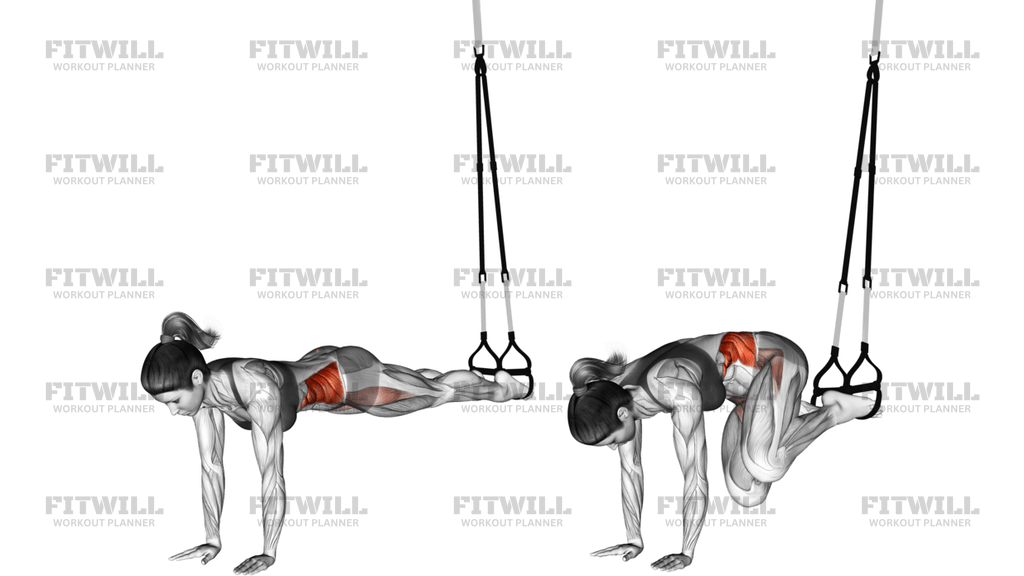
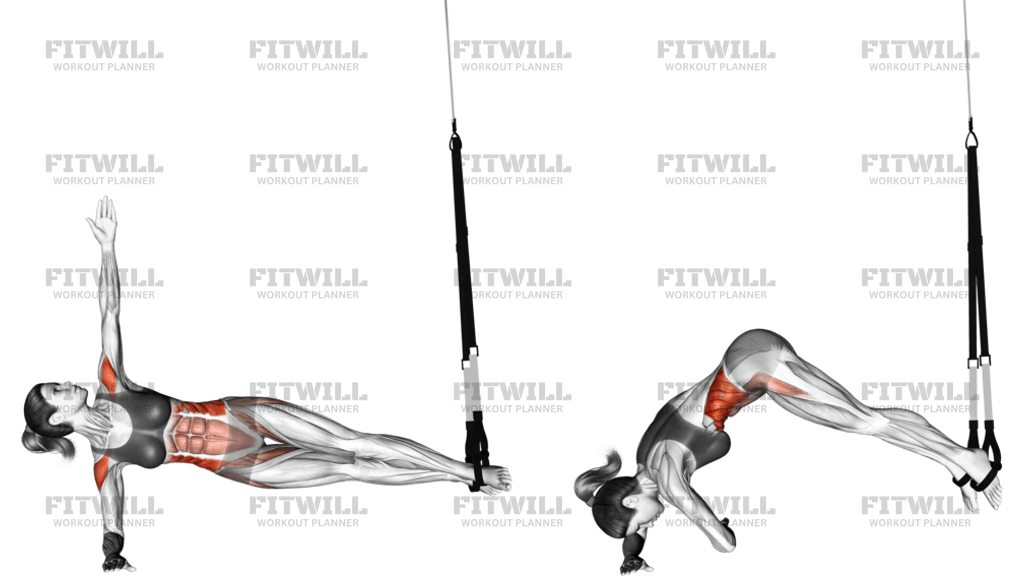
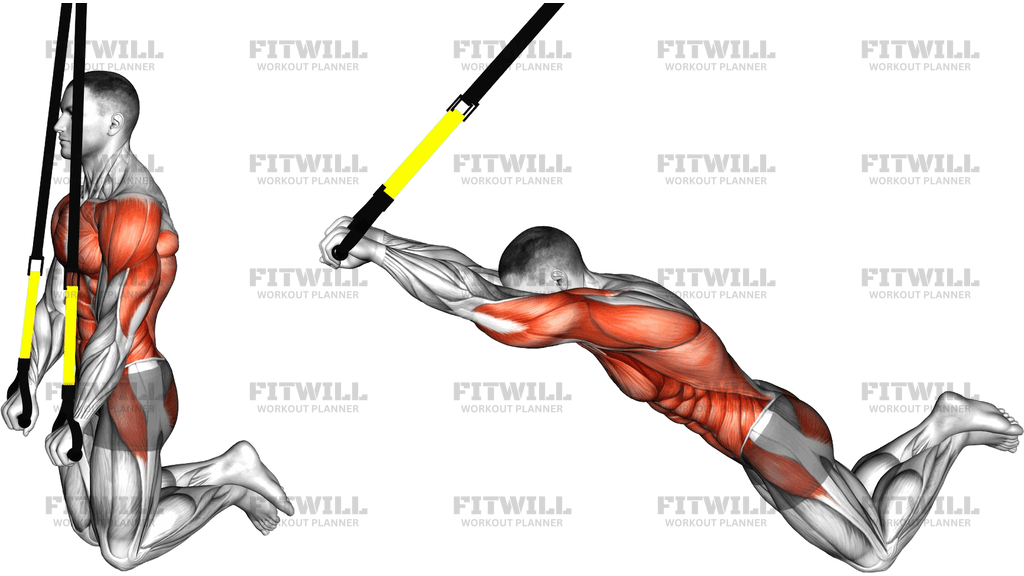
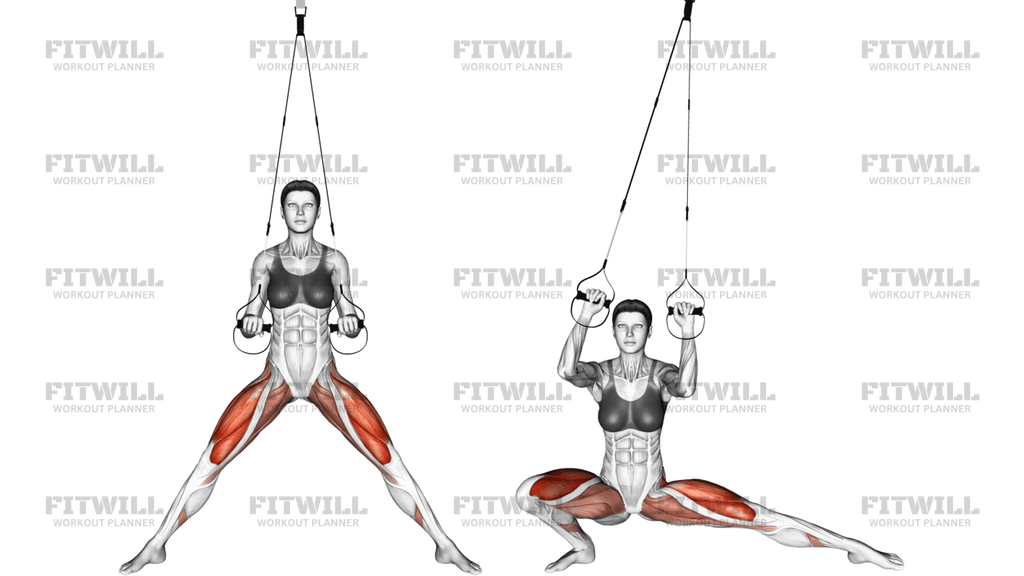
Suspension Pendulum
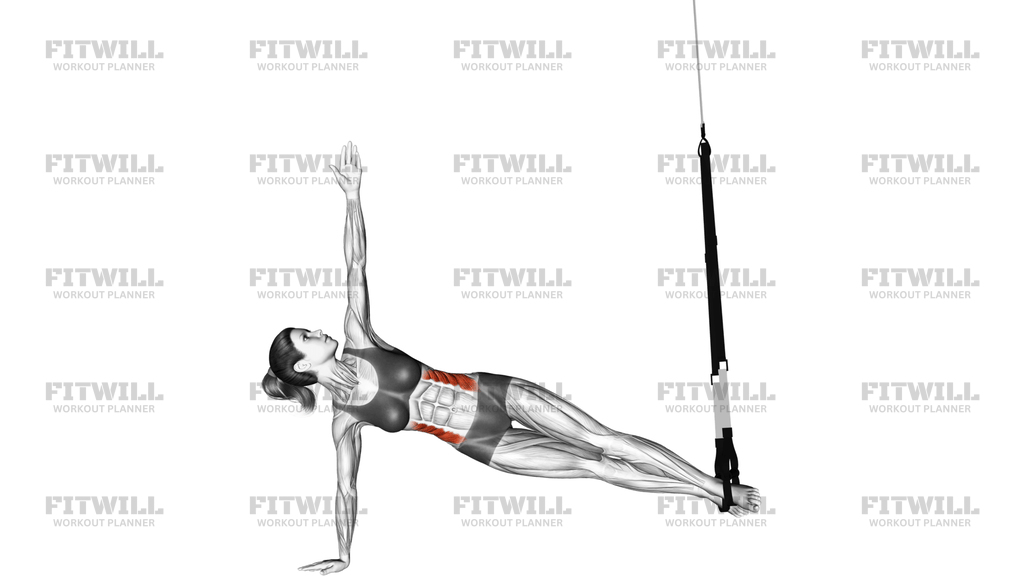
Suspension Pendulum is a suspension-based core drill that combines a rigid plank with a controlled side-to-side leg sweep. The feet stay supported in the straps while the hands press into the floor, so the torso has to resist twisting as the lower body travels in a pendulum arc. That makes it especially useful for building oblique strength, trunk control, and a more stable midsection without needing heavy external load.
The exercise is a good fit for lifters and athletes who want better anti-rotation control, stronger lateral core tension, and cleaner pelvic position during dynamic work. The main effort should come from the obliques, with the abs, deep core, and hip stabilizers helping to keep the body aligned. If the torso folds, the low back arches, or the shoulders drift, the set gets much less useful and usually means the swing is too large.
Setup matters more here than on many floor-based core exercises. Set the suspension straps evenly, place both feet securely in the cradles, and walk the hands forward until the shoulders sit over or just ahead of the wrists. From there, create a long line from head to heels, lightly tuck the pelvis, and keep the ribs down so the lower back does not take over when the legs start moving.
Once you are stable, move the legs from one side to the other in a smooth arc while the shoulders stay as level as possible. Think of the feet and hips swinging under a quiet upper body rather than the whole body flopping from side to side. A small controlled range is often the best place to start, especially if the straps are long or the core is not yet used to resisting rotation under load.
Suspension Pendulum works well in warm-ups, accessory blocks, core circuits, or athletic conditioning sessions where controlled tension matters more than max effort. It is also a practical regression or progression tool: shorten the swing, bend the knees slightly, or slow the tempo to make it easier; extend the legs and add pauses at each side to make it harder. Keep the reps clean and stop the set before momentum starts to move the straps for you.
Fitwill
Log Workouts, Track Progress & Build Strength.
Achieve more with Fitwill: explore over 9600 exercises with images and videos, access built-in and custom workouts, perfect for both gym and home sessions, and see real results.
Start your journey. Download today!




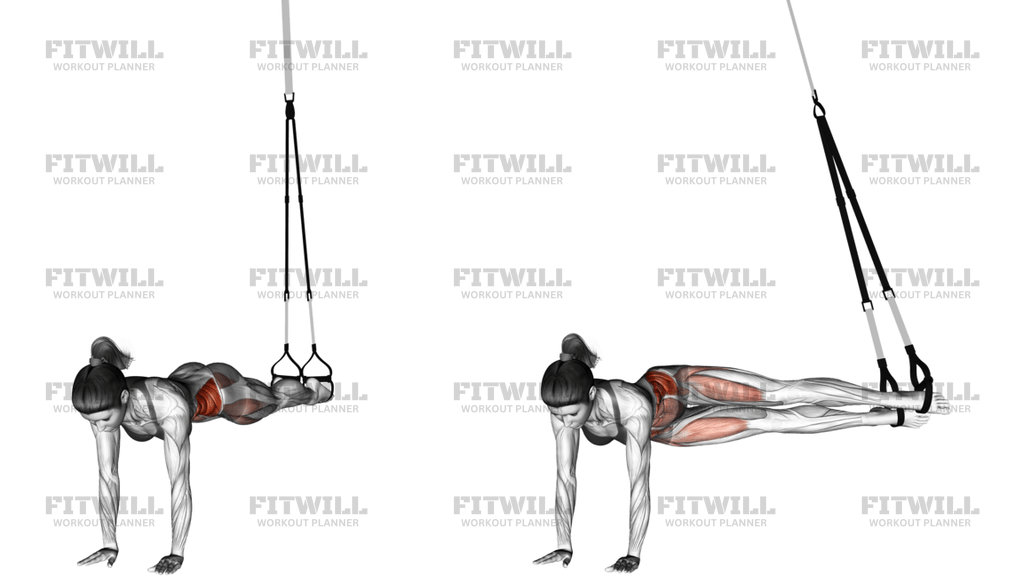
Instructions
- Set the suspension straps to the same length and place both feet securely in the cradles while you hold a high plank with your hands under your shoulders.
- Walk your hands forward until your body makes a straight line from head to heels and your wrists, elbows, and shoulders feel stacked and stable.
- Tighten your glutes and pull your ribs down so your lower back stays flat before the first swing begins.
- Keep both legs long and together, then shift your feet and hips a few inches to one side without letting your shoulders collapse or twist hard.
- Sweep the legs through center and over to the other side in one smooth pendulum arc instead of kicking them with momentum.
- Let the obliques control the change of direction at each side and keep steady pressure through both palms.
- Exhale as you move across the middle and inhale as you come back through center, keeping the neck relaxed and the torso quiet.
- After the last rep, slow the straps down, return the legs to center, and lower your knees or step out of the cradles safely.
Tips & Tricks
- Keep the swing small until you can stop cleanly on both sides without the straps pulling you into a twist.
- If your low back starts to arch, shorten the arc and squeeze your glutes harder before the next rep.
- Press the full palm into the floor so the shoulders stay steady while the legs travel.
- Do not chase speed; if the feet are moving faster than your torso can control, the set has turned into momentum work.
- Slightly bending the knees makes the lever shorter and can help you keep the ribs stacked over the pelvis.
- A brief pause at each side makes the obliques do more of the work and exposes sloppy swinging.
- Keep the straps even; uneven foot height usually makes the pelvis rotate and the set feel crooked.
- Stop the set when the shoulders drift, the hips sag, or the feet begin to arc wider than the torso can manage.
Frequently Asked Questions
What does Suspension Pendulum work most?
Suspension Pendulum primarily trains the obliques, with the abs, deep core, and hip stabilizers helping to keep the trunk from twisting.
Is Suspension Pendulum more of a plank or a swing?
It starts as a strong plank, then adds a controlled side-to-side leg sweep. The swing should stay small enough that the torso still looks quiet.
Can beginners do Suspension Pendulum?
Yes, but start with a short range and slow tempo. If needed, bend the knees slightly to make the lever shorter and easier to control.
Why do my shoulders feel involved in Suspension Pendulum?
Your shoulders have to hold the plank while the legs move in the straps, so some work there is normal. The pressure should still feel even through both hands, not jammed into one side.
How far should the legs swing in Suspension Pendulum?
Only as far as you can keep the ribs down and the pelvis under control. If the swing gets big enough to pull your low back into extension, the range is too large.
Should I keep my knees straight in Suspension Pendulum?
Straight legs make the exercise harder because the lever is longer. A slight knee bend is a useful regression if you are losing control through the hips or low back.
What is the biggest form mistake in Suspension Pendulum?
The biggest mistake is letting momentum drag the straps side to side while the torso follows along. The correction is to slow the arc, tighten the glutes, and keep the shoulders steady.
How can I make Suspension Pendulum harder?
Use a longer lever by straightening the legs, slow the tempo, and add a brief pause at each side. You can also increase the range only after you can hold a stable plank through every rep.