Weighted Sandbag Front Rack Forward Lunge
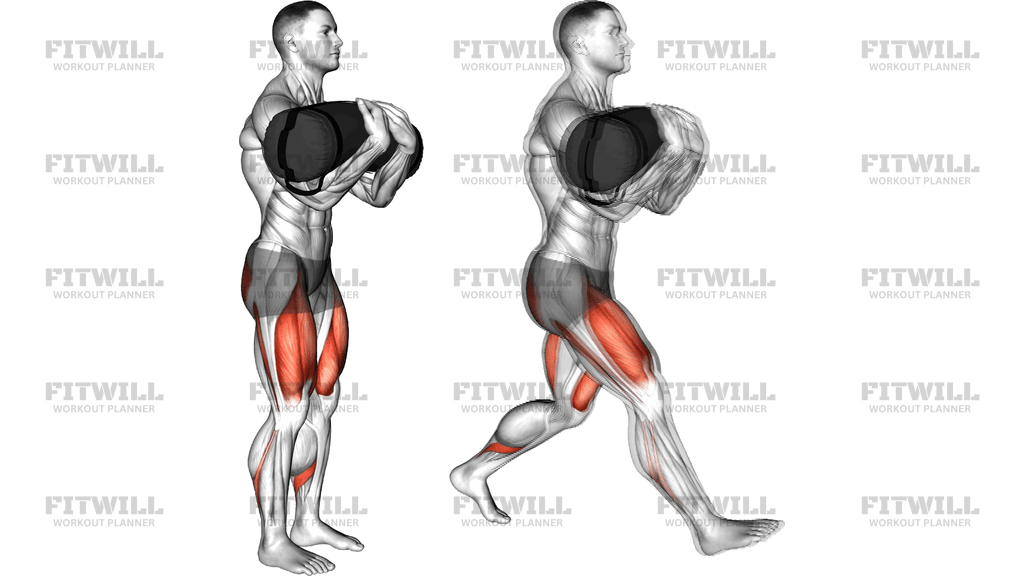
The Weighted Sandbag Front Rack Forward Lunge is a single-leg strength exercise performed with a sandbag cradled across the front of your shoulders, elbows tucked down so the bag rests against your chest. From a tall standing position, you step one foot forward, lower until the front thigh is roughly parallel to the floor, then drive back to standing. The front rack position is the defining feature: because the load sits high and forward, your trunk has to work hard to stay upright while your legs handle the stepping and lowering.
This movement suits lifters who want lower-body strength without a barbell, as well as anyone training in a garage, park, or small gym where a sandbag is the main tool. The sandbag itself changes the feel of the exercise compared to dumbbells or a bar. It shifts and settles as you move, so your arms, upper back, and midsection are constantly making small corrections. That makes the exercise demanding in a way that goes beyond simple leg strength.
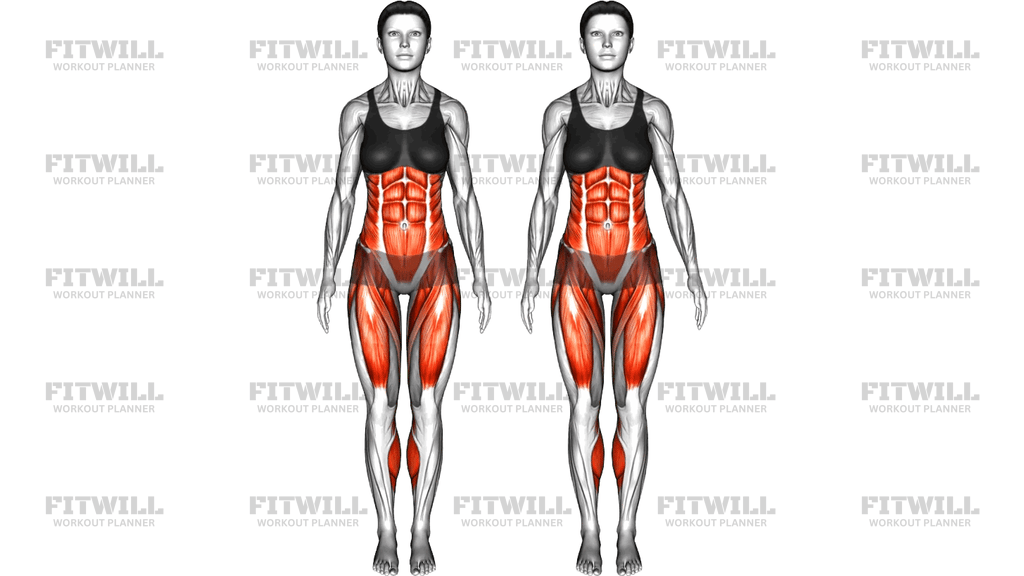
The main muscles at work are the quadriceps of the front leg, which absorb and control the descent and drive you back up. The glutes extend the hip at the top of each rep and help control the landing, while the hamstrings and calves of the rear leg stabilize the trailing position. Holding the bag in the front rack loads the core isometrically and challenges the upper back and shoulders to keep the chest tall for the whole set.
Setup matters more here than it might seem. If the bag sits too low or drifts to one side, your torso leans, your balance shifts, and the front knee takes more stress than it should. Take a moment to wedge the bag against your chest, stack your ribs over your hips, and set your feet before you step out. A clean setup makes the lunge itself far easier to control.
Execution should be deliberate: a confident forward step, a vertical drop of the back knee toward the floor, and a strong push through the front foot to return. Avoid rushing, since the shifting sand punishes sloppy tempo. Alternating legs works well for general conditioning, while doing all reps on one side before switching gives you a focused strength and stability stimulus.
Common use cases include home lower-body sessions, circuit training, warm-ups for heavier squat or lunge work, and single-leg strength development for runners and field athletes. Start with a light bag to learn the rhythm, and only add load once you can keep your torso upright and your knee tracking over your foot on every rep.
[ Workout Log & Planner ]
Put your next workout in Fitwill
Keep your plan and training log ready when you are.


Instructions
- Stand tall with a sandbag resting across the front of your shoulders, elbows pulled down and in so the bag is wedged snugly against your chest and upper arms.
- Set your feet hip-width apart, brace your abdominal wall, and stack your ribs directly over your hips with your gaze forward.
- Take a controlled breath in, then step one foot forward roughly two to three feet, landing with your weight balanced between both legs and your torso still upright.
- Lower straight down by bending both knees, letting the back knee travel toward the floor while the front knee stays stacked over or slightly behind the toes.
- Descend until your front thigh is about parallel to the floor and your back knee hovers just above the ground, keeping the bag pressed into your chest the whole way.
- Drive through the heel and midfoot of your front leg to push back to standing, pulling the trailing leg forward to return to the starting stance.
- Exhale as you rise, then re-brace and reset the bag against your chest before stepping with the other leg.
- Continue alternating legs for the desired number of reps, or complete all reps on one side before switching.
- Finish each set by stepping both feet together, easing the bag off your shoulders with control rather than dropping it.
Tips & Tricks
- Keep your elbows actively pulled down throughout the set. As fatigue builds, the elbows tend to flare up and the bag slides toward your throat, which collapses your posture.
- If you find yourself leaning forward at the bottom, the bag has probably drifted down your chest. Pause at the top, squeeze it back into position with your arms, and continue.
- Watch that your front knee tracks in line with your toes. The shifting sand can tempt you to narrow your stance, which rolls the knee inward under load.
- Land each step quietly. A loud, heavy foot strike usually means you are dropping into the lunge instead of lowering under control.
- Shorten your step if your lower back arches and your torso tips forward; a longer step shifts more work to the glutes, while a shorter one loads the quads harder.
- Wipe or chalk your hands if the bag cover is slick. A slipping grip in the front rack is the most common reason this movement falls apart mid-set.
- Alternate legs only after fully standing and resetting your brace. Stepping into the next rep while off-balance robs the front leg of work and stresses the knee.
- If the bag is unevenly filled, position the denser side over your stronger arm or rotate it between sets so one side does not take all the load.
- Start with a lighter bag than you think you need. The front rack position feels far heavier than holding the same weight at your sides.
Frequently Asked Questions
Which muscles does the Weighted Sandbag Front Rack Forward Lunge target most?
The quadriceps of the front leg do the majority of the lowering and driving work, with strong contributions from the glutes. Holding the bag in the front rack also trains the core and upper back isometrically.
Is the front rack sandbag position harder than holding dumbbells at my sides?
Yes, usually. The load sits high and forward, so your trunk and shoulders must work to keep you upright, and the sand shifts as you move, adding a stability demand that dumbbells do not have.
How long should my forward step be in this exercise?
A moderately long step, roughly two to three feet, lets your front shin stay close to vertical and your back knee travel down rather than forward. Very short steps tend to push the front knee past the toes and strain it.
Should I alternate legs or complete all reps on one side?
Both work. Alternating suits conditioning circuits and keeps the set smooth, while completing all reps on one side before switching lets you focus on balance and strength in each leg individually.
Can beginners do the Weighted Sandbag Front Rack Forward Lunge?
Yes, if they start with a very light bag or even an empty one. Beginners should first learn the lunge pattern with body weight, then add the front rack load once they can keep their torso upright and knee tracking properly.
Why does the sandbag keep sliding down my chest during the set?
This usually happens when the elbows drift upward and the grip loosens. Pull your elbows down and in, squeeze the bag against your chest with your upper arms, and reset the position at the top of every rep if needed.
What can I substitute if I do not have a sandbag?
A pair of dumbbells or kettlebells held at shoulder height, a single kettlebell in the goblet position, or a barbell in the front rack are reasonable substitutes, though none replicate the shifting feel of sand.
Is it safe for my knees to let the back knee approach the floor?
Lowering the back knee toward the floor is standard lunge mechanics and is generally fine when done under control. Descend slowly, keep the front knee aligned over the foot, and reduce depth if you feel pinching or discomfort.
How heavy should the sandbag be for this movement?
Choose a weight you can hold in the front rack for your entire working set without your elbows rising or your torso leaning forward. Most people need a lighter bag for this exercise than for squats or carries with the same sandbag.