Kettlebell Seated Calf Raise
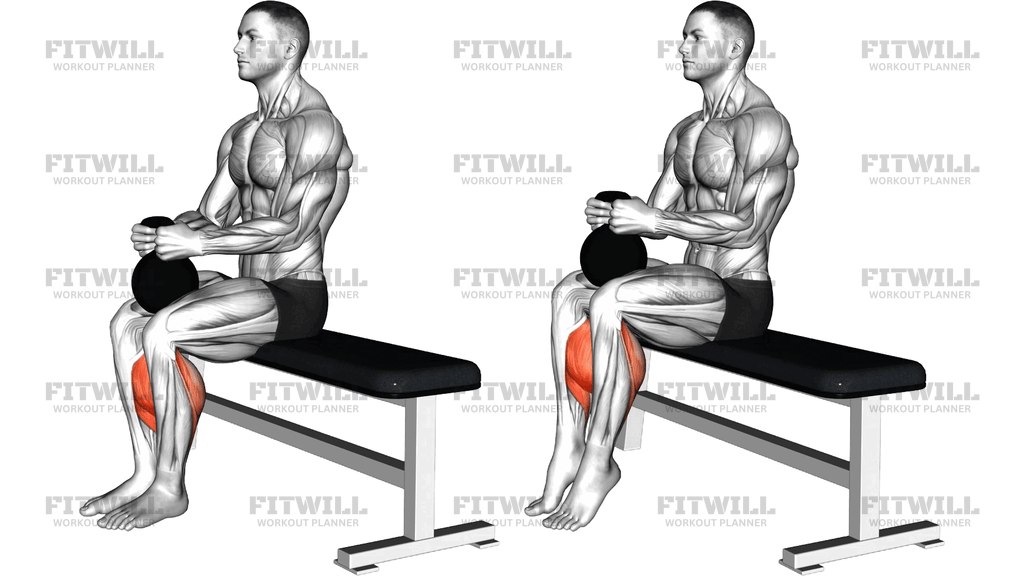
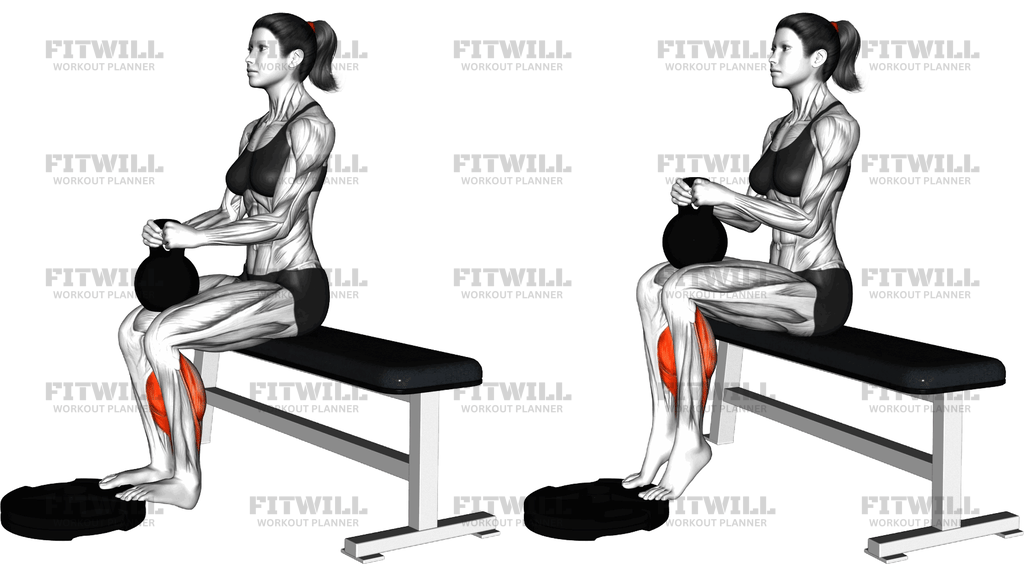
The Kettlebell Seated Calf Raise is a seated ankle extension exercise that targets the calf muscles, with the greatest emphasis on the soleus. You sit on a flat bench with the balls of your feet elevated on a weight plate, rest a kettlebell on your thighs just above the knees, and drive up onto your toes before lowering your heels below the level of the plate. Because the knees stay bent at roughly ninety degrees, the gastrocnemius is placed in a shortened position at the knee, which shifts most of the work to the soleus underneath it.
This setup makes the movement a good fit for lifters whose calves have stalled on standing variations, and for anyone who finds standing calf raises limited by balance or lower back fatigue. Runners, cyclists, and court-sport athletes also benefit, since the soleus handles a large share of the work during repeated push-off and absorbs considerable load with every stride. Training it seated with load on the thighs lets you fatigue the muscle directly without those limiting factors.
The equipment choices matter more than they might seem. Elevating the forefoot on a plate gives the heel room to drop below toe level at the bottom, which lengthens the calf through a fuller range than floor-based raises allow. Placing the kettlebell on the thighs rather than holding it in the hands keeps the load close to the ankle joint's working line and spares the grip and lower back entirely.
Execution is simple but easy to rush. Sit tall, let the weight settle over your thighs, and move only at the ankle joint. Press through the balls of the feet to lift the heels as high as they will go, pause briefly at the top, then lower the heels slowly until you feel a stretch across the back of the lower leg. Bouncing out of the bottom or rocking the torso is the most common way this exercise gets cheated, and it removes exactly the tension you are trying to create.
In practice, this movement works well as a secondary calf exercise placed after your main lower body lifts, typically for sets of twelve to twenty reps with a controlled tempo. Start with a kettlebell weight you can move smoothly for the target range, and add load gradually once you can pause at both the top and the bottom of every rep without losing position.
[ Workout Log & Planner ]
Put your next workout in Fitwill
Keep your plan and training log ready when you are.


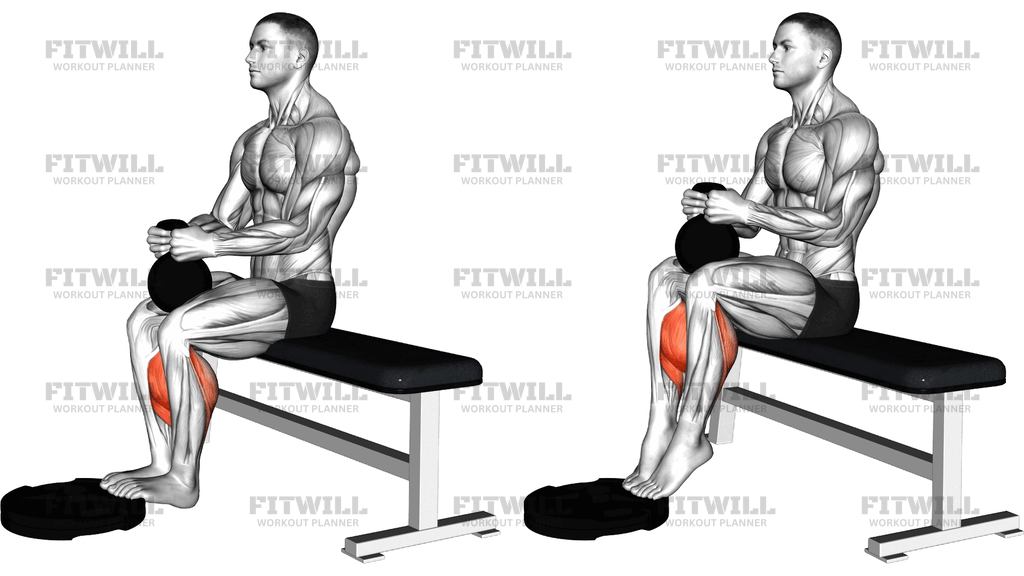
Instructions
- Sit on a flat bench with your feet about hip-width apart and place a weight plate on the floor so the balls of both feet rest on its edge, heels hanging off.
- Stand a kettlebell on end and hold it by the horns, then set it on your thighs just above the knees so the weight presses down through both legs.
- Sit up tall with your chest open and shoulders relaxed, and grip the kettlebell handles only to keep it steady, not to support your torso.
- Allow your heels to sink toward the floor until you feel a stretch along the back of your calves, keeping the balls of your feet planted on the plate.
- Press through the balls of your feet and raise your heels as high as possible, moving only at the ankles while your knees stay bent and still.
- Pause for a beat at the top with the calves fully contracted before starting the descent.
- Lower your heels slowly, taking two to three seconds, until they pass below the level of the plate and the stretch returns.
- Exhale as you press up and inhale as you lower, keeping your breathing steady throughout the set.
- Complete all reps, then steady the kettlebell with both hands and lift it off your thighs before standing up.
Tips & Tricks
- If the plate slides or tips under your feet, place it against a wall or rack upright so its edge stays fixed as you press through your toes.
- Keep the kettlebell centered over both thighs; letting it drift toward one leg loads that calf more and turns the set uneven without you noticing.
- Bouncing out of the bottom stretch is the most common fault here. If your heels are tapping the floor rapidly, cut the weight in half and rebuild with a full pause at the bottom.
- Point your toes straight ahead or slightly inward rather than flaring them outward, so the calves stay in their strongest line and the ankles do not roll.
- Aim to lift your heels as high as they will actually go. Short, partial reps at the top leave the soleus underworked even when the set feels hard.
- If your thighs are tender from the kettlebell's edge, fold a towel and lay it across your legs before setting the weight down.
- Keep your torso upright and your hands off your knees for support. Leaning forward or pressing down with the arms steals tension from the calves.
- Because the soleus is fatigue-resistant, use slower tempos and higher reps here rather than chasing heavy weight for low reps.
Frequently Asked Questions
Which muscles does the Kettlebell Seated Calf Raise work?
The soleus does most of the work because your knees stay bent, which reduces the gastrocnemius's contribution. The gastrocnemius and smaller ankle stabilizers assist throughout the rep.
Why does the Kettlebell Seated Calf Raise target the soleus more than a standing calf raise?
The gastrocnemius crosses the knee joint, so bending the knees to about ninety degrees shortens it and limits how hard it can pull. The soleus does not cross the knee, so it takes over as the primary mover in the seated position.
Can beginners do the Kettlebell Seated Calf Raise?
Yes, it is actually one of the more beginner-friendly calf exercises because you are seated and stable. Start with a light kettlebell or even just body weight to learn the range before adding load.
Why should the balls of the feet be on a weight plate instead of the floor?
Elevating the forefoot lets your heels drop below the level of your toes, which extends the range of motion at the ankle. Raising and lowering on the floor alone shortens the stretch and the contraction.
How heavy should the kettlebell be for the Kettlebell Seated Calf Raise?
Choose a weight you can lift for twelve to twenty controlled reps with a pause at the top and a slow lowering phase. If you cannot pause without the heels dropping, the weight is too heavy.
My heels barely move at the bottom of the Kettlebell Seated Calf Raise. What is wrong?
Your ankle mobility may be limited, or the plate may be too high for your current range. Use a thinner plate or reduce the depth slightly, and lower slowly rather than forcing the heels down.
What can I use instead of a kettlebell for the Kettlebell Seated Calf Raise?
A dumbbell or a weight plate held across the thighs works the same way. Any object that sits stably on your thighs just above the knees and can be loaded progressively will do the job.
Is it safe to do the Kettlebell Seated Calf Raise every day?
Daily training is unnecessary and can leave the calves persistently sore. Two to three sessions per week with at least a day between them is enough for most people to progress.
Should I feel the Kettlebell Seated Calf Raise in my foot or shin?
Some foot arch activity is normal, but sharp discomfort in the shin or front of the ankle suggests the toes are rolling inward or the weight is pressing unevenly. Reset your foot position on the plate and lighten the load if it persists.