Resistance Band Standing Scapular Retraction
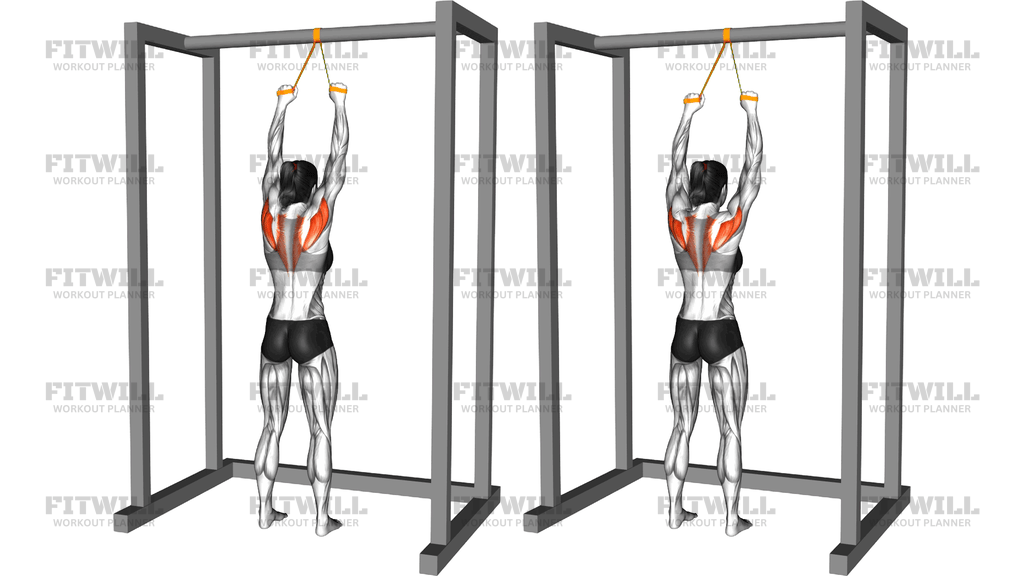
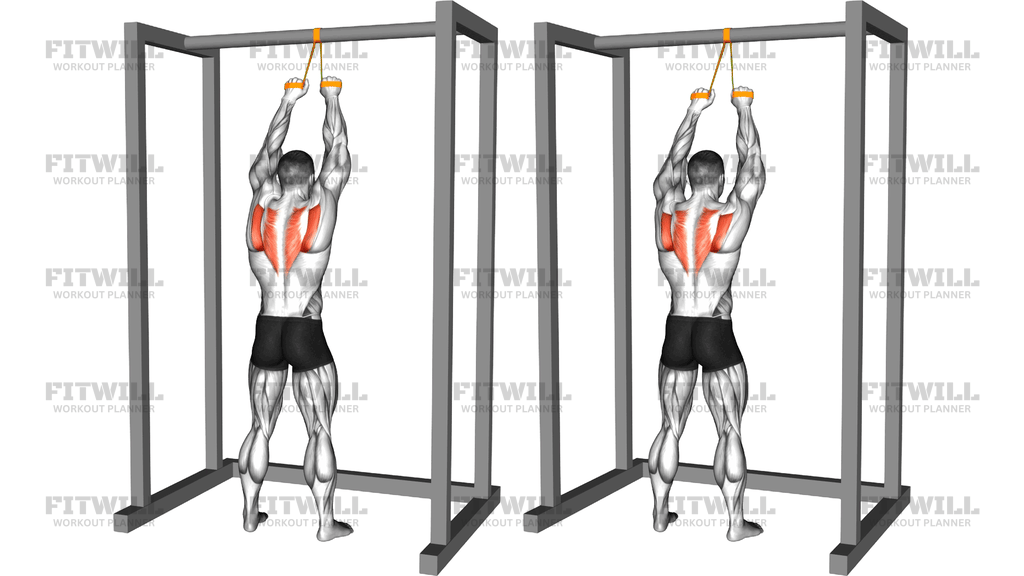
The Resistance Band Standing Scapular Retraction is a small, precise upper-back drill performed with a band anchored overhead. You stand facing the anchor point, hold one end of the band in each hand with your arms fully extended above your head, and pull your shoulder blades down and toward the spine while the elbows stay locked out. Because the band pulls upward and the movement is driven entirely by the shoulder blades rather than the arms, it isolates a range of motion that most pulling exercises skip.
The main muscles at work are the rhomboids and the mid and lower fibers of the trapezius, with the rear shoulders and rotator cuff assisting to keep the upper arm stable. This is the same musculature responsible for pulling the shoulder blades into a strong, packed position during rows, pull-ups, presses, and carries. Training it in isolation teaches you to feel and control that position before you try to reproduce it under heavier load.
This drill is especially useful for people whose shoulder blades drift forward or ride up during pressing and pulling. Desk workers, lifters whose shoulders roll forward at the bottom of a bench press, and beginners who cannot feel their upper back on rows all tend to benefit. Because the band offers light, smooth resistance and the movement happens at the very end range of overhead reach, it is also a common warm-up choice before upper-body training days.
The setup matters more here than in most band exercises. The band must hang securely from a sturdy overhead bar, and you need enough distance between you and the anchor that the band is already taut with your arms overhead. If there is slack at the start, the first part of the rep does nothing; if the tension is too heavy, you will compensate by shrugging or bending the elbows and turn the drill into a crude pull-down.
Execution should feel like a small, deliberate squeeze rather than a big pull. Keep the elbows completely straight, think of sliding the shoulder blades into your back pockets, and let the hands drift slightly apart and down as a consequence of that motion. The visible range is only a few inches. Pause at the peak, then return slowly and let the shoulder blades rise and spread fully before starting the next rep.
Work in the 10 to 20 repetition range for two or three sets, either as a warm-up or as a finisher. Stop the set as soon as you feel yourself shrugging or bending the elbows, because quality of the squeeze, not band tension, is what makes this exercise worthwhile.
[ Workout Log & Planner ]
Put your next workout in Fitwill
Keep your plan and training log ready when you are.


Instructions
- Loop a resistance band over a pull-up bar or the top crossbar of a power rack so both ends hang down evenly in front of you.
- Grip one end of the band in each hand and stand facing the anchor with your arms fully extended straight overhead.
- Step back until the band is taut at the top of the movement, with your body in a straight line from heels to fingertips.
- Set your feet about hip-width apart, brace your core lightly, and keep your ribs stacked over your hips.
- Exhale and draw your shoulder blades down and together, allowing your hands to drift slightly apart and down as the band stretches.
- Squeeze for one to two seconds at the peak, keeping your elbows completely locked out the entire time.
- Inhale and lower under control, letting the band draw your arms back overhead until the shoulder blades have risen and spread fully.
- Reset your shoulder position briefly between reps if you feel your upper traps creeping up toward your ears.
- Finish the set, then step forward to slacken the band before letting go of the handles.
Tips & Tricks
- If your elbows bend during the pull, the band is too heavy or you are rushing — switch to a lighter band and slow the tempo until you can keep the arms straight for every rep.
- Shrugging is the most common fault in this setup. If your upper traps bunch up, cue yourself to pull the shoulder blades toward your back pockets rather than toward your ears.
- Stand at a distance where the band is taut but not straining at the start; if you have to lean back or fight the band just to hold the top position, you are too far away.
- Do not lean your torso backward to help the pull. The hands and shoulder blades do the work while the trunk stays vertical.
- A narrow hand position usually makes the squeeze easier to feel, while a wider grip increases the stretch at the top. Adjust your grip on the band to find the hardest contraction.
- The total range of motion is small — a few inches of hand travel. If your hands are sweeping down toward your shoulders, the exercise has turned into a pull-down.
- Check that the band is centered on the bar before your first rep. A band that slides sideways mid-set can snap off the anchor unexpectedly.
- Think of the movement as happening between the shoulder blades, not at the hands or elbows — this mental cue alone cleans up most reps.
- Keep the wrists neutral and the grip relaxed. Squeezing the band handles hard shifts tension into the forearms and steals it from the upper back.
Frequently Asked Questions
Which muscles does the Resistance Band Standing Scapular Retraction work?
The rhomboids and the middle and lower trapezius do most of the work, since they pull the shoulder blades down and together. The rear shoulders and rotator cuff help stabilize the upper arms while the elbows stay locked out.
How is this different from a band pull-apart?
A band pull-apart is done with the arms out in front of the chest, while the Resistance Band Standing Scapular Retraction is performed with the arms straight overhead against upward resistance. The overhead angle biases the lower and mid trapezius more and removes the arm swing that people often use to fake a pull-apart.
Should my elbows stay straight during the Resistance Band Standing Scapular Retraction?
Yes. Bending the elbows shifts work to the lats and biceps and turns the drill into a pull-down. If you cannot keep the arms locked out, use a lighter band.
How high should the band be anchored?
Anchor the band to a pull-up bar or the top beam of a rack so that both ends hang just above your natural overhead reach. You should be able to stand with straight arms and the band already taut, without reaching up on your toes.
Is this exercise suitable for beginners?
Yes, and it is one of the better first upper-back exercises because the resistance is light and the goal is learning to feel the shoulder blades move. Start with one or two easy sets of 12 to 15 reps and focus entirely on the squeeze.
Why is my range of motion so small?
A small range is normal — the shoulder blades only need to glide down and together a short distance when the arms are locked overhead. Judge each rep by the quality of the contraction, not by how far your hands travel.
How many reps and sets should I do?
Two or three sets of 10 to 20 controlled reps works well, either as a warm-up before presses or pulls or as a finisher. Stop the set when you start shrugging or bending the elbows, since sloppy reps defeat the purpose.
Can I do the Resistance Band Standing Scapular Retraction if my grip tires quickly?
Yes — wrap the band ends around your hands once for a secure hold and keep your grip as relaxed as possible. A tight grip wastes effort in the forearms, which tires long before the upper back in this position.
Is this exercise safe for my shoulders?
For most people it is a gentle, low-load movement, but it should not cause sharp pain at the top of the reach. If overhead positions bother your shoulders, reduce the band tension, use a slightly narrower grip, or check with a qualified professional before continuing.
Can the Resistance Band Standing Scapular Retraction improve my posture?
It can rehearse the shoulder blade position you want to hold during rows, pull-ups, and presses, which carries over to better positioning under load. Think of it as a control drill for your upper back rather than a stand-alone fix for daily habits.