Dumbbell Forward Leaning Lunge
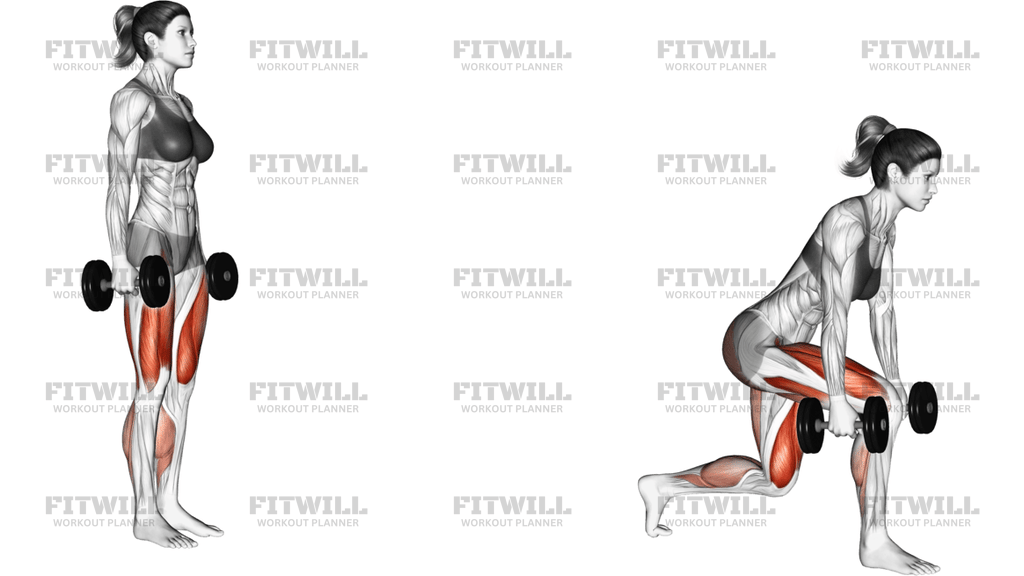
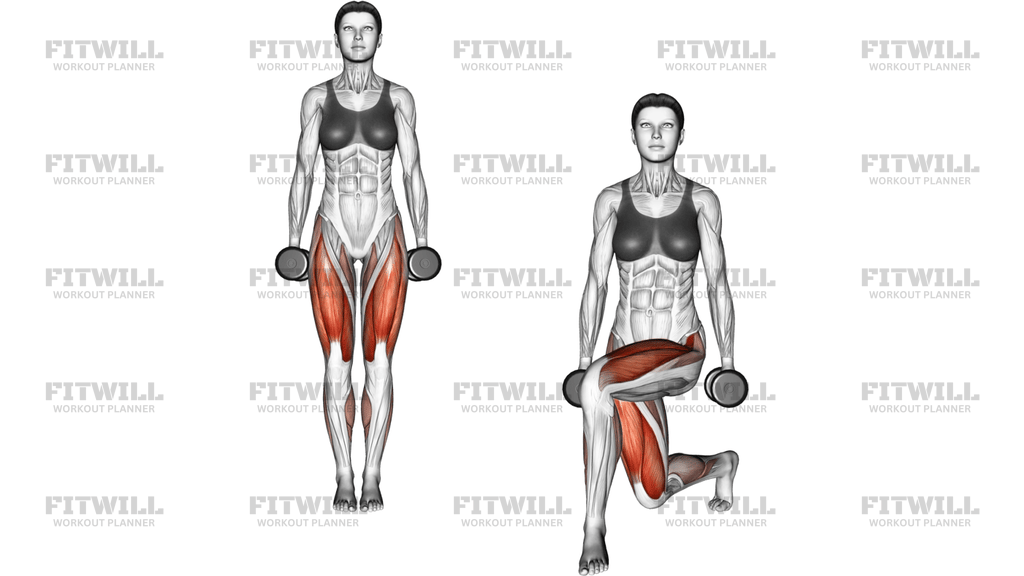
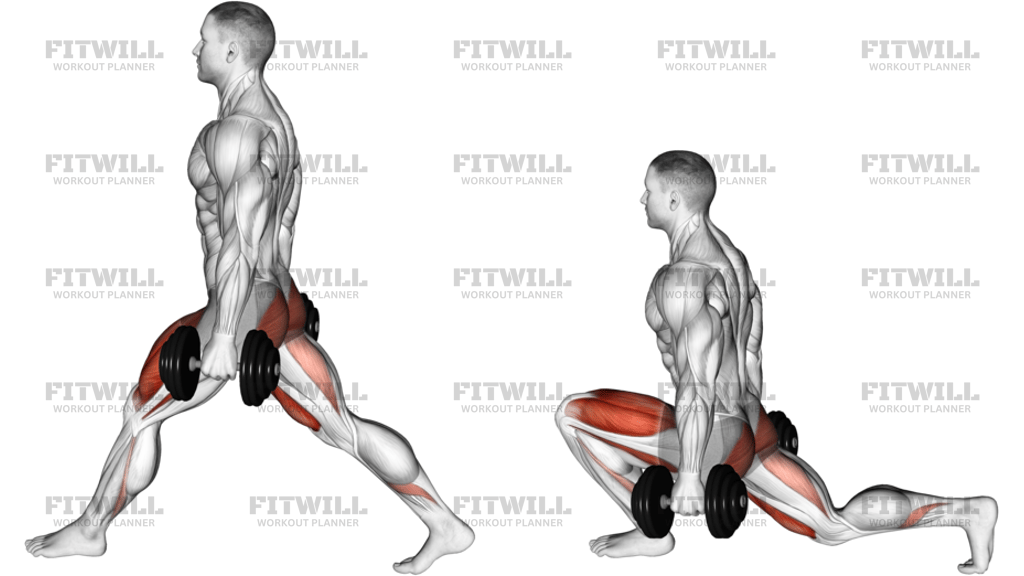
Dumbbell Forward Leaning Lunge is a split-stance lower-body exercise that shifts more of the work toward the glutes and hamstrings by asking you to keep a slight hip hinge as you lunge. The dumbbells hang at your sides, the torso stays angled forward, and each rep should feel deliberate rather than bouncy. Compared with a more upright lunge, this version usually feels more like a hip-dominant strength builder than a pure quad movement.
The forward lean matters because it changes where the load sits and how the hips work. When you step into the lunge, your front foot should stay flat, your back knee should travel down under control, and your chest should stay long instead of collapsing. A long enough step helps keep the front shin from shooting too far forward and gives the glutes room to contribute as you rise.
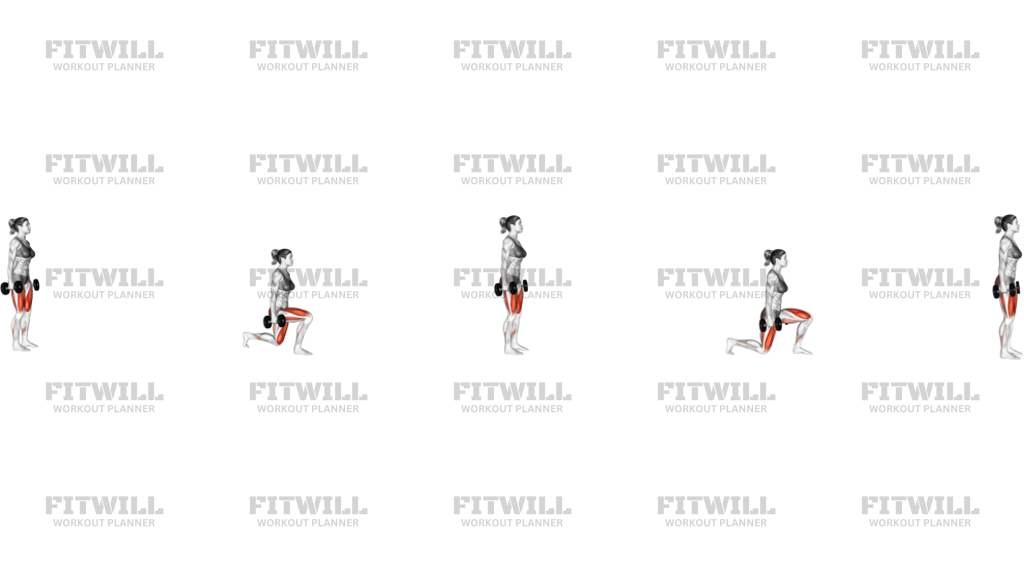
Set your stance before you move so the rep starts with balance, not a scramble. Hold the dumbbells close to your thighs, brace lightly through the trunk, and take a controlled step forward. As you descend, keep the hips square and let the torso angle slightly over the front thigh while the back leg bends and the rear knee approaches the floor. The dumbbells should stay quiet at your sides; they are there for loading, not for momentum.
On the way up, press through the front heel and midfoot and think about driving the floor away rather than pulling yourself forward. The front knee should track in line with the toes, and the pelvis should stay level enough that one hip does not dump forward or twist open. Breathing should stay steady: inhale as you lower, exhale as you stand, and reset before the next rep if the position starts to drift.
This exercise is useful when you want unilateral strength, glute-biased leg work, and a lunge pattern that rewards control. It fits well in hypertrophy blocks, accessory work, athletic training, or any session where you want to train one leg at a time without needing a machine. Keep the load honest and the range of motion smooth; the best reps are the ones that look the same from start to finish, not the ones that simply go lower or use more weight.
[ Workout Log & Planner ]
Put your next workout in Fitwill
Keep your plan and training log ready when you are.


Instructions
- Stand tall with a dumbbell in each hand, feet about hip-width apart, and keep the weights hanging beside your thighs.
- Brace your trunk lightly and take a long step forward so you can lower into the lunge without your front heel lifting.
- Keep your torso slightly leaned forward from the hips as you step, with your chest long and your back flat.
- Lower under control until your front thigh is close to parallel and your rear knee approaches the floor.
- Keep your front knee tracking over the middle toes instead of caving inward or drifting excessively forward.
- Pause briefly at the bottom while staying balanced through the front foot and keeping the dumbbells steady.
- Drive through the front heel and midfoot to stand back up, bringing the rear leg forward only after you finish the push.
- Reset your stance, switch legs, and repeat for the planned number of reps.
Tips & Tricks
- Take a longer step than a standard lunge if you want more glute and hamstring work and less quad dominance.
- Keep the torso angle coming from the hips, not from rounding your upper back toward the floor.
- Let the front heel stay planted; if it keeps popping up, your step is probably too short.
- Lower slowly enough that the rear knee does not tap down hard or bounce you out of the bottom.
- Keep the dumbbells close to your legs so they do not swing and pull your balance forward.
- If the front knee caves inward, reduce the load and track it toward the second or third toe.
- Use a weight that lets you hold the forward lean without losing your ribcage position.
- If balance is the limiter, shorten the range slightly before you shorten the step.
Frequently Asked Questions
What muscle does Dumbbell Forward Leaning Lunge target most?
The main emphasis is on the glutes, with the hamstrings and thighs helping to control the lunge and stand back up.
How is this different from a regular dumbbell lunge?
The forward lean and longer step shift more tension toward the hips, so the movement usually feels more glute-focused than an upright lunge.
How far forward should I step?
Step far enough that you can lower with control and keep the front heel down, with the rear knee traveling close to the floor instead of forcing your torso upright.
Should my front knee go past my toes?
A small amount is fine, but the goal is not to drive the knee far forward. Keep the shin controlled and let the hips do most of the work.
Can beginners do Dumbbell Forward Leaning Lunge?
Yes. Start with bodyweight or very light dumbbells and focus on balance, a long step, and a controlled descent before adding load.
Why do I feel this in my quads as well?
That usually means the step is too short or the torso is too upright. A slightly longer stride and more hip hinge will shift more work to the glutes.
Do I alternate legs or finish one side first?
Either works. Alternating keeps the pace moving, while doing all the reps on one side can help you lock in balance and hip position.
What should I avoid during the rep?
Avoid pushing off the back leg, swinging the dumbbells, or rounding the upper back as you lean forward.