Exercise Ball Back Stretch
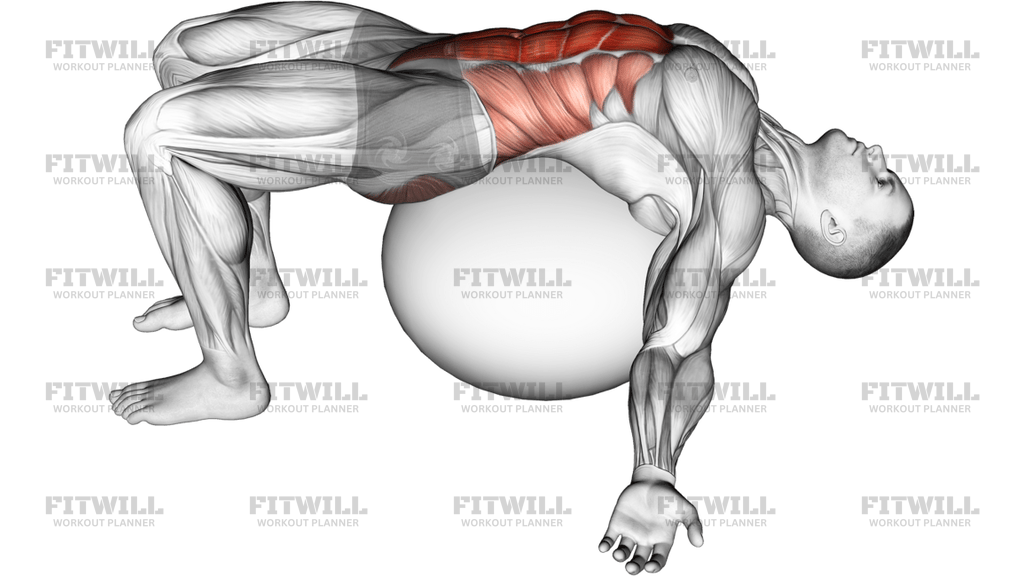
Exercise Ball Back Stretch is a supported spinal opening drill done with the upper back draped over a stability ball and the feet planted on the floor. The ball takes the weight off the spine so you can open the chest, ribs, and upper back without forcing a hard, unsupported arch. It is best treated as a mobility stretch, not a strength lift.
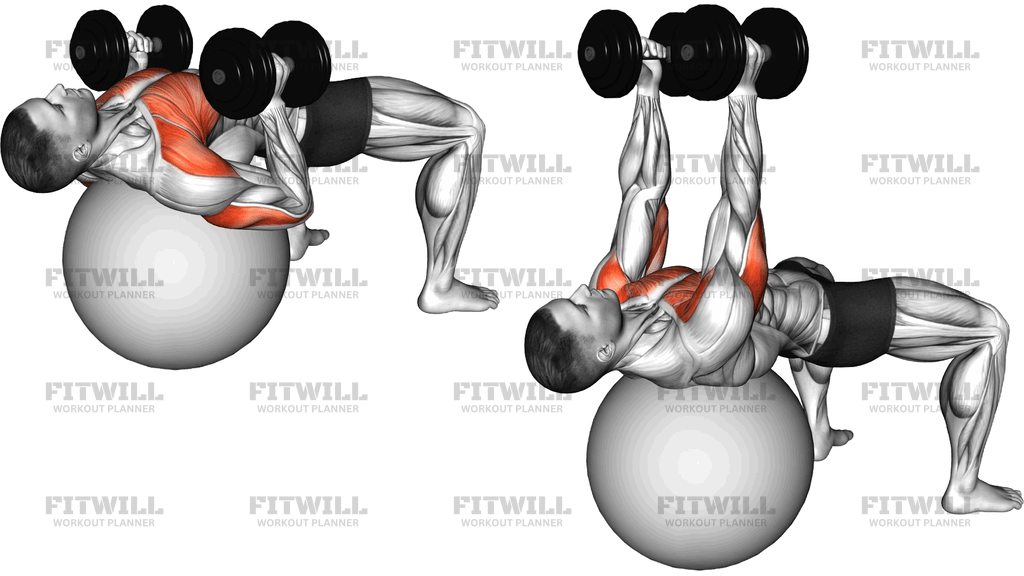
The setup matters because the ball should support the thoracic spine, not the neck or the low back. In the image, the torso is arched over the ball with the hips lifted, the knees bent, and the arms hanging down. That position helps the front of the body open while the shoulders and spine settle into a controlled, comfortable stretch.
Use this exercise when your upper back feels stiff from sitting, pressing, rowing, or overhead work, or as part of a warm-up and cooldown. Smooth breathing is the main driver: exhale to soften into the ball, then inhale into the ribs and side body while keeping the motion slow and calm. The goal is a clean, repeatable stretch that feels supported from start to finish.
Do not chase a bigger arch if the low back pinches or the neck feels compressed. A good rep keeps the feet flat, the ball stable, and the stretch focused through the upper back and chest. If the range feels noisy or unstable, shorten the position and breathe longer instead of pushing harder.
[ Workout Log & Planner ]
Put your next workout in Fitwill
Keep your plan and training log ready when you are.


Instructions
- Sit on the stability ball with your feet flat, hip-width apart, and walk your feet forward until the ball is under your mid-back and lower shoulder blades.
- Lean back so your upper back drapes over the ball, keep your knees bent, and lift your hips until your torso is supported in a smooth arch.
- Let your arms hang toward the floor with relaxed hands, and keep your neck long instead of cranking your head back.
- Set your ribs before moving by taking a small breath out, then let your chest open a little farther over the ball.
- Hold the stretched position for a few calm breaths without bouncing or twisting side to side.
- Keep the pressure even through both feet so the ball stays centered and your hips do not slide off.
- If the stretch stays comfortable, deepen it slightly on the next exhale rather than forcing one big range.
- To come out, walk your feet back and roll your torso forward slowly until you are upright and balanced.
Tips & Tricks
- Place the ball under the middle of your back, not the neck and not the small of the waist, so the stretch stays where it belongs.
- Keep both feet planted firmly; if the heels lift or the stance narrows too much, the ball will feel unstable.
- A small arch with slow breathing is better than a huge backbend that makes the low back pinch.
- Let the ribs soften on the exhale instead of bracing hard through the abs.
- Relax the shoulders and arms so the chest and upper back can open without extra tension.
- If your neck feels compressed, tuck the chin slightly and shorten the range immediately.
- Use this stretch after desk time or pressing work, when the upper back and front of the shoulders feel tight.
- Stop the set if the stretch turns into sharp pain, numbness, or a pinch in the lumbar spine.
Frequently Asked Questions
What does Exercise Ball Back Stretch target most?
It mainly opens the thoracic spine, chest, ribs, and shoulders while the hips and trunk stay supported by the ball.
Is this a beginner-friendly stretch?
Yes, as long as the range stays small, the feet stay planted, and you do not force the low back into a bigger arch.
Where should the stability ball sit during the stretch?
The ball should support the middle of the back and lower shoulder blade area, not the neck or the pelvis.
What is the most common mistake with this stretch?
People usually overarch and dump into the low back instead of keeping the opening centered through the upper back and ribs.
Should my arms stay on the floor or behind my head?
The image shows the arms hanging down, which is a good option because it lets the chest and shoulders relax instead of being forced into position.
How long should I hold Exercise Ball Back Stretch?
Use a short, calm hold of a few breaths or about 15 to 30 seconds, then come out slowly before repeating.
Can I replace a foam roller stretch with this movement?
Yes. The ball gives more support and a smoother arc, while a foam roller usually feels firmer and less forgiving.
What should I do if my low back feels pinched?
Shorten the arch, lift less, and keep the stretch focused higher on the back. If the pinch stays, choose a gentler thoracic mobility drill.