Shoulder Stretch Behind The Back
Shoulder Stretch Behind The Back is a standing shoulder mobility drill that uses your own arm position, not external load, to open the front and back of the shoulder girdle at the same time. One arm reaches overhead and down the upper back while the other travels behind the low back and up the spine, creating a position that can feel intense through the delts, triceps, chest, lats, and upper back. It is most useful for people who spend a lot of time at a desk, lift overhead, or feel stiff when reaching behind the head or behind the torso.
The setup matters because small changes in posture change where the stretch lands. Stand tall with your feet about hip-width apart, knees soft, ribs stacked over the pelvis, and the neck long. From there, sweep one arm up, bend the elbow, and let the hand slide down between the shoulder blades while the other hand reaches behind the lower back and climbs up the spine. The goal is a controlled reach, not a forced bind, so keep the chest square and avoid twisting just to make the hands meet.
When the position is set, lengthen through the crown of the head and breathe slowly while you let the shoulders settle. Gently guide the top elbow toward the ceiling and the lower hand farther up the back until you feel a firm but manageable stretch, usually across the outer shoulder, triceps, and side of the torso. If the front of the shoulder pinches, back off the range and keep the pressure light. The stretch should feel productive, not sharp.
Shoulder Stretch Behind The Back is often used after pressing, pulling, swimming, racket sports, or any session that leaves the shoulders feeling bound up. It also works well in a warm-up when you need to reclaim overhead reach before work on presses, handstands, or overhead carries. Because it is a mobility drill, the best reps are the ones you can hold calmly with even breathing and without shrugging the upper traps or arching the low back.
If one side is tighter, spend a little longer there and keep the opposite side honest so the body does not compensate. A towel or strap can help bridge the gap between the hands when the bind is not there yet, but only if it lets you keep the torso quiet and the shoulders relaxed. Over time, the stretch should feel smoother at the same angle, with less tension in the neck and more usable range in the shoulder.
[ Workout Log & Planner ]
Put your next workout in Fitwill
Keep your plan and training log ready when you are.


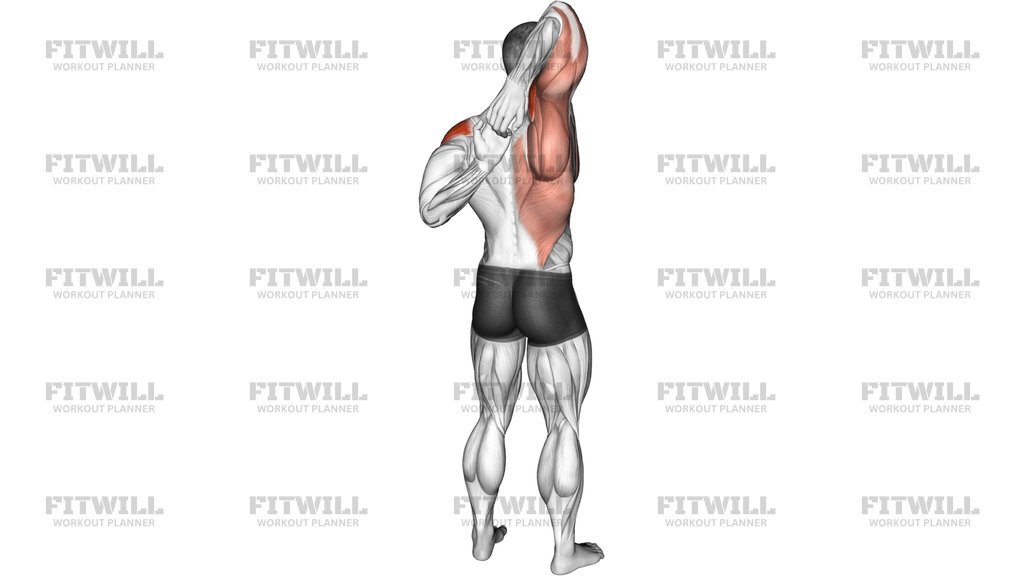
Instructions
- Stand tall with your feet about hip-width apart, knees softly bent, and your ribs stacked over your pelvis.
- Reach one arm overhead, bend that elbow, and let the hand slide down the upper back with the elbow pointing upward.
- Reach the other arm behind your low back and walk the hand up the spine without letting your chest turn.
- Bring the hands toward each other behind the back and keep the shoulders relaxed instead of shrugging.
- Lengthen through the crown of your head and keep the neck neutral while you settle into the position.
- Gently draw the top elbow up and slightly back as the lower hand travels a little higher on the spine.
- Breathe slowly for 15 to 30 seconds, letting the shoulders soften instead of forcing the bind tighter.
- Release the hands with control, shake out the shoulders, and repeat on the other side before switching back if needed.
Tips & Tricks
- Keep the ribs down; if they flare, the stretch turns into a low-back arch instead of a shoulder opener.
- Point the top elbow toward the ceiling, not forward, so the stretch stays in the shoulder and triceps.
- Let the lower hand glide up the spine instead of yanking it with force.
- If the front of the shoulder pinches, reduce the reach and keep the bind looser.
- A long exhale usually helps the upper traps stop guarding and lets the shoulders settle.
- Match both sides even if one side feels much tighter, so the torso does not rotate to cheat the range.
- A towel or strap can bridge the gap between the hands when the bind is too far apart for a clean reach.
- Keep the chin level and avoid jutting the head forward when you chase more range.
Frequently Asked Questions
What muscle does Shoulder Stretch Behind The Back target most?
It mainly targets the delts, with a strong stretch through the triceps, chest, lats, and upper back.
Can beginners perform Shoulder Stretch Behind The Back?
Yes. Beginners should keep the bind loose, avoid forcing the hands together, and stop well before any pinching in the front of the shoulder.
What if my hands do not meet behind my back?
That is normal on a tight side. Keep the torso square and use a smaller gap, or hold a towel between the hands if you need a gentler bridge.
Where should I feel the stretch during Shoulder Stretch Behind The Back?
Most people feel it across the front of the shoulder, the back of the upper arm, and sometimes into the chest or side of the torso.
Should I twist my torso to make the hands touch?
No. Keep the chest facing forward and let the shoulder range improve without turning the ribs just to fake more mobility.
Is Shoulder Stretch Behind The Back useful before overhead pressing?
Yes, especially after a general warm-up. It can help restore shoulder reach, but keep it light so you do not fatigue the joint before lifting.
What is the most common mistake with this stretch?
People often arch the low back or shrug the top shoulder. Keep the ribs stacked and let the neck stay long.
How long should I hold each side?
A 15 to 30 second hold is usually enough to get a useful stretch without turning it into a strain.