Dumbbell Stiff Leg Deadlift On Bench
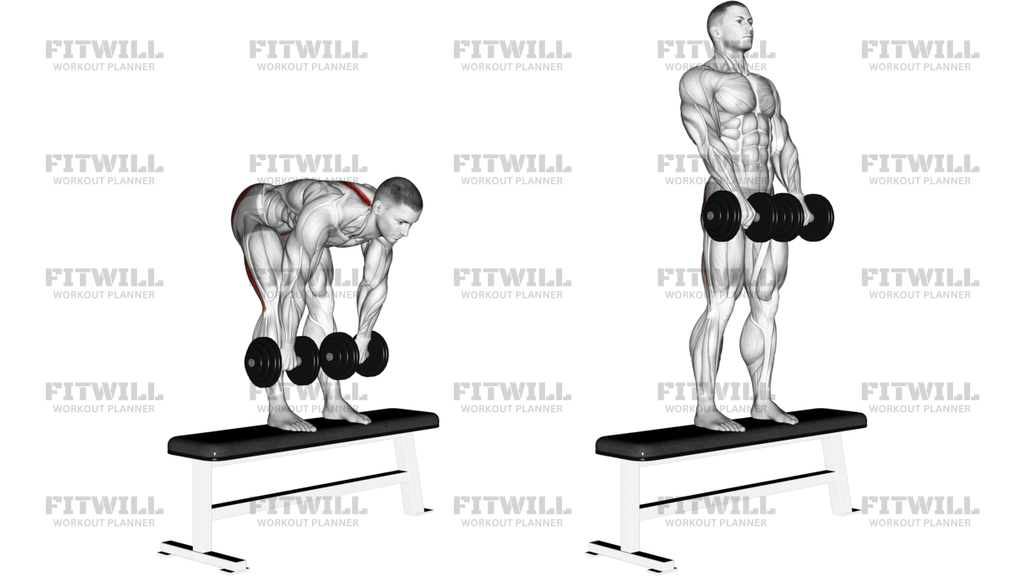
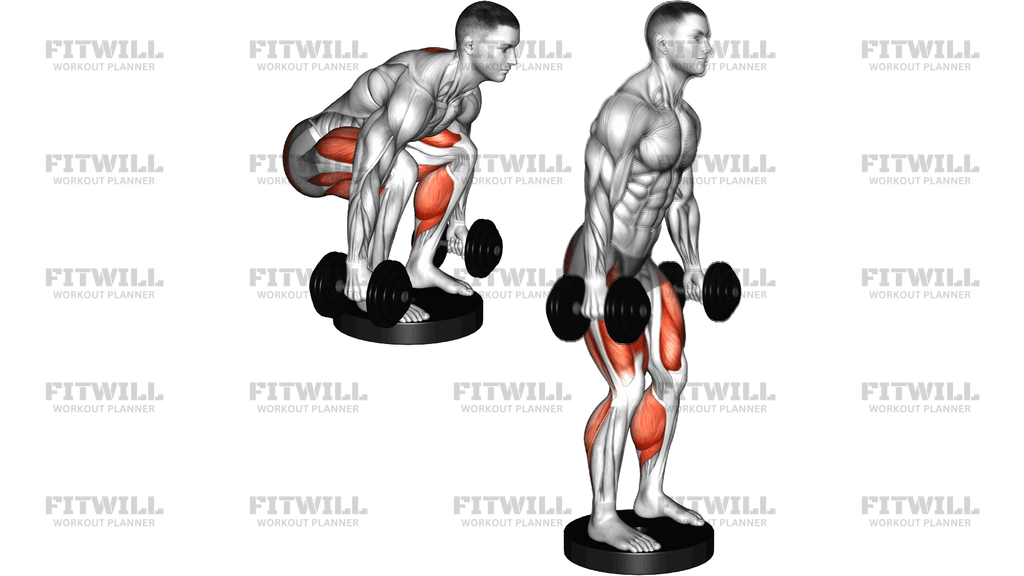
Dumbbell Stiff Leg Deadlift On Bench is a standing hip-hinge variation performed on a flat bench, with the feet planted on the bench and the dumbbells moving down the front of the legs before returning to a tall stand. The elevated stance changes the feel of the movement and usually makes balance, foot pressure, and hinge control more important than in a floor-based deadlift.
The exercise primarily loads the hamstrings and glutes while the core and lower back work to keep the torso organized. Because you are standing on the bench, the feet must stay rooted through the toes, arches, and heels so the hips can move back cleanly without wobbling or drifting forward. That stability is the difference between a useful posterior-chain hinge and a shaky partial rep.
Good repetitions start with a soft knee bend, a braced trunk, and dumbbells kept close to the thighs and shins. The torso should fold at the hips, not round through the lumbar spine, and the lowering phase should stop when you feel a strong hamstring stretch or your posture starts to change. On the way up, drive the hips forward to stand tall without leaning back or swinging the weights.
This movement fits well as accessory work for hamstring strength, glute loading, and hinge pattern practice. Use moderate loads, a controlled tempo, and a range of motion you can repeat without losing balance on the bench. If the bench height or your mobility makes the bottom position unstable, shorten the range or switch to a floor Romanian deadlift until the hinge is solid.
Fitwill
Log Workouts, Track Progress & Build Strength.
Achieve more with Fitwill: explore over 9600 exercises with images and videos, access built-in and custom workouts, perfect for both gym and home sessions, and see real results.
Start your journey. Download today!




Instructions
- Stand on a flat bench with your feet about hip-width apart and the dumbbells hanging at arm's length in front of your thighs.
- Plant your whole foot on the bench, then check that your toes, arches, and heels feel evenly loaded before you descend.
- Soften your knees slightly and brace your torso so your ribs stay stacked over your pelvis.
- Push your hips straight back and let the dumbbells slide down the front of your legs.
- Lower until your torso is close to parallel with the floor or until your hamstrings reach their limit without your back rounding.
- Pause briefly in the stretched position while keeping the dumbbells close to your shins.
- Drive your hips forward to stand back up until you are tall and balanced over the bench.
- Reset at the top and repeat with smooth breathing and no bouncing from the bottom.
Tips & Tricks
- Keep the dumbbells brushing the legs so the load stays centered instead of drifting forward.
- Think about sending the hips back, not just folding the torso, to keep tension on the posterior chain.
- Use only a small knee bend; turning it into a squat will reduce the hamstring stretch.
- If the bench feels unstable, reduce the load and shorten the range before trying to go deeper.
- Stop the descent as soon as your lower back wants to round, even if the dumbbells have not reached the bench.
- Exhale as you stand up and inhale on the way down to help keep the trunk braced.
- A slower lowering phase usually gives a better hamstring stimulus and reduces bouncing at the bottom.
- Choose a load that lets you finish each rep without jerking the shoulders or swinging the dumbbells.
Frequently Asked Questions
What muscles does Dumbbell Stiff Leg Deadlift On Bench train most?
It mainly trains the hamstrings and glutes, with the core and lower back working to keep the hinge stable.
Why do I stand on a bench for this deadlift variation?
The elevated stance changes the hinge and can increase the stretch demand on the hamstrings, but it also makes balance more important.
How bent should my knees be?
Keep them slightly soft, not locked and not deeply bent, so the movement stays a hip hinge instead of turning into a squat.
How far down should the dumbbells travel?
Lower until your torso is near parallel to the floor or your hamstrings are fully stretched without your spine rounding.
Is this the same as a Romanian deadlift?
The hinge pattern is very similar, but the bench elevates your stance and can make the balance and control demands feel different.
What is the most common mistake on this exercise?
Letting the dumbbells drift away from the legs or rounding the lower back to force extra depth.
Can beginners do this movement?
Yes, if they start with light dumbbells, a stable bench, and a shorter range until they can keep their balance.
What should I do if I feel it mostly in my lower back?
Shorten the range, slow the lowering phase, and keep the ribs stacked over the pelvis instead of leaning back at the top.