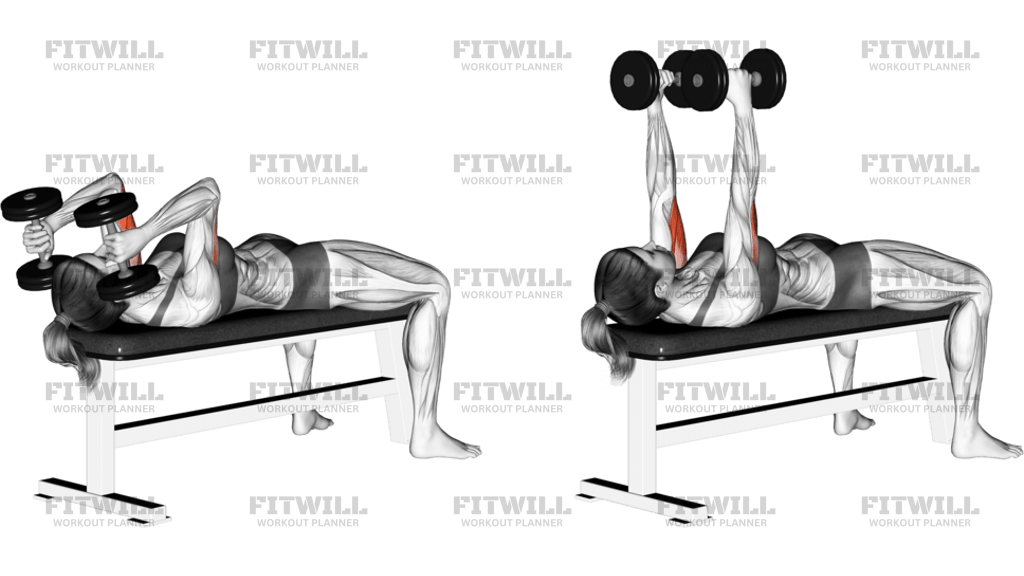
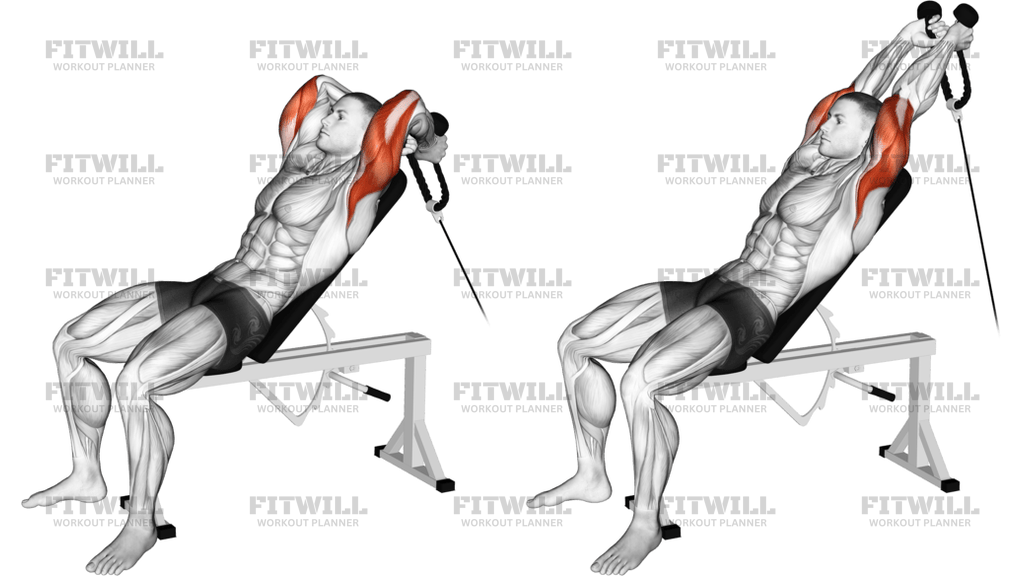
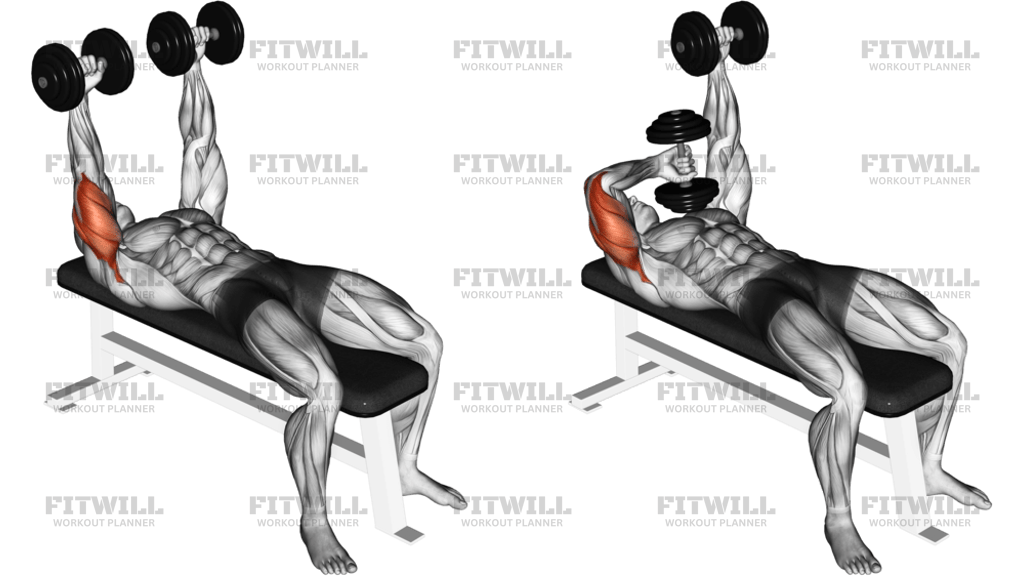
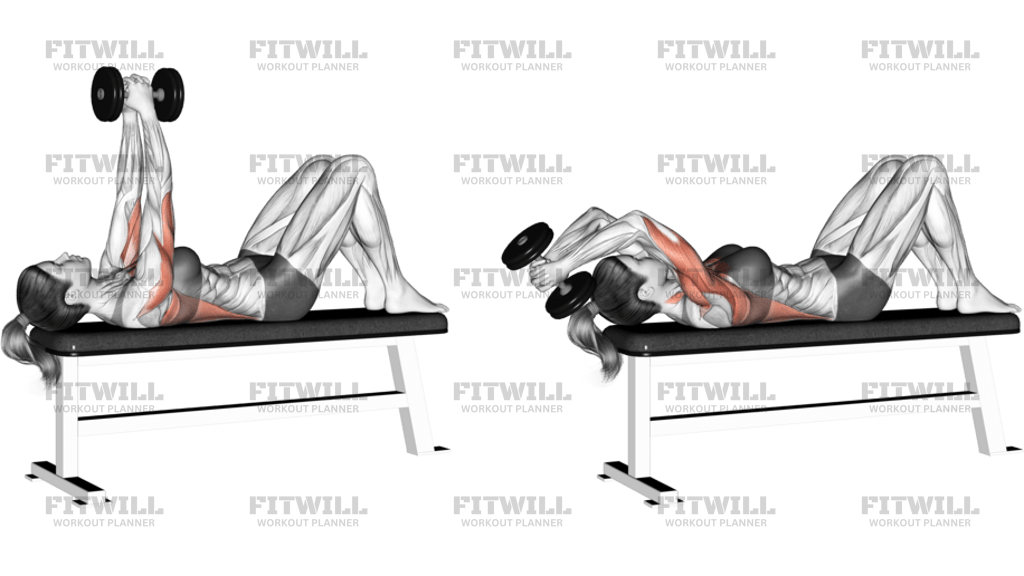
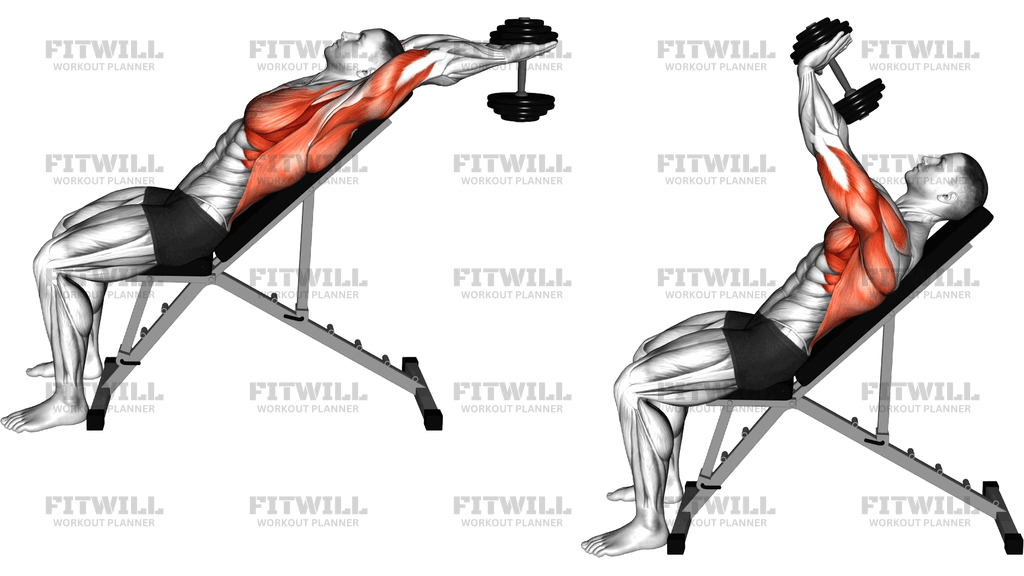
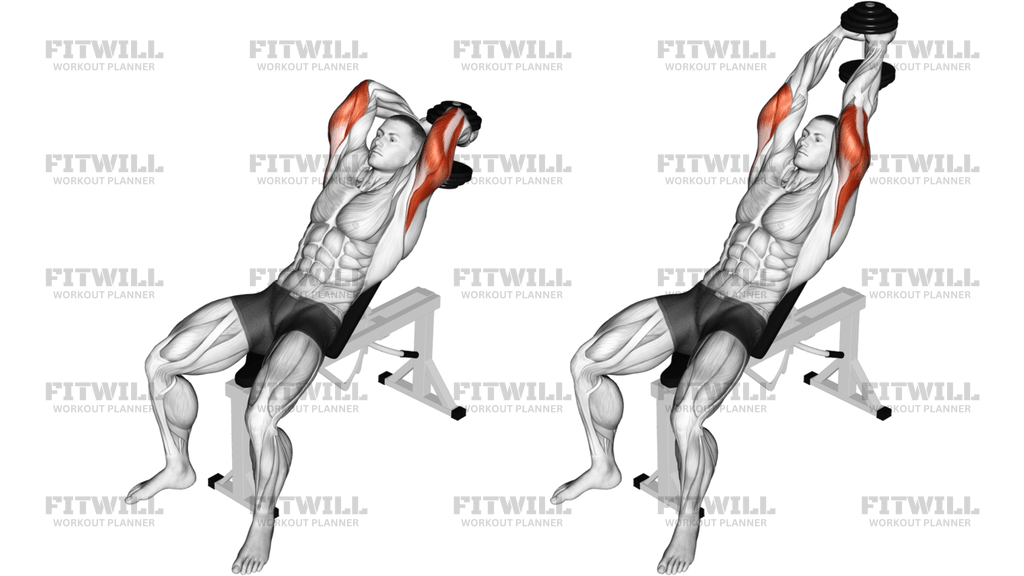
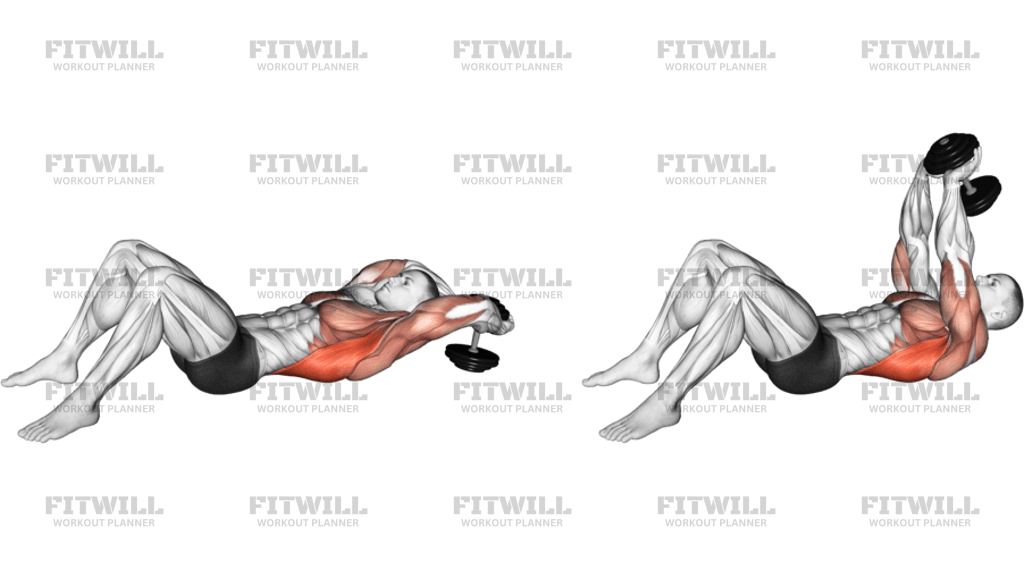
Dumbbell Decline One-Arm Hammer Press
Dumbbell Decline One-Arm Hammer Press is a single-arm dumbbell pressing variation performed on a decline bench with a neutral grip. The decline angle changes the line of force and gives the torso a stable base, while the one-arm setup demands extra control from the triceps, shoulder, and trunk. It is a useful accessory press when you want to load elbow extension without turning the set into a full-body heave.
The main target is the triceps, especially the triceps brachii, with the forearm flexors, anterior deltoid, and rectus abdominis helping to stabilize the arm, wrist, and torso. Because the weight is held in one hand, the free side of the body has to stay quiet. If the rib cage twists, the shoulder rolls forward, or the wrist collapses, the press becomes less about the triceps and more about keeping the dumbbell under control.
The setup matters. Lie firmly on the decline bench, secure the feet, and keep the shoulder blades set against the pad before the first rep. Start with the dumbbell stacked over the working shoulder or upper chest with a neutral grip, palm facing inward. From there, lower the dumbbell in a controlled arc until the elbow is comfortably bent and the upper arm is loaded without the shoulder drifting.
Press the dumbbell back up by extending the elbow and keeping the wrist lined up over the forearm. The dumbbell should travel smoothly rather than wobbling across the body. Exhale through the press, inhale on the lower phase, and keep the torso braced so the bench does the support work while the arm does the pressing work.
Use this movement as a controlled strength or hypertrophy accessory for triceps-focused sessions, upper-body split days, or as a unilateral press variation when you want to even out side-to-side differences. It works best with loads that allow clean elbow tracking, a quiet shoulder, and a full lockout without losing the neutral wrist. Beginners can use it with a light dumbbell and a slow tempo, but the bench position and one-arm balance mean the exercise rewards careful setup more than heavy loading.
[ Workout Log & Planner ]
Put your next workout in Fitwill
Keep your plan and training log ready when you are.


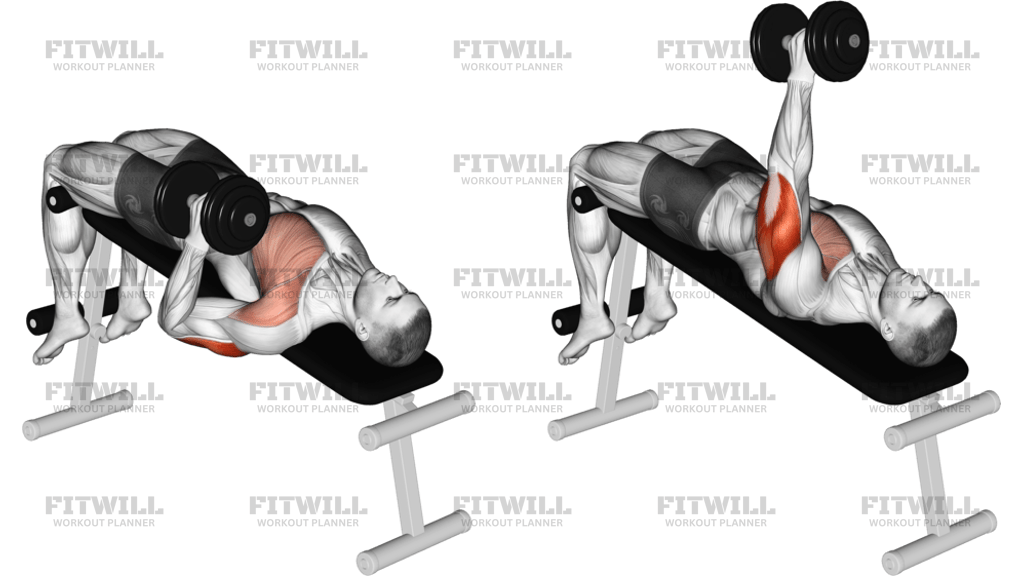
Instructions
- Set a decline bench to a comfortable angle and lie back with your feet secured under the pads.
- Hold one dumbbell in a neutral grip over the working shoulder or upper chest, with the wrist stacked over the elbow.
- Pin your shoulder blades lightly into the bench and keep your rib cage from flaring as you brace.
- Start with the elbow bent and the upper arm under control, not drifting out to the side.
- Lower the dumbbell slowly until the elbow is comfortably bent and the forearm stays close to vertical.
- Press the dumbbell back up by extending the elbow and driving the hand in a smooth line above the shoulder.
- Keep the free arm relaxed on the torso, bench, or handle area so it does not help the press.
- Exhale as you press up, inhale on the descent, and keep the tempo even through every rep.
- Finish the set by lowering the dumbbell back to the start position with control.
Tips & Tricks
- Keep the dumbbell in a hammer grip the whole time so the wrist stays neutral and the triceps can do the work.
- Do not let the elbow flare wide; a slightly tucked upper arm keeps the press triceps-focused and more stable.
- If your shoulder slides forward on the bench, reduce the load and reset your upper back before the next rep.
- Use a slower lowering phase than the pressing phase to keep tension on the triceps instead of bouncing off the bottom.
- Stop the descent when the shoulder starts to roll forward or the elbow loses a comfortable track.
- Keep the non-working side quiet; twisting through the torso usually means the load is too heavy.
- Choose a dumbbell you can lock out without shrugging the shoulder or bending the wrist backward at the top.
- If the bench angle feels unstable, secure your feet first before you bring the dumbbell into position.
- Aim for a smooth lockout rather than an aggressive snap so the elbow finishes strong without losing control.
Frequently Asked Questions
What does the Dumbbell Decline One-Arm Hammer Press train most?
It mainly trains the triceps, especially the elbow-extending function, with the shoulders and forearm working to stabilize the dumbbell.
Why use a decline bench for this press?
The decline position gives your upper back a stable base and changes the pressing angle so the triceps can work hard without as much whole-body interference.
How should my hand be positioned on the dumbbell?
Use a neutral or hammer grip with the palm facing inward. That keeps the wrist stacked and helps the elbow extend cleanly.
Should my elbow stay tucked or flare out?
Keep the upper arm slightly tucked so the elbow tracks naturally. Letting it flare too much usually shifts stress away from the triceps and makes the shoulder work harder.
Can I do this if I am new to one-arm pressing?
Yes, but start light. The one-arm setup adds balance demands, so learn the bench position and elbow path before increasing load.
What should I do if my torso twists during reps?
Lower the weight and brace harder through the ribs and hips. Twisting usually means the dumbbell is too heavy or the shoulder is not staying set on the bench.
How low should I lower the dumbbell?
Lower it only as far as you can while keeping the shoulder packed and the elbow path comfortable. Depth should be controlled, not forced.
What is the most common mistake on this exercise?
Rushing the descent and letting the shoulder drift forward are the biggest issues. Both reduce triceps tension and make the rep less stable.