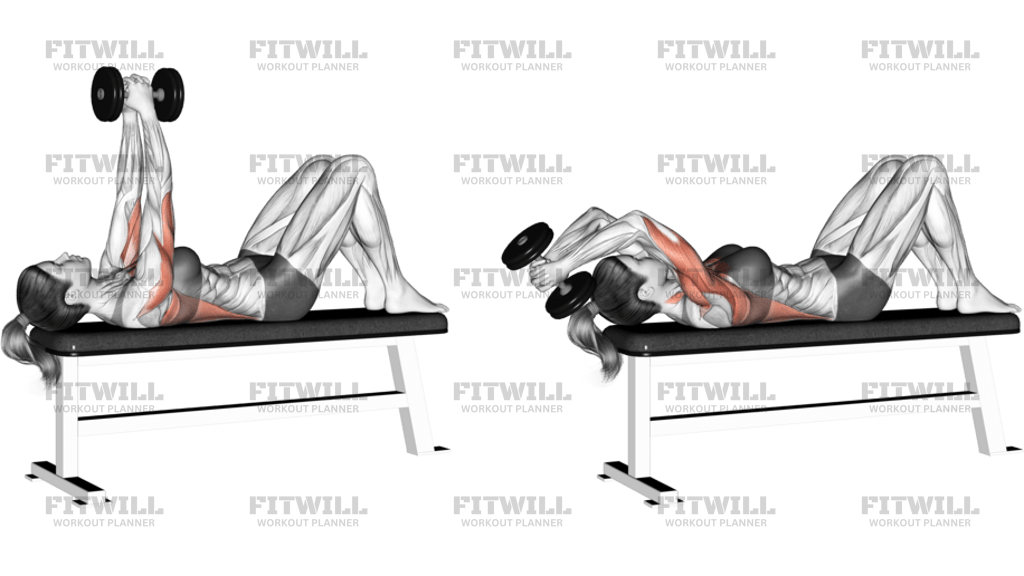
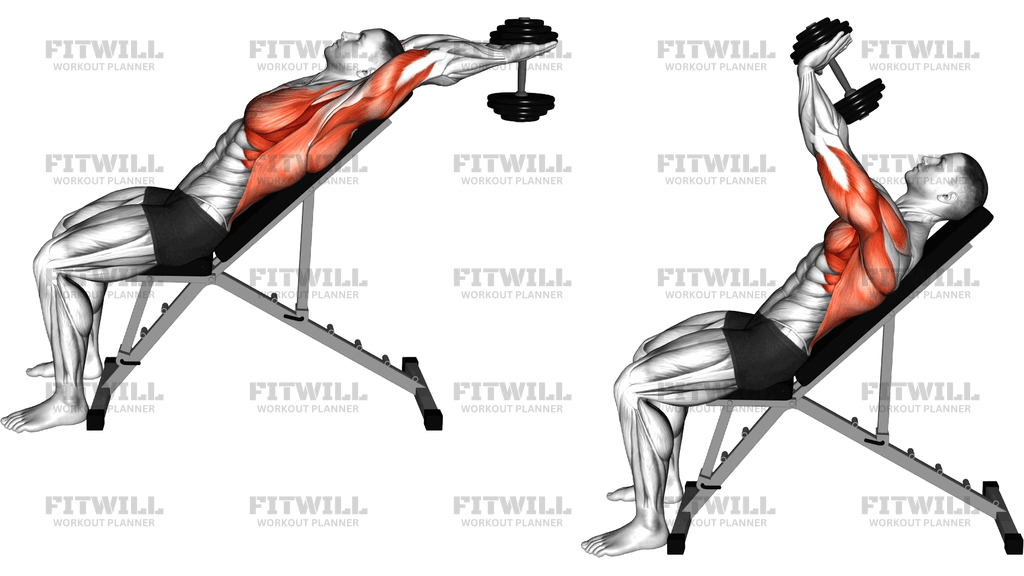
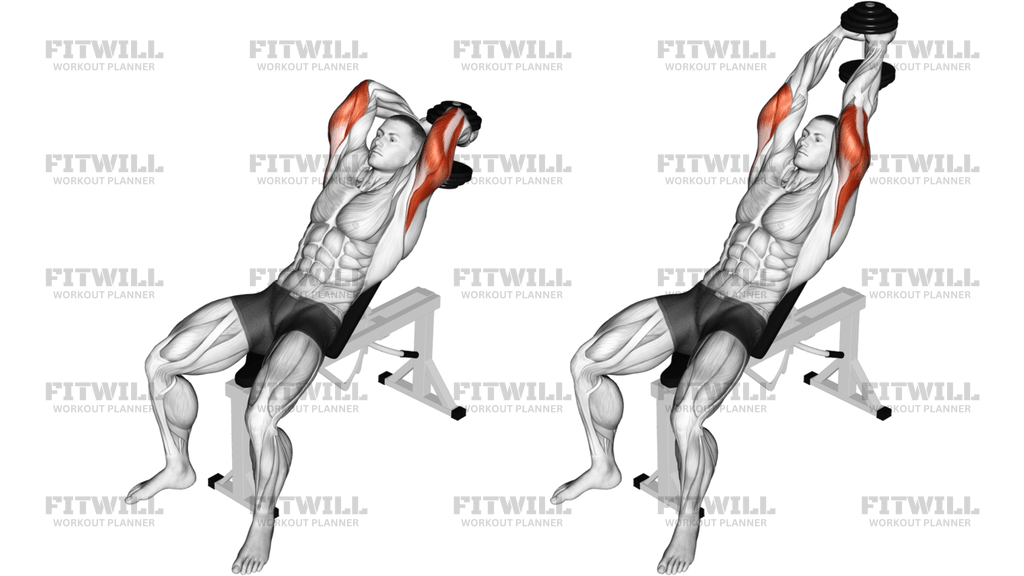
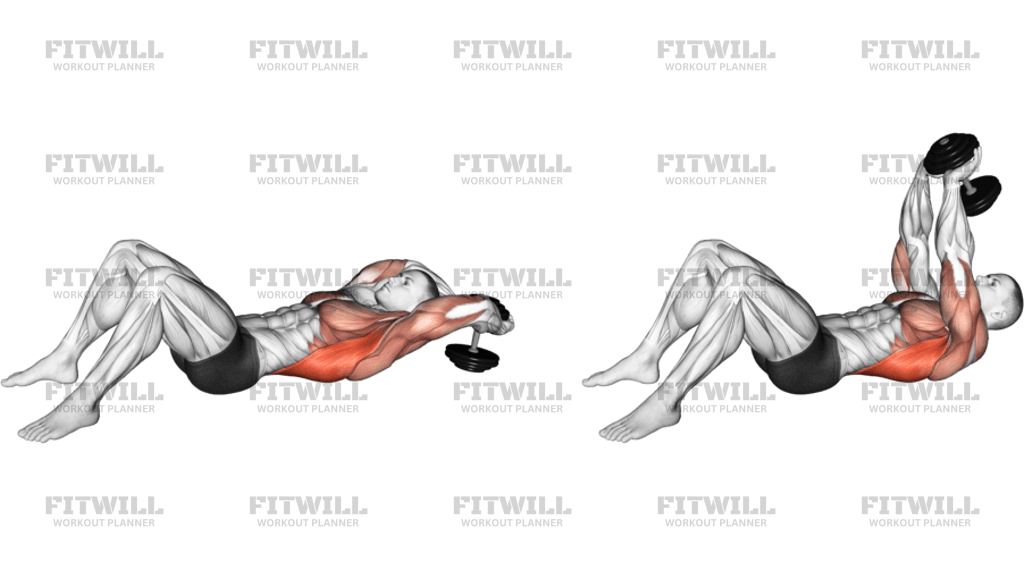
Dumbbell Incline One-Arm Hammer Press On Exercise Ball
Dumbbell Incline One-Arm Hammer Press On Exercise Ball is a unilateral pressing exercise where your upper back is supported on an exercise ball and one dumbbell is pressed with a neutral grip. It is a triceps-focused movement, but the shoulders, forearms, and trunk all contribute because the ball removes the hard bench support that would normally make the lift easier to stabilize. That makes setup quality matter as much as the pressing pattern itself.
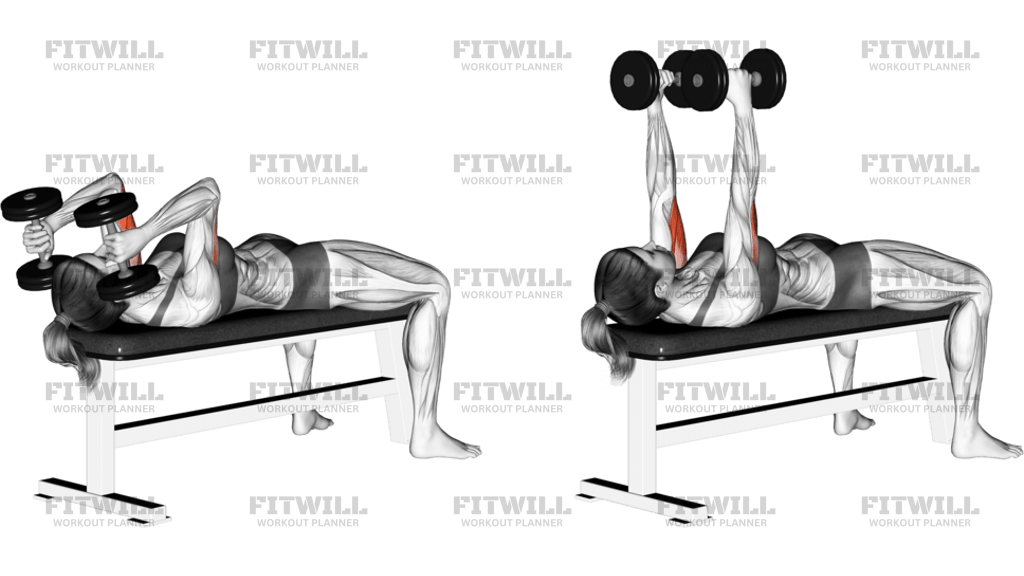
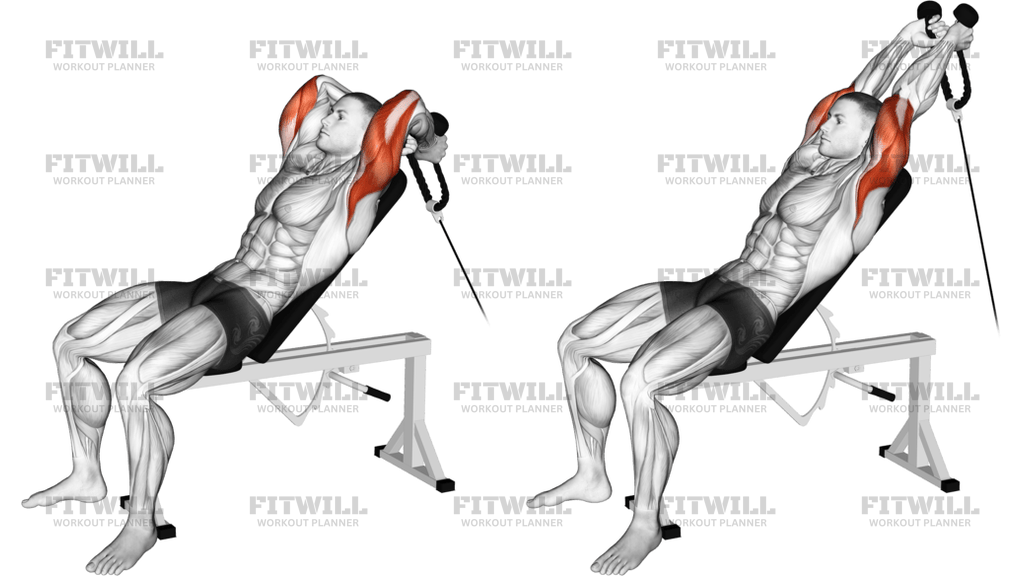
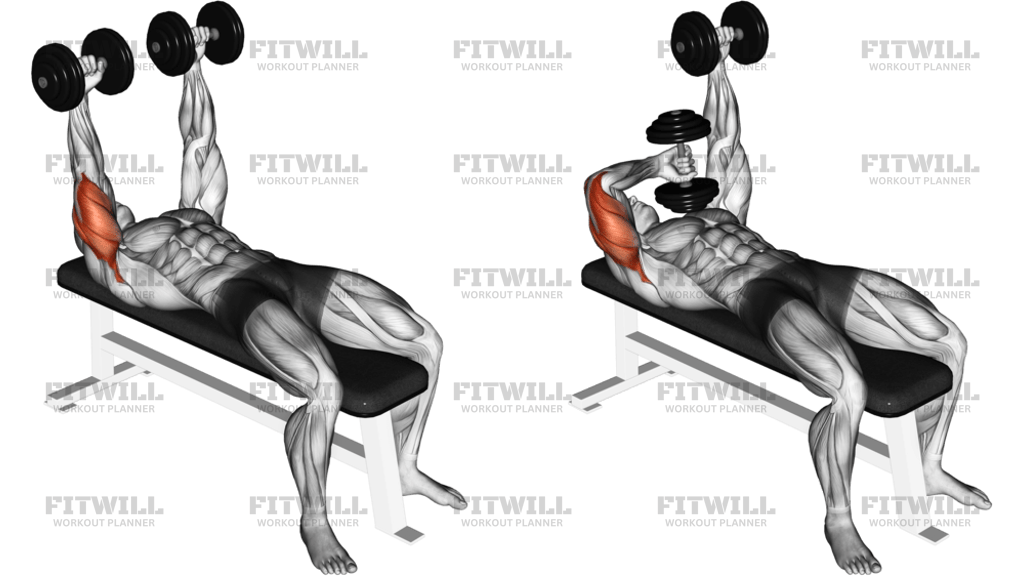
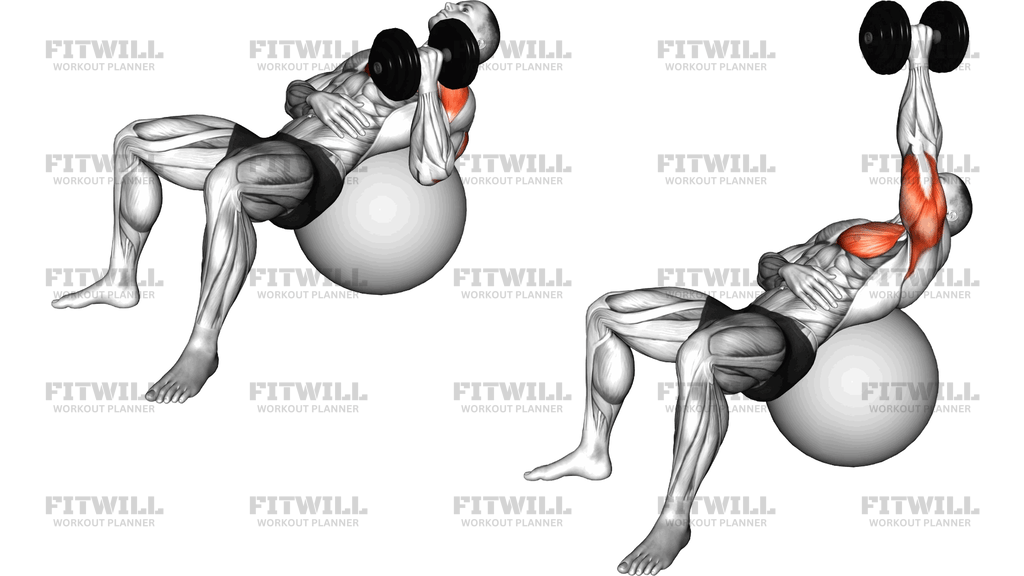
The exercise is useful when you want to train one arm at a time, keep the wrist in a neutral position, and force the body to resist unwanted rotation. The working side has to press the dumbbell in a straight path while the torso and legs keep the ball steady. The image shows the chest lifted, feet planted wide, and the elbow staying under the hand so the load travels vertically instead of drifting forward over the face or back toward the shoulder.
Because the torso is resting on a rounded surface, the starting position should be deliberate. Place the upper back across the ball, plant both feet firmly, and keep the hips high enough to create a stable bridge without overextending the low back. The dumbbell starts near the shoulder with the palm facing inward, which keeps the hammer-grip line of force on the triceps and reduces unnecessary wrist twist. From there, press until the arm is nearly straight and the elbow finishes over the shoulder.
A clean rep looks smooth and controlled. The ribcage stays down, the free arm does not swing for momentum, and the ball should barely move as the dumbbell travels. Lower the weight slowly until the upper arm is back near parallel with the torso, then press again without bouncing off the bottom. If the ball shifts, the hips drop, or the elbow flares hard to the side, the load is probably too heavy or the setup is too loose.
Use this movement as accessory pressing work, unilateral triceps training, or as part of a shoulder-and-arms session when you want more stability demand than a bench press machine provides. It is especially useful for lifters who need to clean up side-to-side imbalances or practice pressing control with a neutral wrist. Keep the range pain-free, work with a load you can control one side at a time, and stop the set before the shoulders start shrugging or the lower back takes over.
Fitwill
Log Workouts, Track Progress & Build Strength.
Achieve more with Fitwill: explore over 9600 exercises with images and videos, access built-in and custom workouts, perfect for both gym and home sessions, and see real results.
Start your journey. Download today!




Instructions
- Sit with the upper back supported on the exercise ball and your feet planted wide enough to keep the body from rolling.
- Hold one dumbbell in a neutral, hammer grip with the working elbow bent and the weight stacked over the shoulder.
- Keep the hips lifted and the ribs down so the torso forms a stable bridge instead of a loose arch.
- Brace through the trunk and keep the non-working arm quiet for balance.
- Press the dumbbell straight up until the arm is nearly locked out and the wrist stays neutral over the elbow.
- Pause briefly at the top without shrugging the shoulder toward the ear.
- Lower the dumbbell under control until it returns close to the starting shoulder position.
- Exhale as you press and inhale as you lower, then complete all reps on one side before switching.
Tips & Tricks
- Keep the dumbbell traveling vertically; if it drifts toward your face or belly, reset your elbow under the wrist.
- Use a foot position wide enough that the ball stays still when the load changes direction.
- A small hip bridge is helpful, but a hard low-back arch usually means you are cheating the press.
- Let the elbow track slightly in front of the torso on the way down so the shoulder stays comfortable.
- Do not let the free hand pull on the ball; it should only help you balance.
- Choose a weight that lets you pause briefly at the top without twisting the torso.
- If your wrist bends back, lower the load and keep the dumbbell handle lined up with the forearm.
- Stop the set when the ball starts sliding or the shoulders begin to shrug to finish the rep.
Frequently Asked Questions
What muscles does the Dumbbell Incline One-Arm Hammer Press On Exercise Ball work?
The triceps do most of the work, with the front deltoid, forearm muscles, and core helping you stabilize the ball and the dumbbell.
Why use a hammer grip instead of a regular press grip?
The neutral grip keeps the wrist stacked more naturally and puts the pressing line in a good position for triceps-focused work.
How should my upper back sit on the exercise ball?
Your shoulder blades and upper back should be supported so the chest can stay lifted while the feet and hips keep the ball stable.
How do I keep the ball from moving during the press?
Plant the feet wide, keep the hips active, and avoid shifting your weight from side to side when the dumbbell changes direction.
Should my elbow flare out to the side?
No. Let it track in a controlled line under the wrist and only open slightly if that helps you keep the shoulder comfortable.
Is this mainly a triceps exercise or a chest exercise?
It is mainly a triceps exercise. The chest helps stabilize the press, but the arm extension is what drives the movement.
Can beginners use this exercise ball press?
Yes, but only with a light dumbbell and a stable setup. The balance demand makes it more technical than a standard bench press.
What is the most common mistake with this movement?
People often overarch the low back or let the dumbbell drift off its vertical path instead of pressing straight above the shoulder.