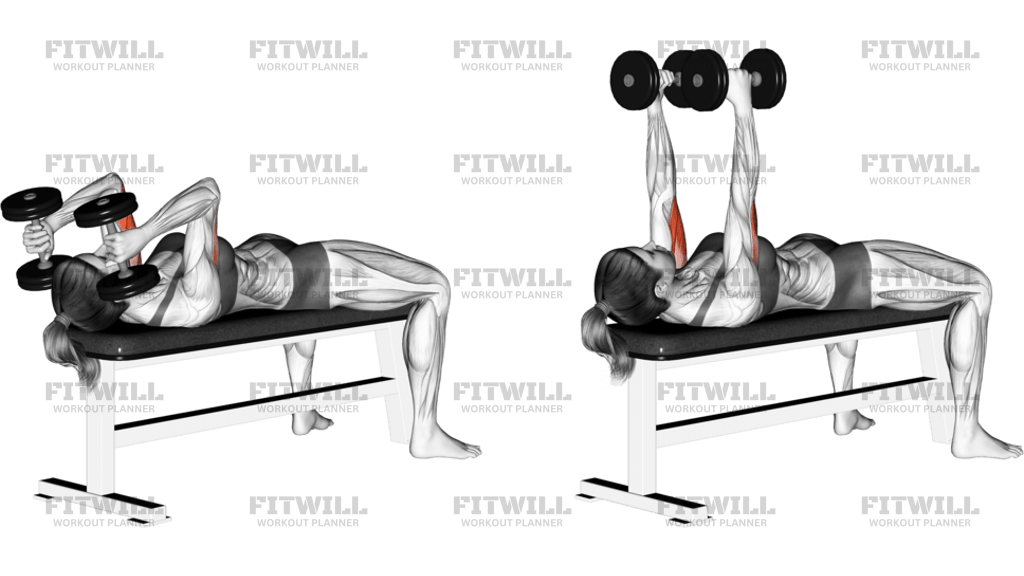
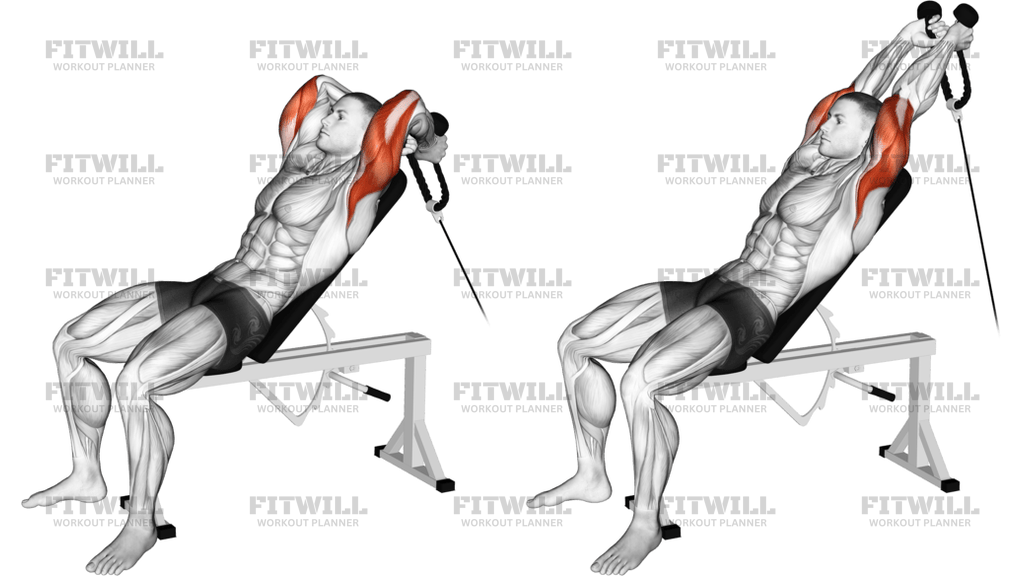
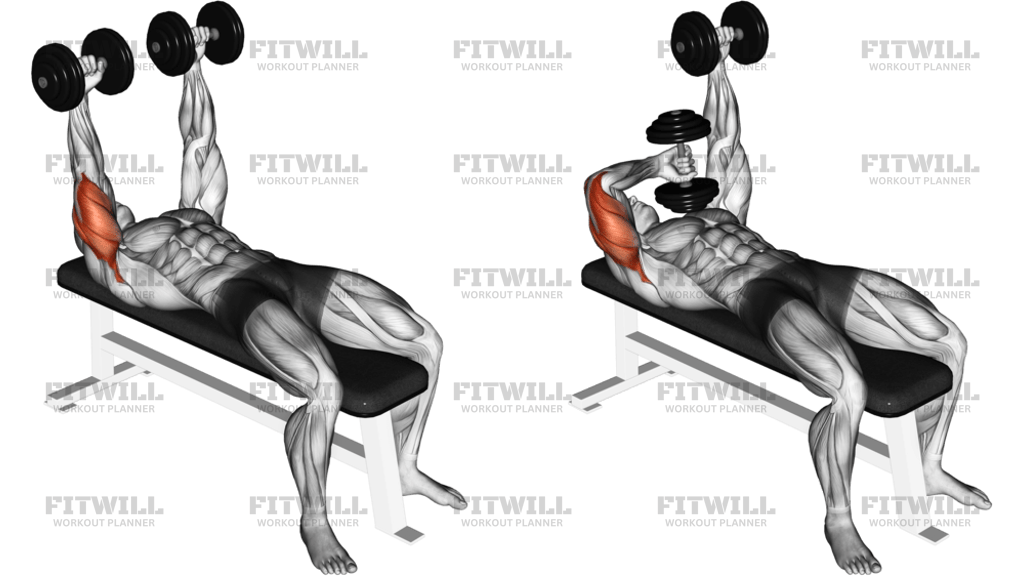
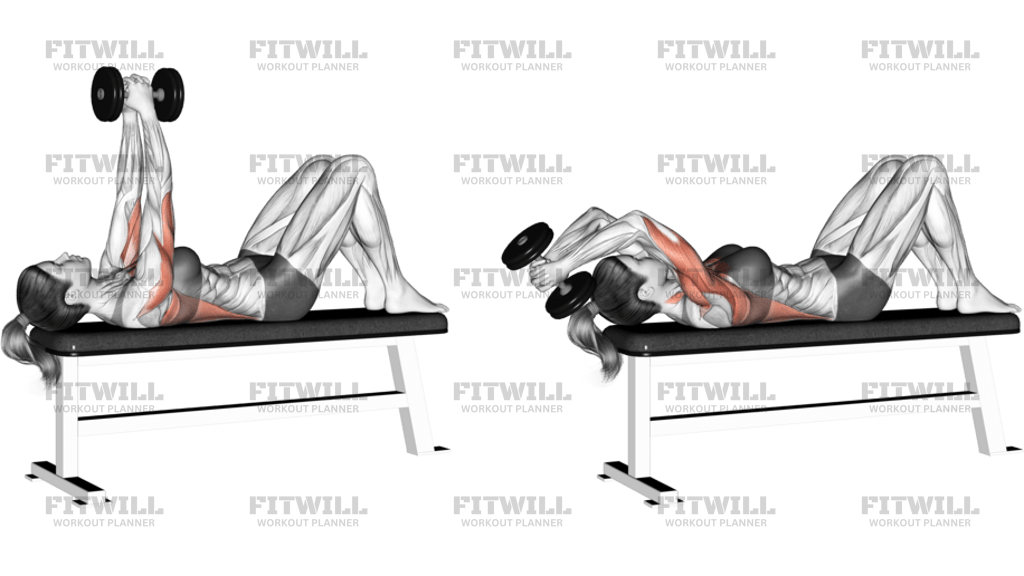
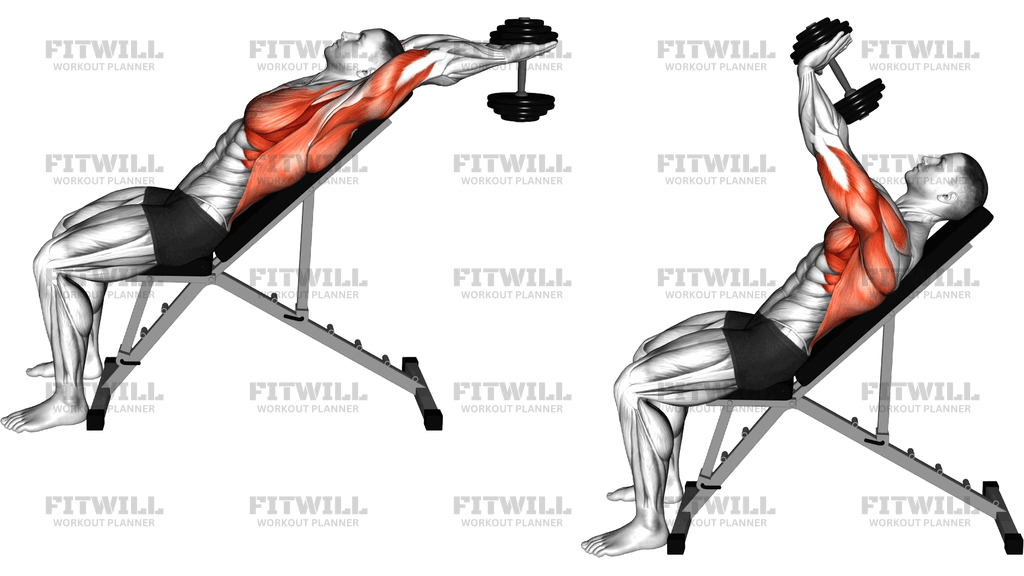
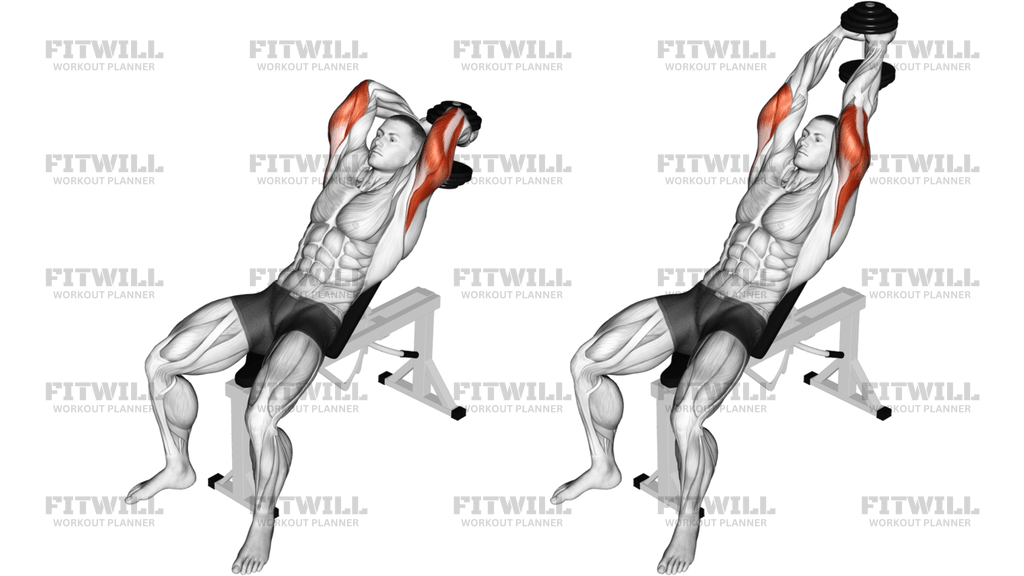
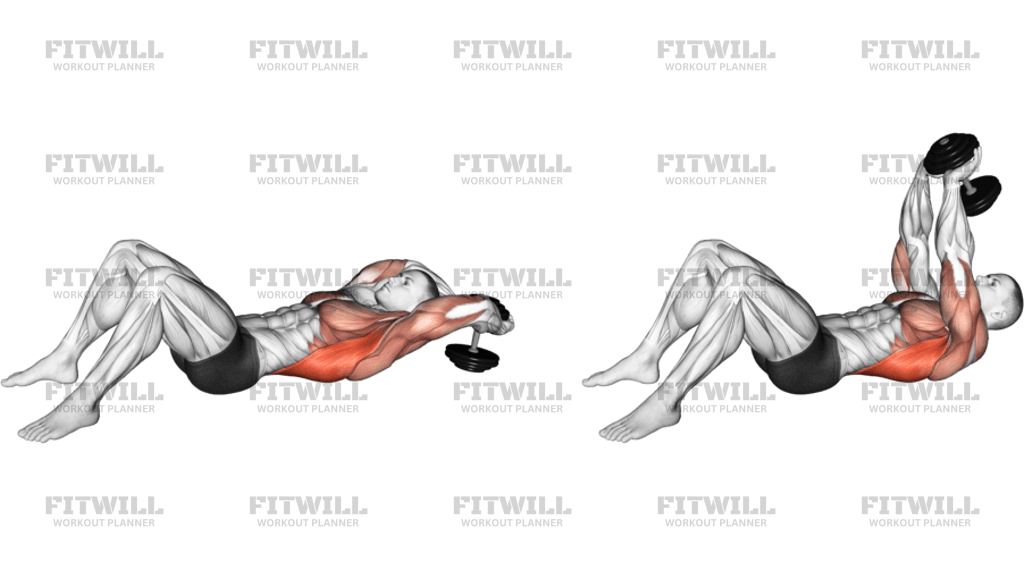
Dumbbell One-Arm Hammer Press On Exercise Ball
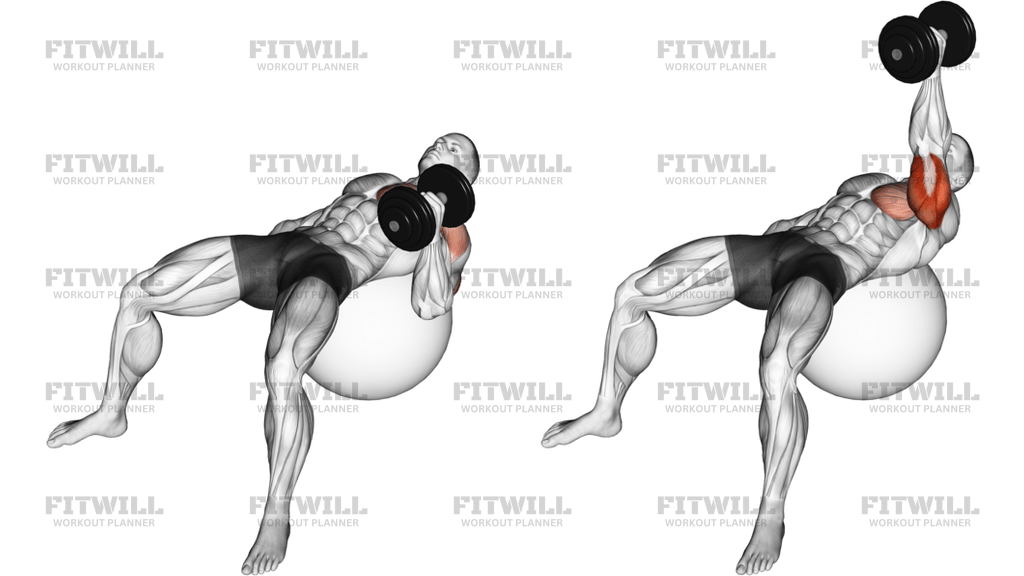
Dumbbell One-Arm Hammer Press On Exercise Ball is a single-arm pressing exercise that puts the triceps in charge while the chest, front shoulder, forearm, and core help steady the movement. The neutral or hammer grip keeps the wrist and elbow lined up in a way that feels natural for many lifters, while the exercise ball adds just enough instability to make each rep demand more control than a standard bench press.
The ball position changes the feel of the press. Instead of lying on a fixed bench, your upper back is supported by the ball while your feet stay planted on the floor, so you have to create your own stable base through your legs, hips, and trunk. That matters because the press should rise straight over the shoulder without the torso twisting or the lower back taking over.
Set the ball so your shoulder blades and upper back are supported, then walk your feet out until your body feels balanced and your hips can stay lifted without sliding. The working dumbbell should start above the shoulder with the palm facing inward, the wrist straight, and the elbow tucked enough to keep the triceps working. From there, lower under control until the elbow is bent and the upper arm stays close to the line of the torso, then press the dumbbell back to a stacked lockout.
Dumbbell One-Arm Hammer Press On Exercise Ball is useful when you want triceps work that also exposes side-to-side weakness, poor shoulder control, or a lack of trunk stability. It fits well as accessory work after a main press, as a lighter unilateral strength drill, or as a corrective exercise when one side presses cleaner than the other. Because the ball removes leg drive and gives you less stability than a flat bench, the load should usually be lighter than a normal single-arm dumbbell press.
Keep the rep smooth and deliberate. If the ball shifts, your hips drop, or your torso twists toward the pressing side, reduce the load and shorten the range until the movement stays organized. The safest reps are the ones where the dumbbell travels straight up and down, the elbow finishes without snapping hard into lockout, and the setup still feels secure on the way down and on the way up.
Fitwill
Log Workouts, Track Progress & Build Strength.
Achieve more with Fitwill: explore over 9600 exercises with images and videos, access built-in and custom workouts, perfect for both gym and home sessions, and see real results.
Start your journey. Download today!




Instructions
- Sit with the exercise ball behind you, hold a dumbbell in one hand with a neutral grip, and walk your feet forward until your upper back and head are supported by the ball.
- Plant both feet flat and a little wider than hip width, then lift your hips so your torso feels balanced and your shoulders, hips, and knees stay roughly in line.
- Stack the dumbbell over the working shoulder with the wrist straight, palm facing inward, and the elbow bent so the upper arm sits close to your torso.
- Brace your ribs down and squeeze your glutes so the ball stays steady before you start the first rep.
- Lower the dumbbell slowly toward the side of your chest until the elbow reaches about a right angle and the upper arm stays just below the line of the torso.
- Press the dumbbell straight back up over the shoulder without letting the elbow flare or the torso rotate toward the working side.
- Finish each rep with the arm vertical, the wrist still stacked over the elbow and shoulder, and the nonworking side helping you stay balanced.
- Inhale as you lower and exhale as you press, keeping the same rhythm as the dumbbell moves.
- After the last rep, lower the dumbbell to the shoulder, sit up carefully, and set the ball and weight down without bouncing out of position.
Tips & Tricks
- Choose a lighter dumbbell than you would for a flat-bench single-arm press, because the ball removes leg drive and makes balance the limiting factor.
- If the ball rolls when you lower the weight, widen your feet and shorten the range before you add load.
- Keep the elbow angled slightly toward the ribs instead of flaring wide; that keeps the press on the triceps and away from the front of the shoulder.
- Stop the descent when the upper arm is near torso level rather than letting the shoulder drift far behind the body.
- Keep the wrist stacked over the forearm; a bent wrist turns the dumbbell into a leverage problem instead of a press.
- Squeeze the glutes before each rep so your hips stay lifted and the lower back does not arch over the ball.
- Let the free hand hover for balance, but do not push off the floor or the ball to finish the rep.
- Use a slow lowering phase so the ball does not bounce under your upper back.
- If the lockout starts to look shaky, end the set there instead of forcing extra reps with torso twist.
Frequently Asked Questions
What does Dumbbell One-Arm Hammer Press On Exercise Ball train most?
The triceps are the main movers, with the chest, front shoulder, forearm, and core helping stabilize the press.
Is the exercise ball making the press harder?
Yes. The ball removes a lot of stability, so your trunk and hips have to work to keep the dumbbell moving straight and keep your torso from twisting.
How heavy should the dumbbell be for Dumbbell One-Arm Hammer Press On Exercise Ball?
Use a lighter load than you would on a bench press variation. If the ball shifts, your hips sag, or the dumbbell drifts away from the shoulder line, the weight is too heavy.
How should my elbow track during the press?
Keep the elbow slightly tucked, not flared wide, so the dumbbell travels in a clean vertical line and the shoulder stays packed on the ball.
Can I do Dumbbell One-Arm Hammer Press On Exercise Ball if I am a beginner?
Yes, but start very light and keep your feet wide so the ball feels stable before you try to add any real load.
Where should I feel this exercise most?
You should feel the back of the upper arm working hardest, with the chest and shoulder assisting and the core stabilizing your body on the ball.
What if the exercise ball feels unstable under my upper back?
Move your feet farther apart, keep your hips slightly higher, and shorten the range of motion until the ball stops wobbling.
Can I use both arms instead of one arm at a time?
You can, but the one-arm version is better for exposing side-to-side control issues and forcing your torso to resist rotation.
What is the most common mistake with Dumbbell One-Arm Hammer Press On Exercise Ball?
Letting the torso twist or the lower back arch to help the press. The dumbbell should rise straight over the shoulder without using body sway to finish the rep.