Dumbbell Seated Bent-Over Alternate Kickback
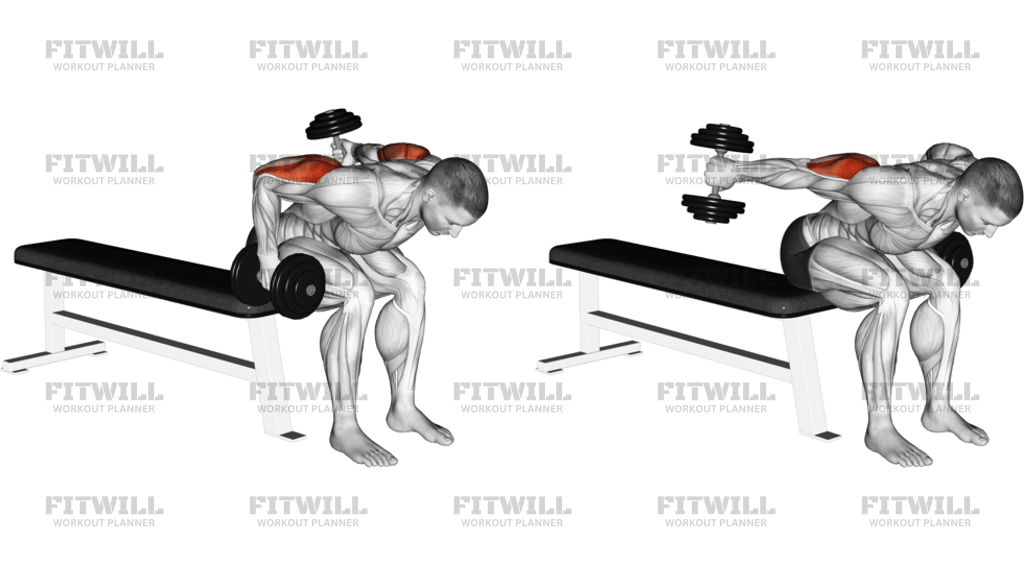
Dumbbell Seated Bent-Over Alternate Kickback is a triceps isolation exercise that uses a seated hip hinge and alternating elbow extension to keep the upper arms honest. The seated position removes a lot of standing body swing, so the triceps have to finish the rep instead of the torso helping out. It is especially useful when you want focused arm work after pressing, or when you want a triceps movement that is easier to control than a heavier compound lift.
The main job is elbow extension, so the triceps do most of the work while the forearms, front shoulders, and core help stabilize the position. Because the torso stays bent over, the setup matters as much as the movement itself: if the chest collapses, the shoulders shrug, or the elbows drift, the rep turns into a back exercise instead of an arm exercise. Keeping the upper arms quiet lets each kickback load the triceps through a clean range.
A good setup starts on the edge of a bench or sturdy seat with both feet planted and the torso hinged forward. Hold the dumbbells with a neutral grip, let the elbows bend so the weights hang under the shoulders, and set the shoulder blades down without over-arching the low back. The goal is a fixed torso and a fixed upper arm, with only the forearm moving as you straighten the elbow.
During each repetition, drive one dumbbell back until the arm is straight and the triceps are fully contracted, then lower it slowly before switching sides. The alternating rhythm keeps tension moving from arm to arm, but it still needs control: avoid twisting the ribcage, snapping the elbow into lockout, or letting the working elbow wander away from the torso. Exhale as the arm extends and keep the return smooth so the next rep starts from a stable 90-degree bend.
This exercise fits well as accessory work for lifters who want extra triceps volume without loading the shoulders or chest heavily. Use a light to moderate dumbbell because the bent-over lever makes the movement harder than it looks, and stop the set if your lower back starts to do the stabilizing. When the position stays tight, Dumbbell Seated Bent-Over Alternate Kickback is a very direct way to build triceps control, finish the elbow, and clean up arm symmetry.
[ Workout Log & Planner ]
Put your next workout in Fitwill
Keep your plan and training log ready when you are.


Instructions
- Sit on the edge of a flat bench or sturdy seat with both feet flat on the floor and a dumbbell in each hand.
- Hinge forward from the hips until your torso is angled well over your thighs, then let the dumbbells hang under your shoulders with your palms facing in.
- Bend both elbows so the upper arms sit close to your ribs and the forearms point toward the floor.
- Set your shoulder blades down and keep your chest long instead of rounding your upper back.
- Brace your midsection and keep your neck neutral so your torso stays still when the arm moves.
- Kick one dumbbell back by straightening that elbow until the arm is nearly straight and the triceps are fully squeezed.
- Pause briefly at the top without shrugging or twisting, then lower the dumbbell slowly until the elbow is bent again.
- Alternate to the other arm and repeat for the planned reps, keeping the same torso angle and arm path on every rep.
Tips & Tricks
- Choose a lighter dumbbell than you would for a standing triceps exercise; the bent-over position makes the lever much harder.
- Keep the upper arm pinned beside your torso so the movement comes from the elbow, not from swinging the shoulder.
- If your lower back starts working more than your triceps, raise your torso slightly and shorten the hinge a little.
- Do not snap the elbow straight at the top; finish the rep with a hard triceps squeeze instead of a hard lockout.
- A neutral grip usually feels best on the wrists and makes it easier to keep the forearm tracking straight back.
- Let the non-working arm stay quiet and bent while you alternate so it does not help you rock through the rep.
- Lower each dumbbell slowly enough that you can feel the triceps lengthen before the next kickback starts.
- If the shoulders shrug toward the ears, reset the setup and think about reaching the dumbbells back from the elbow rather than from the hand.
Frequently Asked Questions
What muscles does Dumbbell Seated Bent-Over Alternate Kickback train most?
The triceps do most of the work, with the forearms, front shoulders, and core helping you hold the bent-over position.
Why is Dumbbell Seated Bent-Over Alternate Kickback done seated instead of standing?
The seated hinge makes it harder to cheat with body swing, so the triceps have to finish the elbow extension more cleanly.
How heavy should I go on Dumbbell Seated Bent-Over Alternate Kickback?
Use a light to moderate dumbbell that lets you keep the upper arm still and pause at the top without twisting your torso.
Should my upper arm move during Dumbbell Seated Bent-Over Alternate Kickback?
No. The upper arm should stay tucked beside your torso while only the forearm opens and closes at the elbow.
Can beginners do Dumbbell Seated Bent-Over Alternate Kickback?
Yes, if they start light and keep the hinge small enough to hold a flat back and still feel the triceps working.
What should I do if my lower back feels strained during this exercise?
Sit a little taller, reduce the hinge angle, and make sure you are bracing your midsection instead of hanging on the low back.
What is the biggest mistake in Dumbbell Seated Bent-Over Alternate Kickback?
Swinging the torso or letting the elbow drift away from the ribs usually turns the exercise into momentum work instead of triceps work.
Where does Dumbbell Seated Bent-Over Alternate Kickback fit in a workout?
It works best as accessory triceps work after your heavier presses, or as a controlled arm-finisher when you want more elbow-extension volume.