Dumbbell Close-Grip Press
Dumbbell Close-Grip Press is a flat-bench pressing exercise that keeps the dumbbells held close together and the elbows tucked to bias the triceps while still involving the chest and front shoulders. It is a useful option when you want a pressing pattern that feels stable on the bench but places more of the work on elbow extension than on a wide chest press. The close hand position also makes it easier to keep the forearms stacked under the weights, which helps the press feel cleaner and more controlled.
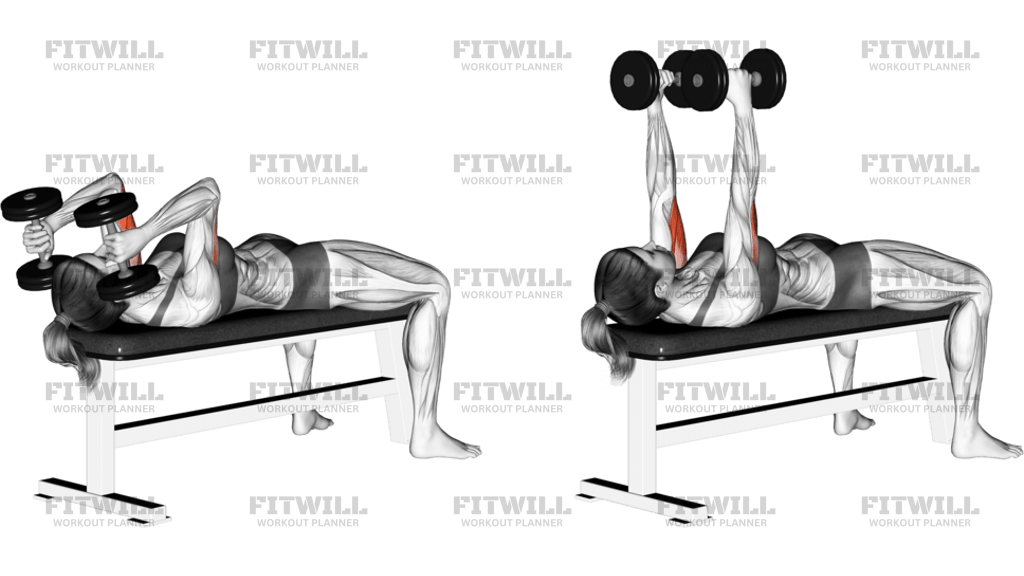
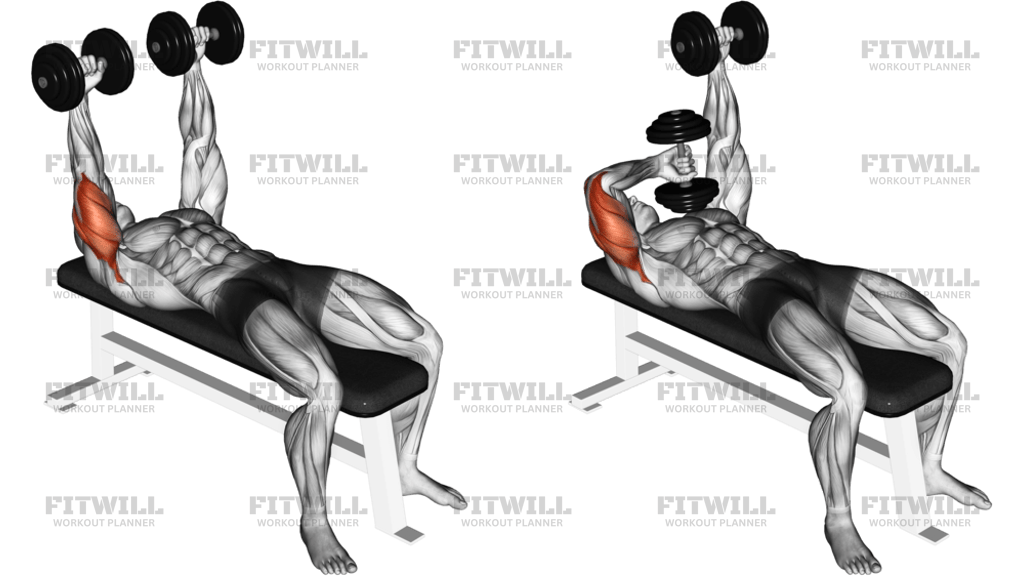
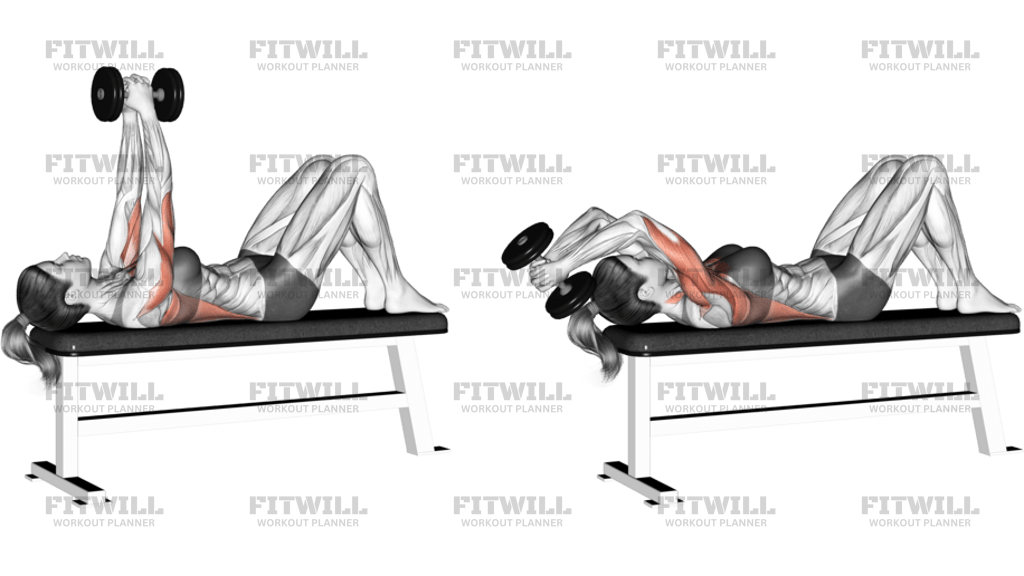
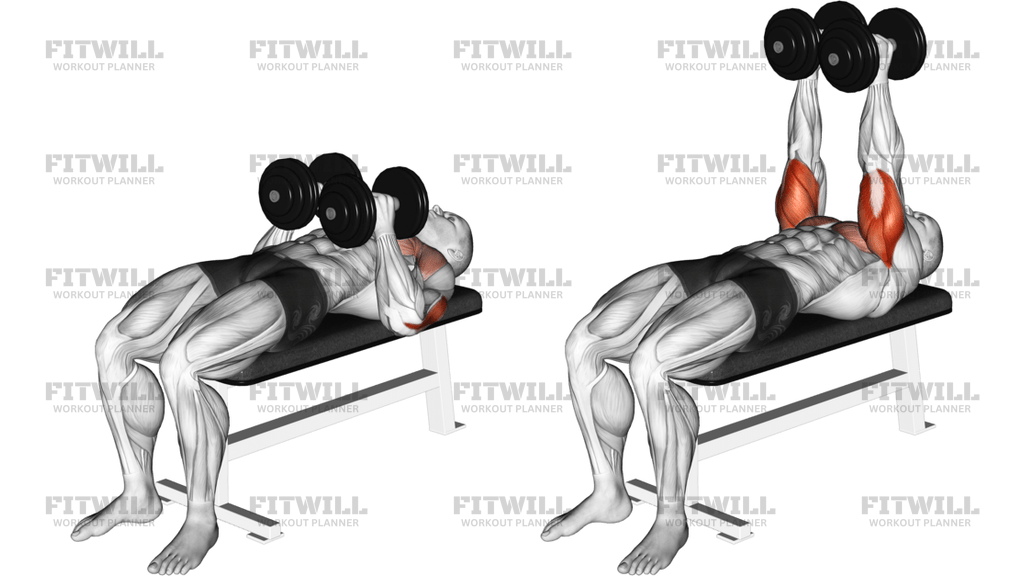
The image shows the lifter lying on a flat bench with both feet planted, dumbbells held above the chest, and the arms traveling mostly straight up and down with a neutral grip. That setup matters because the movement is not about flaring the elbows or bouncing the dumbbells off the chest. Instead, the shoulders stay packed, the ribs stay down, and the upper arms move in a narrower path so the triceps can drive the press. If the dumbbells drift too far apart or the elbows open up, the exercise turns into a more general dumbbell bench press.
This exercise is best performed with a controlled lower, a short pause or light touch near the bottom, and a strong press back to full elbow extension. The dumbbells should travel over the mid-chest and finish stacked above the shoulders without colliding or drifting backward. Keeping the wrists neutral and the forearms vertical reduces strain at the wrists and makes it easier to transfer force through the triceps. Because the load is supported on a bench, the movement can be easier to repeat than a standing press, but it still rewards precise setup and tempo.
Dumbbell Close-Grip Press is commonly used as a triceps-focused accessory after a main bench press, as a hypertrophy movement for arm development, or as a joint-friendly pressing variation when a lifter wants less shoulder flare than a wide-grip dumbbell press. It can suit beginners if the dumbbells are light enough to keep the shoulders stable and the range pain-free. The exercise should feel like a strong triceps press with some chest assistance, not a shoulder dump or a loose, bouncing bench press.
Choose a load that lets you keep the dumbbells close, lower under control, and finish every rep with the same pressing path. If the shoulders feel crowded or the elbows drift too wide, reduce the weight and shorten the range slightly until the bench position feels solid. Clean reps with steady tension are the goal here, not maximum load.
[ Workout Log & Planner ]
Put your next workout in Fitwill
Keep your plan and training log ready when you are.


Instructions
- Lie on a flat bench with your head, upper back, and hips supported, and plant both feet firmly on the floor.
- Hold a dumbbell in each hand above the middle of your chest with a neutral grip, palms facing each other and the bells nearly touching.
- Stack your wrists over your elbows, tuck your upper arms close to your sides, and keep your shoulders pinned to the bench.
- Brace your ribcage down and lower the dumbbells in a narrow path toward the lower chest or upper rib area.
- Keep the elbows angled in rather than flaring wide as the dumbbells descend under control.
- Touch or hover just above the bottom position without bouncing, then press the dumbbells straight up and slightly inward.
- Finish with both arms extended over the chest, not drifted behind the shoulders, and keep the dumbbells close together at the top.
- Exhale as you press up, inhale as you lower, and repeat for the planned reps before setting the dumbbells back to your thighs or the bench.
Tips & Tricks
- Keep the dumbbells almost touching so the press stays narrow and the triceps do more of the work.
- Use less load than you would for a standard dumbbell bench press; the close grip usually exposes weak control sooner.
- Let the elbows travel down beside the ribcage instead of opening out toward a 90-degree bench press position.
- Keep your wrists stacked over the forearms so the dumbbells do not fold backward at the bottom.
- Lower until the upper arms are just below parallel or the dumbbells reach a comfortable chest-level depth; do not force extra range if the shoulders pinch.
- Keep your shoulder blades set on the bench and avoid shrugging the shoulders up toward the ears.
- Press in a straight line with a slight inward finish rather than driving the weights apart at lockout.
- If the triceps are not limiting the set, the bells are probably too wide, too heavy, or too low on the chest.
- Pause briefly at the bottom on lighter sets if you want to remove bounce and make the triceps start the rep.
- End the set when the dumbbells start drifting, one wrist caves, or the elbows flare on the way up.
Frequently Asked Questions
What muscle does Dumbbell Close Grip Press target most?
The triceps are the main target, especially because the elbows stay tucked and the press uses a narrow path.
Can beginners perform this exercise?
Yes, beginners can use it if they start light, keep the dumbbells stable above the chest, and avoid flaring the elbows.
How close should the dumbbells be during the press?
Keep them close together, usually just a few inches apart, so the movement stays narrow and triceps-focused.
Should my elbows stay tucked the whole time?
Yes. Let them track slightly out and back only as needed for comfort, but keep them much closer to your torso than in a regular dumbbell bench press.
Where should the dumbbells lower to on the bench?
They should come down to the lower chest or upper rib area, not high toward the collarbones and not so low that the shoulders roll forward.
Why do my shoulders take over this movement?
Usually the elbows are flaring too wide or the shoulders are losing contact with the bench, which shifts the press away from the triceps.
What is the difference between this and a regular dumbbell bench press?
The close grip and tucked elbows put more emphasis on elbow extension, so the triceps contribute more and the chest contributes a bit less.
What should I do if the bottom position hurts my shoulders?
Shorten the range slightly, lighten the load, and keep the elbows tighter to the body so the upper arms do not drop too far below the bench line.