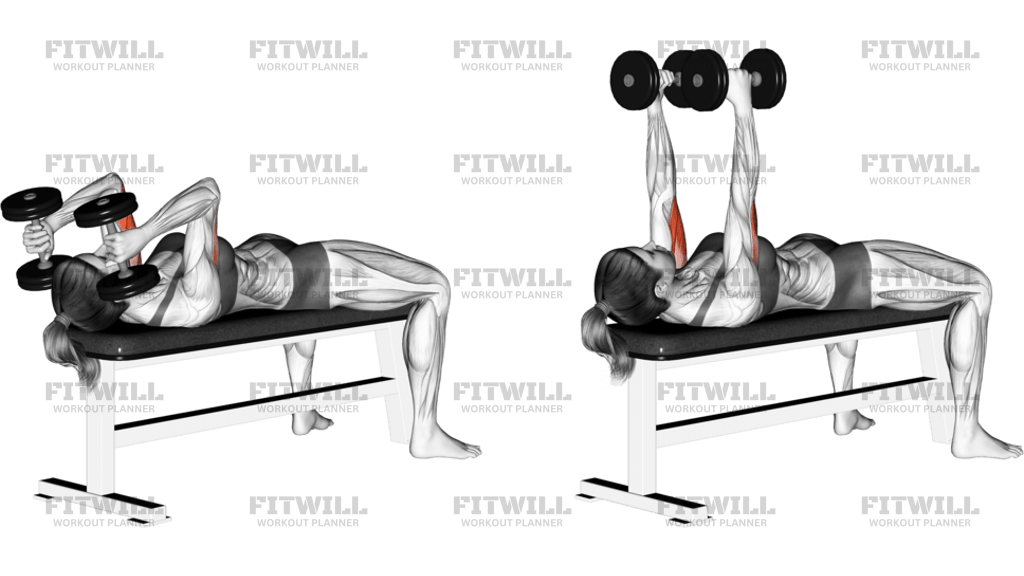
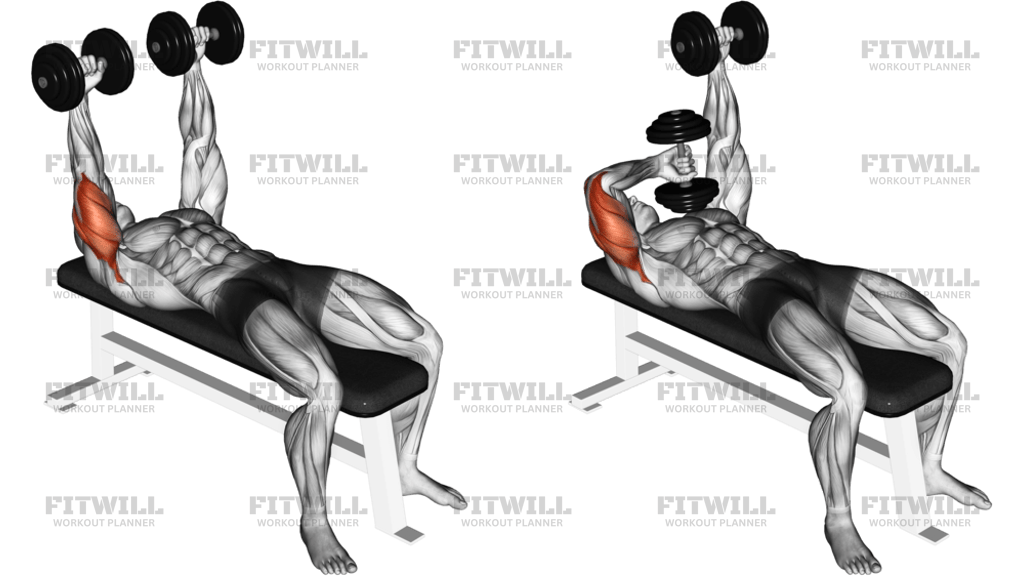
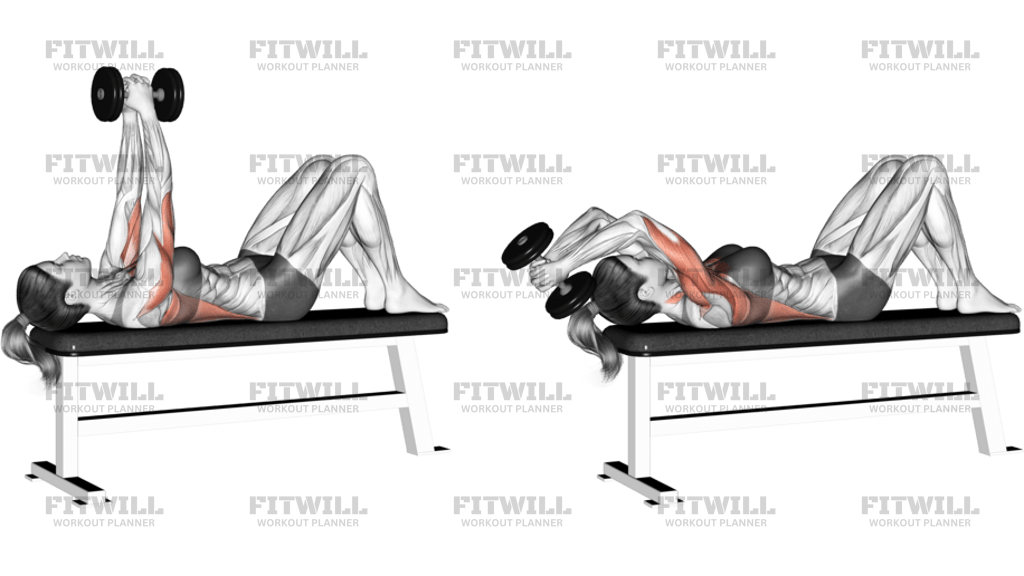
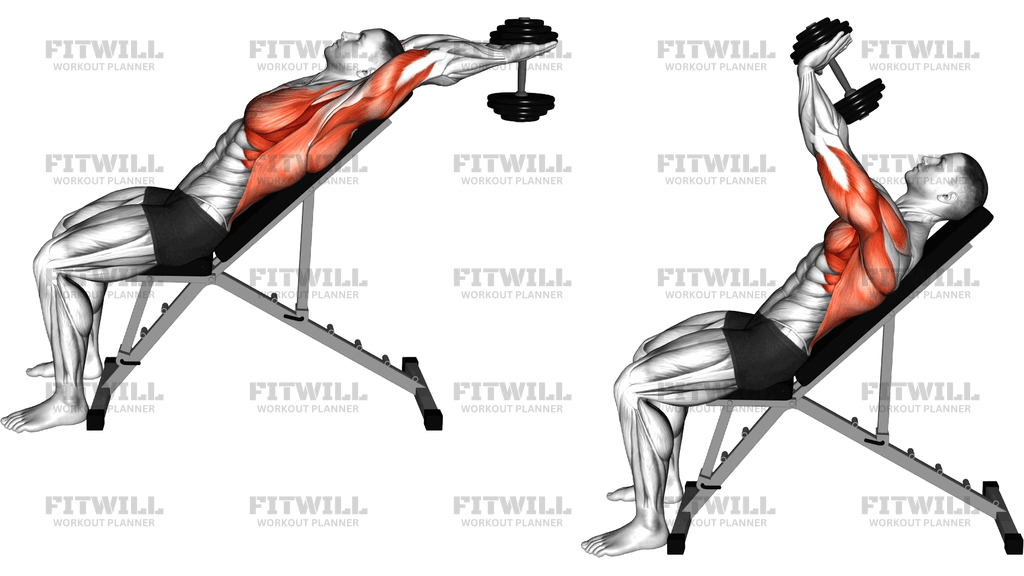
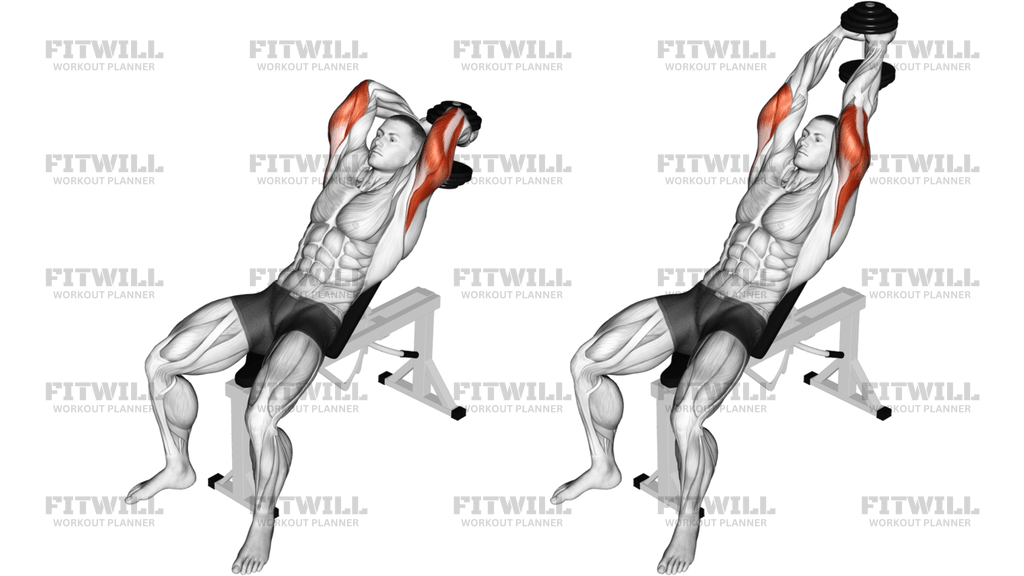
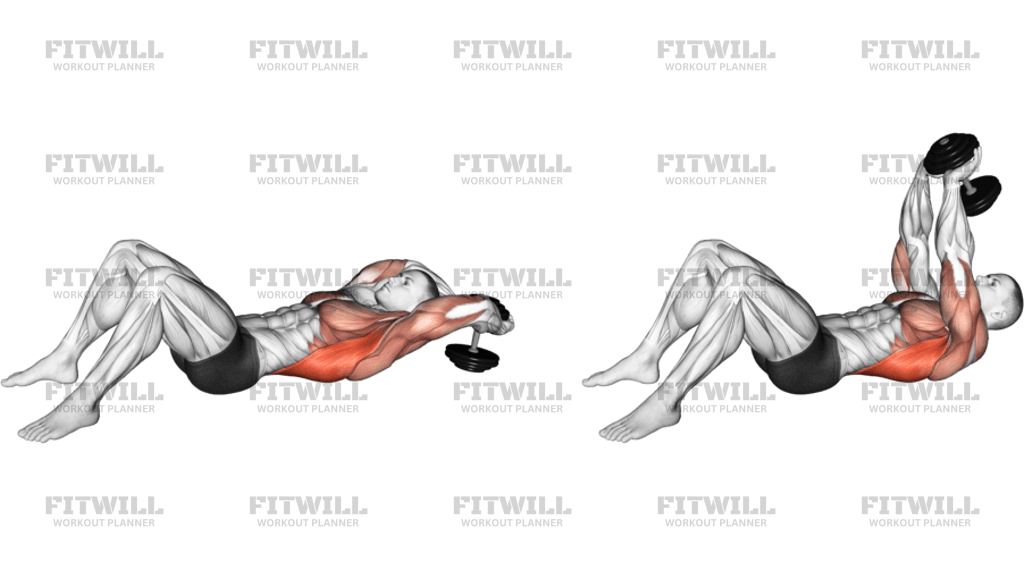
Dumbbell Seated Reverse-Grip One-Arm Overhead Tricep Extension
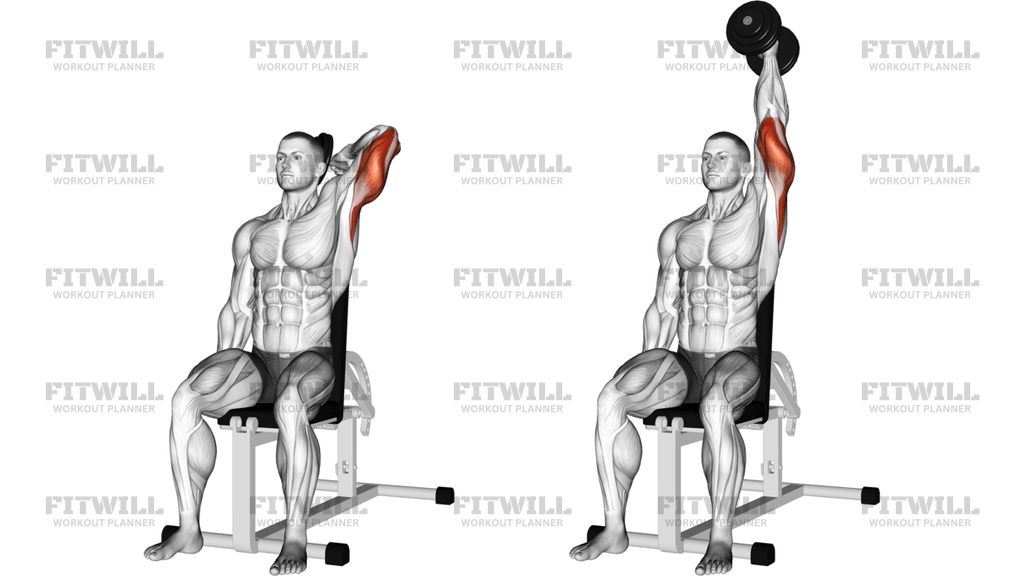
Dumbbell Seated Reverse-Grip One-Arm Overhead Tricep Extension is a seated single-arm triceps exercise that keeps the shoulder supported while the elbow does the main work. The backrest helps you stay upright and reduce body swing, so each rep is driven by elbow extension instead of by leaning or twisting to move the weight. The reverse, underhand grip also makes the dumbbell feel more specific to the forearm and wrist, which is part of why the exercise rewards deliberate control.
This movement primarily trains the triceps brachii, with the forearm flexors, front deltoid, and core helping stabilize the arm and torso. Because only one arm works at a time, it is useful for spotting left-to-right differences and for building direct arm strength without needing a large load. It fits well when you want a triceps-focused accessory lift that is strict, easy to monitor, and easy to progress in small jumps.
The setup matters more here than on many other arm exercises. Sit with your back against the pad, feet flat on the floor, and the working elbow pointed up close to the side of your head. Hold one dumbbell overhead with an underhand grip and keep the wrist stacked over the elbow so the weight sits over the shoulder instead of drifting behind you. The bench is there to help you stay tall, not to let you arch and turn the rep into a half press.
Lower the dumbbell by bending only at the elbow until you feel a strong triceps stretch behind the upper arm. From there, extend the elbow and drive the dumbbell back to the start without letting the upper arm swing wide or the rib cage flare up. The forearm should trace a smooth arc while the upper arm stays mostly fixed, and the return should be controlled enough that the next rep starts from the same position. Breathe in on the way down and exhale as you press up.
Dumbbell Seated Reverse-Grip One-Arm Overhead Tricep Extension works best as controlled accessory work, especially in arm blocks or upper-body sessions where the goal is to add quality tension rather than maximal loading. Use a lighter dumbbell than you would for a two-hand overhead extension, because the reverse grip and single-arm setup can get unstable quickly if you rush. If the shoulder feels pinched, shorten the range slightly and keep the elbow a little in front of the ear instead of forcing the dumbbell farther back.
[ Workout Log & Planner ]
Put your next workout in Fitwill
Keep your plan and training log ready when you are.


Instructions
- Sit on an upright bench with your back pressed into the pad and both feet flat on the floor.
- Hold one dumbbell overhead in one hand with an underhand grip, and point the working elbow toward the ceiling beside your head.
- Set your free hand on the bench or across your torso so your shoulders stay square and your body stays still.
- Stack the wrist over the elbow, keep the rib cage down, and brace before the first rep.
- Bend only at the elbow to lower the dumbbell behind your head until you feel the triceps stretch.
- Keep the upper arm nearly vertical and avoid letting the elbow flare wide as the weight descends.
- Press the dumbbell back up by straightening the elbow until the arm is fully extended over the shoulder.
- Exhale as you extend, inhale as you lower, and keep the dumbbell under control instead of snapping it into lockout.
- After the final rep, bring the dumbbell back to shoulder height and then down to your lap before standing up.
Tips & Tricks
- Choose a lighter dumbbell than you would for a neutral-grip extension, because the underhand hold is less stable overhead.
- Keep the elbow close to the head; if it drifts out to the side, the shoulder will start stealing the rep.
- Let the forearm move, not the upper arm. If the whole arm swings, the load is too heavy.
- Lower slowly for two to three seconds so the triceps stay loaded through the stretch.
- Keep the wrist straight and stacked over the elbow instead of letting the dumbbell bend the hand back.
- Use the backrest to stay tall, but do not lean hard into it or arch your lower back to gain range.
- If the bottom position feels sharp in the shoulder, stop a little earlier and keep the elbow slightly in front of the ear.
- Brace the free hand on the bench or hip if you need extra balance on the working side.
- End the set when the dumbbell starts drifting behind your head or you lose the elbow path.
Frequently Asked Questions
What muscles does Dumbbell Seated Reverse-Grip One-Arm Overhead Tricep Extension work most?
It mainly targets the triceps brachii, with the forearm flexors, front deltoid, and core helping stabilize the arm and torso.
Why use a reverse grip on Dumbbell Seated Reverse-Grip One-Arm Overhead Tricep Extension?
The underhand grip changes how the dumbbell sits in the hand and makes the lift feel more controlled and forearm-dependent than a neutral grip.
Is Dumbbell Seated Reverse-Grip One-Arm Overhead Tricep Extension beginner-friendly?
Yes, if you start light and keep your back on the bench. The movement is simple, but the overhead reverse grip gets unstable fast when the dumbbell is too heavy.
How far should I lower the dumbbell behind my head?
Lower until you feel the triceps stretch and the elbow still points mostly up. If the shoulder starts to roll forward or the rib cage opens, stop the descent there.
Why does my elbow flare out during the rep?
That usually means the weight is too heavy or the upper arm is drifting away from the ear. Lighten the load and keep the elbow stacked more vertically.
Do I need the bench backrest for this exercise?
A backrest makes it easier to keep the torso still and avoid turning the lift into a lean-back press, so it is the better setup for strict triceps work.
What if the dumbbell feels unstable in my hand?
Use a smaller load and keep the wrist stacked over the elbow. The reverse grip should feel secure, not like you are fighting the handle.
Can I swap this for a two-arm overhead extension?
Yes. A two-arm version is a good substitution if you want more stability, while the single-arm version is better for isolating each side.