Dumbbell Tricep Kickback With Stork Stance
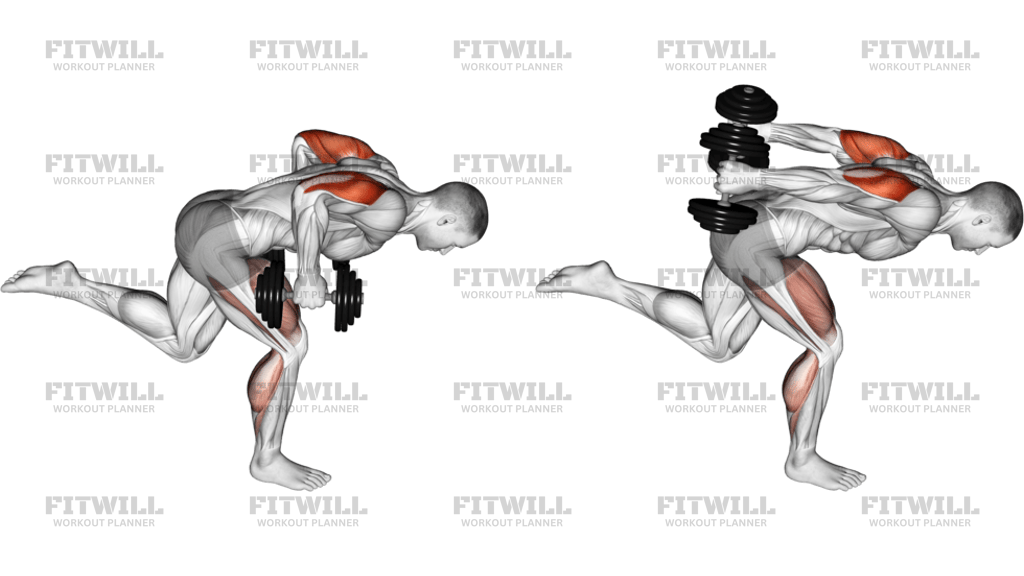
Dumbbell Tricep Kickback With Stork Stance is a unilateral balance-and-isolation exercise for the triceps. The image shows a deep hip hinge with one leg lifted behind the body, the free hand and dumbbell hanging under the shoulder, and the working arm pressing the dumbbell straight back until the elbow is fully extended. That stork setup makes the movement more demanding than a standard kickback because you have to keep the torso fixed, the pelvis level, and the standing leg stable while the triceps do the work.
The main training effect is elbow extension strength and hypertrophy through the triceps brachii, especially the long and lateral heads. The bent-over position also asks the rear deltoid, forearm flexors, and trunk muscles to hold the torso still while you move only at the elbow. Because the torso is close to horizontal, any loss of balance or shoulder position usually shows up quickly as swinging, shrugging, or turning the kickback into a row.
The setup matters more here than in a standard kickback. Hinge until your chest is nearly parallel to the floor, keep a soft bend in the standing knee, and send the non-working leg straight back for counterbalance. Keep the upper arm tucked close to the ribs and fixed in place before you begin each rep. From there, the dumbbell should travel in a short arc backward as the forearm straightens, then return under control until the elbow is back near 90 degrees without letting the shoulder roll forward.
Use this exercise when you want focused triceps work without needing heavy loading. It fits accessory blocks, arm sessions, or finishing work after pressing movements. The stork stance adds a balance challenge, so lighter dumbbells and slower reps usually produce better results than chasing load. If your torso rotates, your shoulder hikes up, or your standing foot starts gripping hard just to survive the set, the weight is too heavy or the hinge is too shallow.
Keep the movement pain-free and smooth. The best reps feel like the elbow is opening and closing while the upper arm stays frozen in space. If you lose that position, reset the hinge and reduce the load. Done well, this variation trains triceps control, body awareness, and posterior-chain stability at the same time.
[ Workout Log & Planner ]
Put your next workout in Fitwill
Keep your plan and training log ready when you are.


Instructions
- Hold a dumbbell in each hand and hinge forward until your torso is close to parallel with the floor.
- Stand on one leg, keep a soft bend in that knee, and lift the other leg straight back for balance.
- Let both upper arms hang under your shoulders with your elbows bent about 90 degrees and tucked close to your ribs.
- Set your neck in line with your spine and keep your chest and hips square to the floor before you start.
- Brace your midsection, then drive both dumbbells straight back by extending only at the elbows.
- Finish each rep with your arms straight behind you and your triceps fully contracted without shrugging your shoulders.
- Pause briefly at lockout, then lower the dumbbells back until your forearms hang under your elbows again.
- Keep the standing foot rooted and repeat for the planned number of reps before lowering the lifted leg and standing tall.
Tips & Tricks
- A lighter pair of dumbbells usually works better here because the single-leg hinge makes balance the limiting factor before triceps fatigue.
- Keep the upper arm still; if the dumbbell starts swinging from the shoulder, the set has turned into a sloppy row.
- Think about straightening the elbow, not throwing the hand backward. The forearm should move while the upper arm stays pinned in place.
- Press the lifted leg long behind you so the torso stays level instead of tipping the pelvis open.
- A soft bend in the standing knee helps you keep the hip hinge and avoids locking into a shaky position.
- Exhale as you kick back and inhale as you return under control so the trunk stays braced without holding your breath too long.
- Stop the rep when the elbows are fully extended; there is no reward for overreaching past the line of the torso.
- If your shoulders start creeping toward your ears, reset the hinge and reduce the load before continuing.
Frequently Asked Questions
What does the Dumbbell Tricep Kickback With Stork Stance work most?
It mainly targets the triceps, with the long and lateral heads doing most of the elbow-extension work.
Why use the stork stance instead of standing on two feet?
The single-leg stance challenges balance and trunk control, so you have to keep the torso from twisting while you kick back.
How bent should my torso be during this exercise?
Hinge until your chest is nearly parallel to the floor and keep that angle fairly steady through the set.
Should my upper arm move during the kickback?
No. The upper arm should stay tucked near your ribs while the elbow opens and closes.
What are the most common mistakes with this dumbbell kickback?
Using too much load, letting the shoulder swing, rotating the hips, and standing up out of the hinge are the biggest errors.
Is this exercise appropriate for beginners?
Yes, if the dumbbells are light and the person can hold the hinge and single-leg balance without wobbling.
Where should I feel the exercise besides the triceps?
You may notice the rear shoulder, forearms, and standing-side glute or core working to stabilize the position.
How can I make this movement harder without using heavier dumbbells?
Slow the lowering phase, pause at full elbow extension, or increase control in the stork stance before adding load.