Sitting Shoulders Stretch On Bench
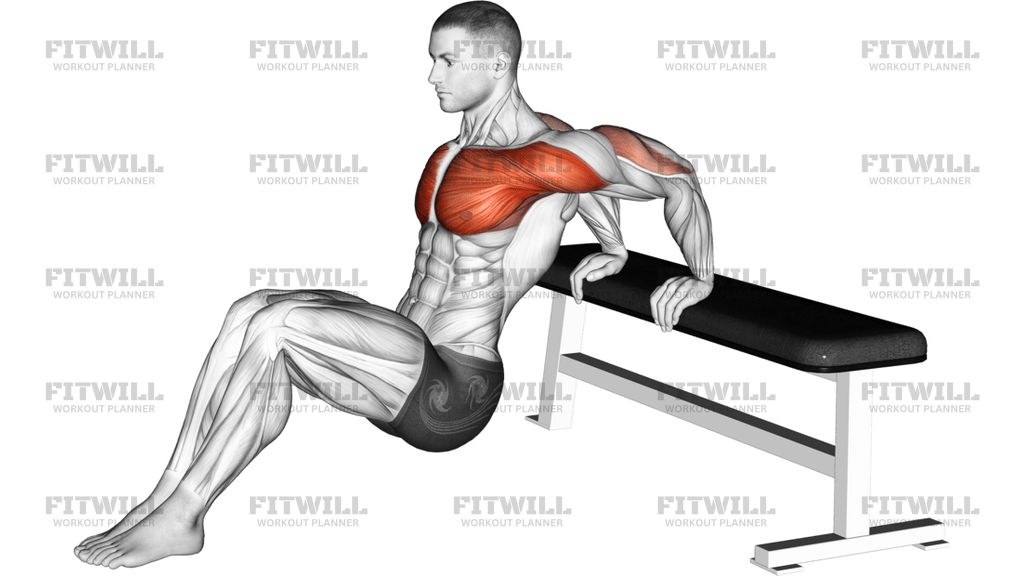
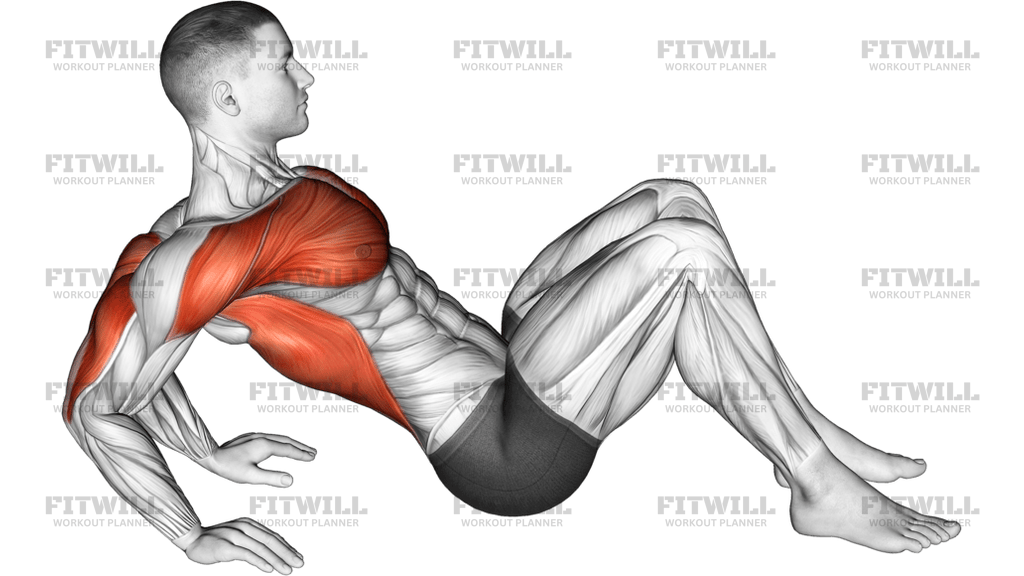
Sitting Shoulders Stretch On Bench is a bench-supported shoulder opener that places the arms behind the torso and loads the front of the shoulders in a controlled, supported position. You sit on the floor in front of a bench, put your hands on the bench behind your hips, and let your bodyweight create a gentle stretch through the delts, chest, and upper arms. The goal is not to push deep into range; it is to set the shoulders, open the front line of the body, and hold the position without collapsing into the joints.
The setup matters because the bench height and hand placement decide how intense the stretch feels. A higher bench and more upright torso usually make the movement easier, while a lower bench or a more forward hip position increases the stretch on the front of the shoulders and triceps. Your wrists, elbows, and shoulders should all stay in a line that feels organized enough to support your weight. If the hands are too far back or the chest drops hard, the stretch can turn into joint stress instead of useful mobility work.
In the pictured position, the torso stays tall, the shoulders are gently drawn back, and the elbows remain slightly bent rather than locked hard. From there, you settle the hips forward or slightly away from the bench until you feel a clear but manageable opening across the anterior deltoids and upper chest. Slow breathing matters: inhale into the ribs, then exhale and let the front of the shoulders soften a little more without forcing the range. The best rep is steady, quiet, and repeatable.
This stretch is useful before pressing work, after chest or shoulder training, or anytime the front of the shoulders feel tight from desk posture or repeated overhead work. It can also help lifters who lose shoulder extension mobility when they sit, row, or press a lot. Keep the stretch pain-free and avoid any pinching in the front of the shoulder. If the bench edge irritates the wrists, change the hand angle slightly or use a safer bench height before you chase more range.
Treat Sitting Shoulders Stretch On Bench as a mobility drill with clear boundaries. You should feel tension in the shoulders and upper arms, not a sharp bite in the joint capsule or neck. Small changes in foot position, bench height, and how far the hips travel will change the difficulty more than trying to yank yourself deeper. Done well, the exercise opens the front of the shoulder while keeping the shoulder girdle stable and the breathing relaxed.
Fitwill
Log Workouts, Track Progress & Build Strength.
Achieve more with Fitwill: explore over 9600 exercises with images and videos, access built-in and custom workouts, perfect for both gym and home sessions, and see real results.
Start your journey. Download today!




Instructions
- Sit on the floor in front of a bench and place both hands on the bench edge behind your hips, about shoulder width apart.
- Turn your fingers forward or slightly outward and keep your palms flat so the wrists feel supported on the edge.
- Bend your knees and plant your feet, then scoot your hips a few inches away from the bench so your arms begin to take some weight.
- Lift your chest, lengthen the back of your neck, and keep your shoulders from shrugging up toward your ears.
- Press lightly through the hands and slide the hips forward until you feel a controlled stretch across the front of the shoulders and upper arms.
- Keep a small bend in the elbows instead of locking them hard, and avoid letting the shoulders roll aggressively forward.
- Breathe slowly through the stretch, using each exhale to soften a little more without forcing the range.
- Hold the position for the target time, then bring the hips back toward the bench and release the hands carefully.
Tips & Tricks
- A higher bench usually makes the stretch easier; a lower bench increases the load on shoulder extension and the front of the arms.
- If the wrists feel compressed on the bench edge, turn the hands out a few degrees or spread the pressure across the whole palm.
- Keep the chest lifted instead of rounding forward, or the stretch shifts away from the front delts and into the upper back.
- Do not let the elbows drift far behind the wrists; that often makes the stretch feel unstable and can irritate the shoulder.
- Move the hips forward in small increments. One inch can change the stretch more than another big inhale and lean.
- You should feel a broad opening in the anterior delts, chest, and triceps, not a sharp pinch at the front of the shoulder.
- If one side feels tighter, bias the torso very slightly toward that side rather than twisting the whole setup hard.
- Use this as a controlled hold, not a bounce. Quick pulses usually make the shoulder guard itself and reduce the stretch.
Frequently Asked Questions
What does Sitting Shoulders Stretch On Bench target most?
It mainly opens the front of the shoulders, especially the delts, while also stretching the chest and triceps.
Why are my hands on the bench behind me?
That hand position puts the shoulders into extension and creates the stretch through the front of the shoulder and upper arm.
How far should I move my hips from the bench?
Only far enough to feel a clear stretch without losing control of the wrists, elbows, or shoulder position.
Should my elbows stay locked during this stretch?
No. Keep a soft bend so the shoulders do not take all the load and the stretch stays more comfortable.
What is the most common mistake with the bench setup?
Placing the hands too far back or dropping the chest too low, which turns a mobility drill into painful shoulder pressure.
Can I make this stretch easier?
Yes. Use a higher bench, keep your hips closer to the bench, and reduce how much bodyweight you press through the hands.
Where should I feel the stretch?
You should feel it across the front of the shoulders, with some tension in the upper chest and triceps, not in the neck.
Is this a good warm-up before pressing?
Yes, if you keep the hold gentle and controlled. It can help restore shoulder opening before benching or overhead work.