Standing Reverse Shoulder Stretch
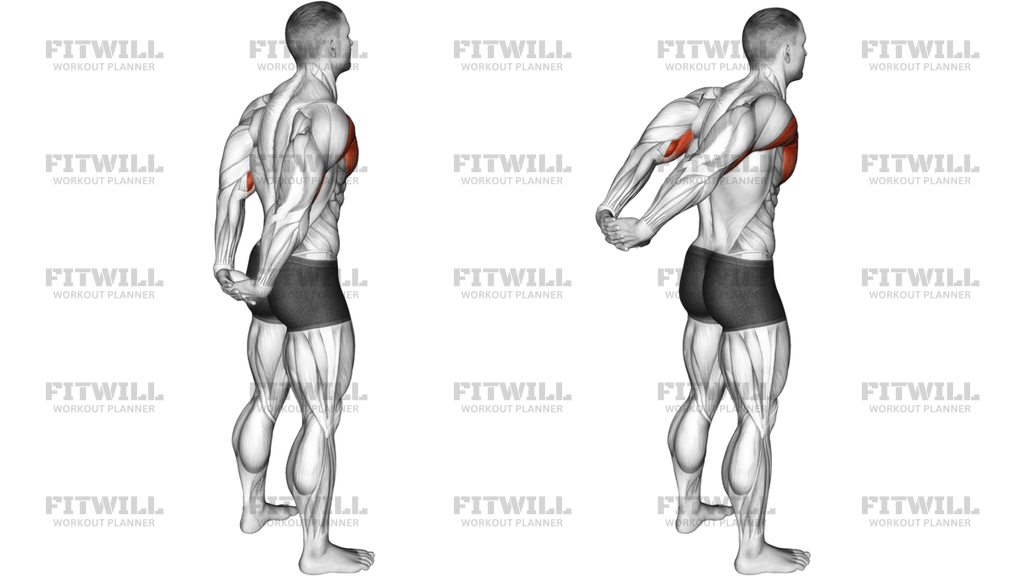
Standing Reverse Shoulder Stretch is a standing shoulder opener that uses your own body position, not momentum, to lengthen the front of the shoulders and the tissues that cross the chest and upper arm. The movement is especially useful when the shoulders feel rounded forward from pressing, desk work, or gripping, because the clasped-hands position behind the body asks the shoulder to extend while the chest stays lifted and the neck stays relaxed.
The setup matters more than the range. Stand tall with your feet about hip-width apart, brace lightly, and clasp or interlace your hands behind your pelvis with the elbows straight or softly bent. From there, gently draw the hands away from the body until you feel a clear stretch across the front of the shoulders without pinching the front of the joint or forcing the low back to arch.
During each hold, keep the ribs stacked over the pelvis and let the shoulder blades slide down rather than shrugging toward the ears. The goal is a clean, steady opening through the shoulders and chest, not a big backward lean. If one side feels tighter, you can subtly shift the hands toward that side or reduce the range and breathe into the shorter side instead of yanking both shoulders equally.
Use this stretch before upper-body training to open the shoulder line, or after pressing and pulling sessions to calm down the front of the body and restore a more neutral posture. It also works well as a short reset between desk breaks. Smooth breathing, a gentle finish position, and an immediate stop if you feel sharp pain are the keys to making it useful rather than irritating.
[ Workout Log & Planner ]
Put your next workout in Fitwill
Keep your plan and training log ready when you are.


Instructions
- Stand tall with your feet about hip-width apart, knees soft, chest lifted, and shoulders relaxed.
- Clasp or interlace your hands behind your lower back, close to your glutes, with the palms facing in or down if that feels better.
- Straighten the elbows just enough to create tension, then slide the hands a few inches away from the body.
- Lift through the sternum without flaring the ribs or arching the lower back.
- Keep the shoulder blades gently down as the arms drift behind you.
- Hold the stretch and breathe slowly into the front of the shoulders and chest.
- Ease off if you feel pinching in the shoulder joint; bend the elbows slightly or reduce the range if needed.
- Bring the hands back in with control, reset your posture, and repeat for the desired hold time or reps.
Tips & Tricks
- Keep the hands close to your glutes before opening farther back; that usually gives the shoulder a cleaner stretch.
- Think long arms and soft ribs instead of yanking the shoulders hard into extension.
- If the wrists feel awkward, keep the clasp looser rather than forcing the fingers together.
- A small bend in the elbows can reduce strain and still open the front of the shoulders.
- Exhale as you settle into the stretch so the chest does not flare upward.
- If one shoulder is tighter, shift the hands slightly toward that side instead of twisting the torso.
- Use short, steady holds instead of bouncing or pulsing at the end range.
- Stop immediately if you feel sharp pain, numbness, or a pinch at the front of the shoulder.
Frequently Asked Questions
What does Standing Reverse Shoulder Stretch target?
It mainly opens the front of the shoulders and chest while the upper back and shoulder blades stay organized behind you.
Is this a strength exercise or a mobility stretch?
It is a mobility stretch. The goal is to create a clean shoulder extension position, not to load the muscles heavily.
Should my elbows stay locked?
Not necessarily. Keep them straight enough to feel the stretch, but a slight bend is fine if locking them makes the shoulders cranky.
Why do I feel this across my chest?
The clasped-hands position pulls the shoulders back, which stretches the front shoulder line and often the upper chest as well.
What if I cannot clasp my hands comfortably behind my back?
Keep the hands lower and closer together, or use a towel or strap so you can open the shoulders without forcing the grip.
Where should I feel the stretch?
You should feel it across the front of the shoulders and upper chest, not as a sharp pinch deep in the shoulder joint.
Can I use this before pressing workouts?
Yes. It can help open the shoulder line before benching, overhead pressing, dips, or other upper-body work.
What is the most common mistake?
Overarching the lower back to fake more range is the biggest mistake. Keep the ribs stacked over the pelvis instead.