Internal Shoulder Rotation Stretch
Internal Shoulder Rotation Stretch is a bench-based shoulder mobility drill that places the upper arm out at shoulder height, bends the elbow to 90 degrees, and lets the forearm rotate downward under control. The setup looks simple, but the exact position matters: the shoulder blade, ribcage, and elbow angle determine how cleanly the joint opens and where you actually feel the stretch.
This movement mainly targets shoulder internal rotation range with a strong emphasis on the back and side of the shoulder. You should feel a firm stretch around the posterior shoulder rather than a sharp pinch in the front. A stable bench and a quiet torso matter because the goal is to move the shoulder joint, not to twist the spine or shrug the shoulder to buy extra range.
To perform it well, keep the upper arm anchored at shoulder height and lower the forearm slowly toward the floor. The motion should be smooth and small, especially near the bottom where people often force the position. Exhale as you settle deeper, then pause long enough for the shoulder to relax into the stretch. If the front of the joint feels compressed, back off immediately and shorten the range.
This stretch is useful after pressing sessions, overhead work, or any training block that leaves the shoulders feeling tight and internally rotated. It can also serve as a warm-up mobility drill before upper-body training when you want better rotation without loading the joint. Keep the effort honest, move only through a pain-free range, and treat the exercise as joint preparation rather than a test of how far you can force the arm down.
[ Workout Log & Planner ]
Put your next workout in Fitwill
Keep your plan and training log ready when you are.


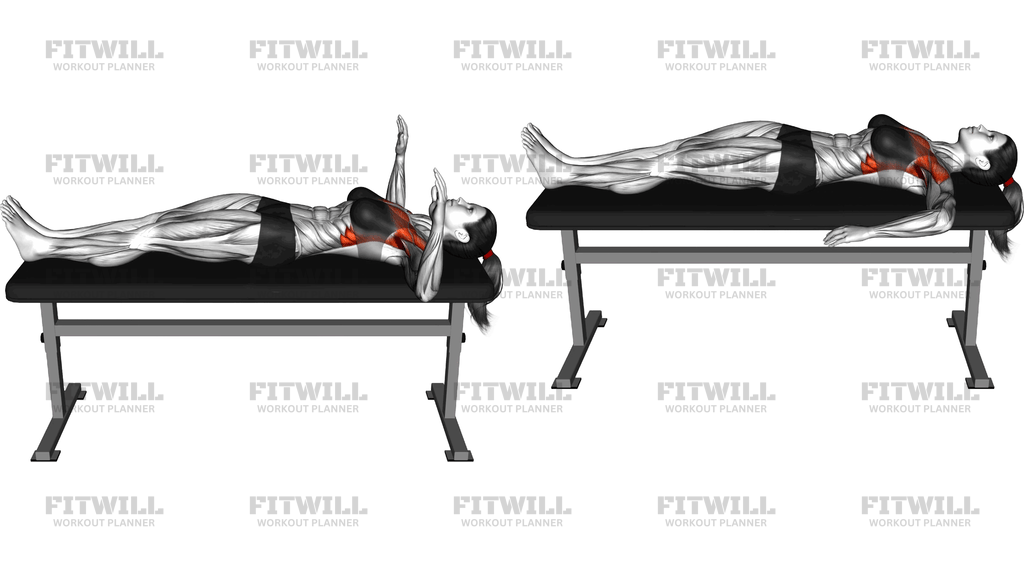
Instructions
- Lie on a flat bench with your upper back and head supported and bring the working shoulder close to the edge so the arm can move freely.
- Lift the working arm out to the side at shoulder height and bend the elbow to 90 degrees, creating a right angle between the upper arm and forearm.
- Keep the shoulder blade heavy on the bench and stack the ribcage without arching your lower back.
- Let the forearm lower toward the floor at a slow, steady pace while the upper arm stays fixed in place.
- Stop when you feel a firm stretch across the back or side of the shoulder, not a sharp pinch in the front.
- Exhale and hold the bottom position briefly without bouncing or twisting your torso.
- If the shoulder starts to jam, reduce the range and keep the elbow slightly higher.
- Return the forearm to the start under control, then repeat the same path on the other side.
Tips & Tricks
- Set the working shoulder close to the bench edge so the forearm can drop without the bench blocking the path.
- Keep the elbow at shoulder height; if it drifts forward or back, the stretch stops targeting the same part of the shoulder.
- The useful sensation should live in the back or side of the shoulder, not as a hard pinch in the front of the joint.
- Relax the wrist and hand so the shoulder, not the forearm, controls the range.
- Use a short exhale as you lower the forearm to help the shoulder settle into the position.
- Do not let the chest flare or the lower back arch to fake extra range.
- A small, repeatable range is better than forcing the hand to the floor.
- If one side is tighter, match the other side to that same honest range before stretching deeper.
Frequently Asked Questions
What does Internal Shoulder Rotation Stretch target most?
It mainly targets shoulder internal rotation range, with the back and side of the shoulder doing most of the work.
Why is the shoulder positioned near the bench edge?
That lets the forearm drop freely while the upper arm stays fixed at shoulder height, which makes the stretch cleaner.
Should I feel this in the front or back of the shoulder?
You should feel a firm stretch in the back or side of the shoulder. A sharp pinch in the front usually means the range is too deep.
Can beginners use this stretch?
Yes. Beginners should use a very small range at first and let the forearm lower only as far as they can keep the shoulder relaxed.
How long should I hold each rep?
A brief pause of a few seconds or a few calm breaths is usually enough. The goal is control, not forcing a long hold.
What should I do if the front of the shoulder pinches?
Shorten the range immediately, keep the elbow slightly higher, and stop before the joint feels jammed.
Is a flat bench necessary for this version?
A flat bench is the setup shown here and makes it easier to keep the upper arm stable while the forearm rotates down.
When is this stretch most useful?
It is especially useful after bench pressing, overhead pressing, or any session that leaves the shoulders feeling stiff and internally rotated.