Finger Stretch
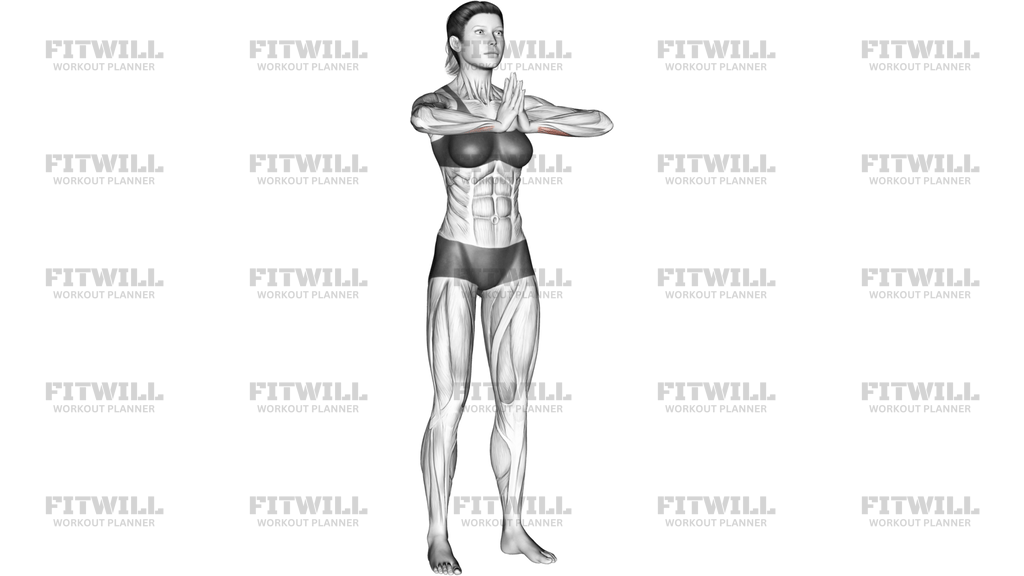
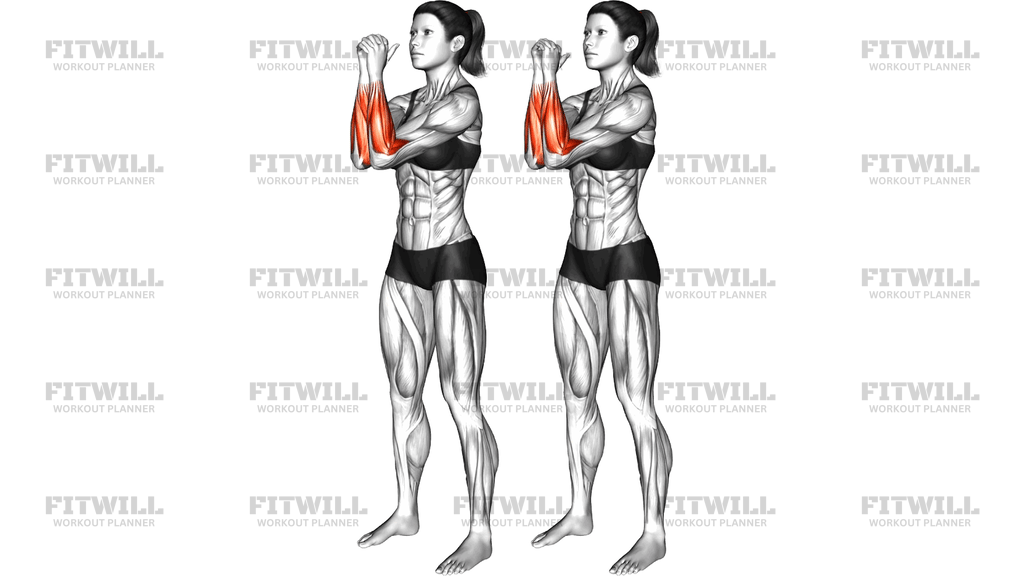
Finger Stretch is a standing hand and forearm mobility drill that opens the fingers, wrists, and the front of the forearms in a controlled prayer-style position. With the palms together and the fingers pointed upward, the exercise creates a gentle stretch through the finger flexors and wrist tissues while also asking the shoulders and upper back to stay quiet. It is most useful after gripping work, pressing, climbing, typing, or any session that leaves the hands and forearms feeling tight.
The setup matters because the stretch changes a lot with small shifts in hand height, elbow position, and how firmly the palms press together. If the elbows drift down or the shoulders shrug, the stretch often moves out of the forearms and into the neck. If the wrists collapse, the load can feel sharp instead of useful. A clean setup keeps the torso tall, the elbows relaxed but lifted, and the fingers actively reaching upward.
This movement should feel like a controlled lengthening, not a forced bend. Bring the hands together at chest height, keep the fingers long, and use a light inward press through the palms to maintain contact. From there, lower the hands a little or ease the elbows slightly to find the most productive range. The goal is to hold a steady stretch with calm breathing rather than chasing a bigger angle or bouncing into more range.
Use Finger Stretch as a warm-up for the hands and forearms, a cooldown after pulling or pressing work, or a short reset during long training sessions. It is also helpful between work sets when the grip, wrists, or forearms feel cramped. Keep the motion pain-free and controlled; if the stretch turns into joint pain, numbness, or tingling, back off the range immediately. For most people, the best results come from short, repeatable holds that gradually improve comfort in the wrists and fingers over time.
Fitwill
Log Workouts, Track Progress & Build Strength.
Achieve more with Fitwill: explore over 9600 exercises with images and videos, access built-in and custom workouts, perfect for both gym and home sessions, and see real results.
Start your journey. Download today!




Instructions
- Stand tall with your feet about hip-width apart and soften your knees.
- Bring your palms together in front of your chest with the fingertips pointing straight up.
- Keep the fingers long, the wrists neutral, and the elbows out to the sides at about chest height.
- Press the palms together lightly so the hands stay in contact without forcing the fingers back.
- Lift the sternum and keep the shoulders down away from the ears.
- Lower the hands a few centimeters or angle the elbows slightly until you feel a stretch through the fingers and front of the forearms.
- Hold the position and breathe slowly, using a long exhale to soften the stretch.
- Release the hands gently and repeat the hold if you want more time on each side.
Tips & Tricks
- Keep the palms evenly matched so one hand does not collapse harder than the other.
- Think about lengthening the fingers upward before you lower the hands.
- If the wrists start to pinch, raise the hands slightly and reduce the elbow flare.
- A small change in hand height can shift the stretch a lot, so adjust in tiny steps.
- Keep the neck relaxed; shrugging usually turns this into an upper-trap stretch instead of a forearm stretch.
- Use a slow exhale to make the stretch feel more available without forcing it.
- Avoid bending the wrists backward aggressively; the goal is a smooth tissue stretch, not a joint jam.
- If your hands cramp, relax the finger pressure for a moment and rebuild the stretch more gradually.
Frequently Asked Questions
What does Finger Stretch work?
It mainly targets the fingers, wrist flexors, and the front of the forearms.
Is this the same as a prayer stretch?
Yes. This version is very similar to a prayer-style forearm and finger stretch with the palms pressed together.
How should my hands be positioned?
Place the palms together at chest height with the fingers pointing up and the elbows out to the sides.
Where should I feel the stretch?
You should feel it across the fingers, wrists, and inner forearms, not as a sharp pinch in the wrist joint.
Can I use this after heavy pulling or gripping work?
Yes. It is a good cooldown stretch after rows, deadlifts, climbing, racket sports, or long keyboard sessions.
What should I do if my wrists hurt?
Reduce the hand height, soften the elbow position, and stop if the sensation turns into joint pain or tingling.
Can beginners do this stretch?
Yes. Beginners usually do best with a very light palm press and a short hold.
How long should I hold it?
Most people start with 15 to 30 seconds and repeat for a few controlled holds.