Dumbbell Shrug
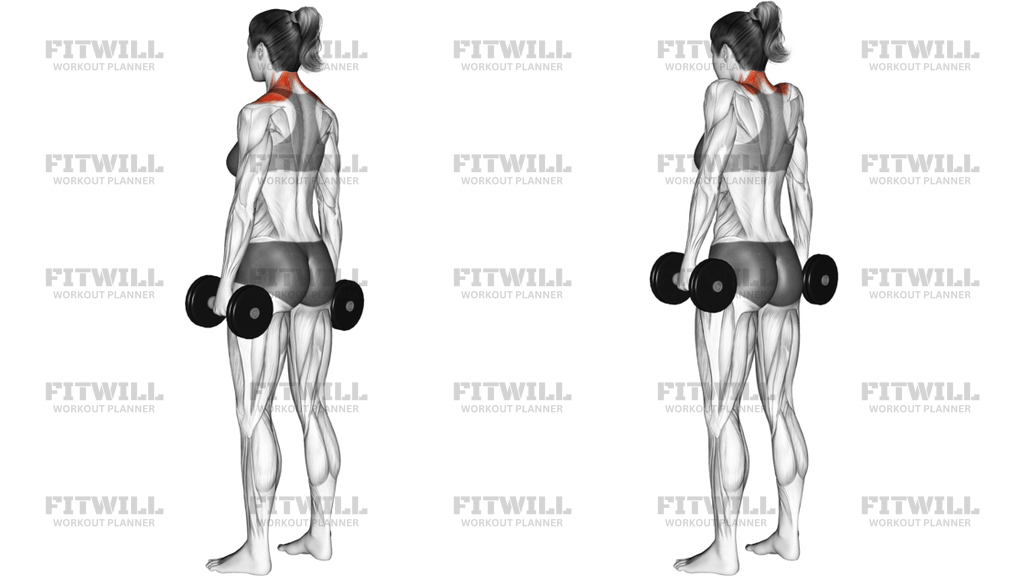
Dumbbell Shrug is a standing upper-back accessory exercise that trains the upper trapezius and the muscles that keep the shoulders organized under load. With the arms hanging long and the dumbbells held at the sides, the movement is small on purpose: you are lifting the shoulders straight up, not swinging the weights or bending the elbows to turn it into a curl.
The setup matters because the shrug begins from a very stable standing position. If your ribs flare, your neck cranes forward, or your torso leans back, the traps stop doing the work cleanly and the lift turns into body English. A controlled dumbbell shrug should look quiet from the waist down, with the head stacked over the shoulders and the dumbbells staying close to the outside of the thighs.
At the top of each rep, the shoulders should rise toward the ears in a vertical line and then briefly settle under control before the weights come back down. The lower phase is just as important as the lift: let the shoulders drop fully without relaxing posture or letting the dumbbells bounce. That bottom stretch is where the traps get a lot of their training effect.
This exercise is commonly used for building trap size, improving scapular elevation strength, and adding grip-friendly upper-back work to a pull day or full-body session. It can be loaded fairly heavy, but only if the neck stays relaxed and the wrists, elbows, and torso remain quiet. If you feel it mostly in the hands or if the shoulders roll forward and back, the load is probably too aggressive or the motion has become sloppy.
Use Dumbbell Shrug when you want a simple, direct way to train the upper traps without a machine. It works well as an accessory lift after compound pulling, but it also stands on its own for lifters who need better postural endurance or a stronger top-end shrug position. Keep the motion short, clean, and deliberate so every rep builds the same pattern.
[ Workout Log & Planner ]
Put your next workout in Fitwill
Keep your plan and training log ready when you are.


Instructions
- Stand tall with a dumbbell in each hand and let the weights hang beside the outer thighs, palms facing the body.
- Set your feet about hip-width apart, soften the knees, and stack your ribs over your pelvis without leaning back.
- Keep the arms straight and the elbows relaxed so the dumbbells stay vertical under the shoulders.
- Brace lightly through the torso and keep the chin neutral before the first rep begins.
- Shrug both shoulders straight up toward the ears without bending the elbows or rolling the shoulders.
- Pause briefly at the top while keeping the neck long and the face relaxed.
- Lower the shoulders slowly until the dumbbells return to the starting hang and you feel a full stretch in the upper traps.
- Keep breathing steady, exhaling as you shrug and inhaling as you lower.
- Repeat for the planned reps, then set the dumbbells down with control.
Tips & Tricks
- Think of the motion as lifting the shoulders straight up, not backward or in a circle.
- Keep the dumbbells close to the sides of your thighs so the load stays under the traps instead of drifting forward.
- Use a grip that is firm but not death-tight; if your forearms fail first, the dumbbells are probably too heavy.
- Do not shorten the bottom position. Let the shoulders drop fully so the traps work through their full length.
- A one-second hold at the top makes the rep more honest and reduces the temptation to bounce.
- Keep the chin tucked slightly and the neck long so you do not feed tension into the upper neck.
- If the torso starts swaying, reduce the load until the set looks still from the waist down.
- Heavy loads are useful here, but only if you can keep every rep vertical and clean.
Frequently Asked Questions
What muscles do dumbbell shrugs work?
They primarily train the upper trapezius, with help from the levator scapulae, forearms, and other upper-back stabilizers.
Can beginners perform this exercise?
Yes. It is beginner-friendly as long as you keep the torso still and use a light load you can shrug without momentum.
Should I roll my shoulders while shrugging?
No. Roll-free, straight-up shrugs are safer and keep the tension on the upper traps instead of the shoulder joint.
How high should the dumbbells rise?
They only need to rise enough for the shoulders to approach the ears. The rep should feel vertical, not explosive.
How heavy should I train dumbbell shrugs?
Heavy enough to challenge the traps, but not so heavy that you lean back, bounce, or shorten the lowering phase.
Why do I feel this in my neck?
A little upper-neck tension is normal, but sharp neck strain usually means you are jutting the head forward or shrugging too aggressively.
What is the best tempo for this exercise?
A short pause at the top and a controlled lowering phase work well because the shrug has a very small range of motion.
Can I use this as part of a pull day?
Yes. It fits well after rows, pulldowns, or deadlift variations as a trap-focused finishing movement.