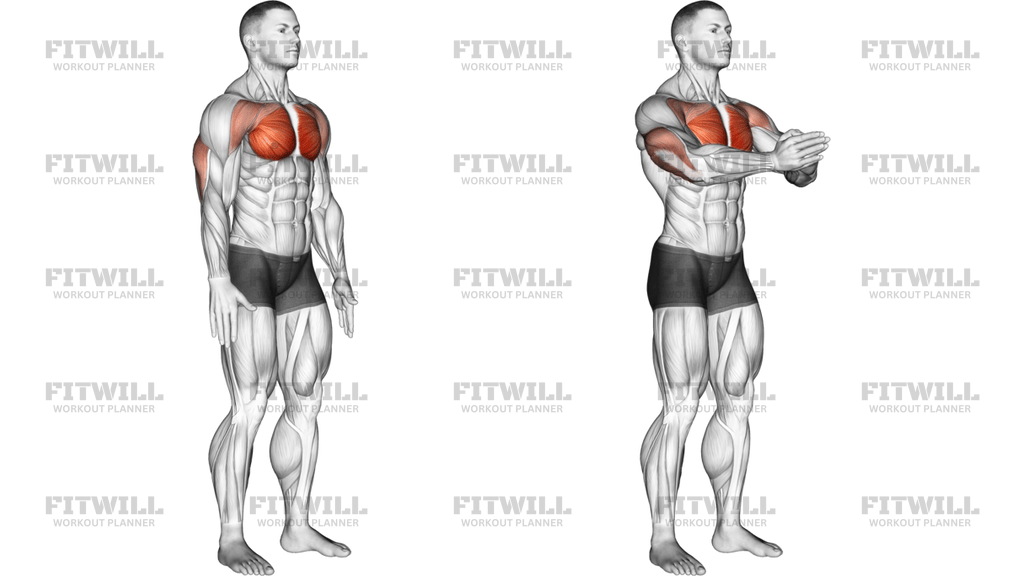
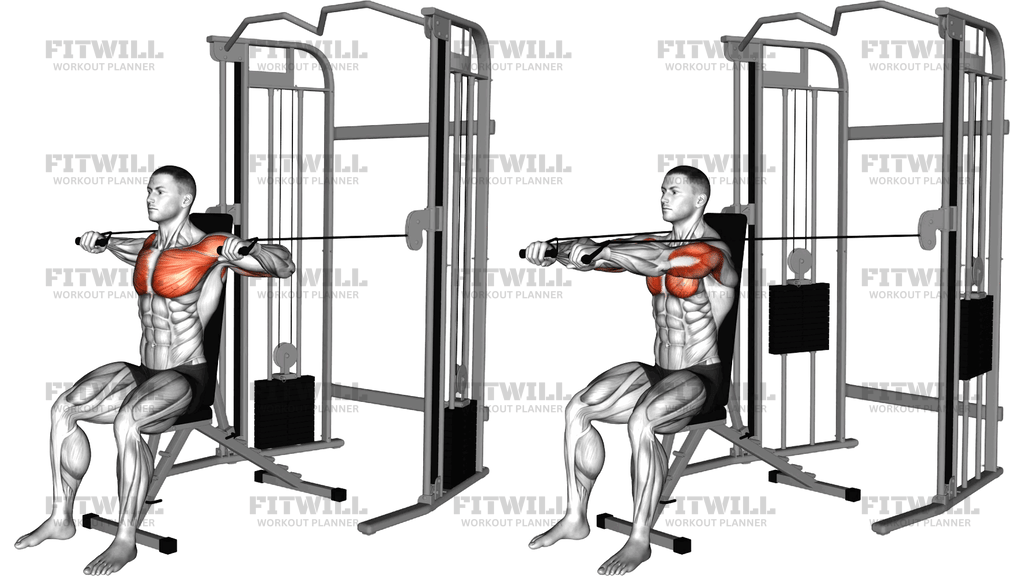
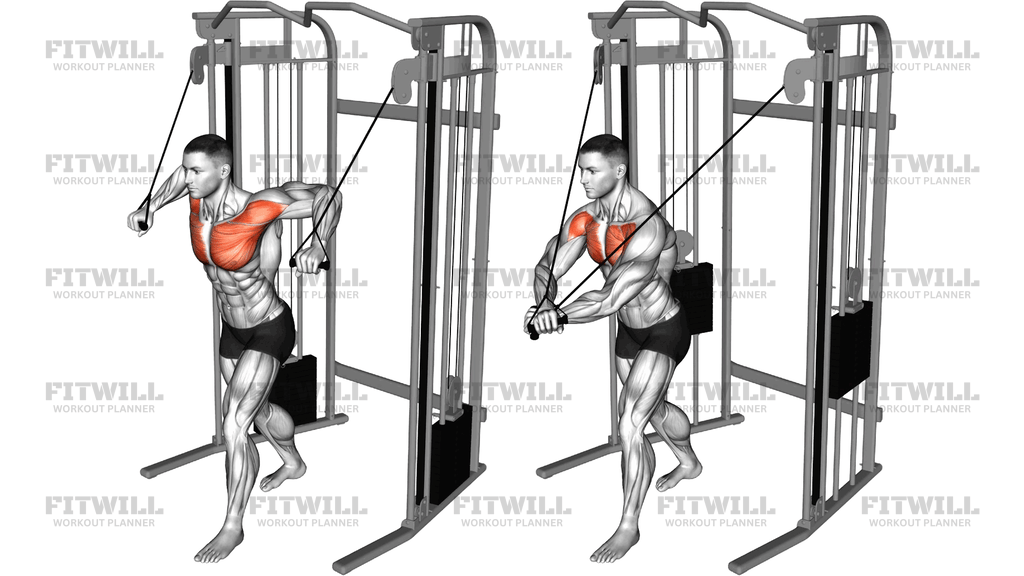
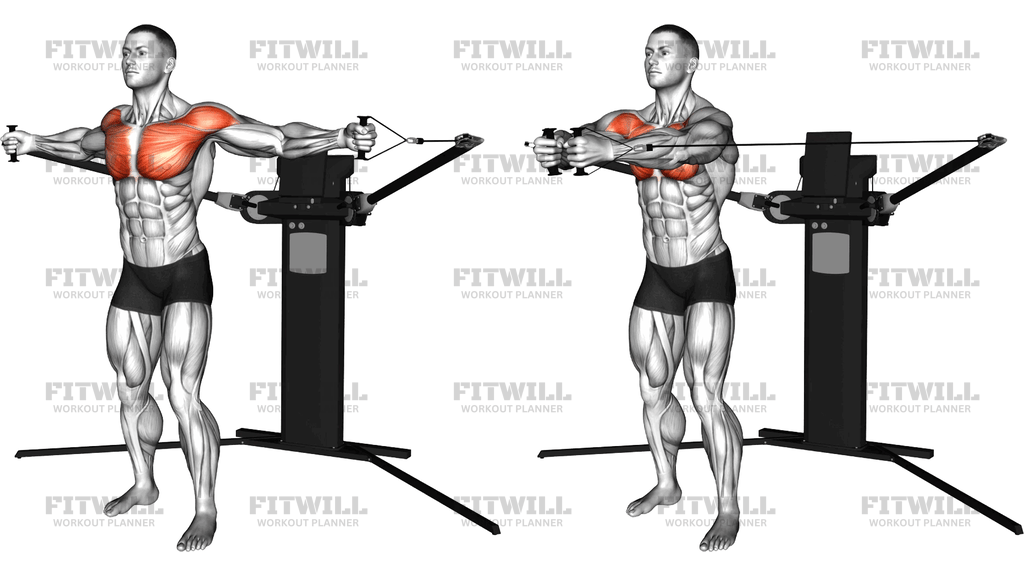
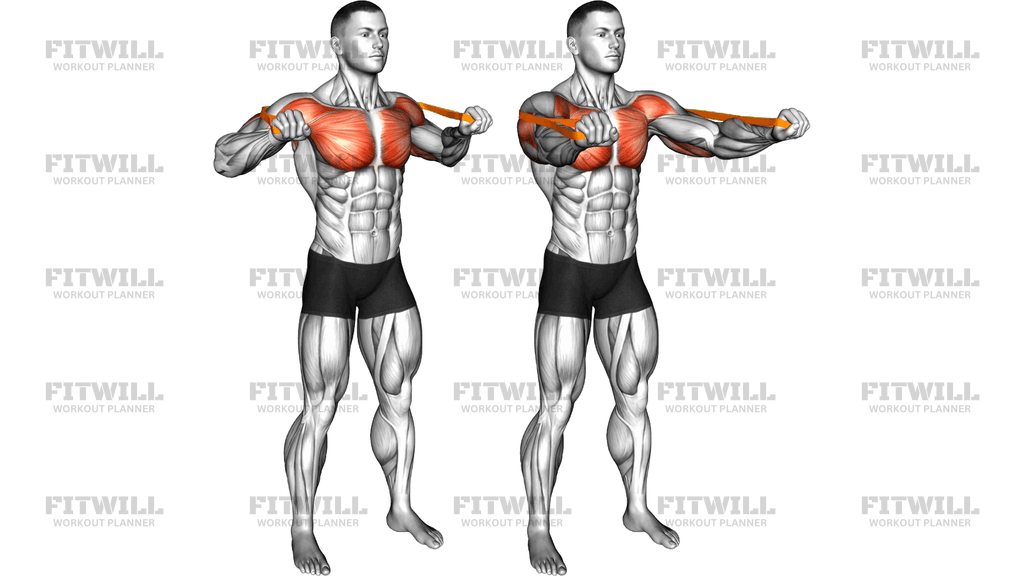
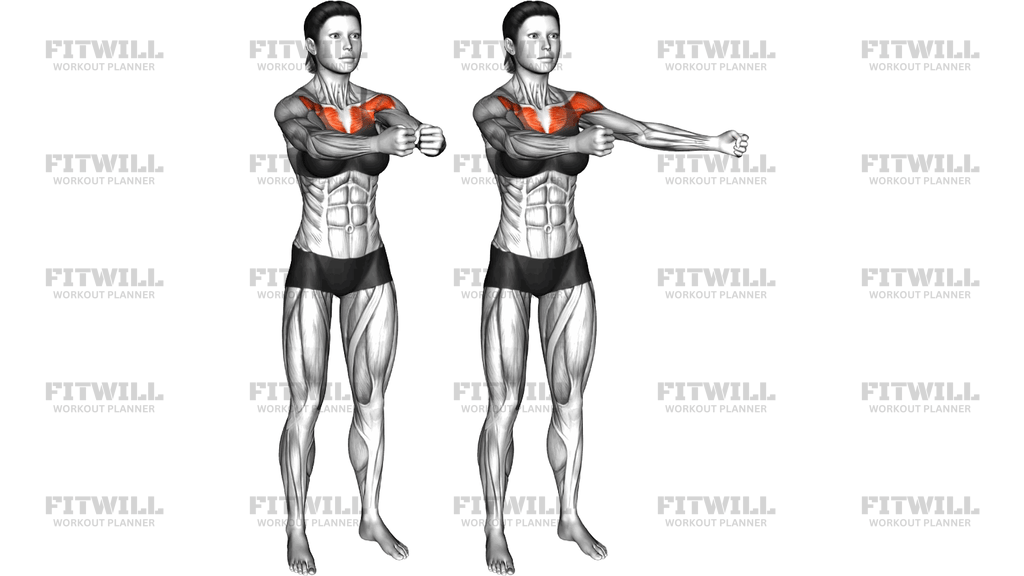
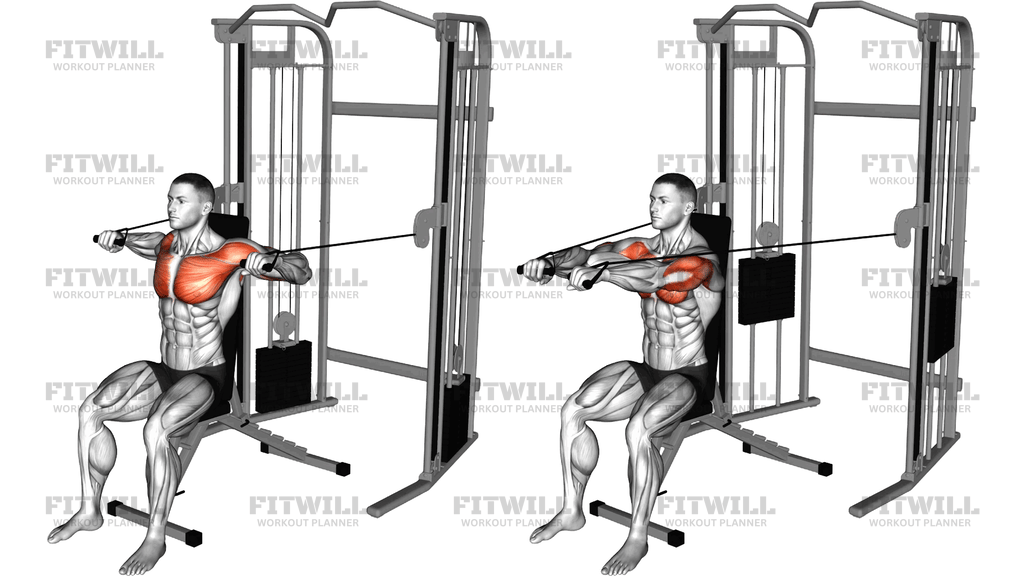
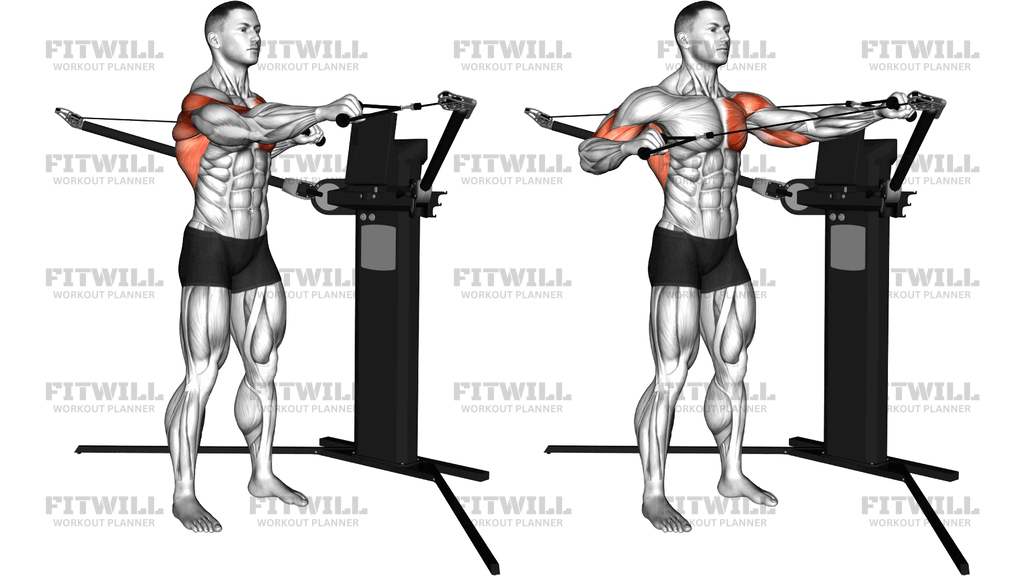
Cable Incline Fly
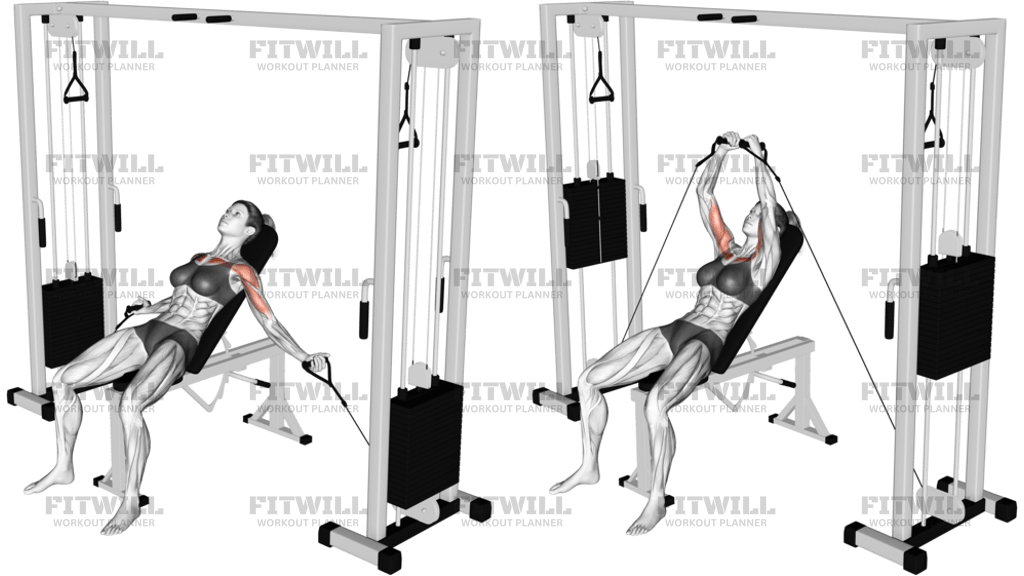
Cable Incline Fly is a cable chest isolation exercise performed on an incline bench between two low pulleys. The setup creates a low-to-high arm path that keeps tension on the pecs through most of the rep, especially when the handles meet above the upper chest instead of drifting toward the face or shoulders.
The movement is usually chosen to emphasize the chest with a slightly higher angle than a flat fly. Because the bench fixes your torso and the cables pull from below, the exercise rewards clean positioning: shoulder blades set on the bench, ribs controlled, feet planted, and elbows held in a soft bend so the arms move as a single unit around the chest.
That setup matters because the line of pull changes the feel of the fly. A low cable and incline bench make the top half of the chest work hard while the front delts and triceps help stabilize the path. If the bench is too steep, the exercise starts to resemble a shoulder raise; if it is too flat, the tension shifts away from the intended incline chest line. The best reps keep the same joint shape from bottom to top and avoid turning the movement into a press.
Perform each repetition by opening the chest under control, then sweeping the handles upward and inward until they meet above the upper chest. The arms should travel in a wide arc, not a straight line, and the elbows should stay slightly bent throughout. Lower the handles slowly until you feel a comfortable stretch across the pecs without losing scapular position or letting the shoulders roll forward.
Use Cable Incline Fly as accessory work when you want focused chest tension, a strong squeeze at peak contraction, and a joint-friendly alternative to heavy pressing. It works well for moderate-to-higher repetitions with precise tempo. Beginners can use it with light resistance, but the exercise only pays off when the load is light enough to keep the bench angle, arm path, and shoulder position consistent from the first rep to the last.
[ Workout Log & Planner ]
Put your next workout in Fitwill
Keep your plan and training log ready when you are.


Instructions
- Set an incline bench between two cable stacks and attach a handle to each low pulley.
- Sit back on the bench and lie against it with your head, upper back, and hips supported, feet flat on the floor.
- Take a handle in each hand, palms facing in, and start with the hands low and slightly out to the sides while keeping a soft bend in the elbows.
- Pin your shoulder blades gently into the bench and keep your chest lifted without flaring the ribs.
- Exhale and sweep both arms up in a wide arc, bringing the handles toward each other above the upper chest.
- Finish with the hands close together and the chest squeezed, but do not slam the handles together or lock the elbows.
- Inhale as you lower the handles back down the same arc until you feel a controlled stretch across the pecs.
- Keep the neck relaxed, the wrists stacked over the forearms, and the shoulders from rolling forward at the bottom.
- Repeat for the planned number of repetitions, then set the handles down before sitting up.
Tips & Tricks
- Set the bench angle to a moderate incline; too steep turns the fly into more of a front-delt raise.
- Start with the pulleys low enough that the cables pull from below your torso, not level with your shoulders.
- Keep a small bend in the elbows and freeze that angle through the whole set so the movement stays at the chest.
- Bring the handles together above the upper chest rather than over the face to keep the line of pull honest.
- Let the chest open at the bottom, but stop before the shoulders dump forward or the front of the shoulder feels pinched.
- Lower the handles slowly on the way back down; the eccentric is where the cable keeps the pecs loaded.
- Choose a load that lets you control the first rep out of the stretch, not just the squeeze at the top.
- Keep your ribs down and your lower back from arching hard off the bench when the handles get heavy.
- If the handles collide or cross, the weight is probably too heavy or the arc is too narrow.
- Use straps only if grip becomes the limiting factor before the chest does.
Frequently Asked Questions
What muscles does Cable Incline Fly work most?
It mainly trains the chest, with extra work from the front shoulders, triceps, and core for stability.
Can beginners perform this exercise?
Yes. Start with light resistance and a moderate bench angle so you can learn the low-to-high arc without losing shoulder position.
Where should the handles finish on each rep?
They should meet above the upper chest, not over the face or too far back toward the rack.
What is the most common setup mistake?
Setting the bench too steep or the pulleys too high, which shifts the exercise away from the chest and toward the shoulders.
Should my elbows stay bent?
Yes. Keep a soft, fixed bend so the movement stays a fly instead of turning into a press.
Why use cables instead of dumbbells for incline flys?
Cables keep tension on the chest through the whole arc, especially in the stretched and midrange positions.
How deep should I lower the handles?
Lower only until you feel a controlled pec stretch. If the shoulders roll forward or the front of the shoulder pinches, stop sooner.
Is this more of a strength or hypertrophy exercise?
It is usually used for hypertrophy or accessory chest work because the fixed path and constant tension make controlled reps the priority.
What should I do if the handles keep drifting out of line?
Reduce the load and shorten the range slightly until you can keep both arms moving in the same arc without twisting your torso.